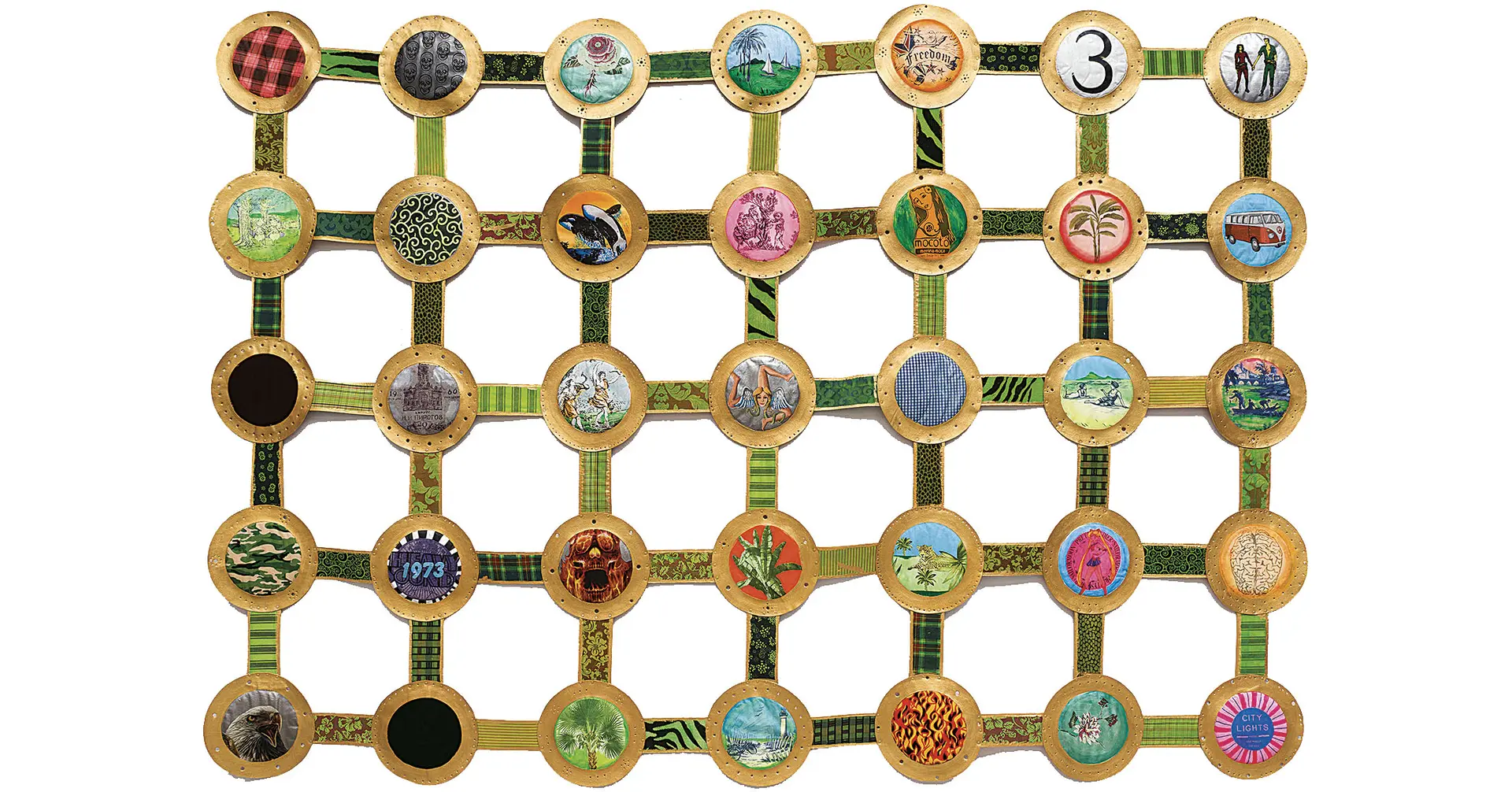
Leda Catunda was chosen as the inaugural figure for the project Nossas Artistas (Our [Female] Artists), launched by São Paulo’s Tomie Ohtake Institute, which proposes a sequence of solo exhibitions devoted to women artists who made and continue to make the history of Brazilian art. With the exhibition titled I love you baby, curated by Paulo Miyada, Leda Catunda’s oeuvre can be apprehended via more than one hundred works created between 2003 and 2016, including paintings, collages, prints, drawings, and objects, as well as works created specifically for the walls of the Institute’s galleries.
In this selection, drawing as a pictorial structure establishes a new synthesis of the overflow of images and the repeating themes in Catunda’s production. Like a catalyst of material culture, the artist builds reflections about such subjects as consumerism, the many strident languages of behavior, the impermanence of things, and “spectacularization,” all on the basis of her use of everyday elements like towels, rugs, tarps, plastic, shirts, windows, Formica, and others.
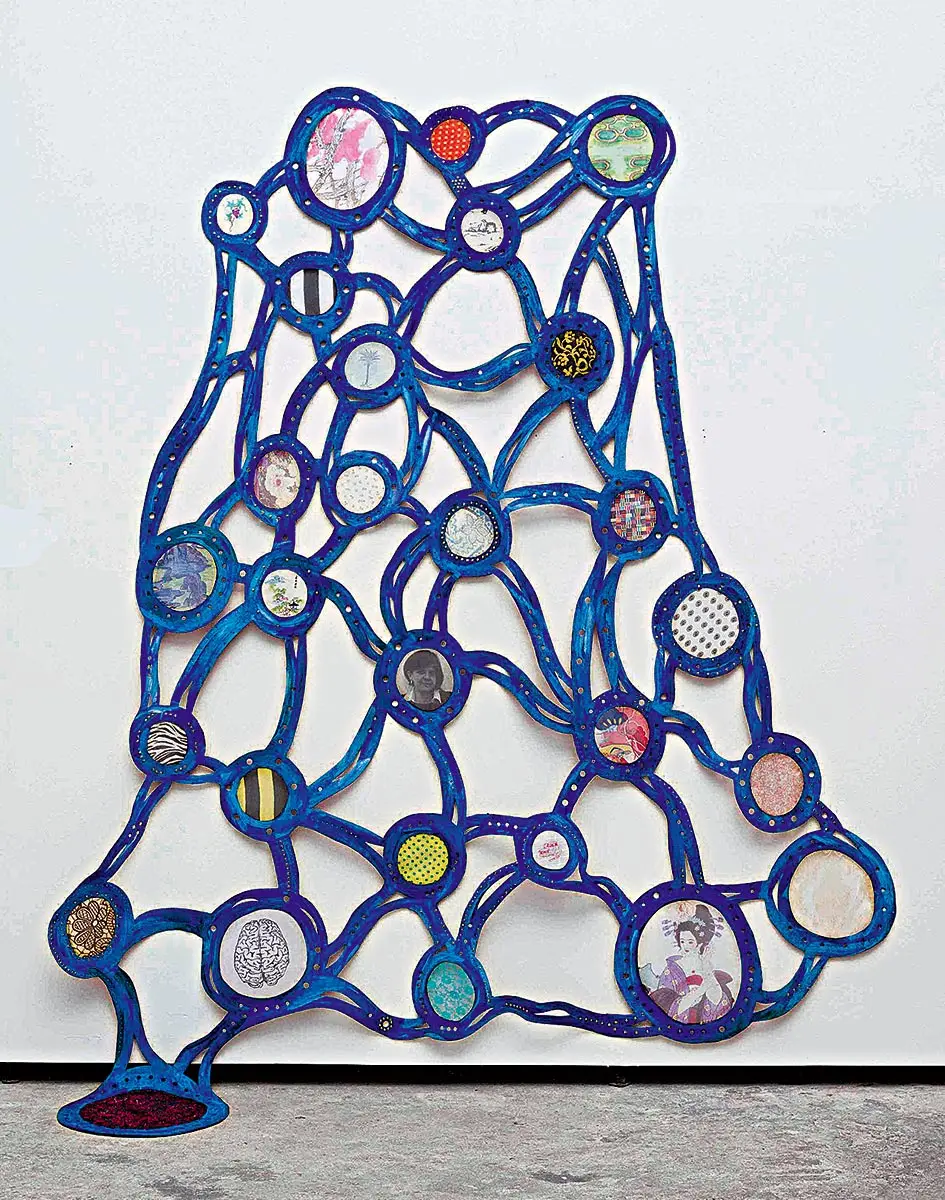
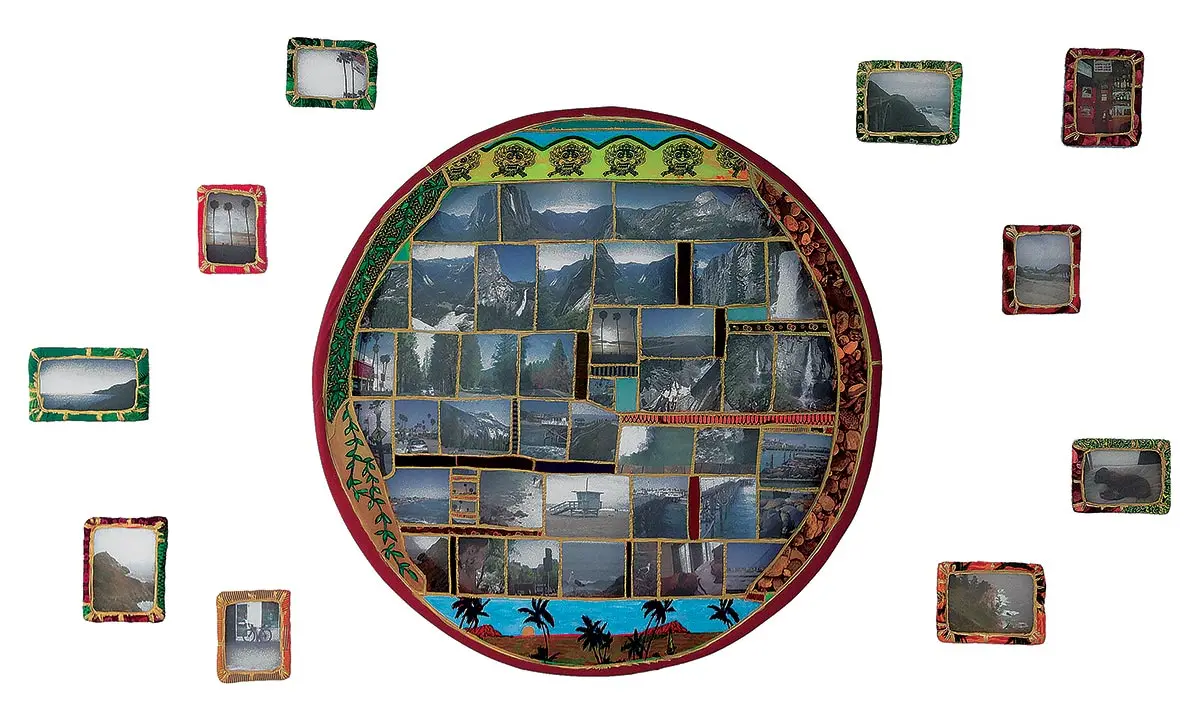
Born in São Paulo in 1961, Leda Catunda first stood out for her special talent among the artists of the effervescent 1980s generation. She has been devoted for decades now to the construction of a unique body of work, marked above all by the profusion of materials, including drapery and plastic, and by the use of such diverse techniques as collage, sewing, and photography. It can also be said that there is a “poetics of softness” in her work. The volumetric results of the materials used to create a domain beyond painting; are painting-objects. Figurative images taken from photographs and drawings are enveloped in colorful draperies and produce landscapes. Characterized by their softness and rounded organic shapes, some seem to “melt”, especially when they jut out from the wall and spill and scatter over the floor.
Revisiting the artist’s career is the best way to ascertain her relevance. Catunda studied at the Armando Álvares Penteado Foundation (FAAP, in its Portuguese acronym), at a time when the Brazilian arts circuit was rather indifferent to contemporary artists. Since many museums and galleries preferred to exhibit the big names of modernism, art schools became the key points of reference for emerging art. The faculty at FAAP, which along with the ECA-USP was one of the key such institutions, included important figures Regina Silveira, Nelson Leirner, and Júlio Plaza (1938-2003), artists from the controversial 1960s and 1970s cohort who sought to undermine the institutionalization of painting as a preeminent language, proposing new concepts: the deconstruction of the image, the use of different supports, etc.
While still a student, Catunda created bold mixed-technique works with very interesting results. Among her earliest creations were compositions based on photographs of TV images, used as the starting point for lithographs, paintings, and videotexts.
The exhibition Como Vai Você, Geração 80? (How Are You Doing, 1980s Generation?) at the Escola de Artes Visuais (EAV- Parque Lage) in Rio de Janeiro, in 1984, sealed Leda Catunda’s success. Featuring more than one hundred artists (many of them from the EAV and from the FAAP), the show proposed a view of the new paths opened by the 1980s cohort. Some of its characteristics became established both for critics and for the art market in general: the commitment with a return to painting; the use of large formats (often without frame); the importance of gestural brushstrokes; the use of traditionally incompatible colors; the exploration of new materials; and a brutalist finish. Among their influences were German neo-Expressionism (which also emerged in the 1980s and proposed a gestural, forceful art) and its Italian counterpart, the Transavantgarde.
In subsequent decades, a strong auteurist characteristic continued to be present in Leda Catunda’s work, but some of her formal preferences shifted. Instead of the descriptive, cartoonish style, she favored in the 1980s, the artist sought to create geometric compositions that were “cleaner” in terms of color, figuration, and texture. In her search for greater levels of abstraction, she became interested in structural elements, the play of various color intensities, and modulations.
In the current exhibition, Catunda once again stoked her audience’s curiosity and tactile sensations. She presented agreeable, sensuous shapes that, made in malleable and lightweight materials, often referred to as natural elements. The artist remains faithful to her quest, investigating issues that are essential to her art: the appropriation of images to critique consumerism in capitalist society; an ironic approach to that society’s everyday archetypes; the courageous use of heterodox materials; the exploration of the frontier between painting and objects.
* Photography: Eduardo Ortega.
ALESSANDRA SIMÕES
National Association of Art Critics (ABCA), International Association of Art Critics (AICA).