
Alberto Barral: My first question is about how you developed your style, which is very unique in the way in which it opens a terrain between sculpture and painting.
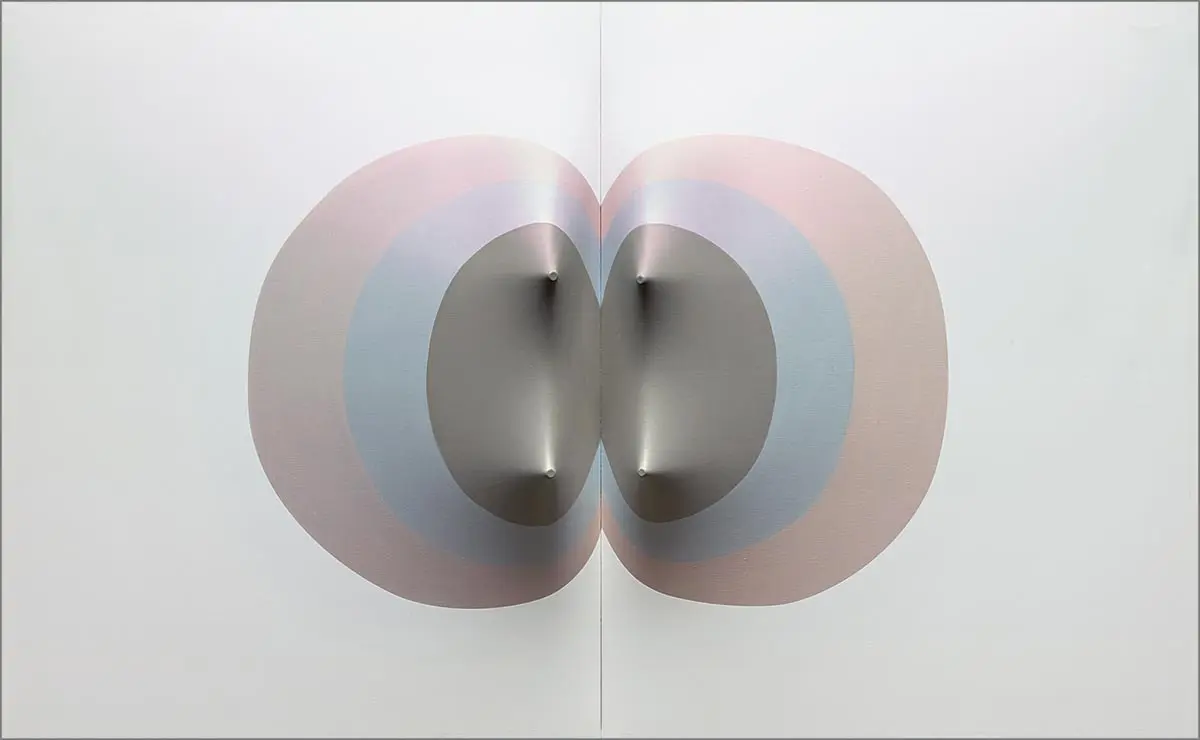
Zilia Sánchez: I began with flatness and continued with another dimension that resembles motion; it was a restless exploration, a quest for change. It went like this: I was on a rooftop terrace and saw that a bed sheet hung out to dry among the clothes had been pushed by the wind over some wood, covering it. I was half asleep, in that halfway zone of awareness, and the movement of the fabric over the wood, which could have seemed accidental, instead looked to me as though it had some meaningful forms. Later, as I was testing how to arrange canvas on a wood frame that would give it shape, I began to explore how a balance can be established between two shapes, two shapes sharing their space, complementing one another and creating a balance in the composition.
Alberto Barral: That image of the bed sheet in the wind makes me think of a scene in One Hundred Years of Solitude where Remedios the Beauty ascends to the heavens between sheets that take her unexpectedly.
Zilia Sánchez: I’ve read the book, but I don’t remember the scene. The unexpected aspect of it does connect though, that’s how I remember how I began to think about those shapes on the basis of that idea.
This idea of the harmony of form, or of two shapes that complement one another, also comes from art school. The balance of the body is what I most remember learning in art school. I compose the balance of the body in my work; I always did that instinctively, one shape that coexists with another.
Alberto Barral: That idea of space as a tension/balance between two forms was always important in art school. How did it develop?
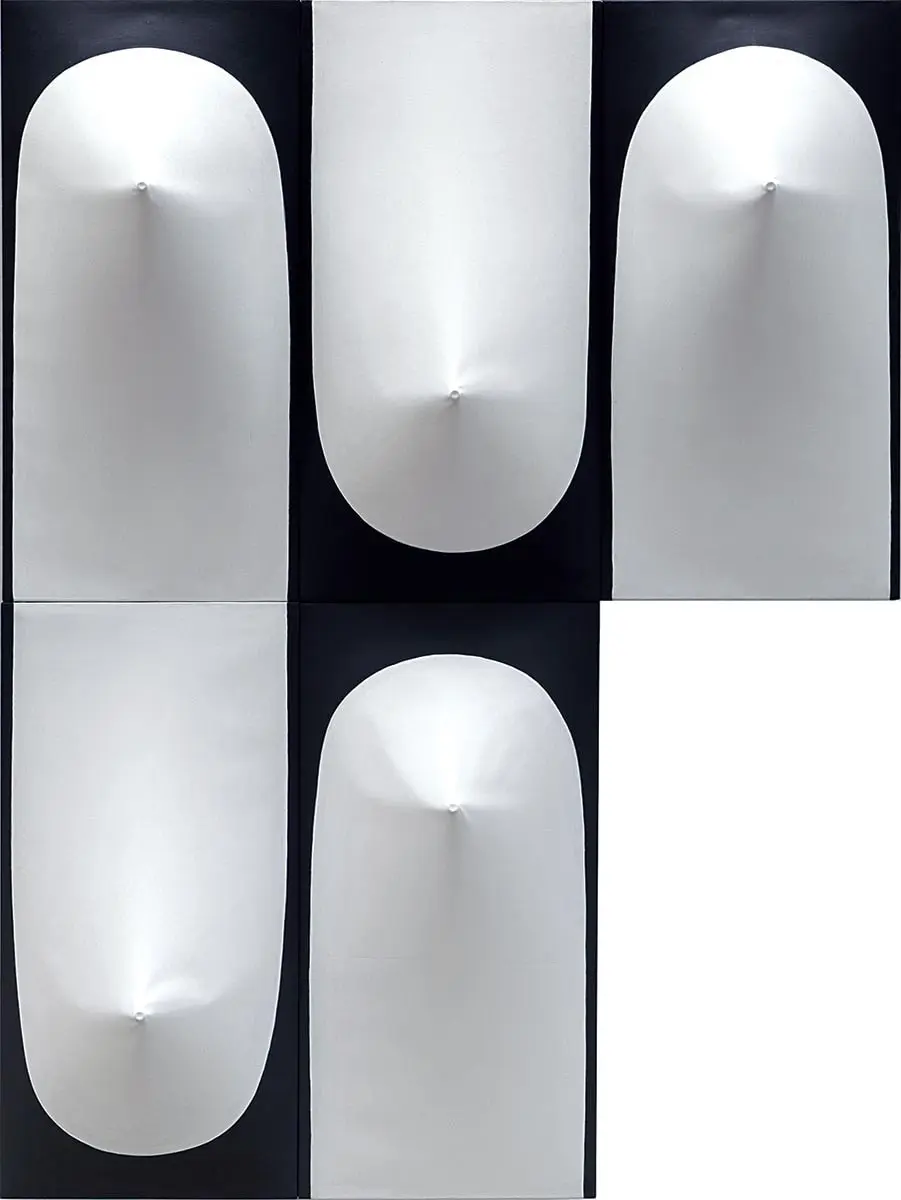
Zilia Sánchez: Everything that you learn finds an answer later. Sometimes you do something that you don’t fully understand, and then someone comes and tells you what it is. Severo Sarduy told me that I was erotic, but I didn’t see that in my work. Much later, when I began teaching art in a school, I brought one of my works to see what the children would find in its shapes. I asked, what is this? And several of them answered: “boobies!” said the first one, but they all saw the shape of a woman’s breast. Sarduy, a poet, woke me up, because one sometimes does things as if asleep.
Alberto Barral: This reference you again make to dreams as part of your work is, I think, a very important feature in Latin American art, especially in literature. It brings to mind Sor Juana Inés de la Cruz’s Primero Sueño (First Dream) and the importance it has in her oeuvre.
Zilia Sánchez: Yes, I even have that book, which someone gave me as a gift and I liked very much. The interval between one thing and the other is what I find interesting, that space most difficult to bring into focus, a kind of boundary.
I was interested in how to express the body as a shape in space, the idea of opening up a space, but not in connection to a specific representation.
Alberto Barral: What is the meaning of the shapes in your paintings, which are like a signature of yours? These are very specific shapes.
Zilia Sánchez: I was searching for balance. Although Sarduy always told me that my work was erotic, I was after a harmony between two forces. I compose the balance of the body. Instinctively, I created a shape that shares its balance with another. The balance of the body is what I most remember from art school, and this quest began early on in my career.
One thing leads to the next, and I feel the need to project that balance of the body into my work. Naturally, the body most familiar to me is the female body, and my work assimilates this, which is what seemed erotic to Sarduy but for me was instinctive, a natural shape of my expression, of how I see.
Alberto Barral: Was the classical era significant in your evolution? I ask because some of your works have titles like Amazonas y troyanas (Amazons and Trojan Women), for example.
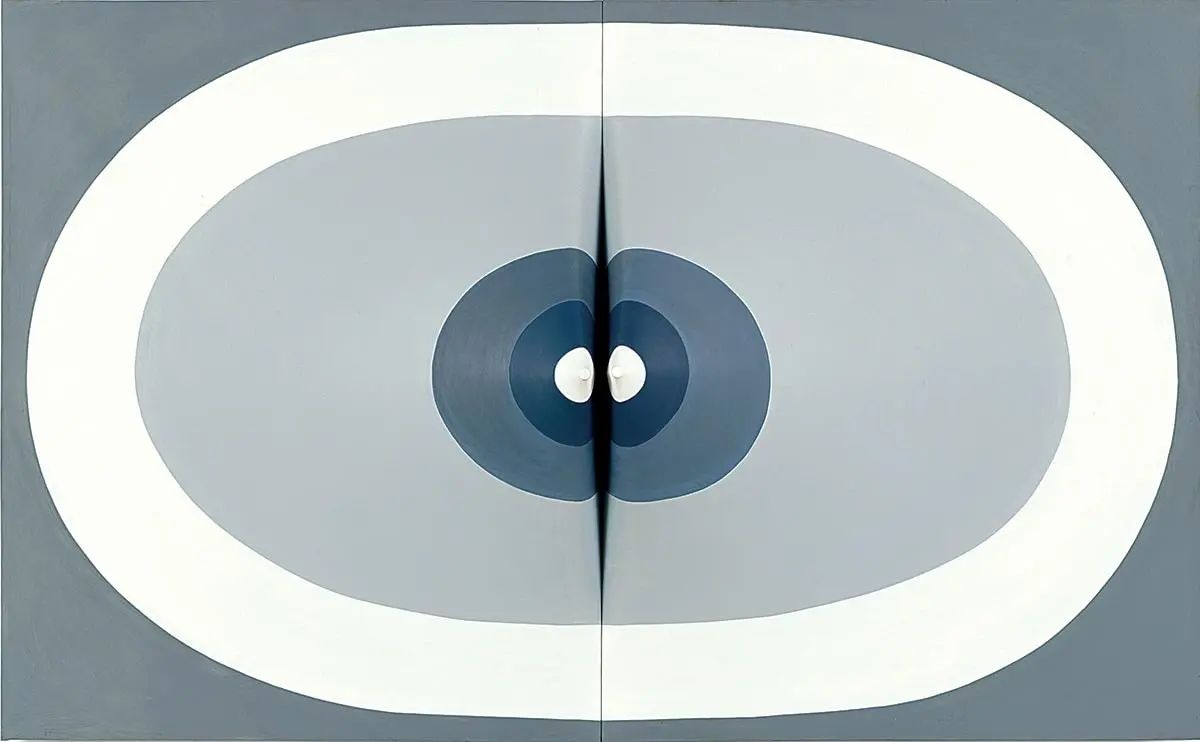
Zilia Sánchez: I was very intrigued by the idea of all-female armies, the possibility that women had created their own horizon of strength. About the Amazons, it was said that they removed their breasts to become better archers.
When I made my Amazonas y troyanas, I sensed them standing shoulder-to-shoulder, like an army of strengthened beauty, and it was a different vision of women. You didn’t find that representation either in art or in real life; I felt it was important, I sensed that strength. A heroic, strong woman that nevertheless remained a woman.
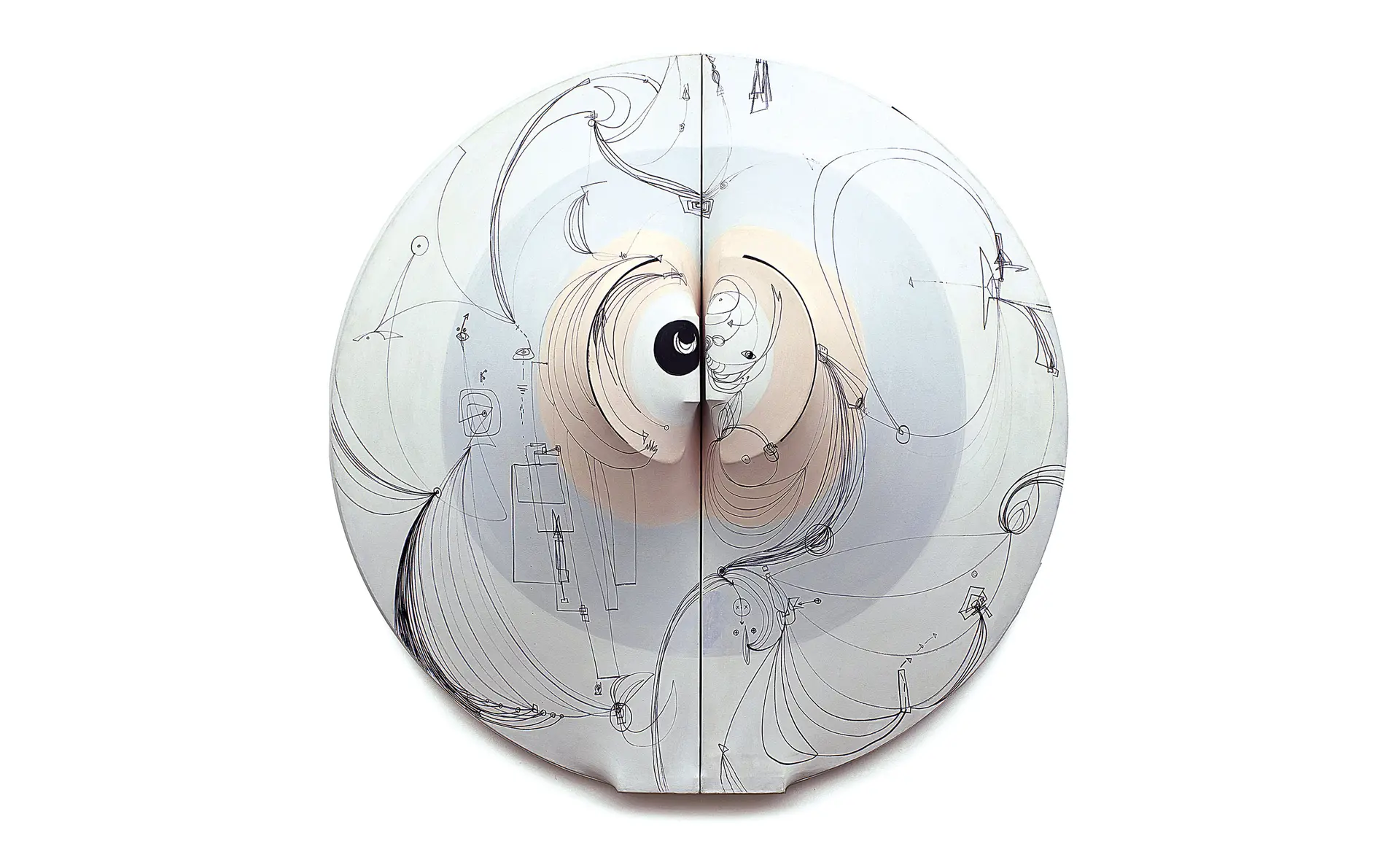
Alberto Barral: Your work Tatuaje lunar (Lunar Tattoo) differs from what came later, but the shapes are already present in it. I wanted to ask about those drawings that are like graffiti, or calligraphy, and seem to float over the white, circular piece.
Zilia Sánchez: I love the Moon. As a child, I wanted to see it all the time; my mother sang me a song about the Moon, and when I cried at night, she carried me to the window to look at it, and that quieted me down immediately.
In Spanish, the word lunar also means a mole or a birthmark, nature’s drawing on the body. When I was working on Tatuaje lunar, I created what goes on top of the original white color with my eyes closed, moving my arm in a circle, with that rhythm of the circle that is also an expression of the shape of the Moon, a white circle.
I see the canvas as a skin; like a tattoo, it contains remembrances of the past: here goes an eye I painted when I was informed of the birth of my nephew; the news came when I was working on this painting, and there it is. You can also see a shape that is the map of Cuba, the way the island would look if seen from an airplane. It is a trip; they say that islands have great power.
Alberto Barral: Power in the religious sense, as in santería?
Zilia Sánchez: Yes, the power of the water that surrounds them. This applies not only to Cuba; islands generate powerful nations. Here I placed the island again, another trip; this forms a kind of map of what happened then, but none of it was guided by instruments or measurements. I didn’t use tools to make this work, just that circular rhythm to place all that is a tattoo or a lunar on the surface.
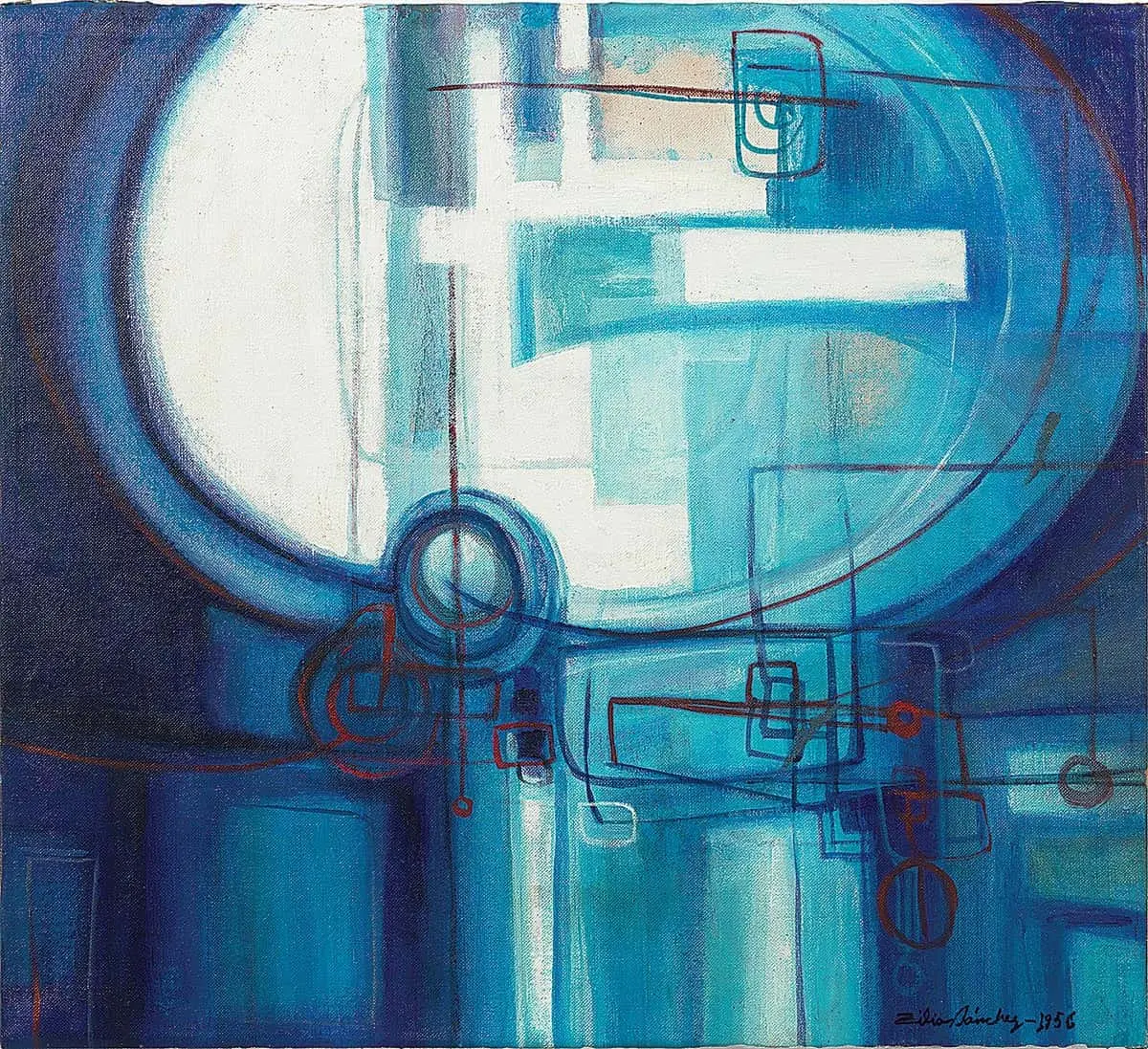
Later I developed color and shapes more in my work; color is very important for me, especially its hue. I like serene colors rather than strong contrasts; exaggerations don’t sit well with me.
Alberto Barral: Between color and form, what interests you the most? Which is more important in your work?
Zilia Sánchez: What is important in the work of art is for color and form to get along, to organize and soothe one another.
Primary colors are mortifying colors. Blue is a cold color, and I favor it in many works, but my favorite is a pink hue, a kind of old pink; to produce it I mix red, heavy amounts of white, blue (just a bit), or also a touch of black. I like to live more in a neutral zone with color: neither shouting nor whispering too much. Neutrality as harmony is a strong presence in my work.
Alberto Barral: What artist or artists have influenced or inspired your work?
Zilia Sánchez: I knew Amelia Peláez very well. I loved her work; I also admired Loló Soldevilla and Carmen Herrera. They were women and made art; this is very important, although I don’t say it as a feminist discourse. Doing things has always been much more difficult for women, and this is also true in art, and I admired those who were already on that path.
I attended the classes that Amelia Peláez used to give in the ceramics workshop in Santiago de las Vegas, when I was in Cuba. She was very precise, delicate, very serene. Precise was a word she used often when she spoke about art. She was very exact, marvelous, and I wanted to be like that, to have my work evoke that.
Alberto Barral: What do you admire the most in a work of art?
Zilia Sánchez: Whatever is well done and calm. I had teachers who seemed like dictators for the way they spoke very loudly and in an authoritarian way. None of that is necessary.
Good communication does not need to be forced or imposed, it possesses a natural elegance that is transmitted. The same can be said about the work of art; neutrality as harmony is a good, solid basis for making it and continuing to make it.
* All Images: ©Zilia Sánchez and Courtesy Galerie Lelong, New York.
ALBERTO BARRAL
Corresponding Editor ArtNexus, New York.