
“I don’t want to fill the empty silence of the materials with noise. I don’t want to betray it with words. The industry is doing everything. Without the hands, with the hands of men.” So ends the introduction to this show, written by the artist. This declaration of intent accompanies our visit as a floating placard in the middle of the warehouse-like exhibition space of the Ruth Benzacar Gallery, a point of reference for contemporary art in Buenos Aires.
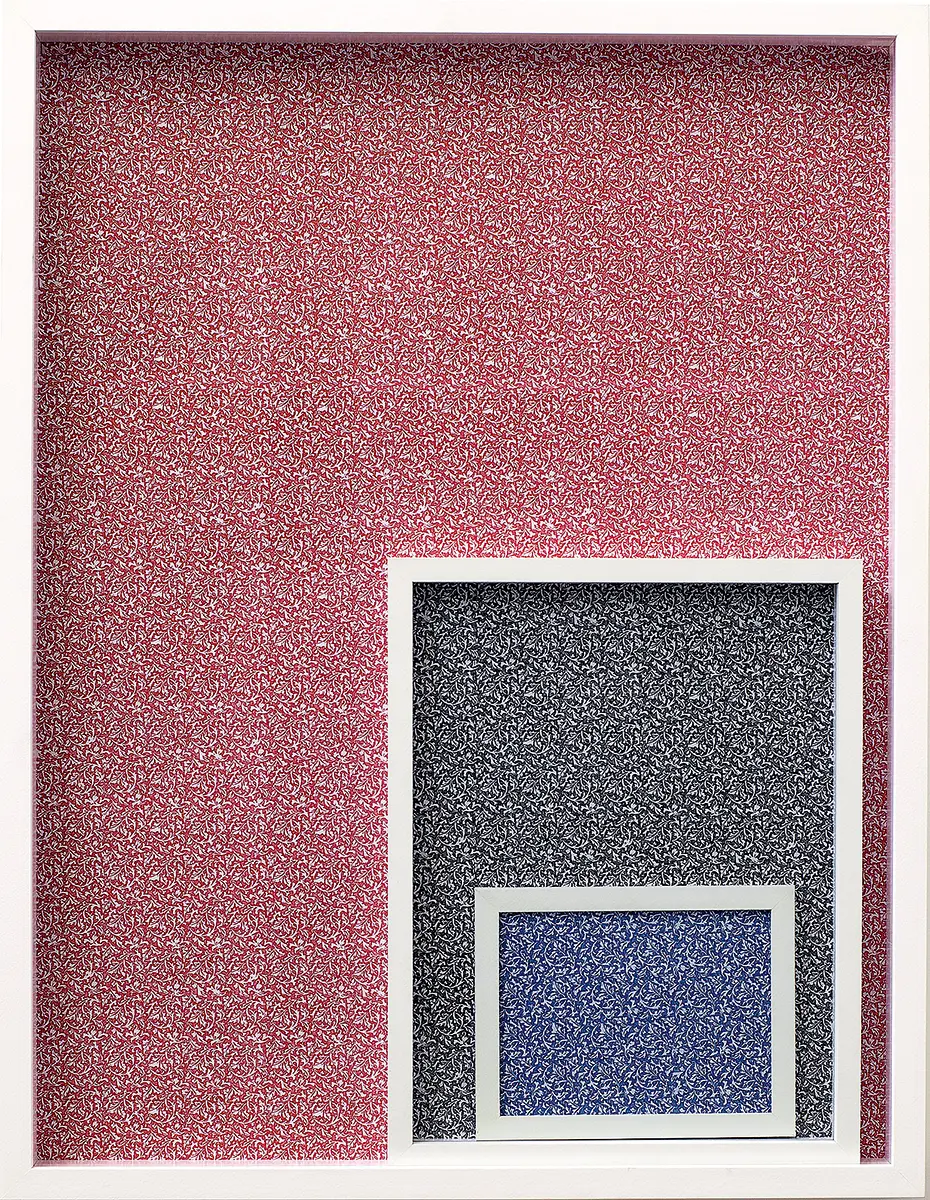
Daniel Joglar (1966, Mar del Plata) arranges his materials in the empty space with no word support; no titles or references accompany the artworks, as the artist refuses to betray the silence that permeates our encounter with them from the start. Sneaking words in becoming, then, a challenge and an act of disobedience.
Joglar likes to refer to his work as an essay. But the objects don’t seem to be there as the result of the full development of ideas; we are denied, felicitously, a view of their path and their course.
As César Aira notes in reference to contemporary art, there are no stages, just a single solitary plane of flattened time. In the exhibition space, under an intense, uniform white light, all shadows have dissipated and everything is in plain view, devoid of secrets and contrasts. It is all evidence, with clear-cut outlines and flat, polished, impeccable surfaces. Bare in the extreme, the objects seem to have gobbled up the very world that each is intended to salvage, and they have given shape to their own, furtive system. The resulting environment tips toward the viewers and leaves them exposed. A number of questions emerge: What sets us in relation to this system? What lies behind the obvious and precludes the history of the stages of a process from being revealed?
There is a dose—the amount is difficult to determine—of what Aira calls the “not made,” which is inaccessible from the specific plane where the work of art takes place, its here and now in the final place of exhibition. It seems that the “made,” the produced, abolishes all possibility of experience. But it is precisely there that the energy of the “not made” and the not said appears in order to open up an empty space, the opportunity to participate in this essay. Under that general light, with no nuance or differentiation, no genre can be identified: this is neither comedy nor tragedy. We must forget binary opposites and extremes in order to un-learn and quiet the din of all we have acquired, the entire world—this is to say, to make a silence, to meditate. To abandon the utilitarian aspect of the material and the noise of information, and also to desist from the search for known origins. In the sensation of a continuous present, the promise remains a state of consciousness without nooks or crannies for memory, without room for History.
The artist’s intentions seem to operate on the subtle basis of the minimum effort. The non-actuated, which could suggest the absence of manual intervention, stands at a great distance from the ready-made and the found object. The selection and the manipulation of these everyday elements are, fortunately, not directed in any way; our gaze is not pointed towards anything in particular. Such indications are absent, despite the familiarity of the perceived forms.
The show was accompanied by a series of activities, actions, and workshops. There was also a Tea Ceremony event directed by the artist, his voice barely audible accompanying a ritual that did not unfold as would have been culturally expected. Enacting the tea-making ceremony the way the artist’s aunt used to do it was, it seems, to deviate from Japanese culture. But everything can be in everything else: the reference to a moment in one’s personal history may contain, without contradiction, that which seems not to belong to that life path.
In the event that closed the exhibition, the artist conversed with critic Juan Laxagueborde, who identifies art as that which is incommunicable: “if you can explain it to me, don’t do it,” he says.
If there is anything native to Daniel Joglar’s productions, it is the latent state of what cannot be named.
VIVIANA SAAVEDRA