
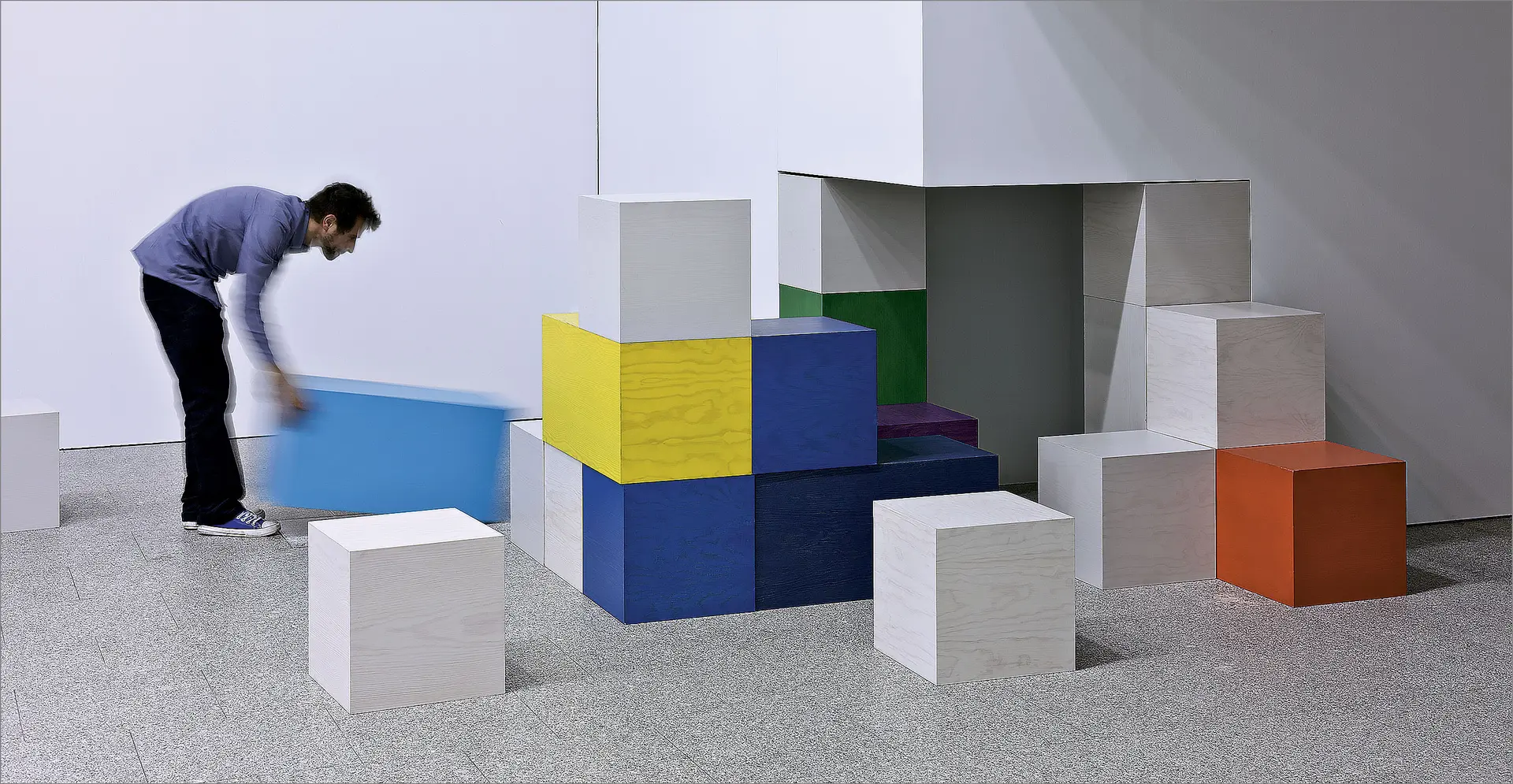
Today, we would not seek such a thing as originality in art. We have traveled so many paths and rested on so many trails that the very idea has become inconceivable. Yet, when confronted with the situations that Nicolás Paris proposes, it comes to me, like a flash, that I am in front of a newborn universe, inhabiting a micro-world formed by instances of unprecedented perceptions.
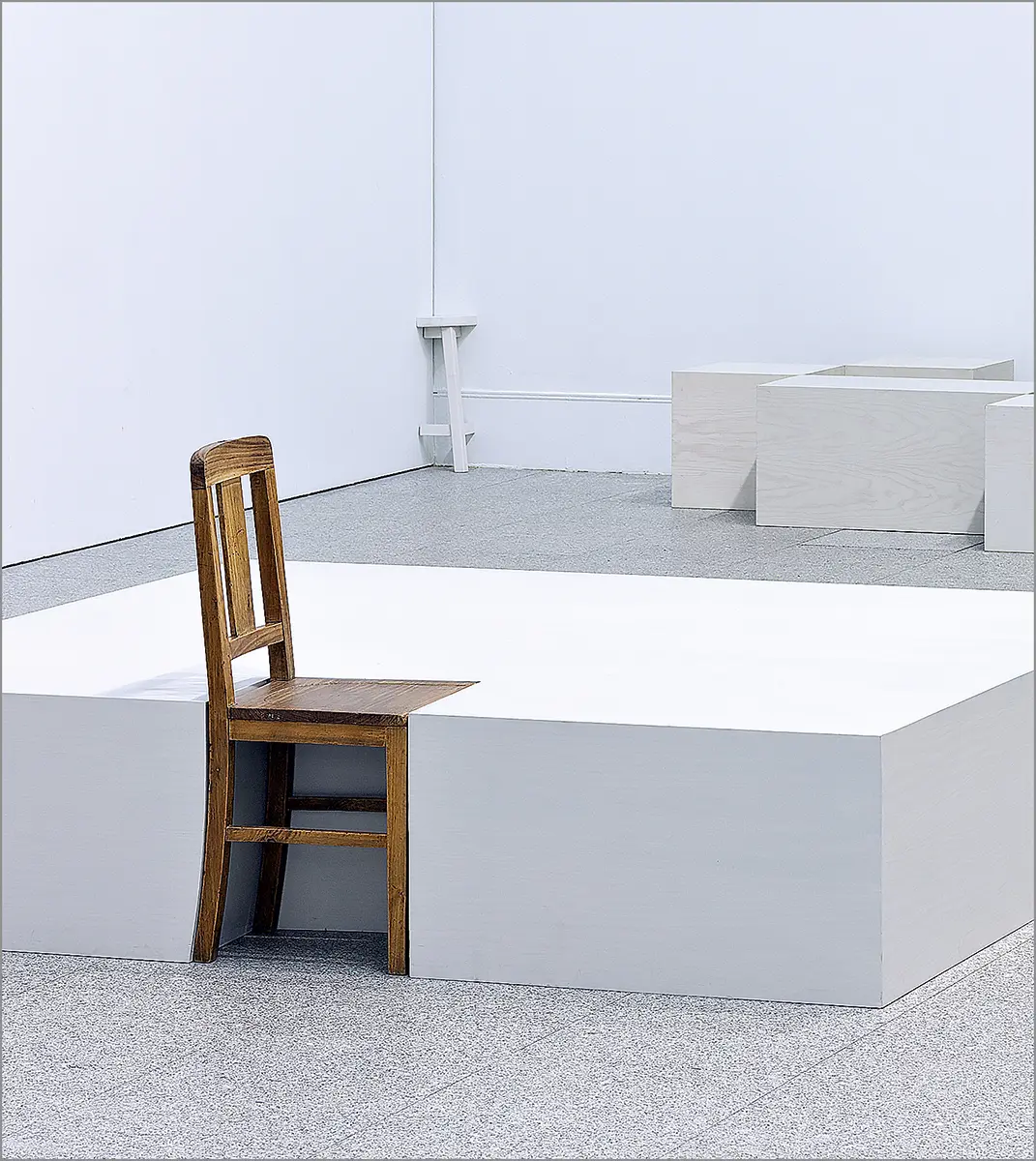
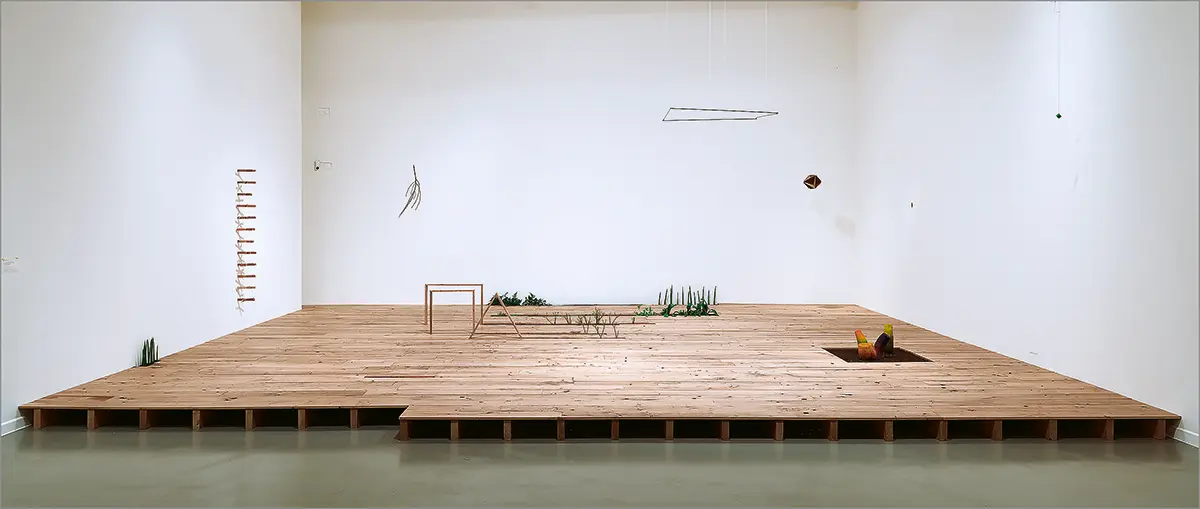
Nicolás Paris walks around the Ejercicios para sembrar relámpagos (Exercises for Sowing Lightning Bolts) at the Caixa Fórum gallery in Barcelona with a wide smile on his face, inviting dialog. He is an artist who intuits the invisible geometry that takes place between things and people—that empty space that is a hole, which he calls architecture. “The issue is to perceive an architecture between us,” he says. He searches for that perception through dialog, through shared time. Then, he explains, in order to fill the spaces between us, we need to invent new ways of being together.
Paris’ projects are pure speculations, as he would like to call them; there are no clear goals, one never knows how the exhibition will end, there is no concept, there is only an experience. An experience that even the artist himself might not witness: “The fact that there are as many experiences as viewers give me hope.”
In this invisible architecture, Paris seeks to create polyhedral or many-faced situations that make it possible to inhabit time in different dimensions. To occupy time until it stops. “That is what I am after.” In truth, nothing has occurred. An instance of perception has opened up; we have seen a phenomenon take place, and it is now gone. The fact is that we don’t really know which perceptions are unfolding. “For me, art is something that has not happened.” It is like creating an erratic microcosm that is part of an unstable totality. To that end, Nicolás Paris says, it is indispensable “to trust the viewer, to speak not in categorical terms but in ellipses, and to have the viewer complete the sentence.”
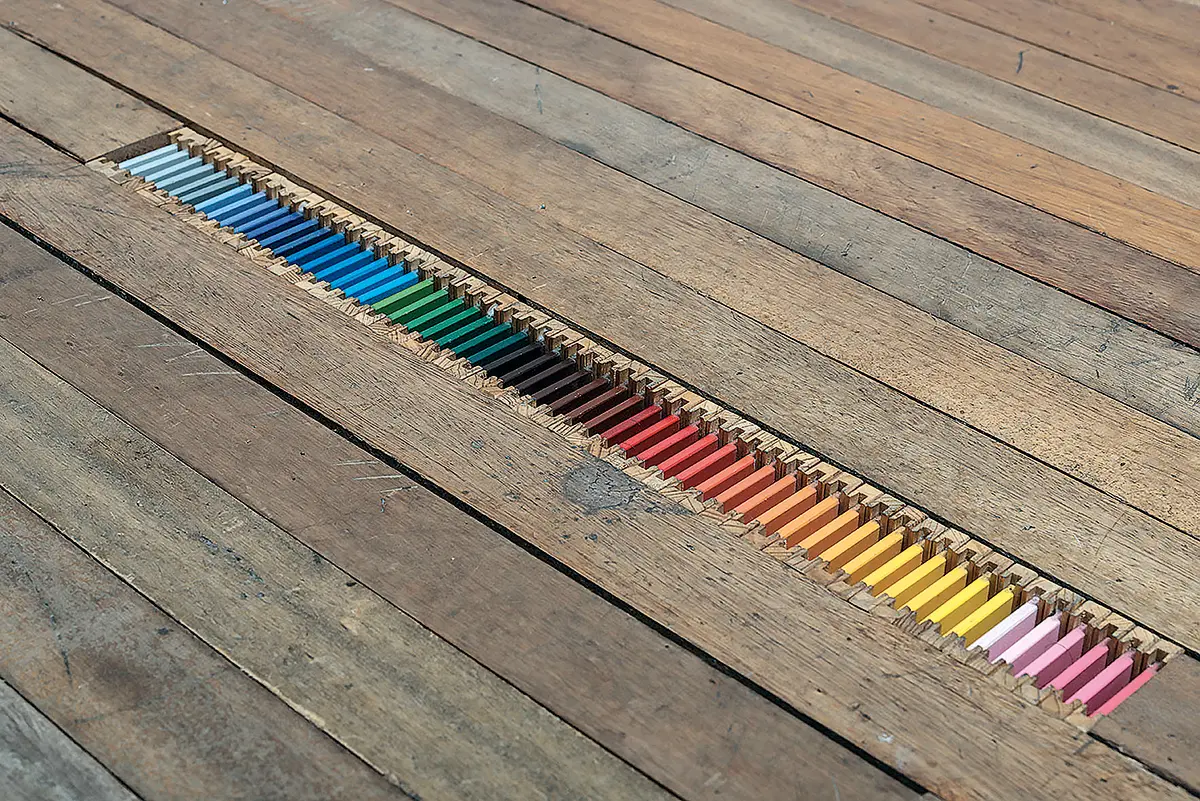
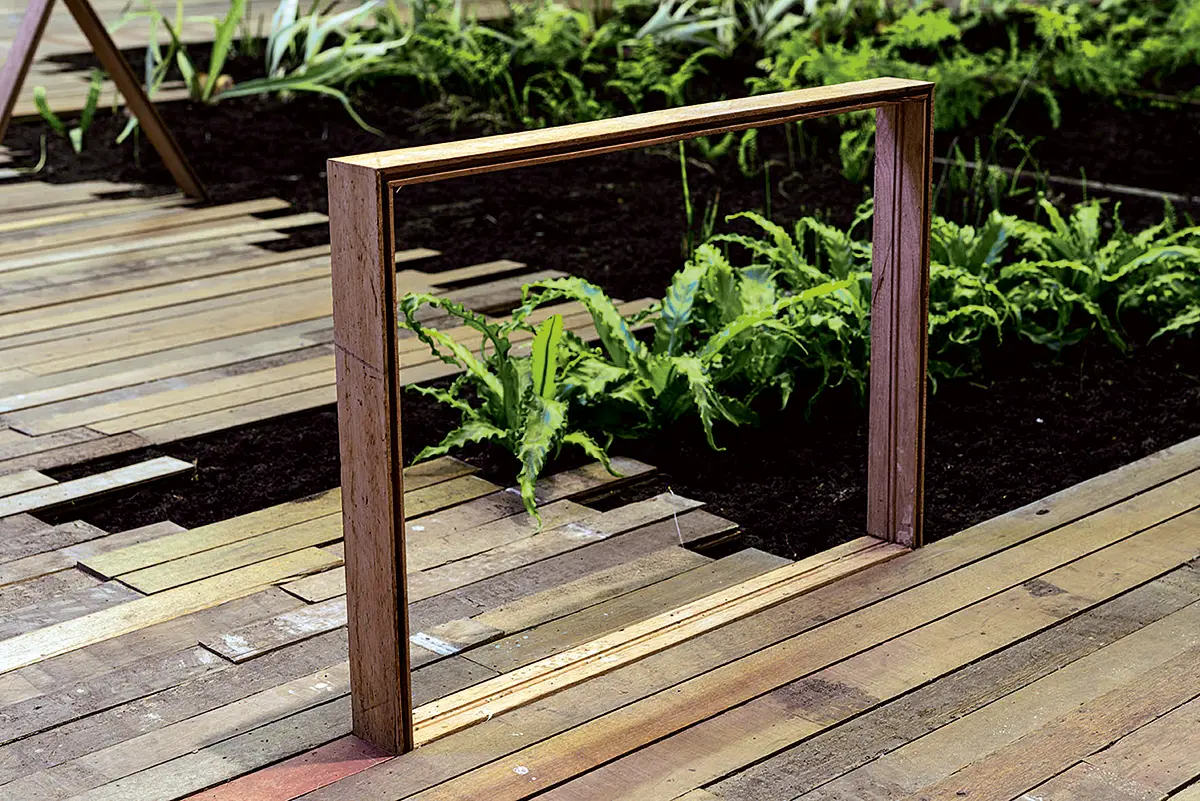
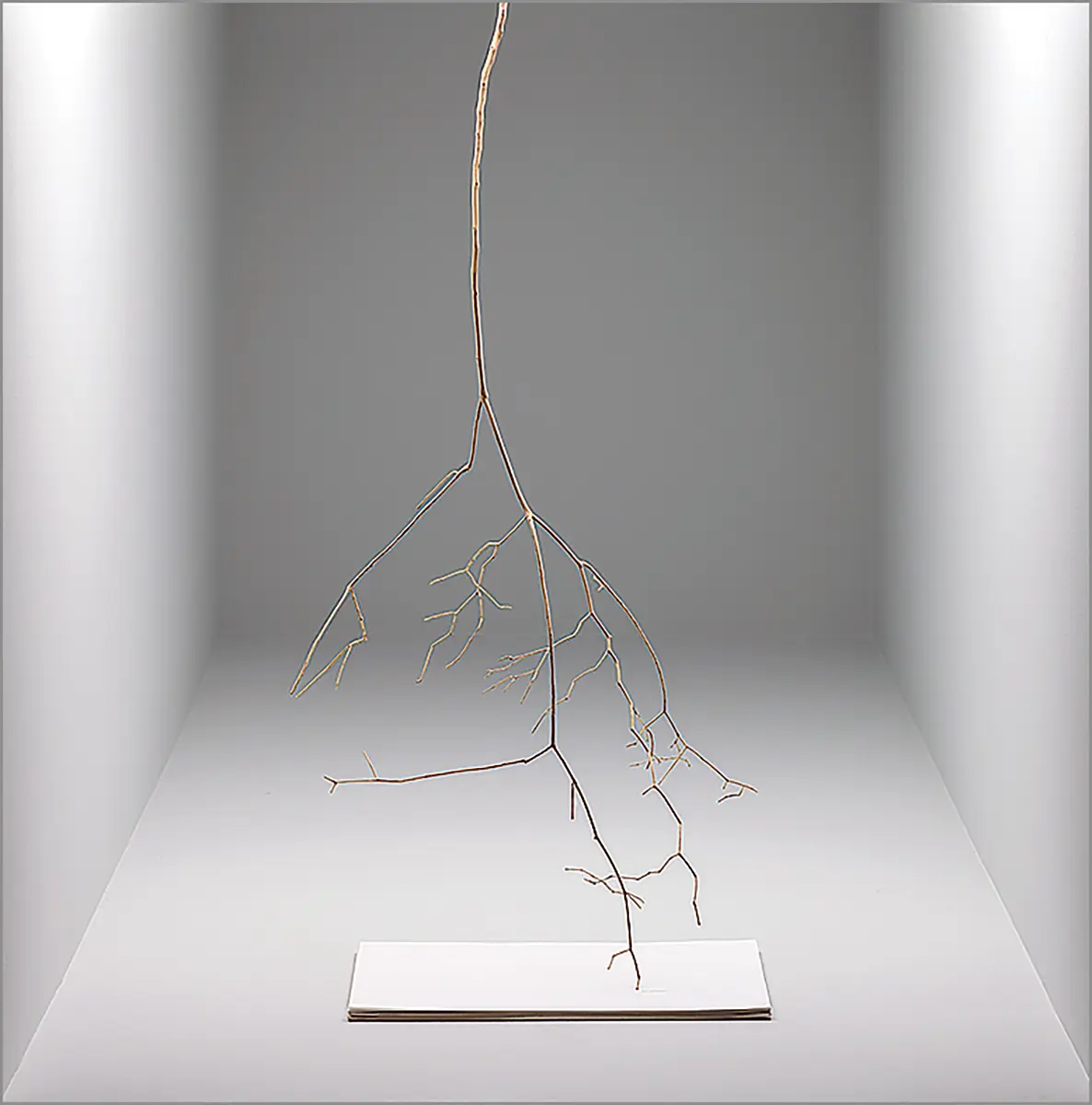
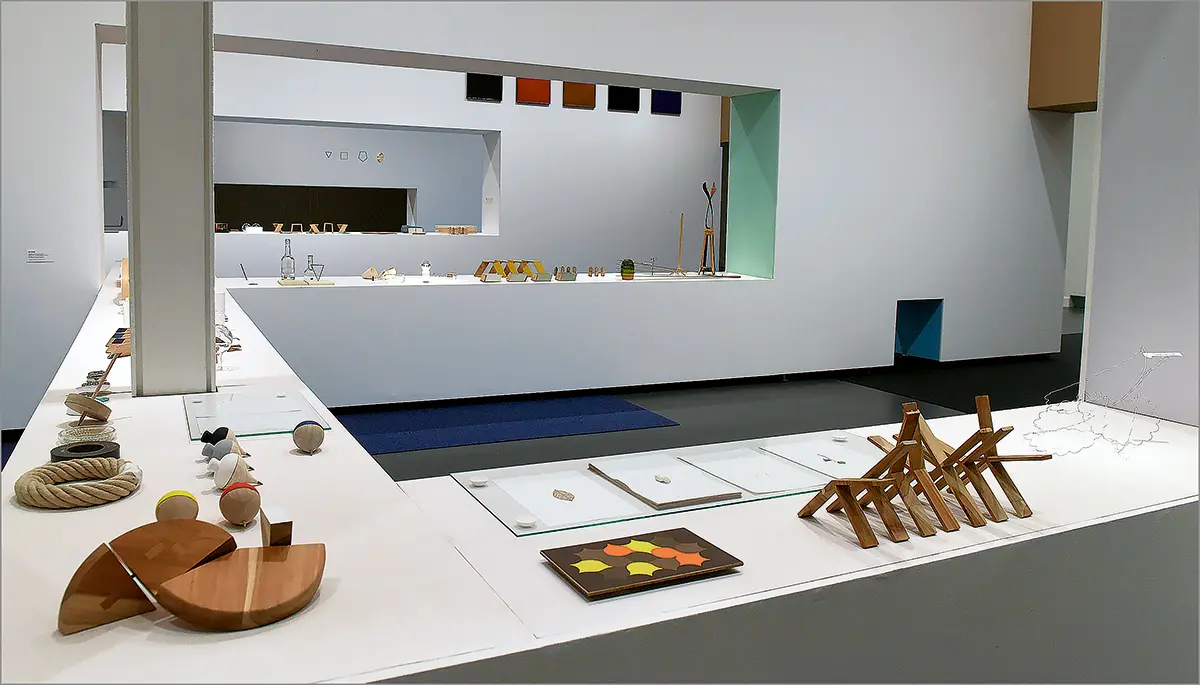
So, the strategy is now to seek that polyhedral geometry, that many-faced situation, in everything that exists between us. Paris uses cuts on plants in order to uncover their geometrical interior, a found object dissected into parts (which we use daily in our homes), branches that describe multi-dimensional drawings in the air, small multiform leaves, the orifices of the parts of a dryer, the filters resembling hexagonal beehives that we find in the ducts of a fan, the octagonal shapes inside a light bulb box, “or parts for a pedagogical exercise.”
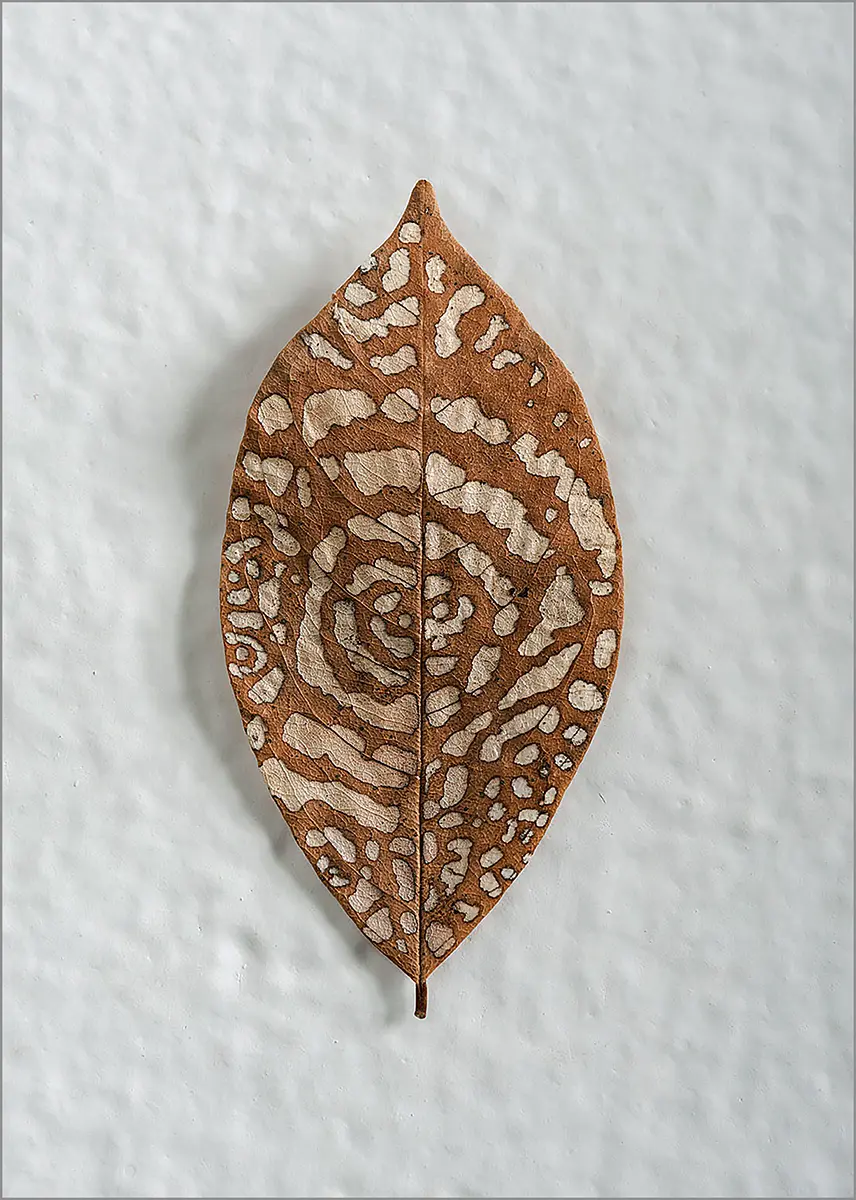
Another one of Paris’ basic strategies becomes clear here: relatedness and dialog (between people, animals, birds, clouds, plants, light, rumors), all based on mutual learning of other people’s perceptions. Like an unstable zone where we learn new ways to interconnect. Because we will learn by unlearning what we already know. This is why there are no masters or apprentices, only spaces or exchanges. Manual work, wordplay, scissors-trimmed drawings, paper foldouts, the building of objects that become disarticulated and seem not to serve a specific purpose, the invention of many angles in the figures, playing at making the hidden dimensions and the spaces that lurk in the folds visible.
When I visited Nicolás Paris in his studio, he took a random paper and inscribed a dot on the sheet’s obverse and another one on its reverse. Then he folded the paper accordion-like, making small creases until those two separate dots became one. His entire face beamed a smile as he said: “Time stopped, and now there is no longer a space between us.” In this way, we have traversed several far-apart dimensions in the immense multiple planes of the universe. What took place there remained in the rumor, in the drawings tracing an abstract line in space.
He participated in the latest Havana Biennial with another strategy he favors, already set in motion in 2012 during the New Museum Triennial in New York. He titled his participation La revolución es mental o ejercicios por demostración (Revolution is Mental, or Exercises by Demonstration). He talked with teachers and activists at the Martin Luther King People’s Education Center and other schools, spending long hours with the students and their instructors, the employees, and others he encountered at each site. He also found an abandoned garden connected to these institutions, where children played with their marbles. Together they gradually fixed the garden as they drew glass geometries between the colorful marbles. From all of this, all that remained was the hope that the random encounter prompted a deliberate, unhurried shift in each participant’s behavior and ideas. Paris says it was wonderful for him to be in Havana working in the construction of places where art is defined by small victories or random, imperceptible micro-events that leave no trace, not even in a technical card on a Biennial location.
They made their mental revolution through reading and writing exercises, workshops, paper cutouts or foldouts, scissors, clips, color pencils, chalks, gardening practices, wood, found objects, paint, bird feed, geometry books, bread, and time. And let us not forget the glass marbles.
In Havana, Paris also worked with bakers, as he has done on other occasions over the past 17 years. At one point, he became curious about the history of the first union ever formed, back in the Middle Ages. It was a group of bakers that self-governed their craft and worked with whomever they wanted, claiming independence from the feudal lords: the earliest artisan guild. They were the compagnon du devoir. They passed on their knowledge by sharing long workdays with apprentices who traveled on foot along a pre-established chain of baker’s shops all across France. With the experience gained after completing the route, the apprentices obtained their Master’s baton. Afterward, a friend in Argentina told Paris about the practice of the “bakers by conviction,” a group of anarchists active in the early Twentieth Century who created bread and pastries and gave them such names as receipt and watchman, as a form of everyday activism among consumers.
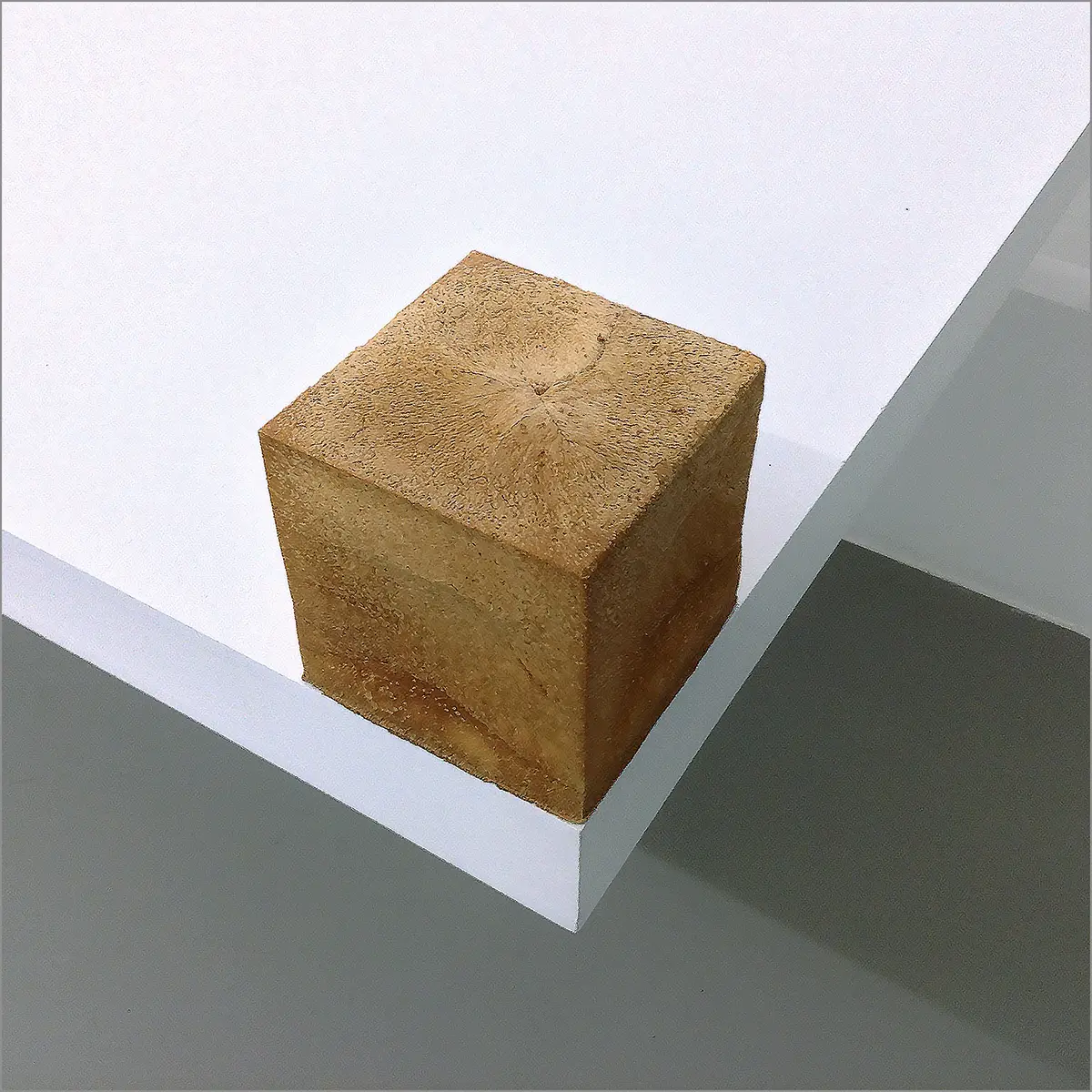
Their actions did not survive the passage of time, although in Buenos Aires one can still find pastries with the names the anarchists gave them. However, their work methods did endure, Nicolás Paris says, “like something very subtle that we consume, the most poetic action one can do.” This is, indeed, one of Paris’ favorite strategies, which he has used in almost every city he visits. Once, he was able to make, working with a baker, a perfect 14-centimeter cube that they named Control de masas (Mass Control). His best encounter with a baker happened in Paris, France, even though they didn’t have a common language. What made him happy was to confirm that learning truly depends on the relationships that are built, “on those geometries that so interest me.”
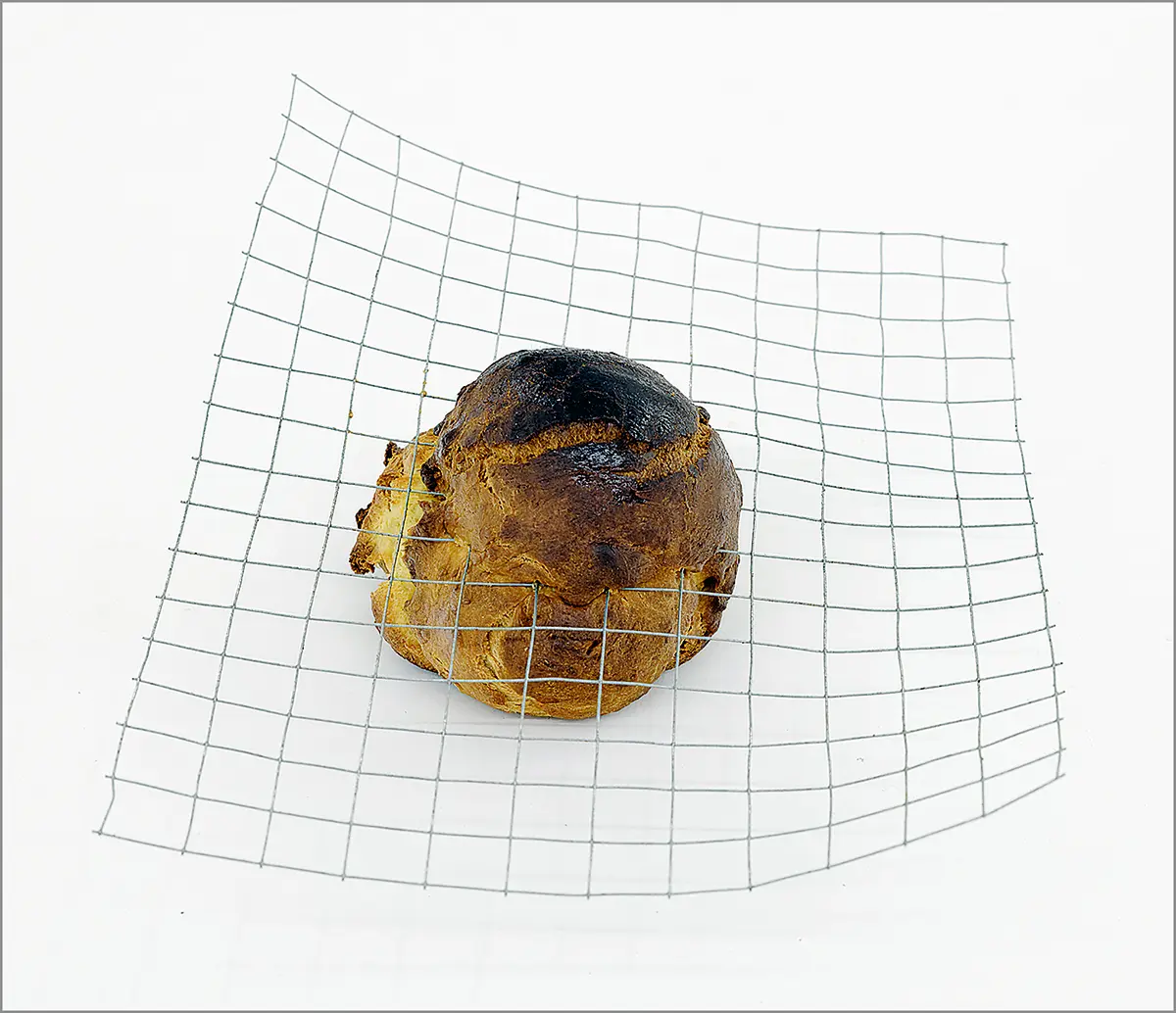
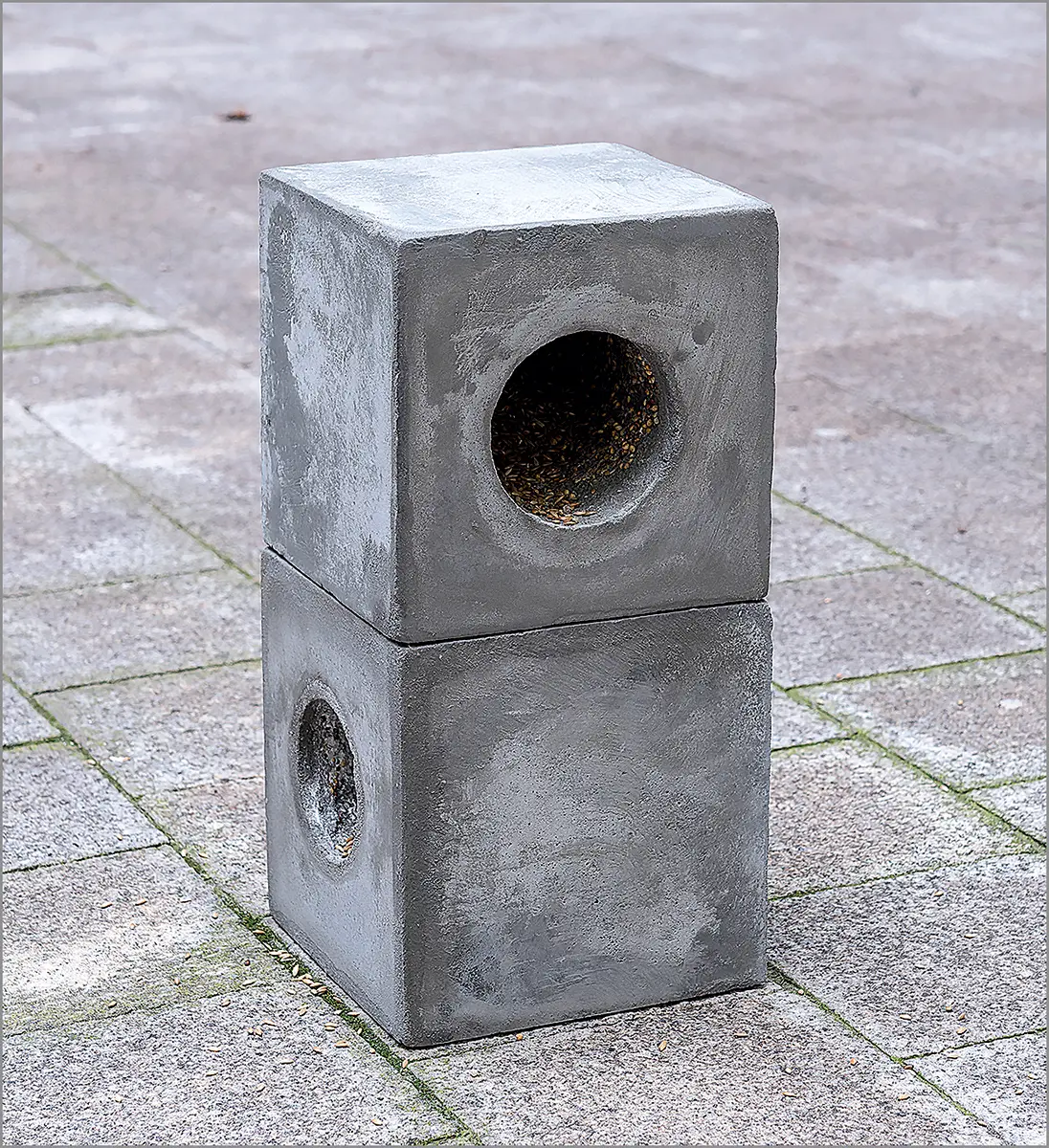
Paris uses these delicious pastries to build sculptures that he then involves in his environments and montages. Two years ago I traveled to Madrid to meet him. We were preparing together a show at Elba Benítez’s gallery (which, along with a long accompaniment at Luisa Strina Gallery, has supported Paris’ presence in the art world even though his immaterial processes might seem strange in that context). When I arrived in Madrid, I found Nicolás Paris with a local neighborhood baker. They had been baking Control de masas cubes for a month. In the interior courtyard of the complex where the gallery is located, he attempted to invite birds in with large amounts of birdseed and some cube houses made in concrete, molded from bird feed. Curtains with eyelets to peek through had been placed on the neighbors’ windows. What was to take place there was titled El rumor, la luz, las horas, o (un lugar para observar la transformación) (The rumor, the light, the hours, or (a place to observe the transformation).
Yet another strategy behind Paris’ work was being set in motion: to seek an aesthetics of the weightless by setting aside anything flamboyant or snazzy. We intended to work with dust (made from white marble, white cement, and flour) as our material for the first time. The exercise was an attempt to eliminate everything, to merge into the ground, the walls, the windows, the yard’s dust, the flour, and to let ourselves be influenced by the anonymous labor of the neighboring bakery. To do away with all support, to situate the work on the very ground, which functioned as an invisible chessboard. For hours that became days, I saw Paris draw and make marks with that white dust, only to erase what he had done using a spatula and start anew. Drawing, erasing, taking things away, putting things in. As I wrote at the time: “to relinquish all excess, to become creative dust, particles of a world that, by force of sustained erasures, appears only as an abstract line, or perhaps in a puzzle piece that is abstract in itself. And by combining, by continuing into other lines, other pieces, another world is created that could cover the first one, like transparency.” To fine-tune our perception of the smallest things, of the transparent. Our perception of that which is imperceptible in us, in things, and beyond.
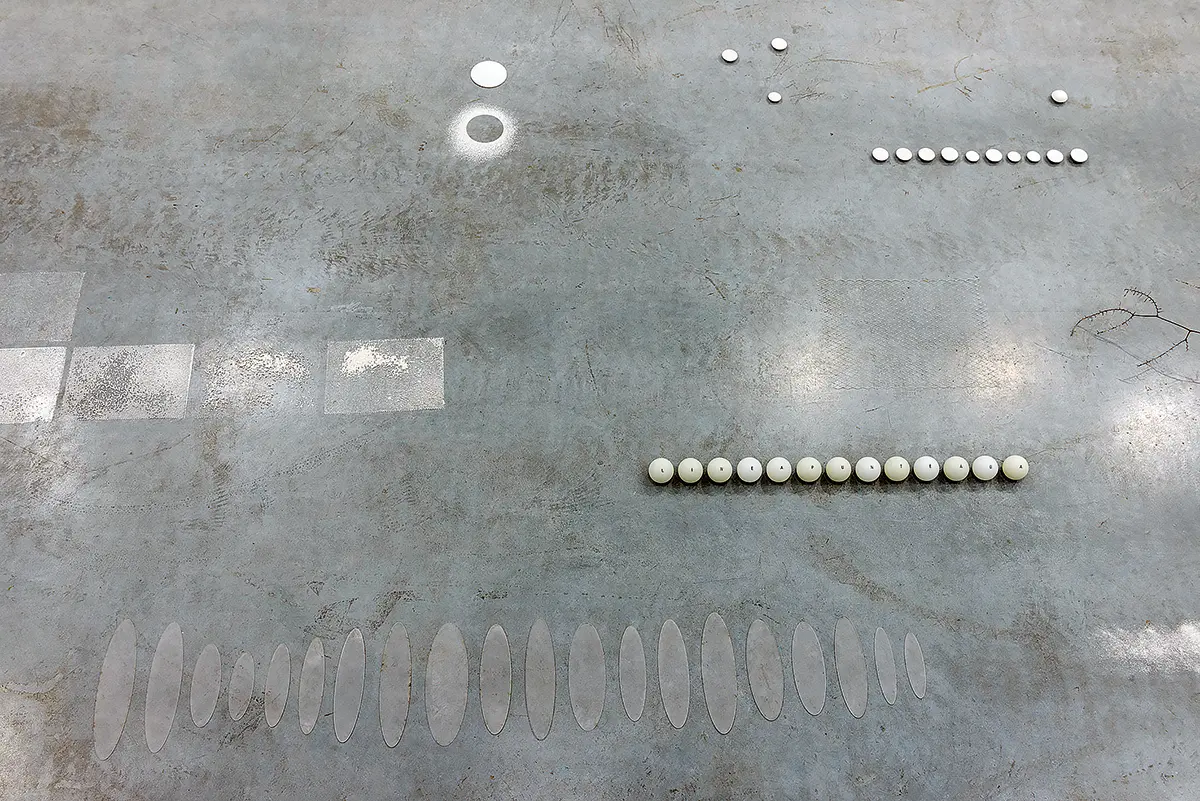
Had we not had to open the doors and stop this exercise in elimination, for sure the process would have never ceased. This is because Nicolás Paris’ work has no beginning and no end. It is like a perpetual wandering “into places of instability” or in “ephemeral spaces of concentration,” in order to realize that “the process is now.” A continuous now, with no rifts or breaks, like the one we definitely experienced in El rumor, la luz, las horas... This is why we agreed not to approach this brief article in terms of exhibitions or periods. Rather, Paris is enthusiastic about the possibility of thinking in terms of strategies. A continuous ambling between strategies that are applied time and again and produce results that are unexpected in their similarity or their difference, in the course of a journey that has no goals or destination.
Along this journey, Nicolás Paris gleans conversations, spreads rumors, and increasingly seeks to lean on words. In these shared moments he discovers new strategies and also new exercises for shared learning, and these experiences, in turn, serve him to capture more materials/works to share time, to be together.
Over the last three years, Paris has also been producing a series of videos that evolved in a similar way. Let’s review some of the titles of his videos, materials/artworks that suggest their contents: Un salón de clases para la dislexia o para el pensamiento topológico (A Classroom for Dyslexia or for Topological Thinking); Del triángulo al hexágono (From the Triangle to the Hexagon); Un salón de clases para leer entre líneas (A Classroom for Reading Between the Lines); Filigrana (Filigree); El diálogo, el rumor, la luz, las horas, o estudio para material pedagógico (The Dialog, the Rumor, the Light, The Hours, or a Study for Pedagogical Material); Semilla (Seed); Apresúrate despacio (Hurry Up Slowly); No culpes a nadie (pensando en Julio Cortázar) (Do Not Blame Anyone (Thinking of Julio Cortázar); Eclipse (Eclipse); Dispositivos para el diálogo errático o herramientas para aprender por simpatía (Devices for an Erratic Dialog or Instruments for Learning Through Sympathy); Hexagrama (Hexagram), among others.
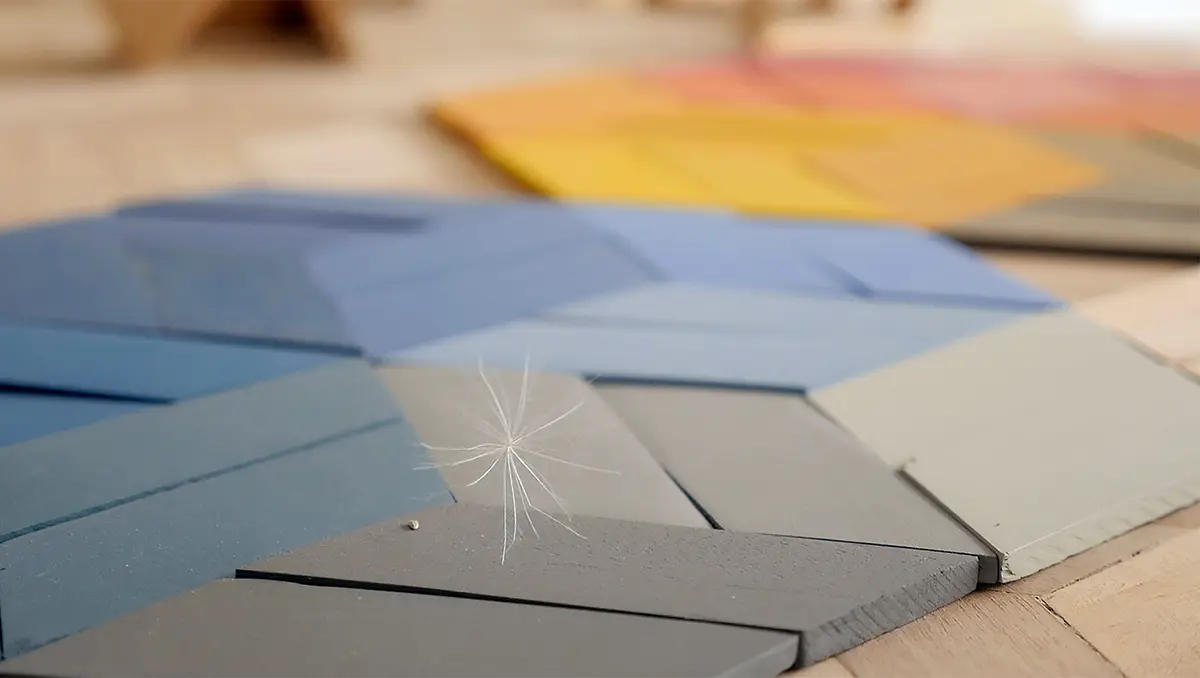
Detour is the most recent video: the flight of a seed that circulates among the small things that have come to rest on these minuscule worlds. A haphazard path, a wandering along purposeless, worthless routes, at the whim of the wind.
And perhaps the strategy on which the possibility of making art for Nicolás Paris was founded, after studying architecture and teaching for a few years in a public rural school in a Colombian municipality, was to work in terms of establishing a relationship with things and with people on the basis of a skhole mentality, to use the term he prefers, defined with an Aristotle paraphrase: the time of leisure, the most useful time,” when we must try to learn that which is most useful to know. And in that space, of course, to build a shared place. “For example, the shared place of a child who is developing the structure of his or her learning” (as we were discussing a moment ago) “and you travel light and want to take nothing with you because the only thing that matters is to be present in order to start again and to continue enjoying that childhood, which is a new one at every moment.”
Today, at the age of 40 and after eleven years working in the most special art circles, as he has said on occasion, Paris’ greatest aspiration and honor have been to be a school teacher.
MARÍA BELÉN SÁEZ DE IBARRA
Curator. Director of Cultural Heritage at Universidad Nacional de Colombia.