
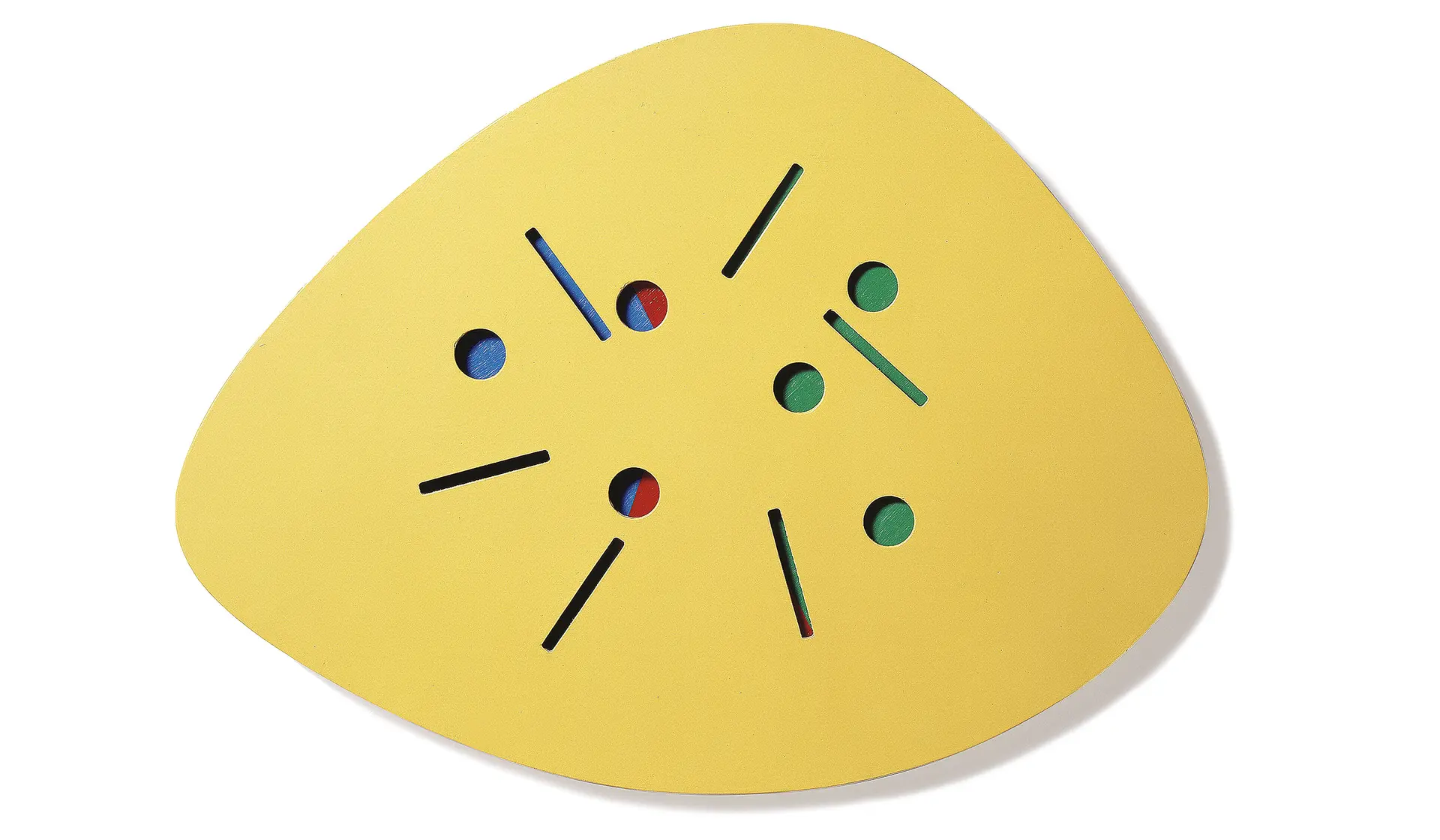
Placing Omar Carreño (Porlamar, 1927-Caracas 2013) in his proper generational context, beyond the Taller Libre de Arte and the Los Disidentes group requires understanding his inscription in a wider social, cultural, scientific, and philosophical space. It requires seeing him not only as an abstract-geometric artist with a remarkable career in Venezuela and Europe but also as a man whose meditations transcended into universality and synthesized a new sensibility.
As Ortega y Gasset writes in Idea de las generaciones (The Concept of Generations): “While there are times of a peaceful philosophy that gives continuity to previously generated ideas, there are other eras when the immediate past is felt to be in need of urgent reform (…) eras of a belligerent philosophy that aspires to destroy the past by means of its radical overcoming.”1
Indeed, Carreño, along with the group that coalesced around the need to understand space in connection to time, belongs to a generation that pushed and expanded the boundaries of the art field in Venezuela and abroad.
An Effervescent Subversion in the River Plate
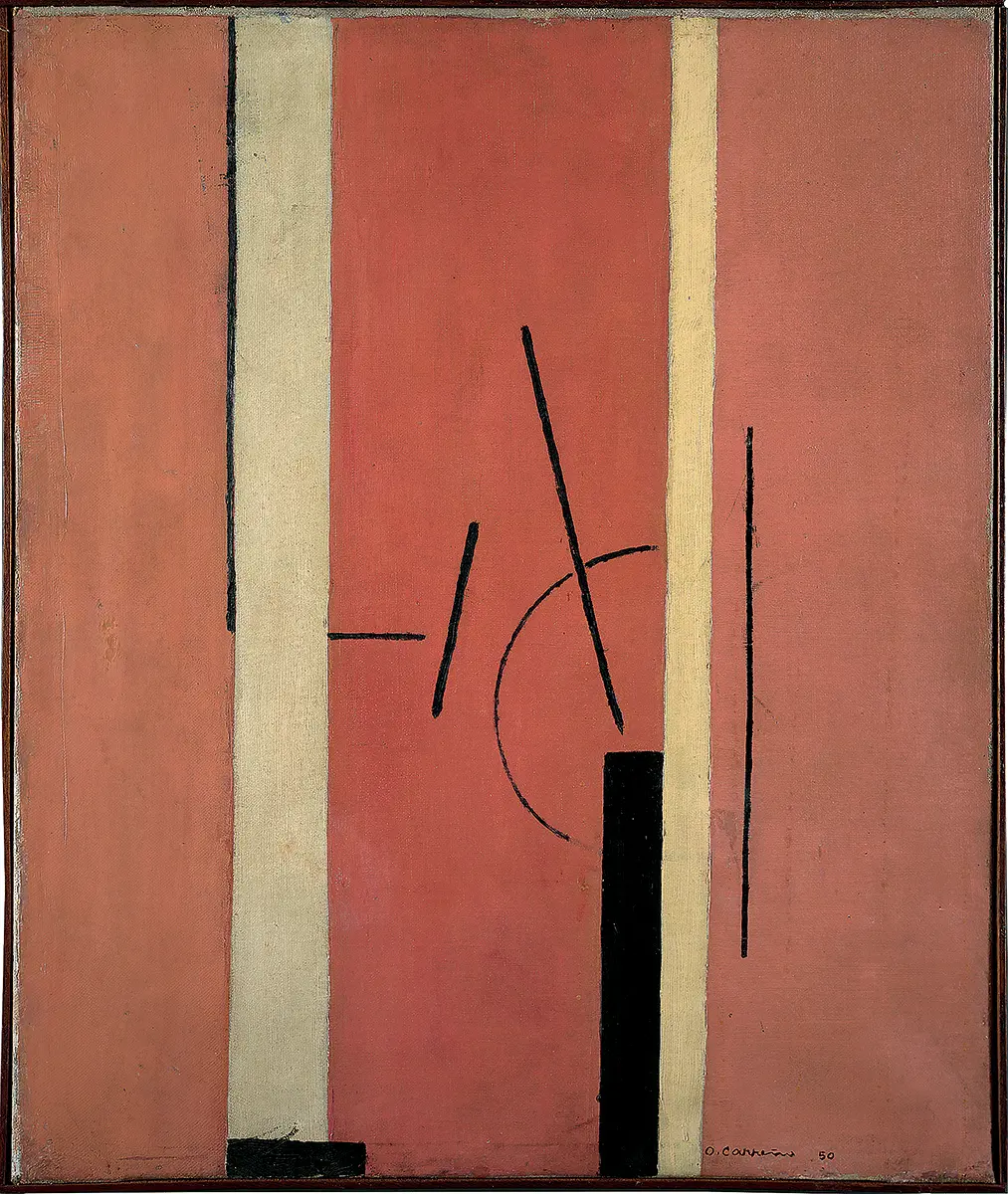
In defining Carreño’s ideas, it is important to contextualize the Latin American scene in which he was immersed, in particular the effervescent waves of subversion that started in the River Plate region (Uruguay/Argentina) and broke through the conventional framework to set new landmarks in the continent’s artistic landscape.
An important moment is the publication of the first (and only) issue of Arturo (1944), the abstract-art journal launched by Carmelo Arden Quin, Rhod Rothfuss, Gyula Kosice, and Edgar Bayley. They advocated for the eradication of all representation and directed their efforts toward “invention and pure creation”; Arturo was the standard-bearer of a new space that was beginning to open up in and from Latin America.
A number of different abstract-geometric art groups and manifestos emerged in quick successions, such as the Asociación Arte Concreto Invención (1945), with the launch of Manifiesto Invencionista in 1946, and the MADÍ movement formed (also in 1946) by Arden Quin, Rothfuss, and Kosice, who opted for irregular formats and for the articulation of a kind of painting that begins and ends in itself.
This fertile “inaugural moment” of the Latin American avant-garde prompted a compact group of artists to introduce new geometrically rigorous aesthetic propositions, but above all, it promoted the direct manipulation of the work of art by its audience.
The Taller Libre de Arte (1948-1952)
The Taller Libre de Arte (Free Art Workshop) was a cultural association that brought together artists from different disciplines, who began a process of research and attempted to reformulate Venezuelan art at a time when the local scene was still tethered to the landscape genre and to social realism.2 They intended to update it to the more open visual language that was being developed farther south in order to trace the contours of a new sensibility.
Their efforts began to bear fruit only in 1948, with the Exposición panamericana de pintura moderna (Pan-American Modern Painting Exhibition) at the Museo de Bellas Artes de Caracas, as well as Venezuela’s first-ever exhibition of abstract and non-objective art, mostly featuring works by the Buenos Aires-based Arte Concreto Invención group.3 The second abstract art show ever held in Venezuela took place in 1949 in the same location, and it was devoted to Alejandro Otero’s Cafeteras (Coffee Pots).4
In the midst of this climate of aggiornamento of the visual arts in the country, Omar Carreño recuperated from two years of debilitating respiratory ailments and put the full force of his creative resolve to work, alongside his cohort, towards the furthering of a then-fledgling geometric abstraction and concrete-art movement in the country.
In January of 1949, Carreño was admitted to the Escuela de Artes Plásticas de Caracas. He presented his first solo show in 1950, already an active member of the Taller Libre de Arte, just as “the dissidence”—which was to coalesce as a group under that name later that same year, in Paris—was being forged in Venezuela.
The Dissidents (1950)
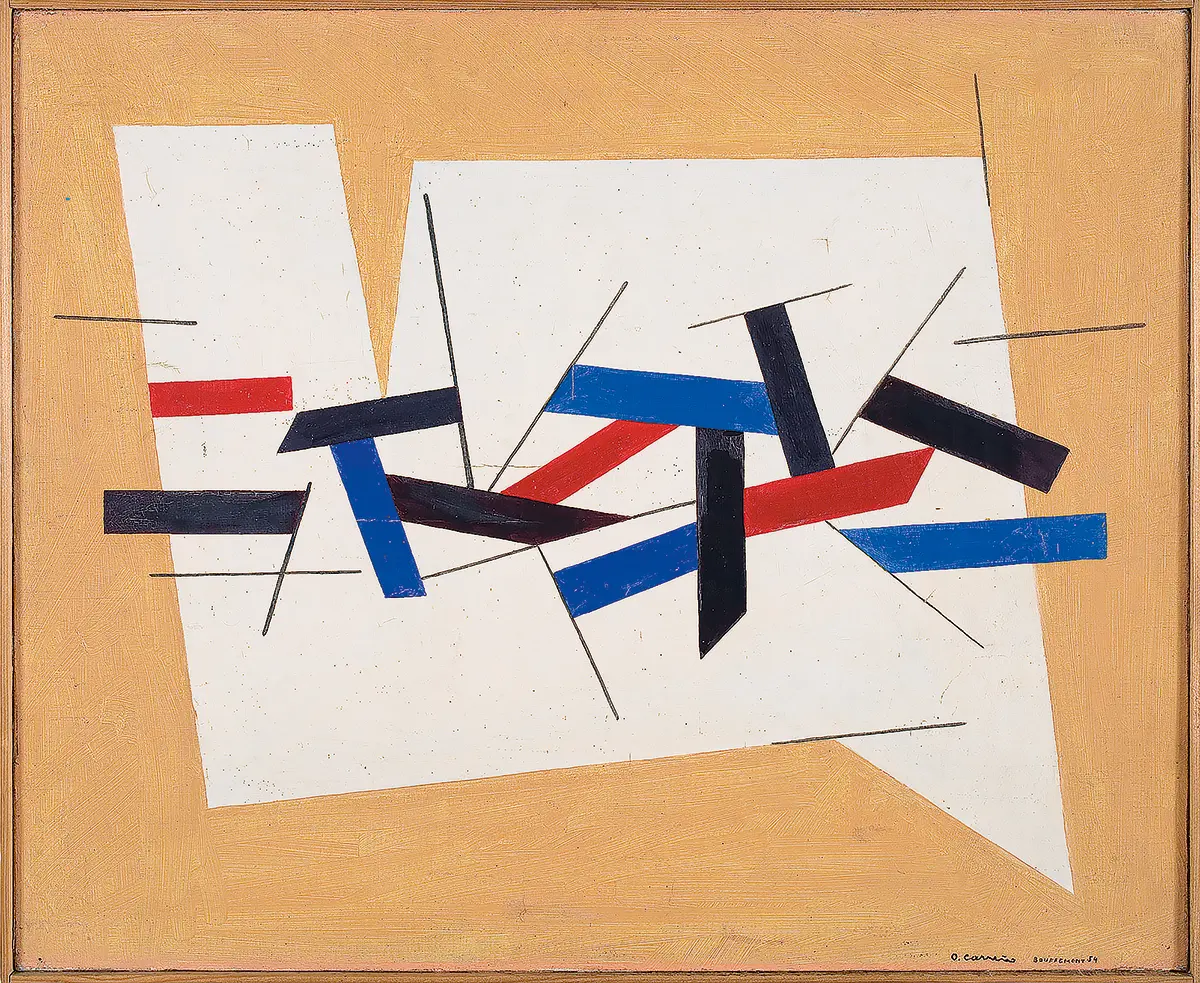
Omar Carreño moved to Paris in 1950 and did not return to Venezuela until 1955. He conceived Tema en tres tiempos No 22 (Theme in Three Times #22), one of his earliest abstract-geometric works, and was a protagonist of the first chapter of geometric abstraction in Venezuela as a member of Los Disidentes (The Dissidents), a group of artists who resettled en masse to the French capital, the epicenter of Modern ideas at the time.5 The group’s postulates, presented in what they called their Manifiesto del “No” (Manifesto of "No"), rebelled against Venezuela’s superannuated arts scene.
Although in 1949 artist Pedro León Castro still spoke of the “squalor and immorality that young Venezuelans find themselves in as they follow the fashionable ‘isms’ in Paris,”6 the group would garner well-deserved accolades from a broader cultural space.
The Polyptychs (1951)
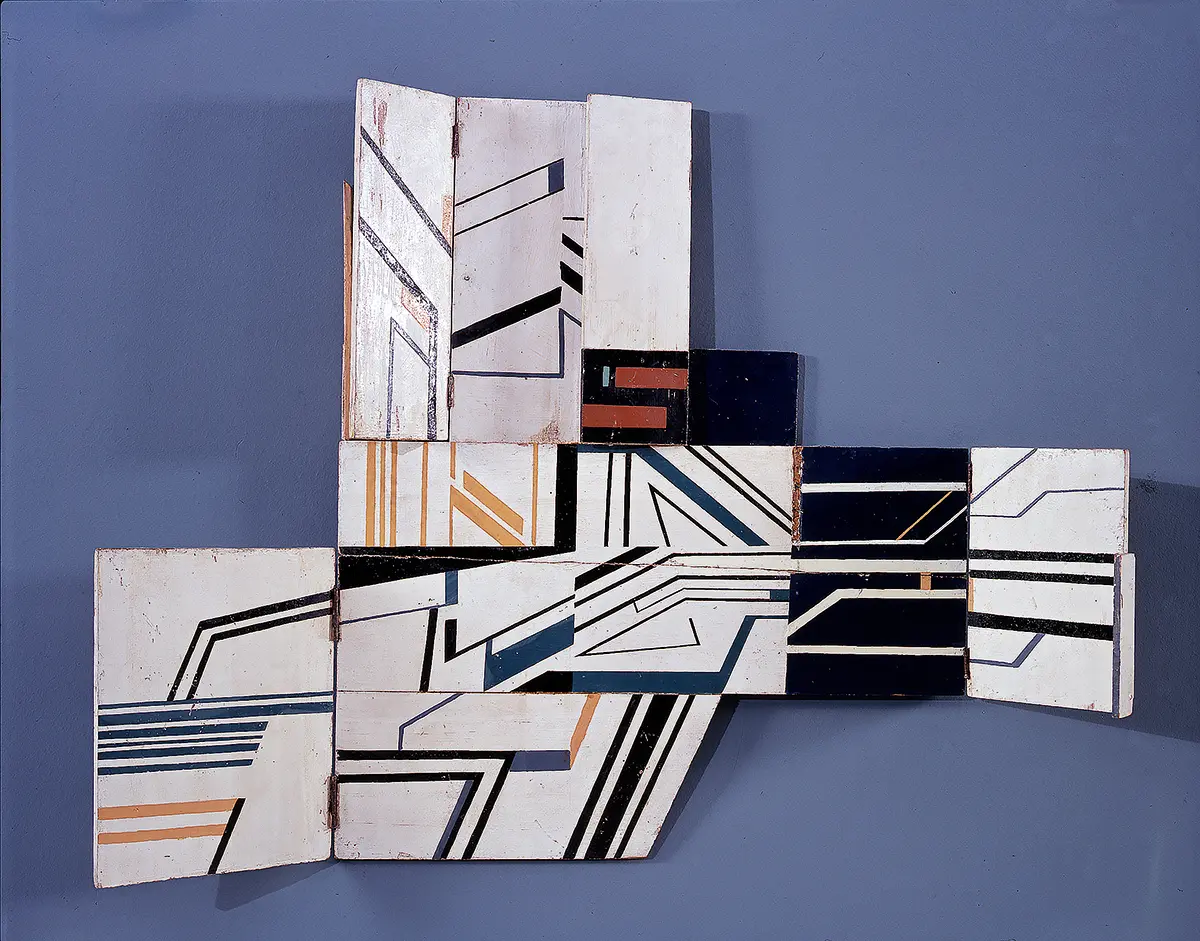
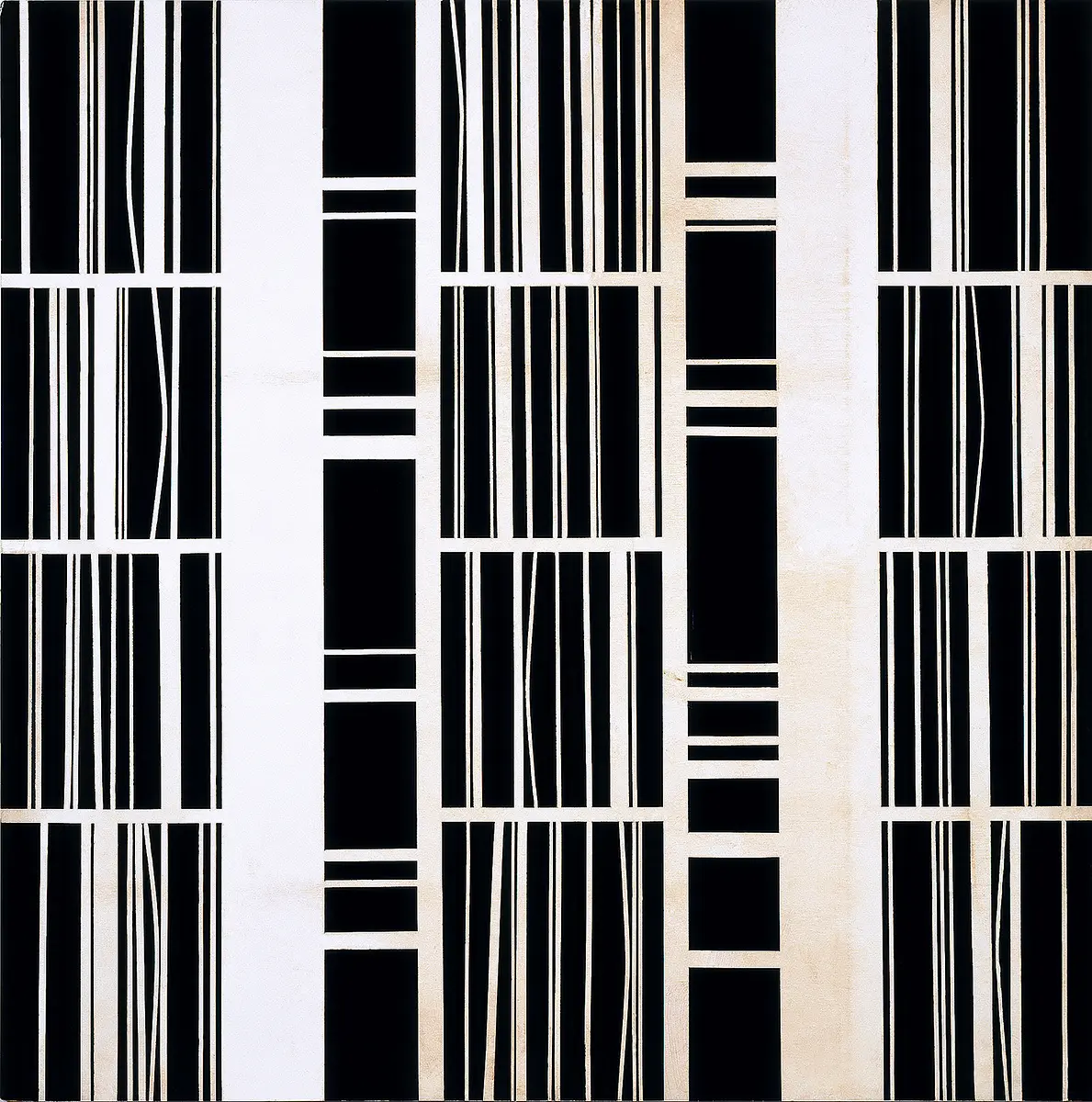
In 1951 Carreño developed large two-dimensional works in wood, to which he applied industrial paint. Later he began to include reliefs and irregular formats and introduced his first painting-objects, manipulable by the viewer. These were a turning point in the artist’s career, as they inaugurated the Expansionist Movement that is the backbone of his thought. The importance of these works resides in the playful character of the interactions they establish with the audience.
Omar Carreño belongs to a generation of non-conformist artists who sought to break the boundaries between audience and artwork, positing play (manipulation) as a new way of relating to artistic objects. The character of the immaterial connection with the public that emerges in that way has deep roots in Latin America: precedents like Gyula Kosice’s mythic Röyi (1944), a manipulable eight-section wood sculpture, or the famous Coplanales (Coplanars), geometric surfaces connected into an articulated structure, by Roth Rodfuss, Carmelo Arden Quin (1945), and Juan Melé (1947), should serve as proof.
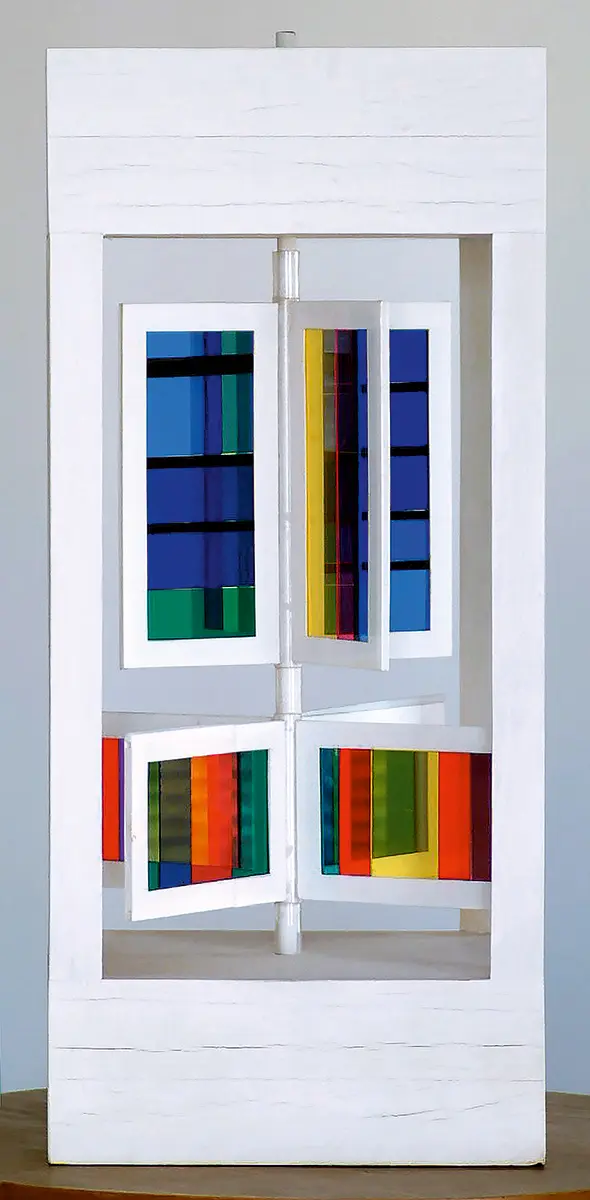
Omar Carreño’s first solo exhibition at Galerie Arnaud in Paris came in May of 1952. It featured his painting-objects, subsequently called polyptychs by the critic Pierre Descargues, who, along with other press reviewers, made a point to mention the Venezuelan artist’s innovative system of articulation using hinges.8
Carreño’s polyptychs are completed in the hands of the viewer, who modifies the work in unpredictable ways. They were followed by Yaacov Agam’s Cuadros transformables (1953), also open to manipulation by the audience, at the Craven Gallery in Paris.
Also in 1952, Carreño took part with Arden Quin in the prestigious Salon des Réalités Nouvelles, and his Políptico 4 was reproduced in the Salon’s catalog. That same year he was invited by Venezuelan artist Luis Guevara Moreno to participate in the Madí exhibition at the Suzanne Michel gallery in Paris.
In the following years, Carreño’s health deteriorated and until his recovery in 1955, he limited himself to reading in science, physics, poetry, and drama, and to create small works and sketches. His spirit, however, didn’t break; on the contrary, in his 1953 essay “Idées de l’artiste,” Carreño expresses an all-encompassing interest in everything that was shaping and transforming the Twentieth Century and declares himself immersed in the greatest adventure known in the history of the arts.9
Omar Carreño used curved formats throughout this period. He made his Esculturas-poemas (Sculpture-poems) and the first Tableaux-objets(Ojos de Buey) (Tableaux-objects [Portholes]), some of them transformable by means of lateral motion, rotation, or through the use of hinges or axes.
Geometry and Universal Order. Expansionism
While geometric abstraction as a whole was after universality in art and sought to render art’s constitutive elements independent of any representation, two opposing routes derived from its principles. One was a compositional route centered on the interactions between form, line, and color as visual elements freed from any external commitments. The other was a moral or philosophical route, inaugurated early by Malevich (1910), Fluid and Cosmic Rhythms, and Torres García (1930), who synthesized into geometry the absolute truth of a divine and universal order. Omar Carreño’s inclination towards the philosophical route into abstraction was soon in evidence, as he argued for the imminent need for a universal, collective, rational transformation. Carreño called his philosophy “Expansionism”, a term he coined in 1953 and developed in five manifestos that treat space-time as a pliable element subject to manipulation.
Omar Carreño shared with other thinkers of his era a sense of the artist’s responsibility, especially after World War II, when a universal contribution based on the idea of construction was forged.
Expansionism is committed to extending aesthetic common sense to account for the role of art in the urban space, which demands that we cease to see cities in two dimensions and understand them instead as large-scale stages for aesthetic experiences, bringing citizens closer to a true apprehension of their situation.
A Synthesis of the Arts
Omar Carreño was involved in two important projects centered on the fusion of art, life, and space. First, the exhibition La síntesis de las artes (The Synthesis of the Arts) at the 9th meeting of the CIAM (International Congress of Modern Architecture, in its French acronym), organized by Le Corbusier in Aix-en-Provence (1953), where he was the only Latin American representative. Second, Caracas’ University City, began in 1952 and today an Artistic Heritage of Humanity landmark, where he was invited to participate by architect Raúl Villanueva.
Return to Venezuela
A fully recovered Carreño returned to Venezuela in 1955 and settled in Caracas. He exhibited the polyptychs he had brought with him from Europe, and suppressed color almost entirely in his work, all the way to the extreme black/white contrast of the Posinega series.
In 1957, Carreño’s participation in Villanueva’s Síntesis de las artes project took concrete shape with the exterior and interior polychromes of the School of Dentistry building. The Universidad Central de Venezuela represents a significant step forward towards modernity, one that changes the system of circulation of artworks by eliminating intermediaries and generating a direct link with system participants. Nevertheless, it took some time for the project to be properly understood: that same year, a forceful debate about abstract art raged in Venezuela with writer Miguel Otero Silva and artist Alejandro Otero as its protagonists.10
Yet Omar Carreño was able to demolish preconceptions, and the jury at the 1957 Official Annual Venezuelan Art Salon gave him the Puebla de Bolívar Award for his iron sculpture Estable N°1 (Stable No.1).
Pariata 1957 (2012)
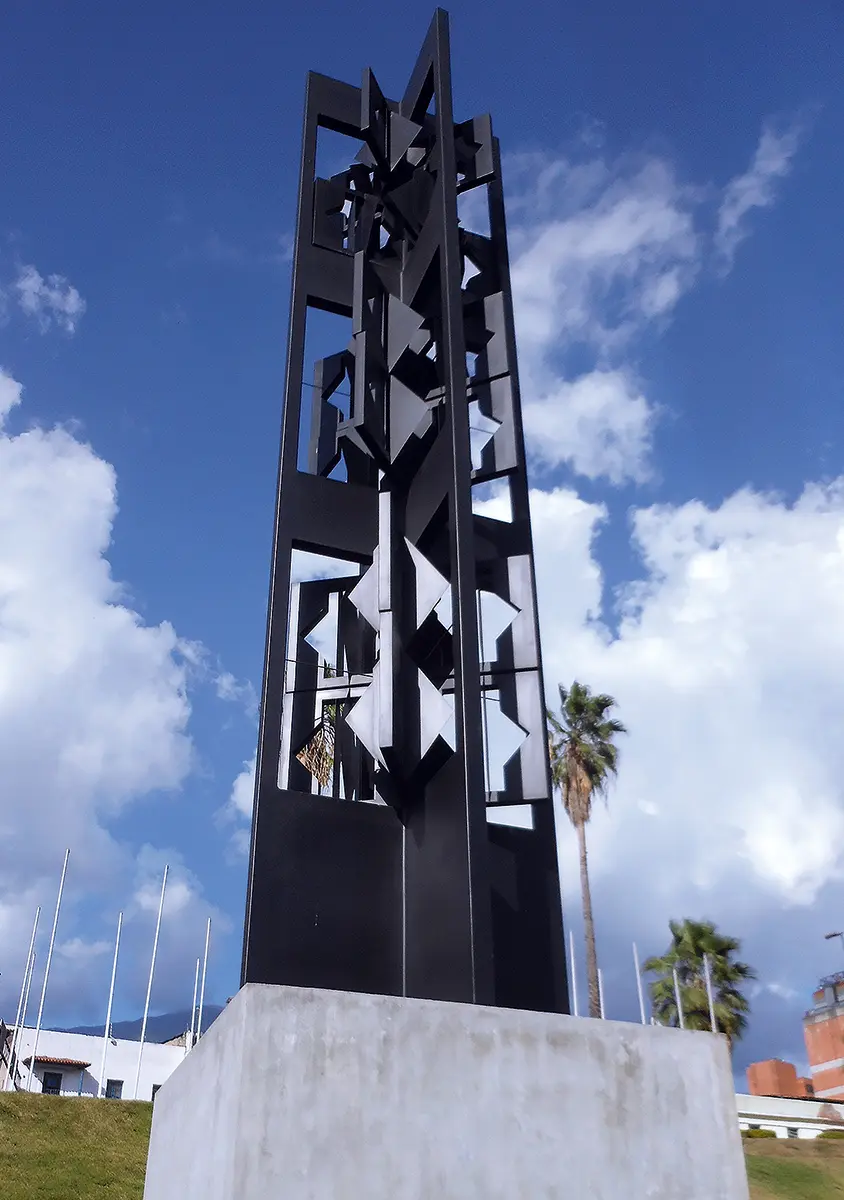
Omar Carreño again intervened in the public space with Pariata, a 10-meter iron tower, the first sculpture featuring blades activated by the wind11 (Alejandro Otero also conceived his outstanding wind sculptures around 1967.) Between 1960 and 1965, Carreño engaged with abstract informalism.
The First Expansionist Manifesto was launched in Rome in 1966 and in Caracas in 1967. “The collaboration between cybernetics and art opens a new era based on cooperation,” he observed. A visionary, Carreño identified the stirrings of something that decades later came to define our communicational behavior in cyberspace.
Light Boxes, 1967
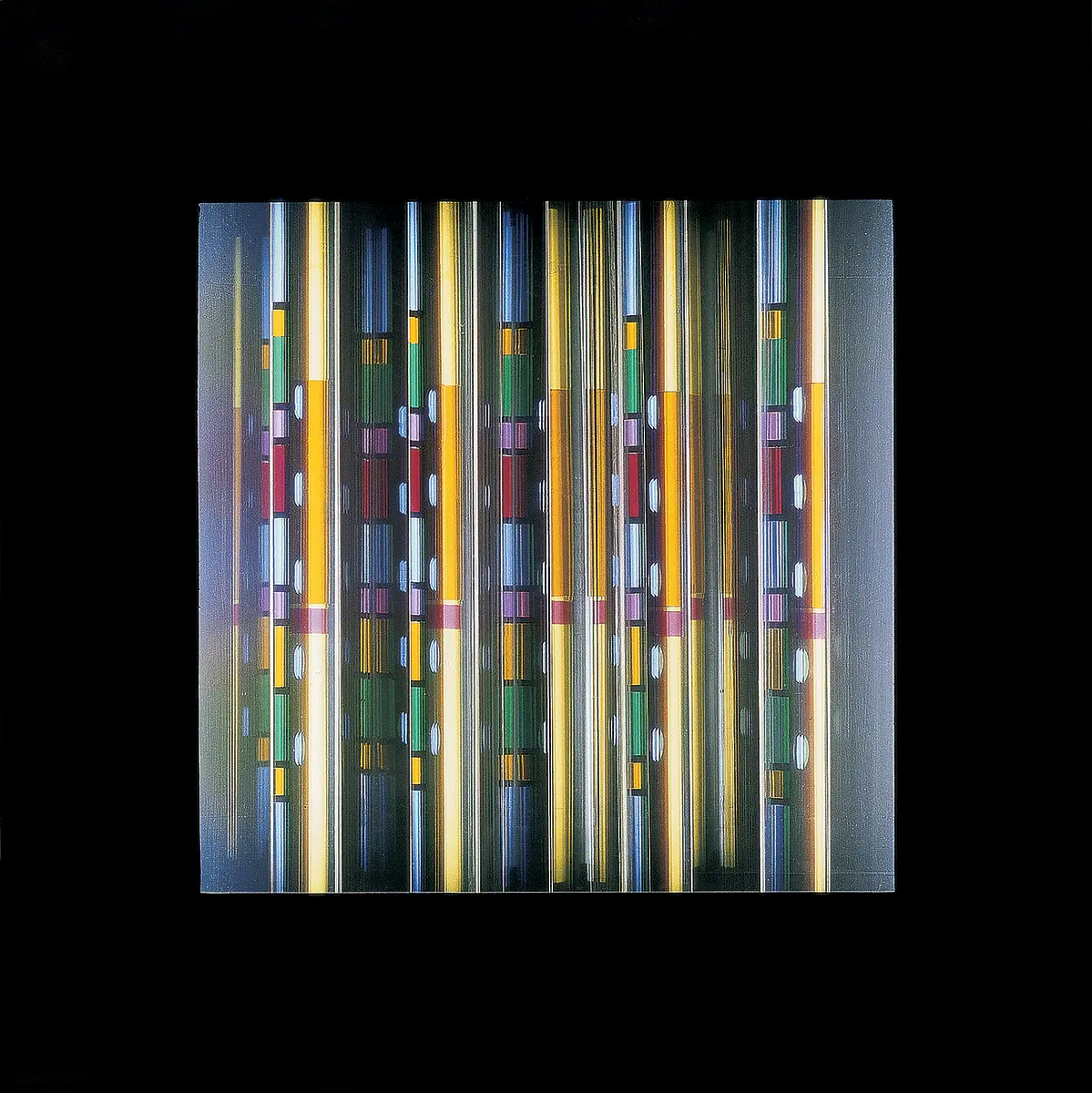
In 1967 Carreño published his Second Expansionist Manifesto and presented in Caracas his extraordinary Cajas luminosas (Light Boxes), transformable and manipulable color columns reflected on transparent plastic sheets, placed at an oblique angle in order to produce a mirror effect. The simultaneous action of several viewers or motors rendered these boxes into transformable light artworks.
Light and Transformation. The Venice Biennale
Carreño’s Third Expansionist Manifesto appeared in 1968. In parallel to the Venice Biennale he held a solo exhibition—visited by critic Frank Popper—of his Cajas luminosas.12 In 1972, this line of work reached its peak with Mansión-Luz (Mansion-Light), transformable by means of viewer-controlled motors, which was presented as a site-specific installation at the Venezuela Pavillion in Venice.13 That same year Carreño received the National Visual Arts Award. In 1973 he created his first Esculturas vitrales (Stained Glass Sculptures), transformable structures that synthesize the manual articulation of color planes.
Over the course of the following decade, Carreño presented successful solo exhibitions and participated in group shows in Venezuela and abroad, including his 1983 anthology exhibition at the Museo Español de Arte Contemporáneo (now the Museo Nacional de Arte Reina Sofía) in Madrid.
Expanding the Coordinates of Art
The new millennium began for Omar Carreño with a conference titled Science, Technology, and Art at the Beginning of the Third Millennium.14 There he presented ideas that had been in development since 1951, when Carreño read such keystone texts and authors as The Evolution of Physics, by Albert Einstein and Léopold Infeld (1948), and the works of Henri Bergson, an advocate for creativity who proposed pathways into the “world of the spirit” that differed from those of the natural sciences.
“What contemporary art seeks,” Carreño concluded, “is a Spatio-temporal dialog with contemporary science (…) Let us have our works leave the Earth and explore the universe in search of new dimensions.” Beyond the work of art or any specific artistic school, Carreño clearly envisaged total Humanism, embodied in the Spatio-temporal architecture of the universe, one of his lifelong passions.15
The new sensibility that permeates Omar Carreño finds support in a scientific and philosophical framework, a conceptual lattice that extends transversally, longitudinally, and interdisciplinarily into universalism since the turn of the Twentieth Century.
In his 5th and last Manifiesto Expansionista, Carreño observes: “In order to sustain the new art, merely deploying new media does not suffice: human creativity must be preeminent.” This was always evident for the Venezuelan artist, who greatly furthered the cause of geometric abstraction at an international scale and created spaces for reflection around "Expansionism", an idea whose tenets remain valid and wholly honor its name.
NOTES
1. Ortega y Gasset: The Modern Theme (1923; English translation 1931) diagnoses the existence of a new sensibility, a concept developed in his Revista de Occidente (Journal of the West), which had a surprisingly ravenous reception in Latin America.
2. Omar Carreño with Jacobo Borges, Feliciano Carvallo, Narciso Debourg, Alirio Oramas, Perán Erminy, José Fernández Díaz (FEZ), and Luis Guevara Moreno, among others. Having studied under Antonio Edmundo Monsanto, they finally became acquainted with Avant-Garde ideas and broke through the Escuela de Artes Plásticas’ outdated curriculum. This cohort left behind the traditional landscape genre in favor of its analysis based on a pre-cubist method, the first step towards giving the formal elements of painting an autonomous, non-representational value.
3. Exhibition held at the Taller Libre de Arte: José Memo Mena and the Arte Concreto Invención group: Juan Mele, Lidy Prati, Alfredo Hlito, Nélida Souza, Juan del Prete, and a concrete sculpture by Jorge Souza.
4 A member of the Taller Libre de Arte, and the first to leave for Paris (in 1945), he returned to Venezuela after four years.
5. Its members, like Perán Erminy, Mateo Manaure, Alejandro Otero, Carlos Cruz-Diez, Pascual Navarro, Rubén Núñez, and Armando Barrios, came largely from the Taller Libre de Arte. The Disidentes took on the profound responsibility and the commitment of being the face of Modernity. A year later, in 1951, the São Paulo Biennial emerged as another prestigious bridge between Latin America and the world’s most forward-looking art. In subsequent years, intercontinental dialogs will be key, especially for the worldwide evolution of geometric abstraction and kinetic art.
6. Memoria crítica, Alejandro Otero. Compilation and selection, Douglas Monroy and Luisa Pérez Gil. Artesanogroup Editores, second edition, Caracas, 2008, p. 44.
7. In 1951, Pablo Picasso invited Omar Carreño to participate in the Latin America Exhibition at the Henri Tronche gallery in Paris, along with Armando Barrios, Héctor Poleo, Adela Rico de Poleo, Carmelo Arden Quin, Carlos Mérida, Diego Rivera, Siqueiros, and Wifredo Lam, among others.
8. A system later used by Lygia Clark for the folding and unfolding of her well-loved Bichos (1960).
9. In Biografía de Omar Carreño, Manuela Billaudot, pp. 2.
10. Miguel Otero Silva: “Nothing more distant from the people than this coldly cerebral understanding of painting, entirely divorced from their issues and feelings. The people will never see abstract painting as anything other than an ancillary, merely decorative kind of art, destined to embellish buildings.” El Nacional Newspaper, 1957, in Memoria crítica, Alejandro Otero, p. 496.
11. Commissioned by Villanueva, the architect, to be situated between the polychrome bocks of the Banco Obrero, in the Pariata sector, Vargas State. It was reconstructed in 2009 and relocated to Venezuela Square, reaching a height of 12 meters.
12. Popper is Emeritus Professor of Aesthetics and Art Sciences at the University of Vincennes (Paris 8). An authority in the study of kinetic art, he includes Omar Carreño in the second edition of L’art cinétique, París/Gauthier-Villars, 1970, p. 196, validating and summarizing his contributions alongside other representatives of the movement.
13. Mansión-Luz crystallizes the dream that Carreño announced in 1960: “a color-light mural that viewers can traverse” (the immersion in the main gallery covered 23 meters in length).
14. Omar Carreño’s presentation at the “Science, Technology, and Art at the beginning of the Third Millennium” international conference, held at the Palace of the Academies in Brussels in the year 2000.
15. Interview with Manuela Billaudot, February 2015.
ELISA RODRÍGUEZ CAMPO
Graduate of Fine Arts UCV, Venezuela.