
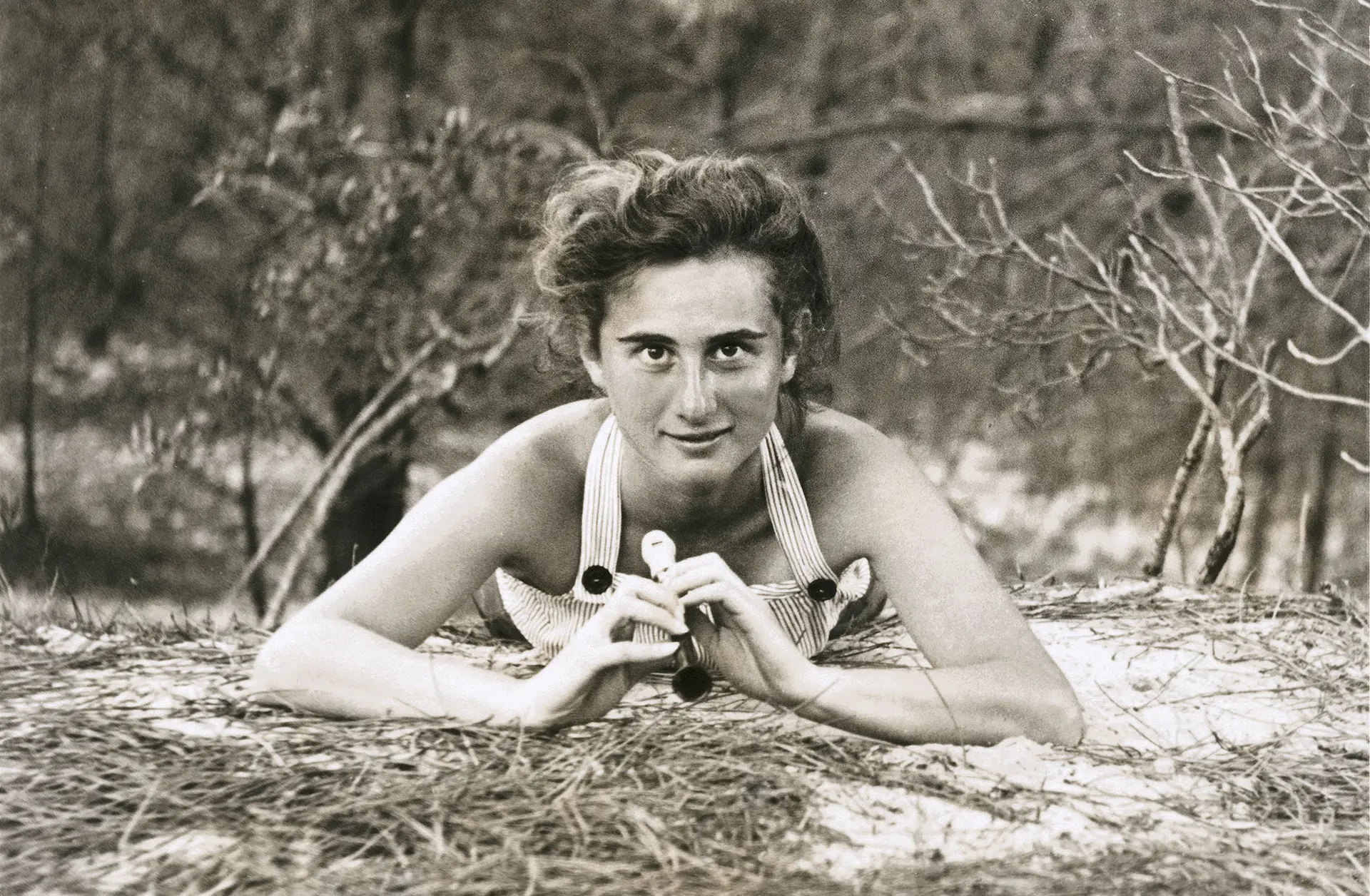
I encountered Ana Sacerdote through people who had been close to her, especially Paul, her husband. This is why, once all the materials that brought me in contact with her life as a woman artist had been collected, I began to discern a portrait (no doubt subjective) based on the confluence of those fragments. What I heard about her, the images I gathered, my readings, drive me to think of Ana Sacerdote, above all, as a woman who exercised great freedom in all her choices. I’ve been told that she was withdrawn and introverted, that she preferred direct face-to-face relationships, and eschewed large gatherings and political debates. There are two black and white photographs of Ana Sacerdote in the carefully put together catalog that was published in 2012 to accompany her exhibition at the Jorge Mara-La Ruche gallery in Buenos Aires. One shows her as a very young woman in Piriápolis, in the 1940s: a potent gaze, her eyes filled with yet-to-be-expressed worlds and framed by dense, visor-like eyebrows ready to assist in scrutiny and surveillance. A musical instrument in her hands seems to herald future artistic inclinations. This portrait embodies the latency of events to come. The second photograph was taken in Cuba in 1957. There we see Ana Sacerdote pointing a film camera at the landscape; standing on the trunk of a car by the side of the road, she seems to have found the most favorable vantage point to capture an unrevealed scene, color, or texture.
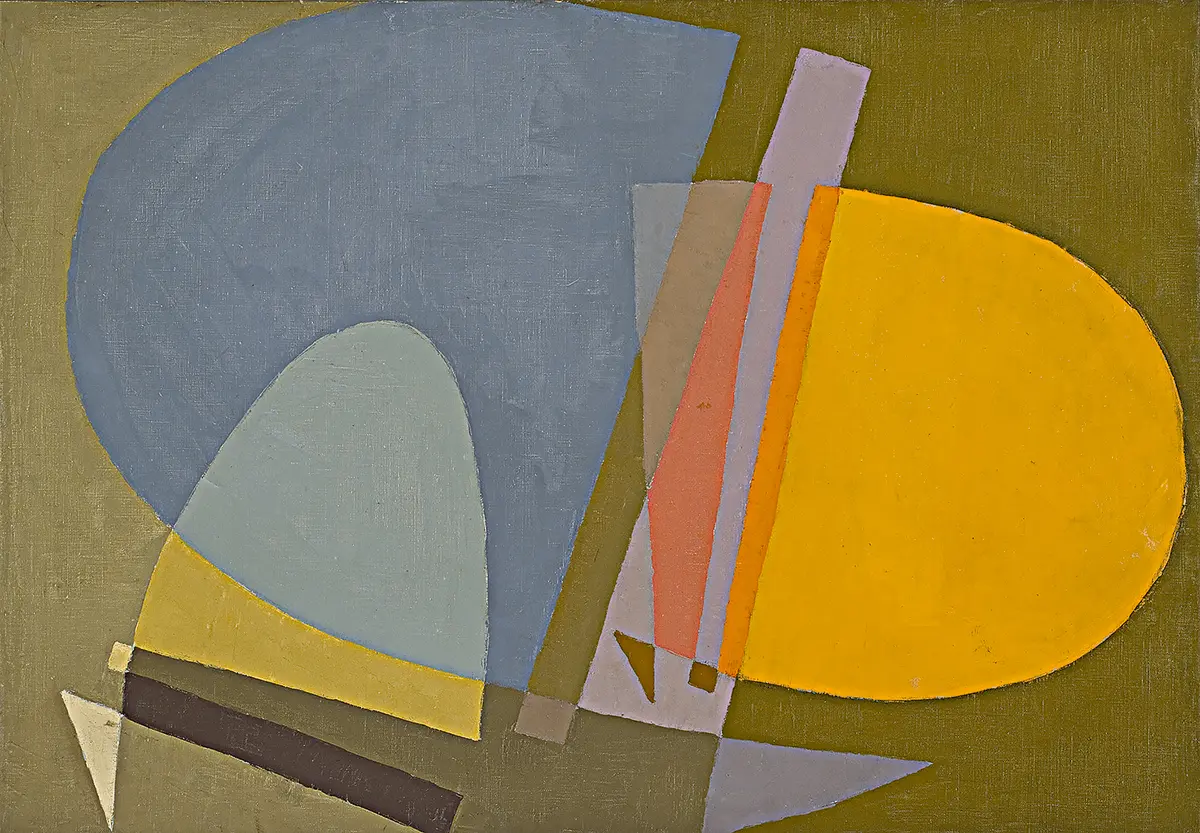
Born in Rome in 1925, Ana Sacerdote moved to Buenos Aires with her family in 1940, before Italy entered World War II. Her training as an artist includes a passage through the Prilidiano Pueyrredón Fine Arts School as well as drawing studies under Lino Enea Spilimbergo. Early on she became interested in abstract art, and even organized an independent study group.
After her marriage, in 1957, life took Sacerdote to different cities: Paris, Havana, Rio de Janeiro, and São Paulo. She always found ways to lay down roots in every place she inhabited through the development of projects and the planting of the flag of art. In 1967, she returned to Buenos Aires for good.
In Search of a Language
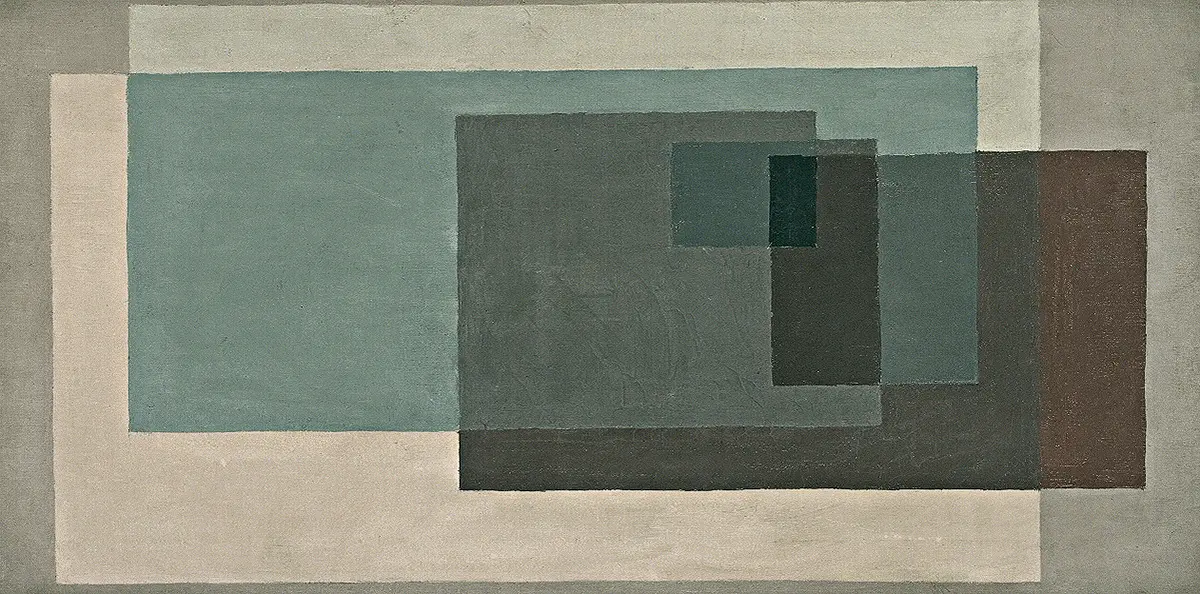
Ana Sacerdote thought of music as an older sister to painting. Pure music had formulated her language with great precision. Why not borrow its system? That is precisely the connection explored by Vasili Kandinsky in Concerning the Spiritual in Art, a book that greatly interested her. As José Emilio Burucúa put it in his 1954 essay “Ana Sacerdote: Un caso argentino de pintura musical” (“Ana Sacerdote: An Argentinean Case of Musical Painting”), there is in her art “a reference to the need to define rhythm in visual terms.” In 1955, Sacerdote painted her first abstract work in oil: Estudio de equilibrio (Study in Balance), which was exhibited in the first Non-Figurative Art Salon.
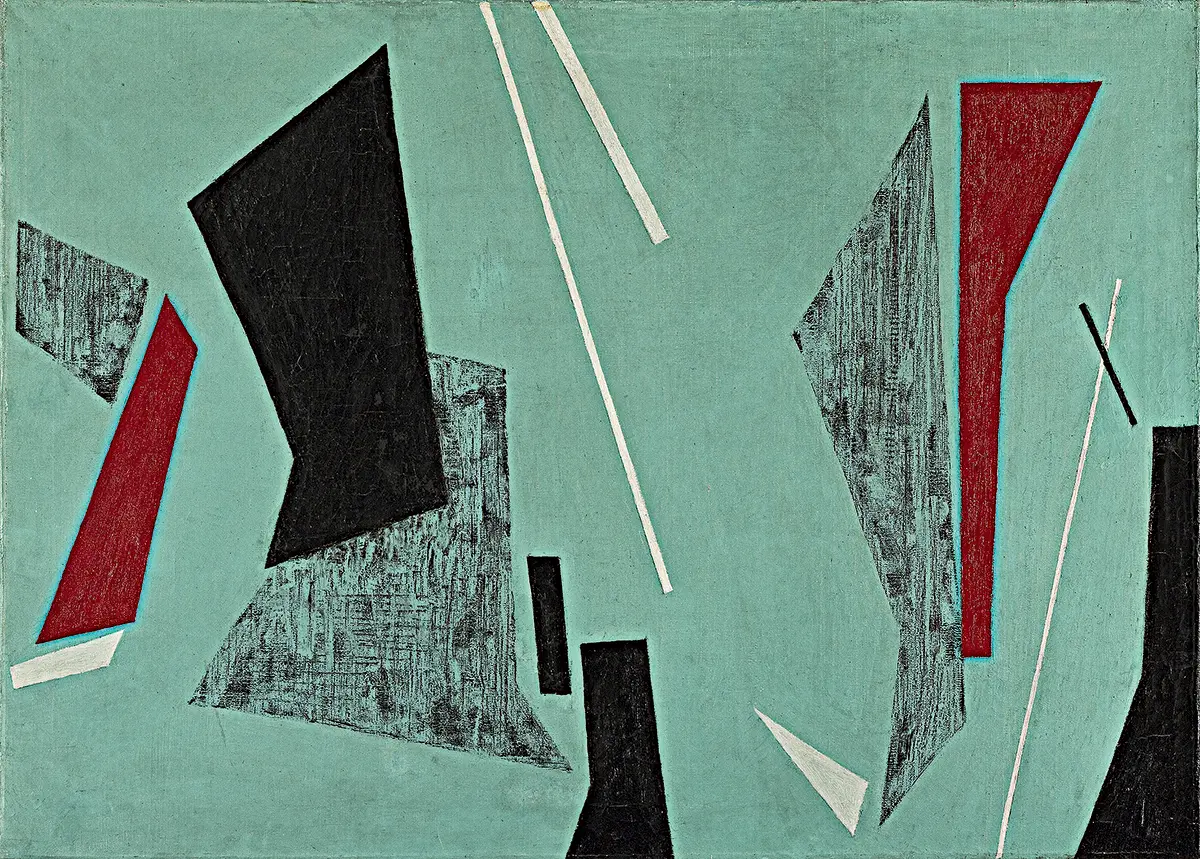
The subject of variation was key to investigate the development of a system: “A color, like a sound, can have different ways to harmonize,” Sacerdote wrote. For her, the acoustics of a color can vary depending on whether it is involved with a complementary or an analogous one. Thus, she thought she could play with the different color chords in a logical continuum, searching for the definition of an aesthetic discourse. Under this premise, in 1956 Sacerdote presented her research plans as she applied to a painting fellowship sponsored by the French government, which she won.
Writing
A favorite book for Ana Sacerdote was Paul Valery’s L’idée fixe, an imagined dialog between a doctor-fisherman-painter (who doesn’t paint or fish) and a wanderer who meet by the seashore. In one passage in the book, the wanderer explains to the doctor why an idea cannot be fixed: “An idea is a change… even the most discontinuous form of change… an idea is a means for, or a signal of… transformation, which acts in varying degrees upon the entirety of Being.” Ana Sacerdote’s artistic production was closely connected to the proclamation of her ideas about art by means of writing—an instrument also capable of intensifying the work by expressing apparitions and quests. Chronologically distant from Conceptualism, yet close to it in the sense of showing ideas, perhaps this writing was also connected to what Sol LeWitt said about his own: “I write in self-defense… to clarify for myself what it is I am doing.”
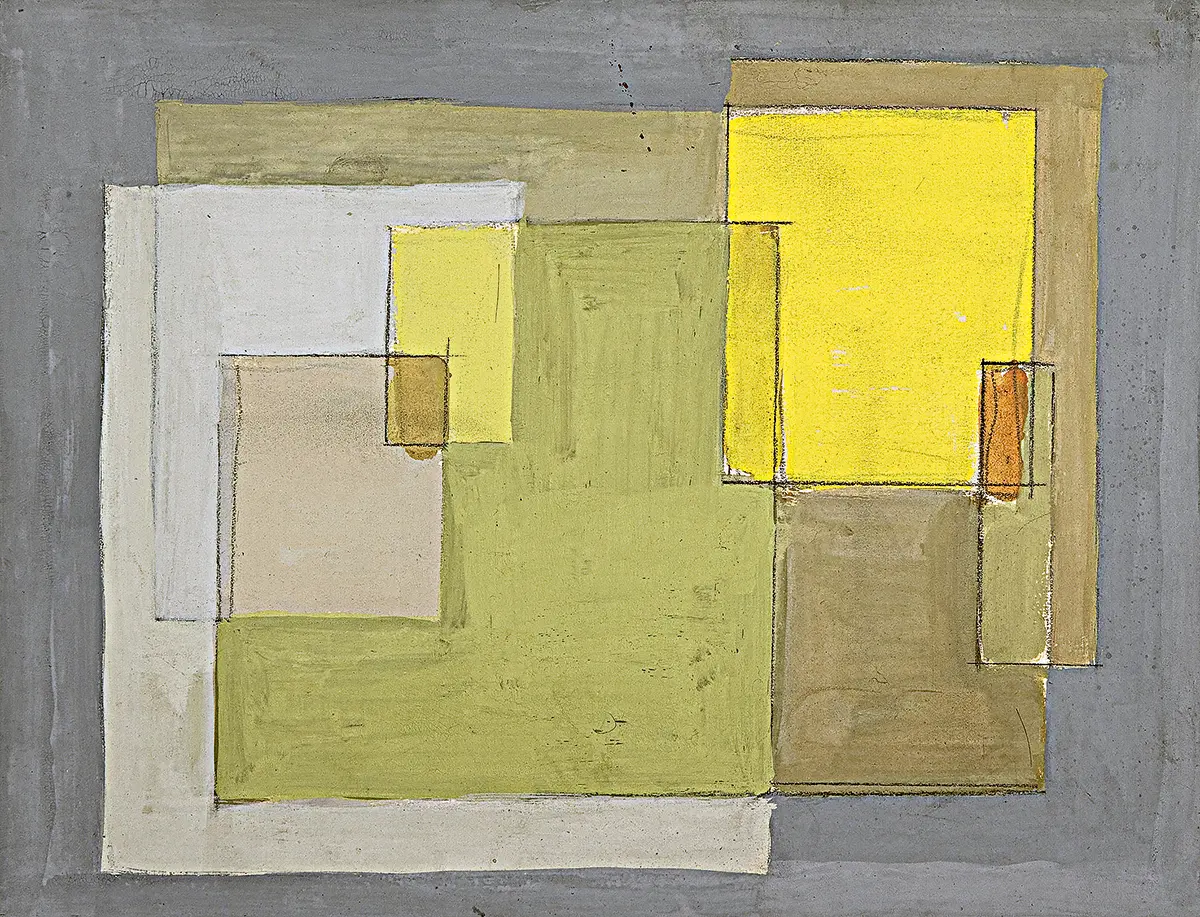
A year after painting Estudio de equilibrio, Sacerdote published “Acerca de un hipotético tratado de armonía de la pintura” (“On a Hypothetical Treatise of Harmony in Painting”) in the first issue of the journal Arte Nuevo, of whose editorial committee she was a member. There she makes reference to the difficult situation of modern painting, the attacks encountered on the road to the liberation of the object. “Could painting ever develop a system as highly codified as that of music?” the artist wondered. And she added: “Music has discovered the possibility of making giant leaps on the basis of tiny nuclei (one of Beethoven’s symphonies is entirely built on variations on a single theme.) Why couldn’t painting do the same? There is a system of sound chords; why couldn’t there be one of colors?”
Images in Motion
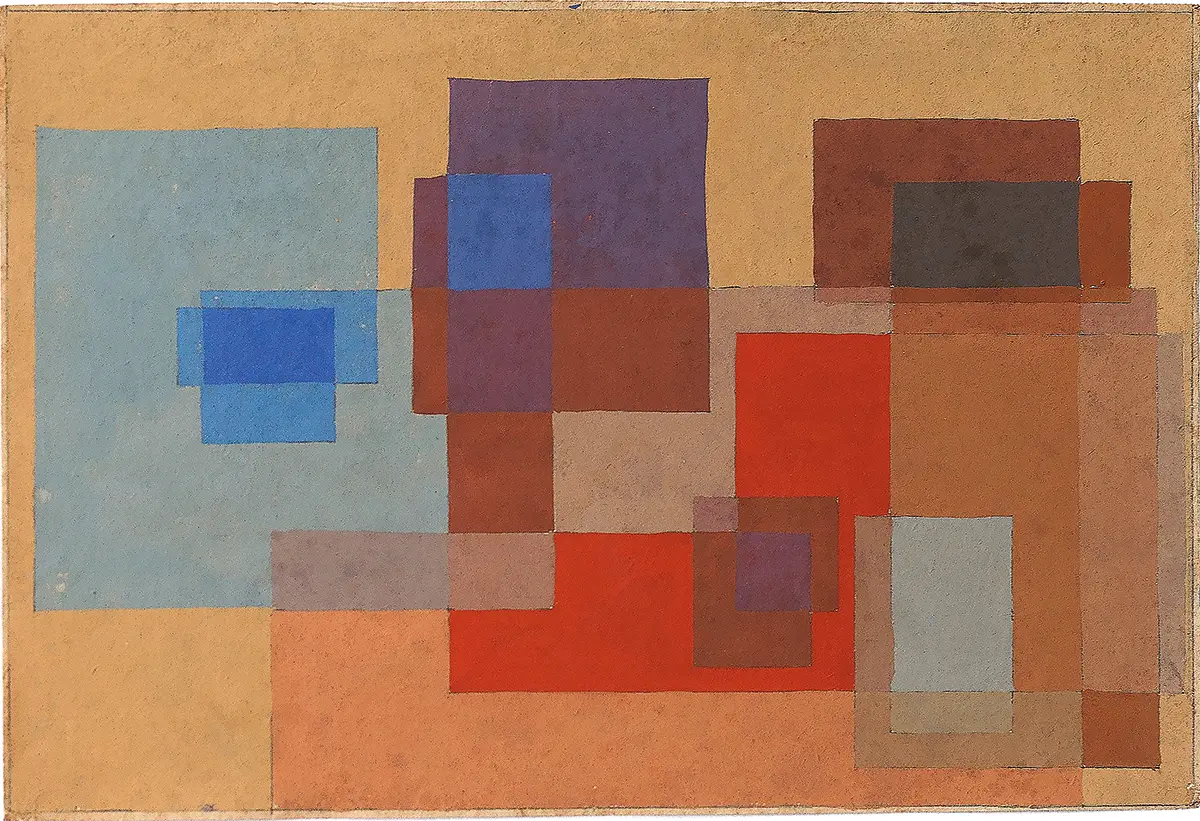
In 1959, Sacerdote began working on Essai de couleur animée, an animated film slightly over two minutes in length, divided into three segments. To complete the film, she created more than one thousand small-format paintings. Essai de couleur animée was finished in 1965 and presented at the National Short Film Festival held in parallel to the 8th São Paulo Biennial.
Sacerdote developed and explained the foundations for that work in her article “Kinetic art: Animation of color for cinema film,” which appeared in 1972 in the influential UK journal Leonardo. Her starting point is still the relationship between music and painting, her own “idée fixe.” Yet, as the doctor acknowledges in Valéry’s dialog, “there is nothing more peripatetic than an idée fixe”: bringing motion to painting by means of film, in order to experience the advancement of the relationship between music and painting.
Ana Sacerdote explains in her article the starting point for her compositions. The work began with what she defines as “chromatic units or chromatic syllables,” comprised of six or eight color hues that are visually harmonious according to her criteria. She prepared “many different chromatic units with hues selected in a free, some times arbitrary manner.” The film’s segments are titled Monocromático (Monochrome), Sugestión de complementario (Complementary Suggestion), and Ritmo (Rhythm). Years later, in 2011, Essai de couleur animée was exhibited at Pinta London.
Towards the end of her written exposition, Sacerdote lists the conclusions of her work in a somewhat self-critical vein; she seems intent on inducing new variants and setting the pace for the continuation of her quest.
Continuous change, the same constants
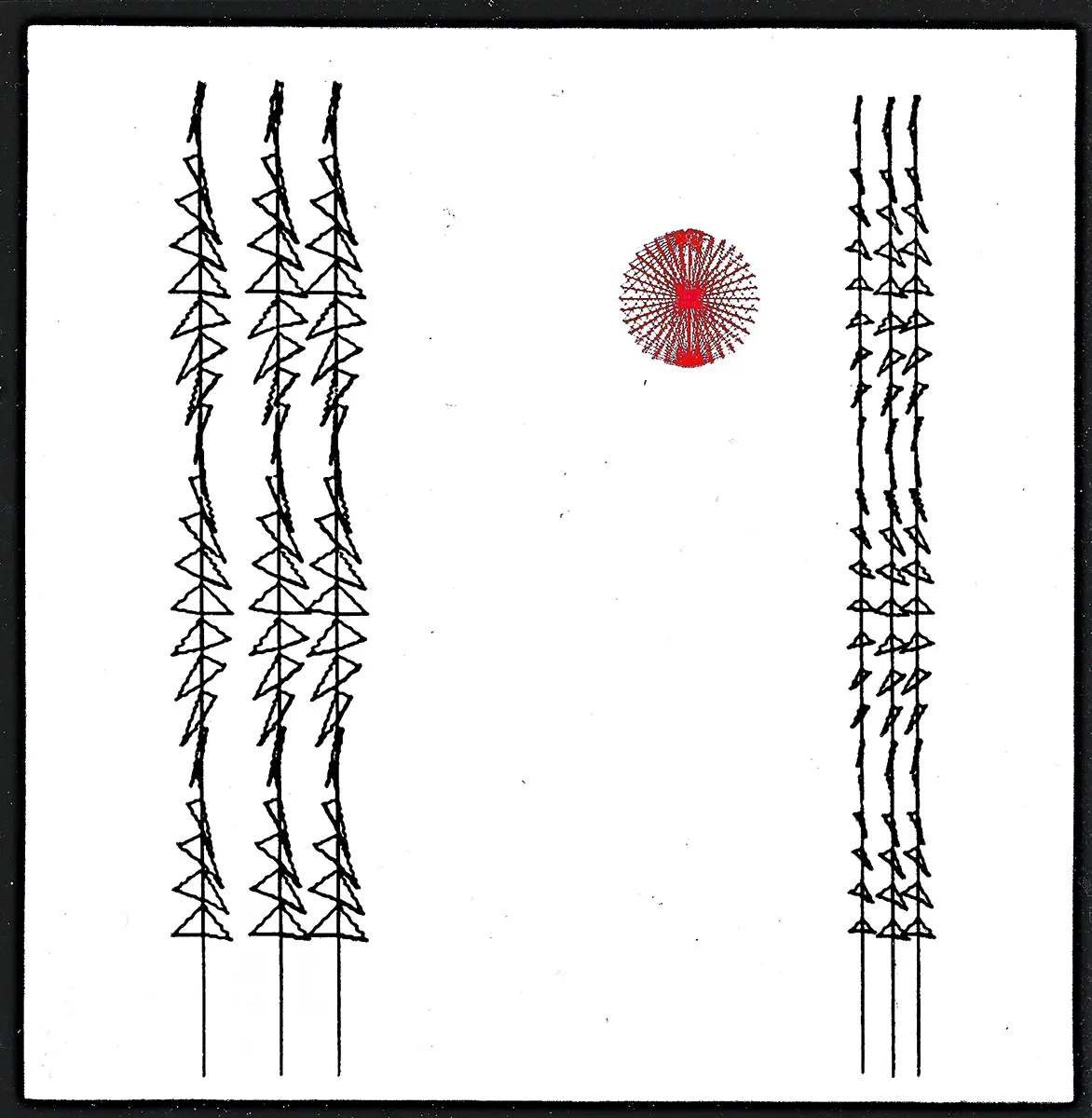
“In the end,” Valéry’s wanderer explained, “all that is worth in life is essentially brief… that is the point, the word, the node. We can think about that essential brevity… Intensity, brevity…” The minimal, the brief, remained as the triggering element for Sacerdote’s work—that idea of developing an artistic language on the basis of tiny nuclei—even after she abandoned painting. The desire to create a system based on small units moves to the field of computer-assisted drawing. In an essay on the subject, “Notas para una programación creativa con graficador” (“Notes On Creative Programming Using Graphic Software”), Sacerdote expresses her intention to approach abstract artists, especially those working on a geometric line, “with the certainty that the continuation and extension of their work rests on an adequate use of the computer.” Ana Sacerdote was convinced that the resources of abstract artists of a geometric orientation derived, consciously or unconsciously, from mathematics. Once again the work began with simple elements that assembled into structures of varied complexity. In 1979, she presented, at the Lagard Gallery in Buenos Aires, a series of works made on a computer. The catalog opens with the graphic element the artist deemed her “basic unit.” It is the generative sign for an entire series of drawings. Sacerdote presents this simple computer-designed drawing as the point of expansion of a discourse: “the most static, most devoid of literature drawing wants, precisely, to suggest the non-geometric meaning that underlies every work”; it is a search for specific physiognomies “through variations on a very simple basic unit.”
Broadening the Spectrum
Although Ana Sacerdote’s most visible works focused on painting, her need to create diversified and followed a variety of paths. “It can be said that our living system rejects prolonged specialization,” Valéry’s wanderer asserted. Sacerdote engaged a variety of interests: she sang with the Hebraic Society of Buenos Aires Choir and participated in Gente de Cine, the Argentinean capital’s cinephile club. Although not specifically trained in sculpture, she created expressive bust-portraits in cement. Photography was also among her interests; she liked to capture images of nature, landscapes, and plants. She even exhibited alongside the iconic Horacio Coppola at Centro Cultural Borges.
Starting in 1968, Ana Sacerdote abandoned painting. Already settled in Buenos Aires, she returned to a discipline she had already experimented with in the 1940s: design. Back then, she had worked in the design of men’s neckties under the label of Creaciones Pervinq. Once in Buenos Aires, she began to design and manufacture lamps, and also works in graphic design.
Carmen Santos, the translator of Valery’s L’idée fixe, synthesizes what characterizes that imaginary dialog where “idea(s) discover its/their folds, the uselessness of anchoring on a safe port, which does not exist, and the need to do it.” This essential tension seems to permeate this artist’s career. Sacerdote’s creative interventions were steeped in the ideas of her era, accompanying the radical movement through which painting appropriated its own means of representation and, later, making an early use of new media.
In Concerning the Spiritual in Art, Kandinsky imagined an acute triangle as the schema for the representation of spiritual life. He started from a simple figure to demonstrate the complex path of the visionary artist: to occupy the upper apex while often remaining misunderstood in the pursuit of his or her “spiritual hunger.” Ana Sacerdote produced her work alongside those artists who, from that upper apex of the triangle, pushed “forward and upward” at a time when progress was an option for the arts.1
NOTE
1. Biographical information and chronology taken from David Weseley’s catalog-book Ana Sacerdote, published by Jorge Mara-La Ruche Gallery, in Buenos Aires (2012).
VIVIANA SAAVEDRA
Writer, researcher and educator in contemporary art.