
Visões de um Poema Sujo (Visions of a Dirty Poem), an exhibition of photographs by Márcio Vasconcelos, curated by Diógenes Moura, was presented at the Museu Afro Brasileiro, in São Paulo. It featured eighty photographs and was based on a project by the Maranhão-born photographer that was awarded, in 2014, the Funarte Marc Ferrez Prize. The initiative took a different turn after Diogenes Moura joined the curatorial project, and culminated with the exhibition and a book, published by Vento Leste and launched on opening day, January 25. The book includes 95 photographs as well as essays by the curator and Celso Borges.
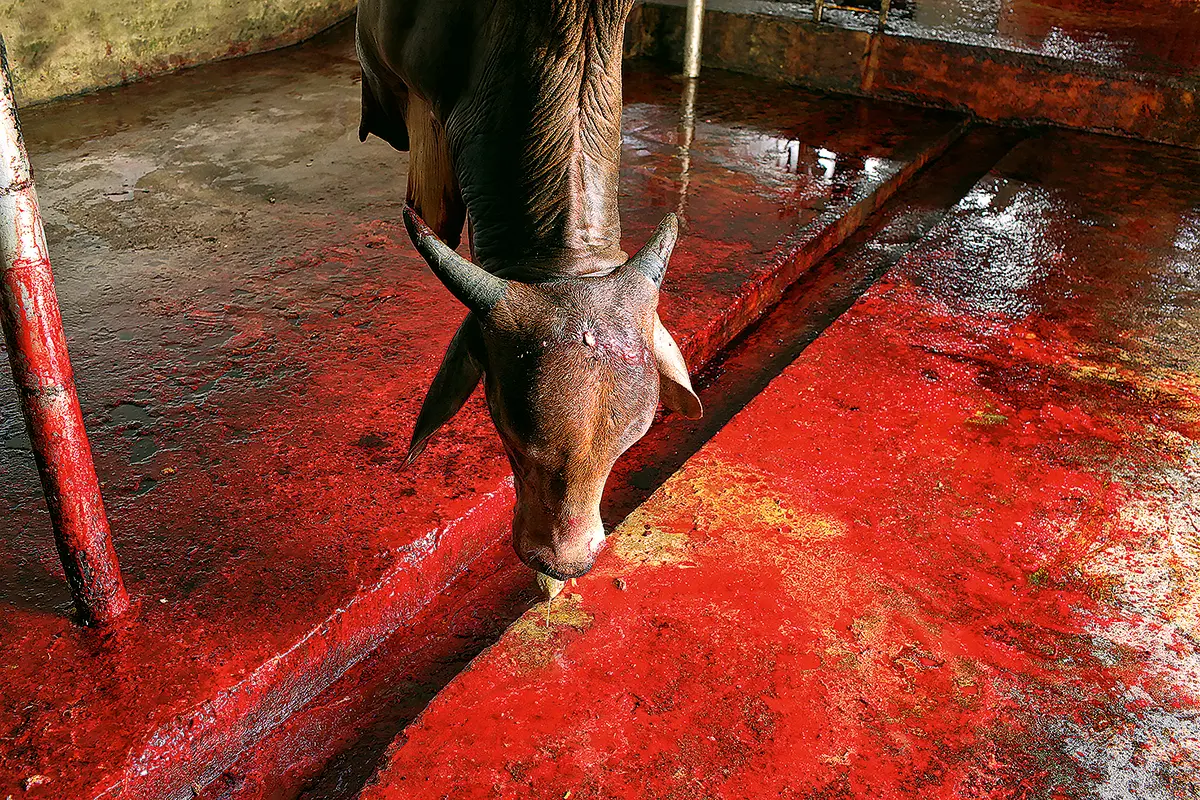
The exhibition and the book dialog with perceptions of human degradation, a crisis of values, the forsaking of ethics, at a time when Brazil is undergoing a moral and political crisis. It is a kind of aesthetic bridge between two moments of great suffering in the nation: the years of the civilian/military dictatorship when Ferreira Gullar wrote his Poema Sujo (Dirty Poem), and the contemporary moment, so intensely present in the urban imagination. In that trajectory, poetics appear as a form of catharsis.
The images produced by Márcio Vasconcelos, who has experienced São Luis viscerally for 60 years, connect powerfully with Gullar’s poetry; Márcio Vasconcelos never disassociated himself from the poet and his Poema Sujo.
Visões de um Poema Sujo results from an investigation developed by Diógenes Moura over the course of three years traveling back and forth between São Luis do Maranhão and São Paulo, with a deep immersion in Vasconcelos’ images, produced over the last 10 years. The curator’s fascination with the photographer’s work is due to the fact that Moura strongly identifies with someone who says what he also wants to say.
These photographs are not intended to reinterpret in any way Ferreira Gullar’s poetry. The Poema Sujo is a landmark in Brazilian Poetry and also in Ferreira Gullar’s oeuvre. It was written more than 40 years ago, during the poet’s exile in the former Soviet Union, Chile, and Argentina. For its author, the poem was a way of combating the pain of exile, one way he found to keep himself alive during those terrible years. For Diógenes Moura, the dictatorship is, like slavery, a scar that Brazilians carry with them without fully understanding it.
Márcio Vasconcelos has lived his entire life inside the Poema Sujo, in São Luis: the same geography inhabited by Gullar’s urban imagination. “Márcio knows what Gullar wrote; he sweats, bleeds, and suffers what comes through the surface of a São Luis that, like all Brazilian cities, struggles anguishedly in the face of the abyss the country is confronting,” says Diógenes Moura. The photographer was contaminated with Gullar’s poetics, which became viral in his expressive thinking.
The world described by Gullar remains in its comatose state today, 41 years later, and we are enveloped by a moral and ethical crisis that affects our bodies, our language, our gaze, and our education.
Every one of those images is a scream: violence and passion. It is also a mirror of what we are, immersed in our own creation and abandoned by all palliative public-policy projects. Via Márcio Vasconcelos’ photographs, the curator presents us with the giant scar described by Ferreira Gullar in Poema Sujo, and a veritable symbiosis between poet and photographer takes place in the images.
Diógenes Moura connects these works with a prior exhibition, Por Debaixo do Pano (Behind the Curtains), at São Paulo’s Casa da Imagem in 2015, by Nair Benedicto, a woman victim of the dictatorship who knows what it is to see the world from the point of view of a pau de arara (a torture device used often by the repressive forces in Brazil at the time). And also with the curatorship, he is working on now, for an exhibition of João Pina’s photographs about Operation Condor at Torreão Leste, in Praça do Comércio, Lisbon, Portugal—itself a country that experienced dictatorship for 48 years.
The exhibition’s opening was animated by the presence of Maranhão artists Rita Bennedito and Zeca Baleiro performing sections of Poema Sujo and of their home state’s folk traditions. Similarly, a sound installation featured the voices of Gullar, Zeca Baleiro, Rita Bennedito, Jorge da Fé em Deus (the late babalorixá—high priest of the candomblé religion—and an important figure in Maranhão), Marcelo Preto (of the A Barca group in São Paulo), and Zezé Meneses (Filha de Santo of the Fanti Ashanti House).
“I take what is dark, what is dirty, the old chairs, the old armoires, and give them light,” Ferreira Gullar says about the title of his poem. “I go all the way down, all the way to the back, and bring it all up: that which is poetry and that which is not.” That exaggerated realism, including childhood memories and scenes from everyday life, is what Márcio Vasconcelos refers to in his photographs: a sacrifice in an abattoir, where fallen cows bleed; sex on offer in the streets and seedy bars of Maranhão; the rites of a syncretic religiosity; a child’s fearful gaze; a worker’s sweaty body; all that was, and all that could have been.
HÉLCIO MAGALHÃES