“documenta was born in Kassel in 1955 and died in Athens in 2017”. This blunt statement, written by Alexis Stavros in the comments section of the documenta website, summarizes a widespread discontent among Greek observers with regards to one of the boldest decisions ever taken by Europe’s most important exhibition of contemporary art: adopting Athens as its second site.
Conceived in the 1950s and 1960s as a powerful platform for the promotion of modern art, and later of the artistic avant-gardes that in the 1970s and 1980s radically subverted the modern paradigm, in the new century documenta joined the critique of Eurocentrism in the arts initiated by Les magiciens de la terre, even moving events in its official program to Brazil, Egypt, and India. With the selection of Athens as a second site, however, it has gone even farther: documenta has split itself in two, one in Athens and another one in Kassel, the former held between April and July and the latter, between June and September of this year.
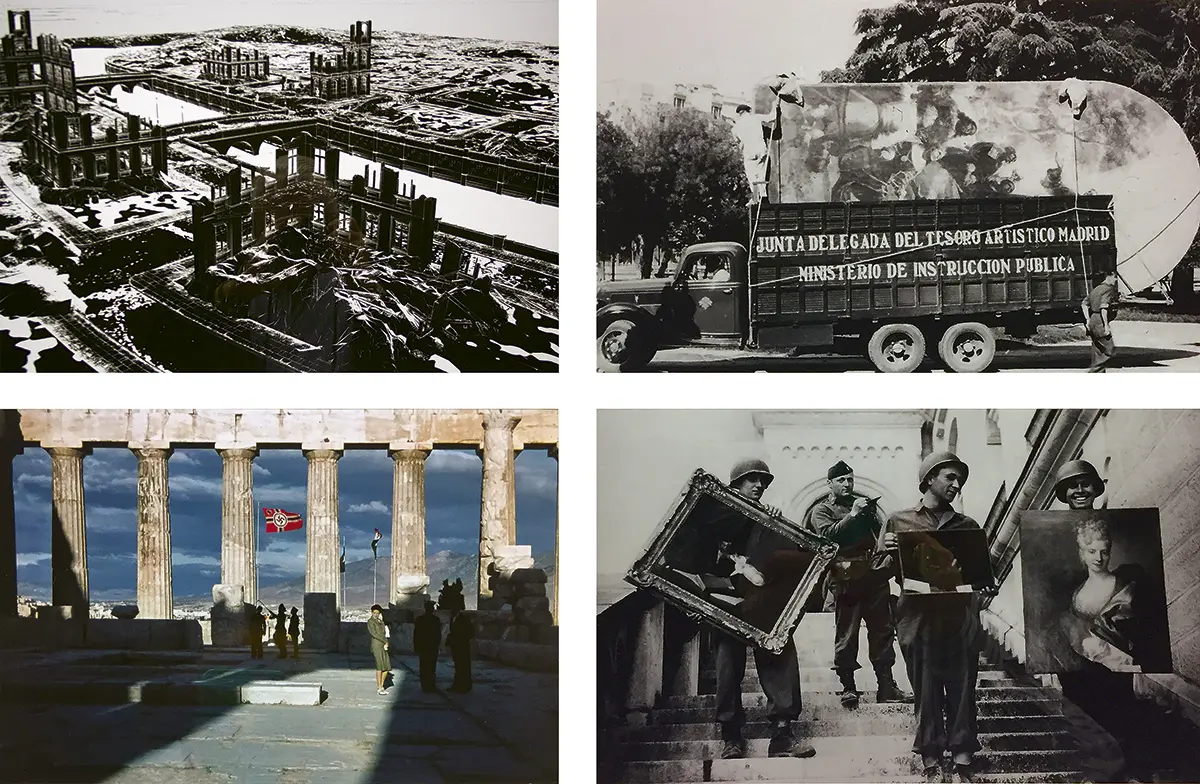
It could be assumed that the choice of Athens is simply the result of the German cultural world’s long-lasting fascination with Ancient Greece. Indeed, the Neue Neue Galerie—one of the locations for documenta in Kassel—holds a copy of the original edition of J.J. Winckelmann’s History of the Art of Antiquity, published in 1764, which is not only accepted as the first proper art history treatise in the modern sense but also understood as the first to provide an aesthetic canon for the veneration of the Greek legacy that has marked German art and thought from Hölderlin to Peter Weiss, from Hegel to Martin Heidegger (including Karl Marx). The choice of Athens would be in this view proof of the extraordinary persistence of such a deeply rooted devotion. The problem with this explanation is that the contemporary art on which documenta focuses is far from subject to any version of the aesthetic canon formulated by Winckelmann in his day—or, as a matter of fact, to any other canon, as the Spanish artist Daniel García Andújar reminded us with his Los desastres de la Guerra (The Disasters of War), exhibited at the Neue Neue Galerie, one of the sites for documenta in Kassel. García Andújar’s work consisted of a series of reproductions of Greek statues enclosed in a wooden structure crowned by a hybrid figure, a Frankenstein monster made from fragments of various sculptures of the same type: a penis, two female breasts, a torso, a shinbone. On June 23—the Night of St. John—García Andújar moved his work to the garden and burned it like a Valencian falla, with the evident intention of having the flames turn into ashes not only the harmony and the balance of the classical canon but also the very possibility of installing hybridity and incongruence, so common in contemporary art, as an alternative.
To sum things up: the selection of Athens and the decision—implicit in Learning from Athens, the slogan adopted by Adam Szymczyk, the event’s artistic director—to acknowledge the city once again as a preceptor and guide, responded to political rather than solely artistic reasons. The classical canon is no longer in force, and Athens is not a central site from which the international art scene is to learn anything different or wholly new. This was clearly demonstrated by the selection of works by Greek from the EMST (Athens Contemporary Art Museum) collection on exhibit at the Fridericianum Museum in Kassel. All of them worthy, none exceptional or particularly outstanding—just like the museum’s collection itself.
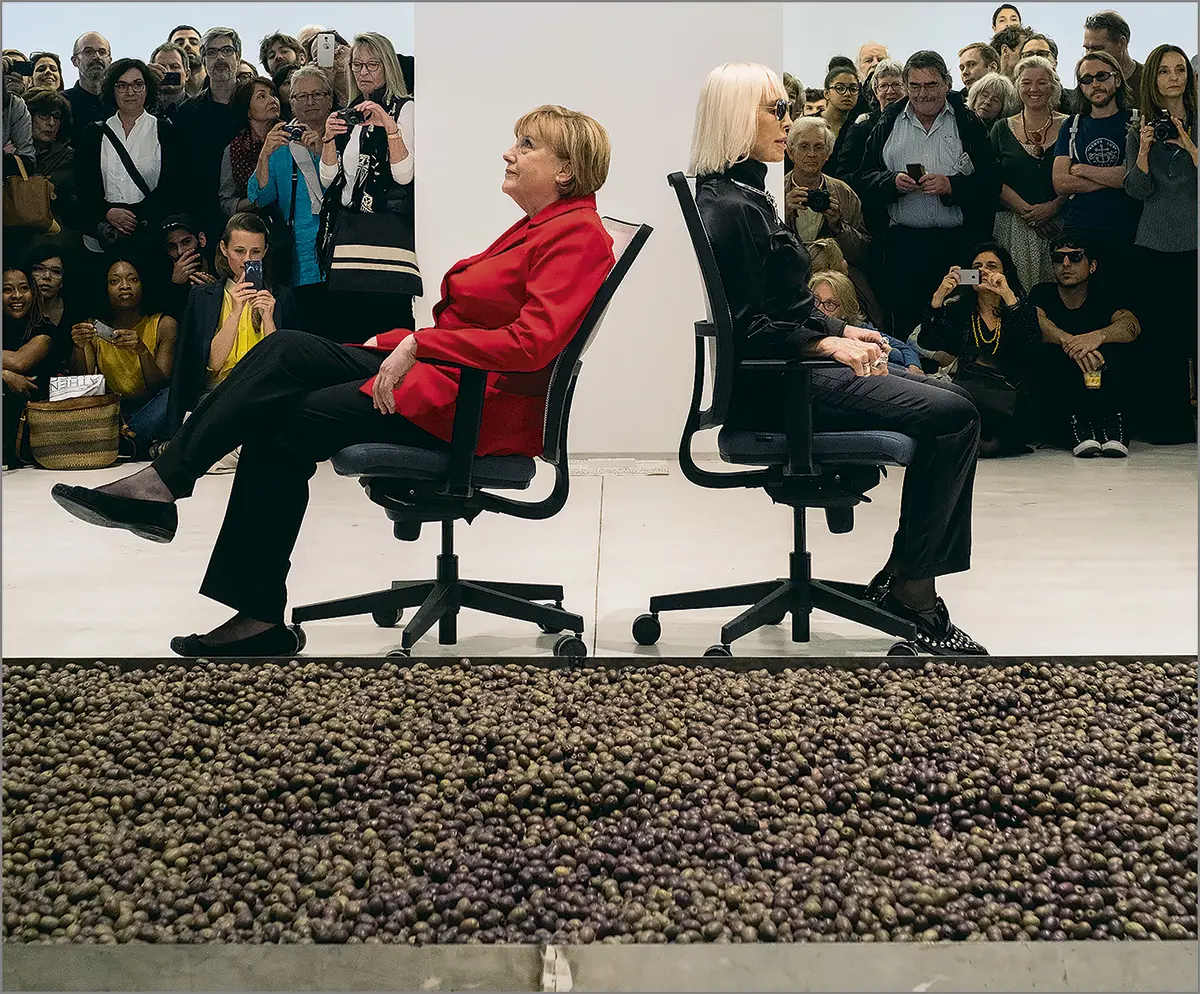
But, what can we learn today from Athens? We can learn anew the lesson of democracy, could be the answer given by Yanis Varoufakis, the brilliant Greek economist who, as Minister of Economy for the Tsipras government, led his country’s arduous negotiations with the European Commission to restructure Greece’s exorbitant foreign debt, which failed in the face of the Commission’s unshakable refusal. After this bitter experience, Varoufakis resigned and became one of Europe’s most passionate defenders of the idea of “democratizing” the European Union, where power seems to reside not in the hands of the people—the demos—but of the banks. Varoufakis was the first to publicly open fire against the Athens documenta. For him, to have Germany—the very nation that had exacerbated the suffering of the Greek people by refusing debt relief—cleanse its conscience or its image by bringing documenta to Athens, in a show of false generosity, was an unbearable insult. Varoufakis’ public statements opened the way for a deluge of criticisms online—like the one at the head of this article—whose authors paid no attention to the fact that the show included works that also critiqued this new form of German domination over Greece. The most impressive of such works was Marta Minujín’s. On April 8 (Opening Day for the Athens documenta), Minujín executed a performance featuring herself and a replica of German chancellor Angela Merkel, with a title that condensed the Argentinean artist’s a certain poetic proposal for the (im)possible payment of Greece’s debt: Payment of Greek Debt to Germany with Olives and Art.
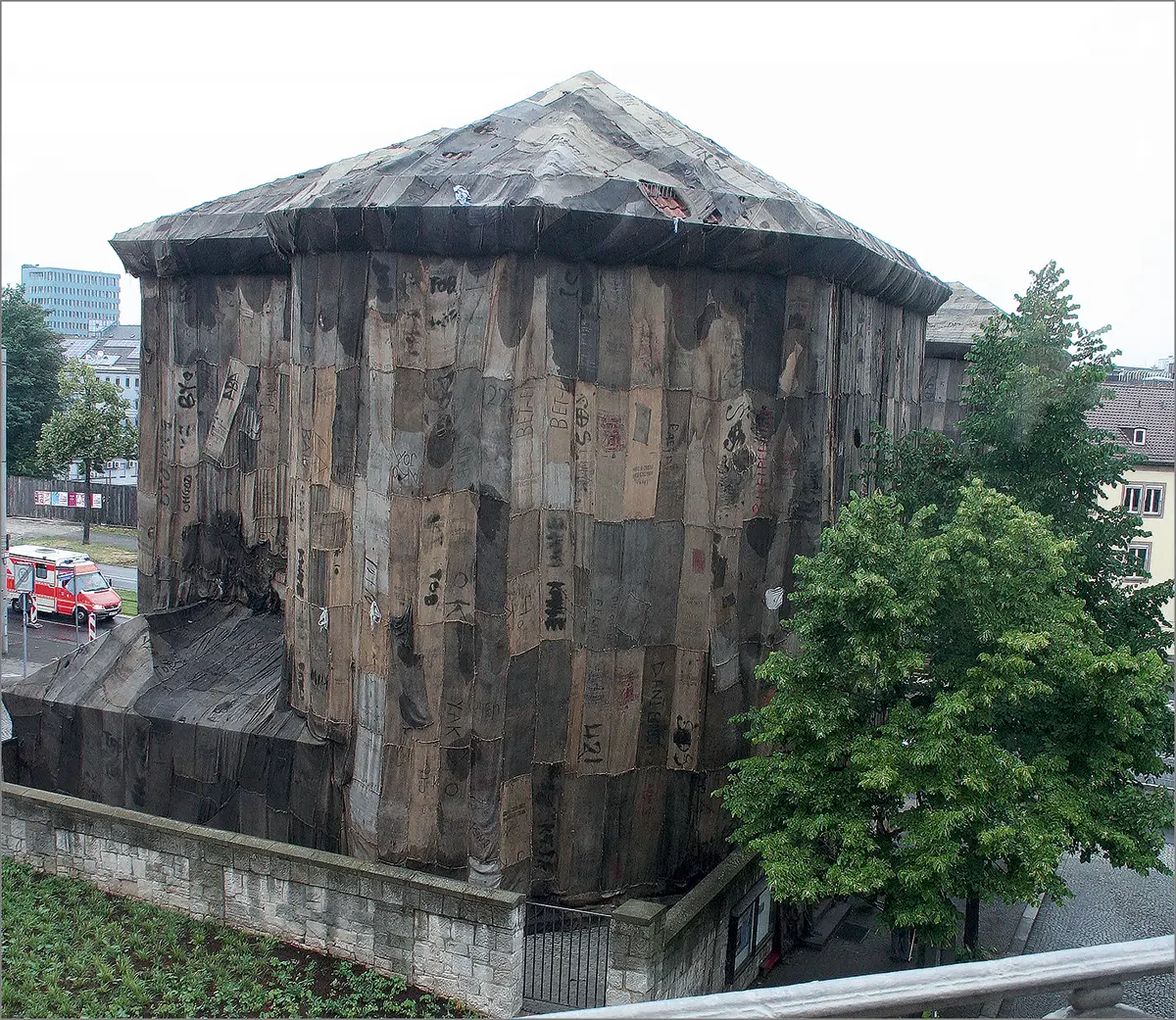
The criticism of documenta did not abate, either, in the face of works that evoked the extraordinary civic mobilization that brought down Greece’s previous conservative government, with its epicenter at Syntagma Square in Athens—a name that came to join the roster of plazas and public areas where occupiers shook political power all around the globe: Zuccotti Park, in New York City; Tahrir, in Cairo; Puerta del Sol, in Madrid; and others. All of them were stages for democratic exercises that, casting aside the protocols of parliamentarian, recovered the modes of Athens’ primitive democracy. At Syntagma, Ibrahim Mahama led Check Point Prosfygika, an intervention that evoked Sumando ausencias (Adding Up Absences), Doris Salcedo’s 2016 action at Plaza Bolívar in Bogotá. The difference was that Mahama’s team of collaborators covered the square with used coal sacks rather than white canvases with names written in ash.
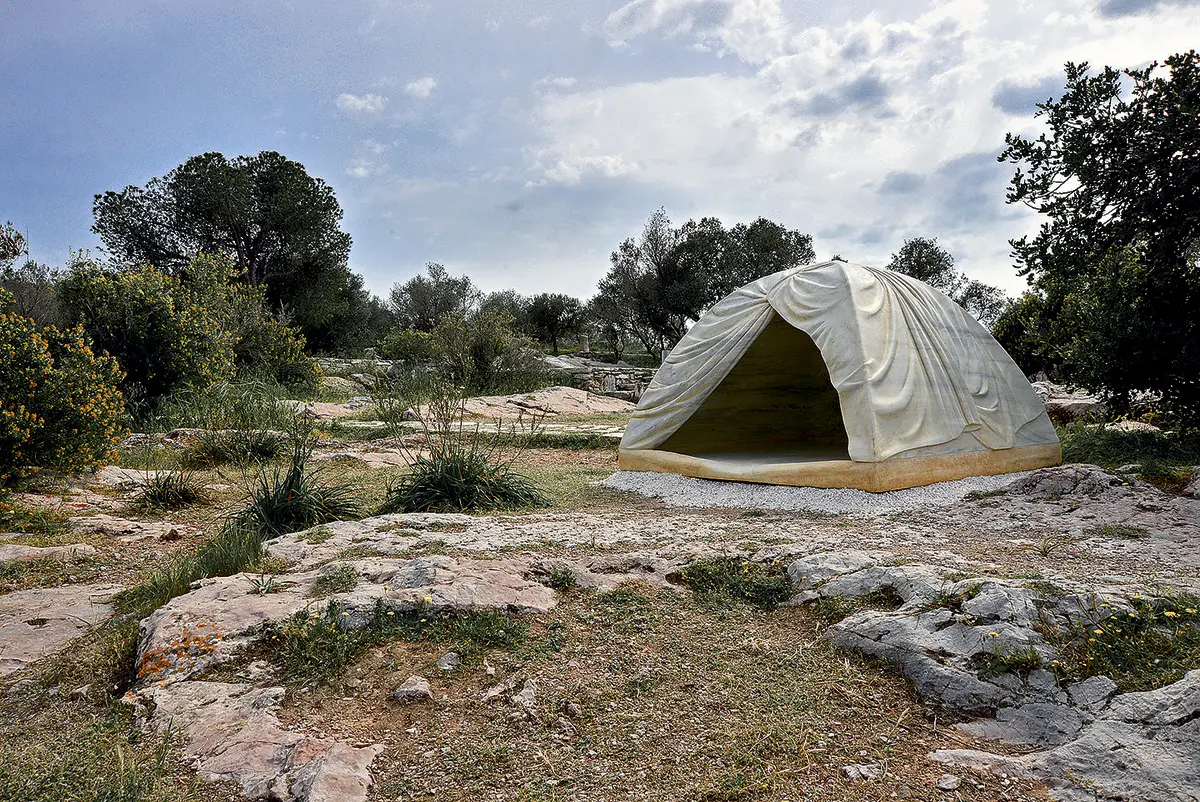
In turn, Rebecca Belmore erected in a park near the Acropolis a work that resembled the tents used both by the occupiers of Syntagma Square and by refugees in the camps that have sprung across Greece for people fleeing the Middle East’s war zones. Belmore’s title, From Inside, is as paradoxical and disconcerting as her tent—in fact, a statue, carved in marble.
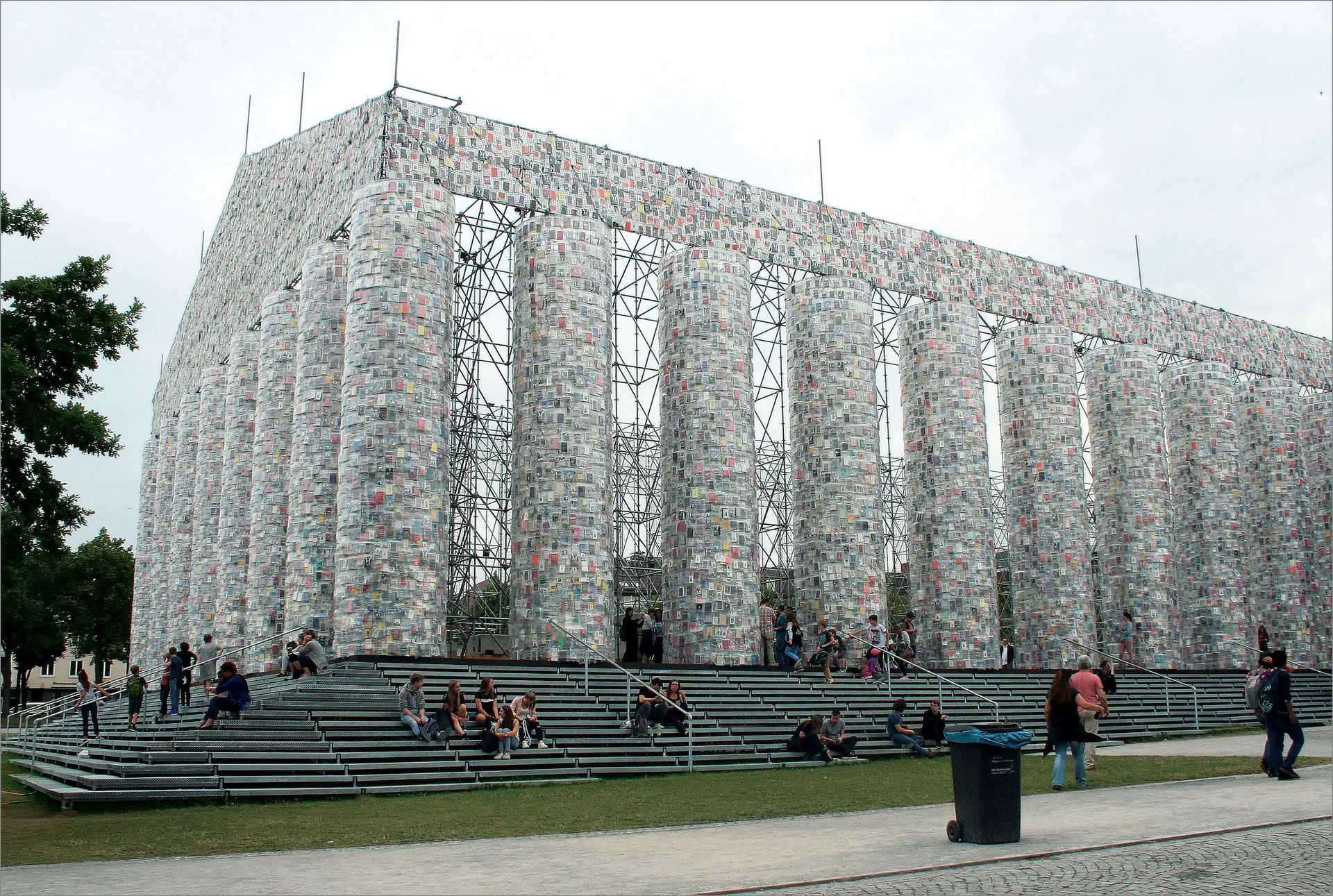
Marta Minujín was also the artist who most forcefully attempted to connect the Athens documenta with its Kassel counterpart. Her Partenón de los libros (Parthenon of Books), built at a 1:1 scale in Friedrichplatz, established that relationship in a much more conclusive way than any of the works from the EMST Collection on view at the Fridericianum. And it did more than that: in the country wherein 1933 the Nazis burned both the parliament building and many books (and wherein 1937 they burned many Avant-Garde works of art they considered “degenerate”), Minujín’s work reasserted the alliance that enlightenment culture has established between books and the very democracy of which the Parthenon is a symbol. Minujín also denounced the fact that there are still banned books in the world today.
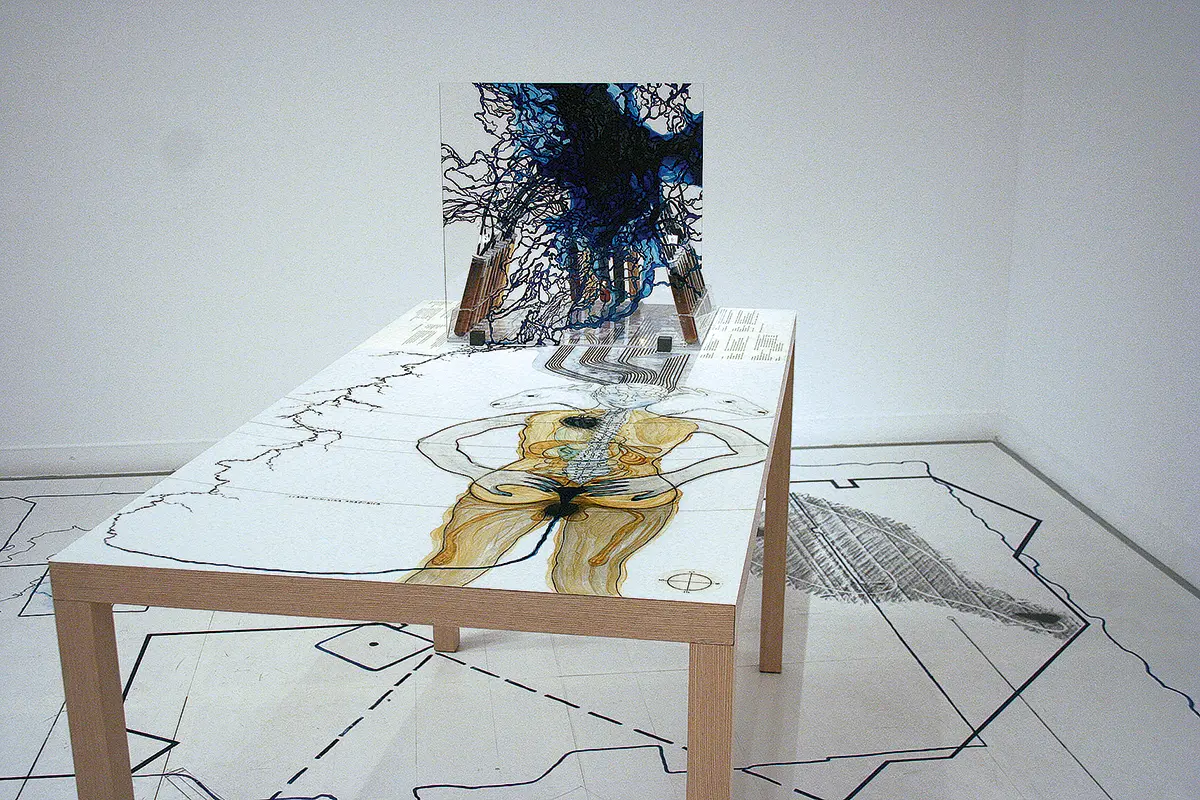
While Minujín connected Kassel and Athens by means of a powerful symbol of democracy, Mexican artist Guillermo Galindo brought to Kassel an irrefutable testimony of another tragedy currently besetting Greece: the tragedy of refugees that reach the country’s shores seeking to take Germany up on its offer to accept 200,000 of them and find that they cannot continue on their journey because not a single country of the former Yugoslavia will grant them passage.
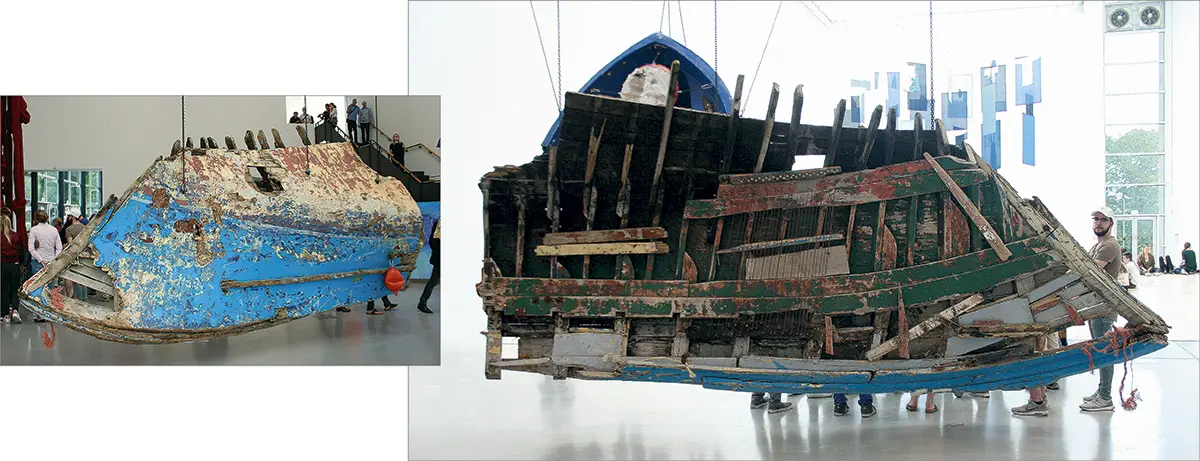
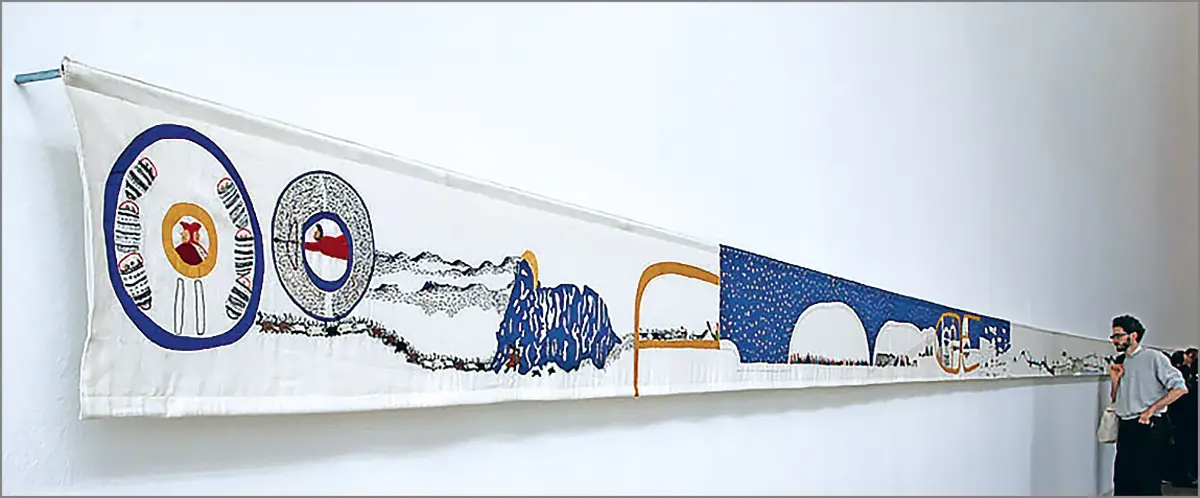
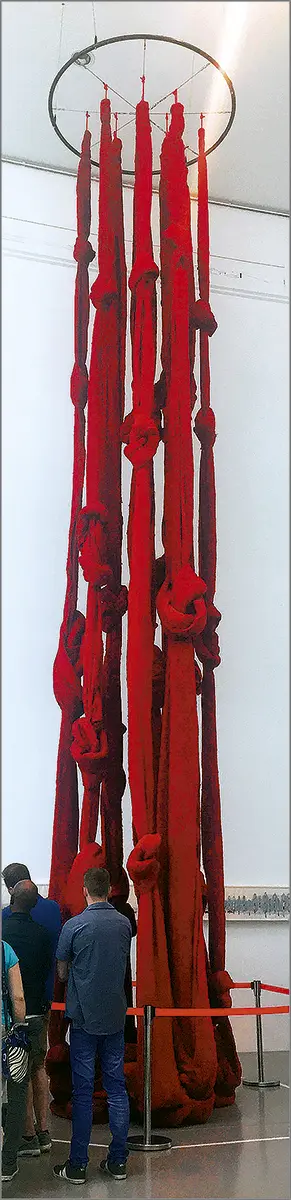
From the waters around the island of Lesbos Galindo salvaged the remains of the wreckage of one of those improbable barges on which the refugees, in their desperation, attempt to cross the Mediterranean, and installed them in the largest gallery of the documenta Halle. The effect was impressive, and it multiplied the impact of an exhibition space that included such outstanding, forceful works as Quipu Womb, a large assemblage of red fabrics tied in knots by Chilean artist Cecilia Vicuña, and Historia (History), a fabric belt, some twenty meters in length, on which the Swedish artist Britta Marakatt-Labba has painted a series of connected scenes. The large-format figurative paintings exhibited by Senegalese artist
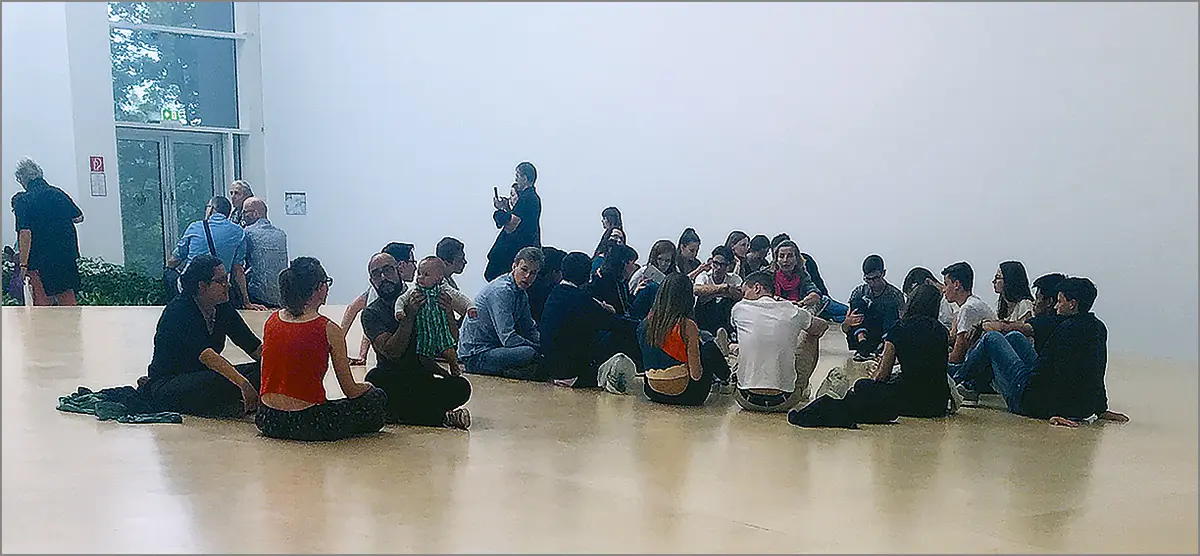
El Hadji Sy added color to what was, without a doubt, one of the documenta Kassel exhibition’s strong points. Annie Vigier & Frank Apertet rounded up it by covering part of the floor with a fine wooden stage that transformed the exhibition space into a theater where viewers presented to other viewers scenes of a random drama—something akin to the big city “involuntary narratives” that Akinbode Akinbiyi attempted to capture in Passageways. Involuntaries narratives and the Sound of Crowded Spaces, the work he exhibited at the Odeon in Athens.
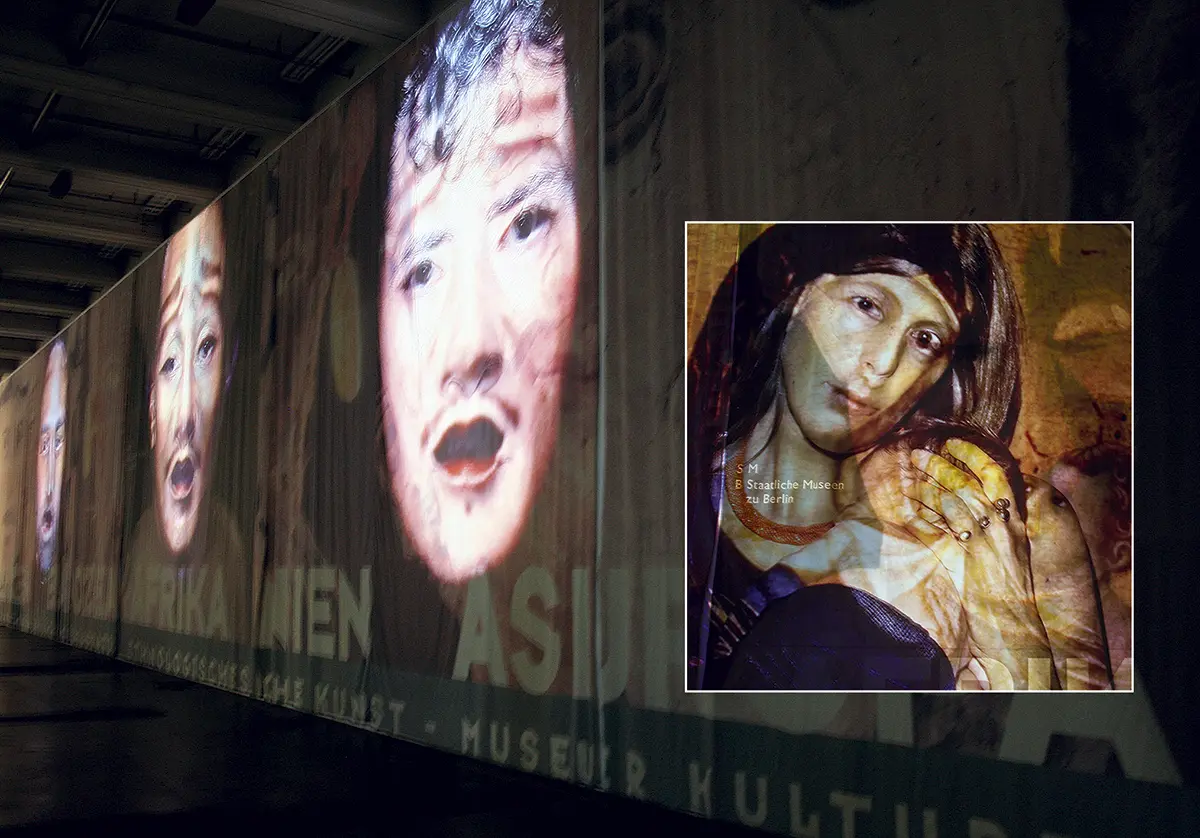
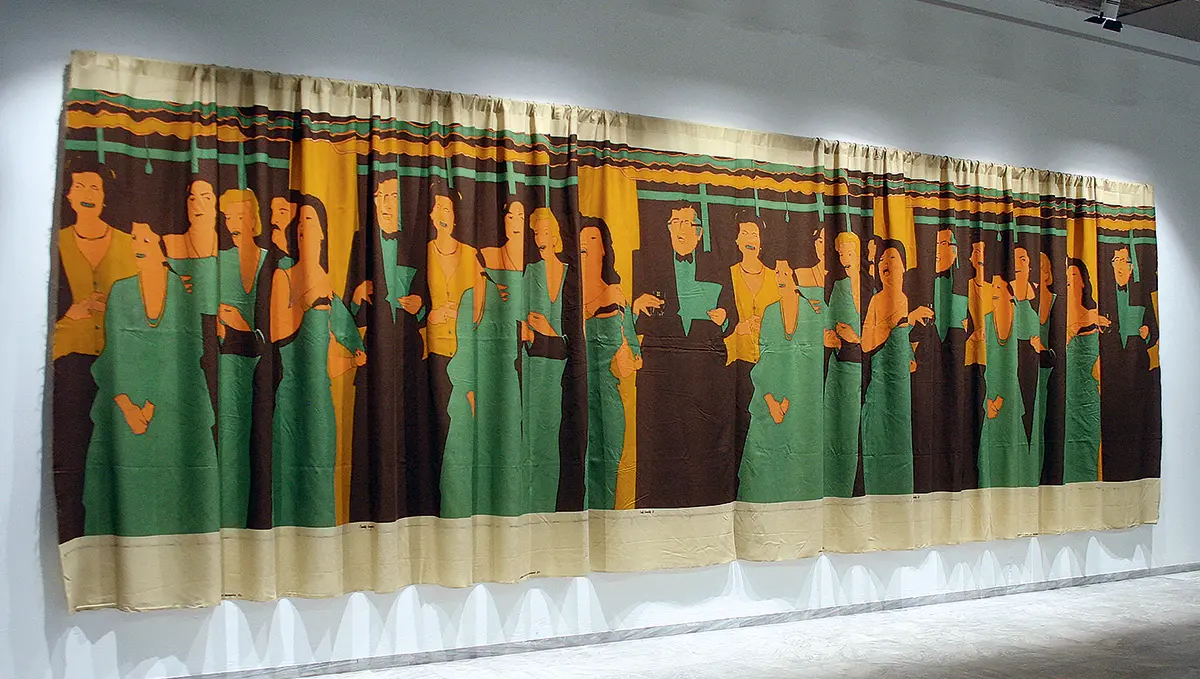
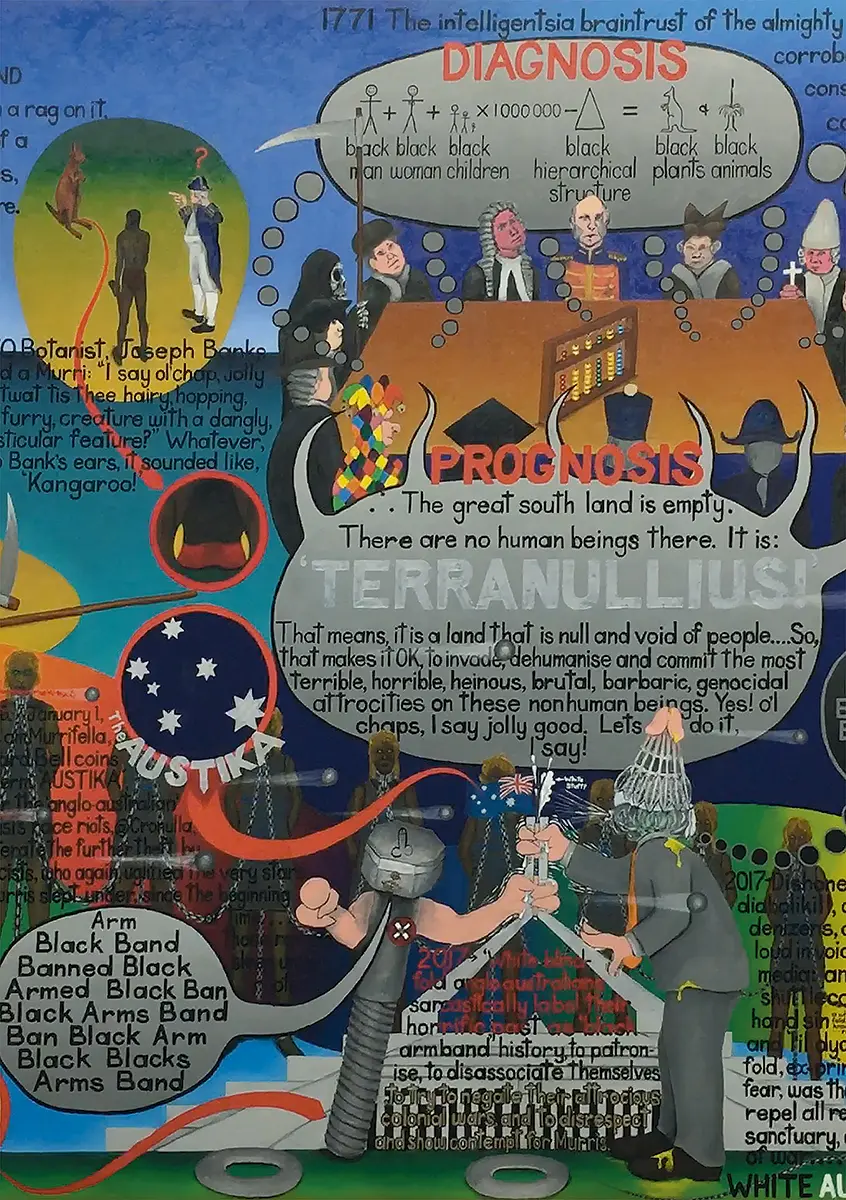
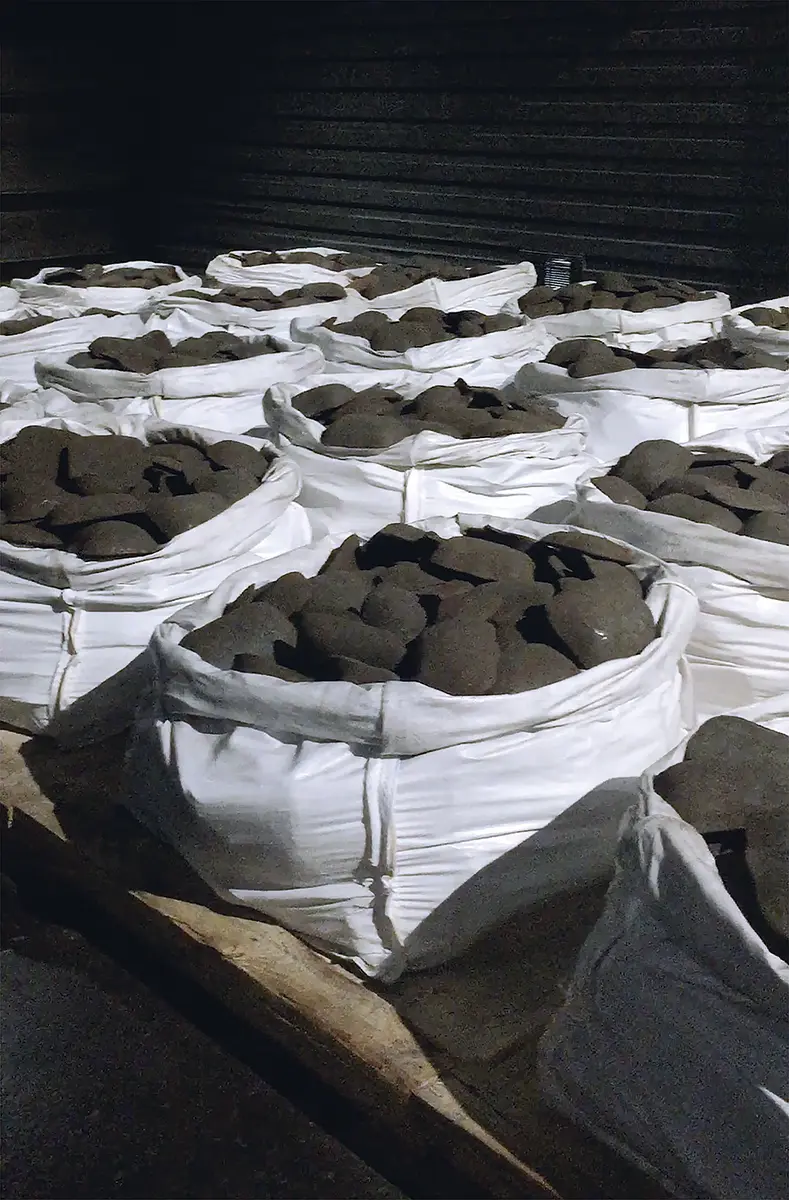
Another strong point of documenta Kassel was the Neue Neue Galerie—a converted postal office—now added to the event’s traditional exhibition spaces: Friedrichplatz, the Fridericianum, the Ottoneum, documenta Halle, Orangerie, and the Karlsaue Gardens. In the Neu Neue Galerie’s large exhibition hall, one of the centerpieces was Telón de la móvil y cambiante naturaleza (Curtain for a Mobile and Changing Nature), a large-format painting where Colombian artist Beatriz González presented her unique interpretation of Manet’s Le Déjeuner sur l’herbe, obviously related to Decoración de interiores (Interior Decoration), another of her large-format curtains, which was on view at the Odeon in Athens. The other centerpieces were Atlas Fractured, an outsize mural with video projections presenting Theo Eshetu’s vision of our tumultuous world—composed of Murriland and The Reading Room, two complementary murals by Gordon Hookey and Rasheed Areen, both artists and the editors of the London-based journal Third Text, titled, respectively—and US artist Dan Peterman’s installation of fifty white sacks filled with iron ingots. So, I will limit myself to mentioning a couple of landmarks and some of the most outstanding works among those exhibited by Latin American artists.
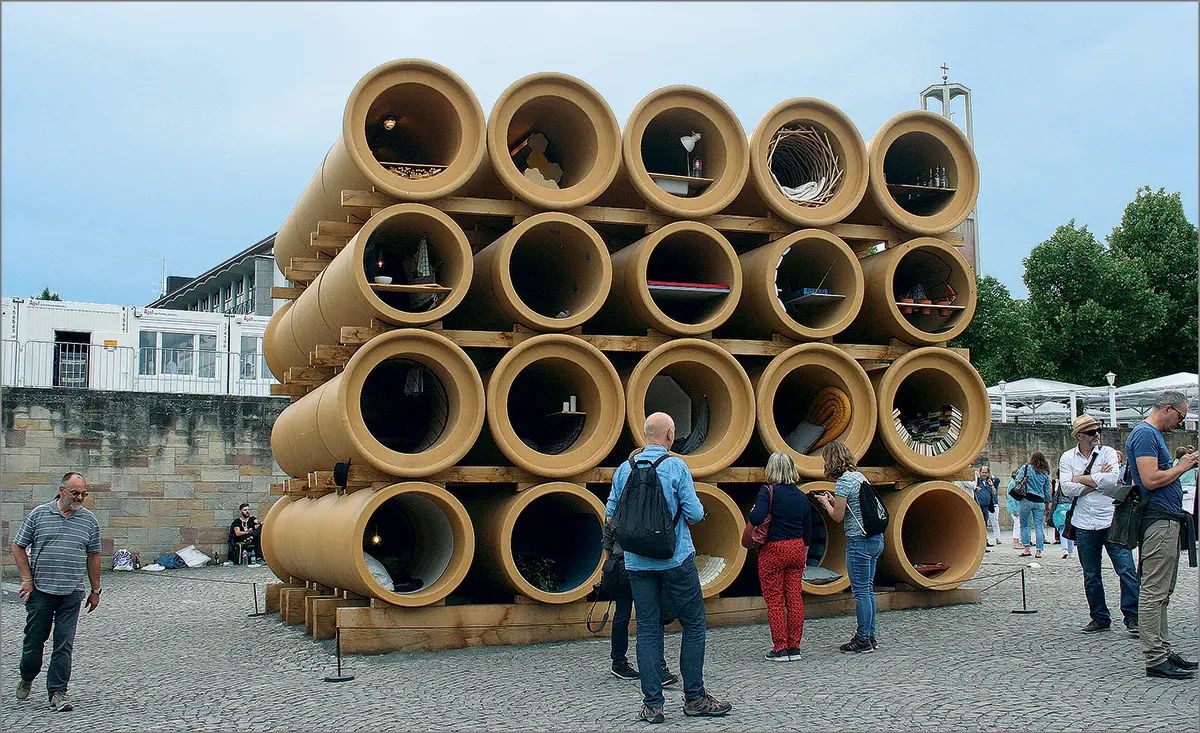
The landmarks: the sculpture of large pipes piled up in Friedrichplatz that Hiwa K and his team of art students set up as micro-shelters for refugees or homeless people. And Nigerian artist Olu Oguibe’s Monument for Strangers and Refugees, an obelisk erected at the Königplatz with the biblical quote “I was a stranger and you took me in” inscribed on its faces in German, English, Turkish, and Arabic.
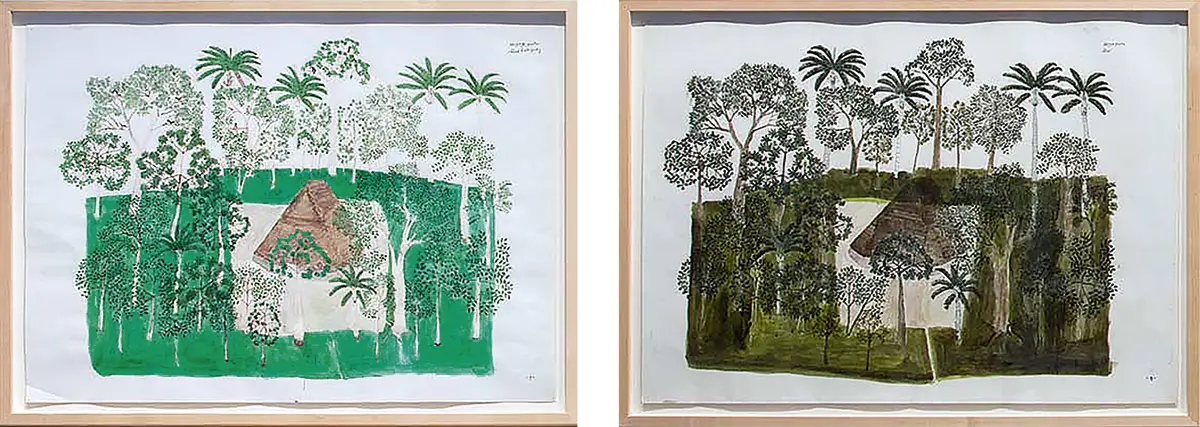
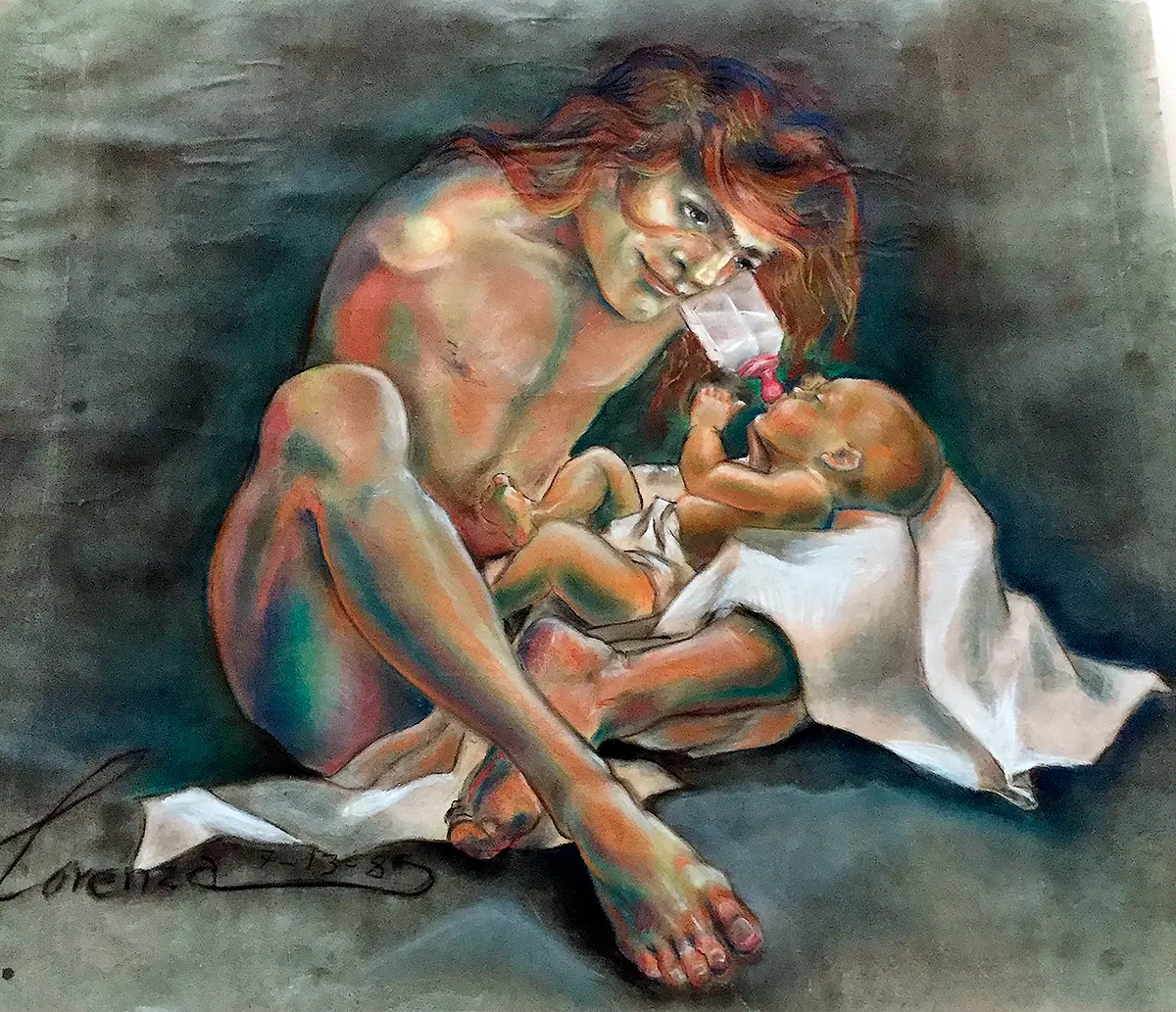
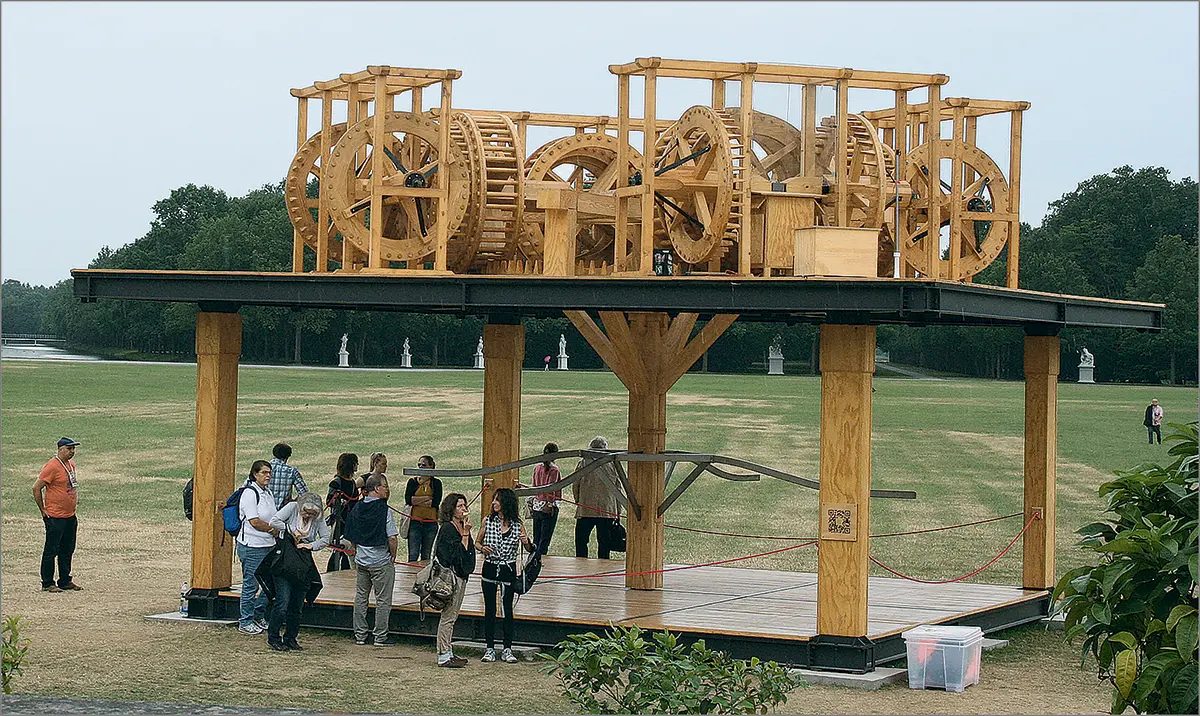
Among the works by Latin American I will note, first, El molino de sangre (The Blood Mill), a large sculptural set by Mexico’s Antonio Vega Macoleta, at the Karlsaue Gardens; Argentinean artist Vivian Suter’s paintings at the Glass Pavilions; Colombia’s Abel Rodríguez’s drawings of the Amazon rainforest, at the Ottoneum; the formidable self-portrait presented by the late transsexual Chilean artist Lorenza Böttner; and A War Machine, an installation by Peruvian artist Sergio Zevallos. The last two were at the Neue Neue Galerie, where audiences were also presented with a notable selection of works by Cuban artists.
* Photos: Leon Birbragher.
CARLOS JIMÉNEZ
Essayist and art critic. Professor of aesthetics.