
Myths influence, seduce and produce magic; they charge objects with vitality and energy. And art is precisely a place where myths and beliefs are projected. The fifth solo show by the Mexican artist known as Dr. Lakra at the Kate MacGarry Gallery in London alludes to pagan myths, the sacred, superstition, and the human spirit. The exhibition focuses particularly on the relationship between myths and art. Powerful and magical, myths are gateways to artistic creation; they infuse life and energy into objects and art.
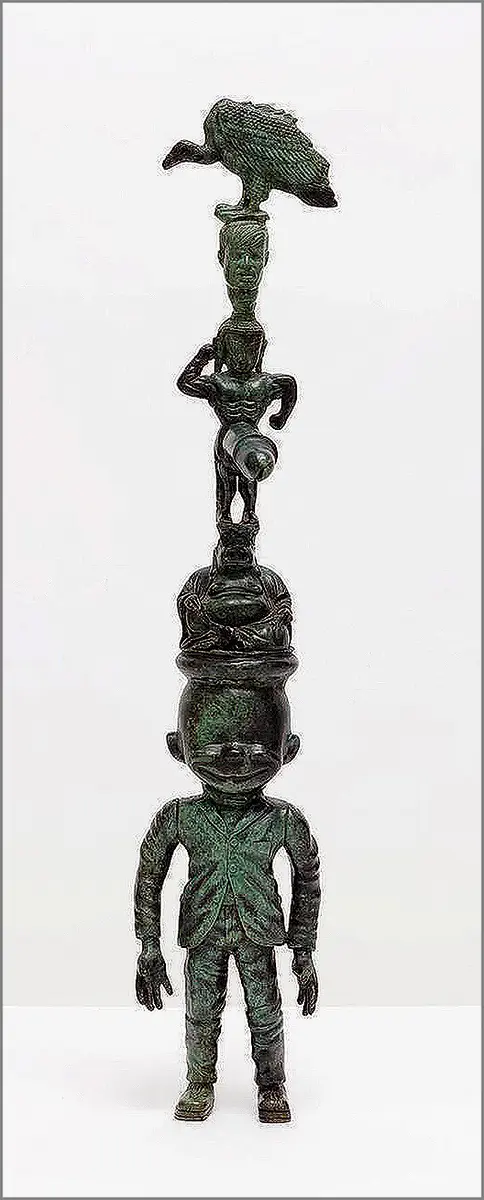
Upon entering the gallery space, it would appear as if we were inside a sort of sanctuary. In-display cases, on pedestals, and hanging on walls, the works have been neatly arranged throughout the exhibition space. Dark and opaque tones are set in contrast against the white walls of the gallery. It is as though the pieces have come out of an anthropology book, an anatomy laboratory, an antique shop, a museum of natural history, or an archeological depository. Dr. Lakra presents a collage of objects, figures, and information that associate, connect, interact, and establish dialogs with one another.
There are sculptures in bronze, stone, and wood, collages, mural drawings, artist books, and tattoos. We recognize a variety of icons, figures, and symbols from different cultures and diversity of geographical contexts and historical periods. Dr. Lakra presents us with a strange and exotic display that includes recognizable figures like Osiris and the Buddha. There are also totems from North America, children’s toys, samurais, Peruvian pottery, demons, medieval swords, dissected spiders, stupas—Buddhist structures used to store relics—and objects from Ancient Greece and Mesopotamia. We become disoriented amid this hybrid of images and information, in an exhibition where beauty and the grotesque become entangled to shape the exhibition experience.
Like an archeologist digging deep into the past, Dr. Lakra relies on ancient experiences, the traditions of primitive civilizations, and dreams that have survived the passing of time. He discovers, appropriates, and adopts a variety of myths; relies on historically-charged images and objects that are also filled with energy and magic. He studies and transforms them. They are no longer used in religious ceremonies or experimented with in laboratories like anatomy mockups. Dr. Lakra transforms them into art objects that nonetheless remain sacred. He arranges them across the exhibition space as he gives them new meaning and fills them with new life.
The highly symbolic pieces allude to the sacred, the secular, the scientific, and the artistic; to the religious and the profane, to high culture and popular culture. They also touch on themes like language, power, and the use of play; the ephemeral, permanence, war and the ego; worship, nature, and truth. The works tell us a variety of stories, but we feel as if we were in the middle of a ceremonial site used to cast spells or incantations, where the pieces serve the purpose of revealing dark secrets. We are compelled to participate in some pagan ritual and become part of its mystery. Dr. Lakra’s imaginary is attractive, it sparks our curiosity, but it also repulses us and appears foreign to us.
This Mexican artist relies on a certain type of knowledge in order to borrow aesthetic values from the past and the periphery, adopting and transferring them to contemporary culture. He appropriates them to insert them into a new context from which to reclaim underlying ideologies and question moral precepts. In this manner, Dr. Lakra generates a sort of cultural resistance while also questioning identity principles. We recognized a combination of imaginaries that are not hegemonic, a tension between global and local, central and peripheral realms, between dominant and subordinated elements, between that which is colonizing and the colonized. He reclaims the wisdom and teachings from outside of civilization and confronts the categories that set beauty and ugliness apart, sin and virtue, pain and pleasure, good and evil.
This exhibition by Dr. Lakra encourages reflection on the meaning that we confer to objects and art; on the myths and beliefs that render them powerful and magical. He makes us pause and think about what the objects ask for and want from us. But we also realize that the objects, and art, are reciprocal in that they give us vitality, influence us, seduce us; they cast a spell on us that transforms us into powerful and magical beings.
PAULA LÓPEZ ZAMBRANO