
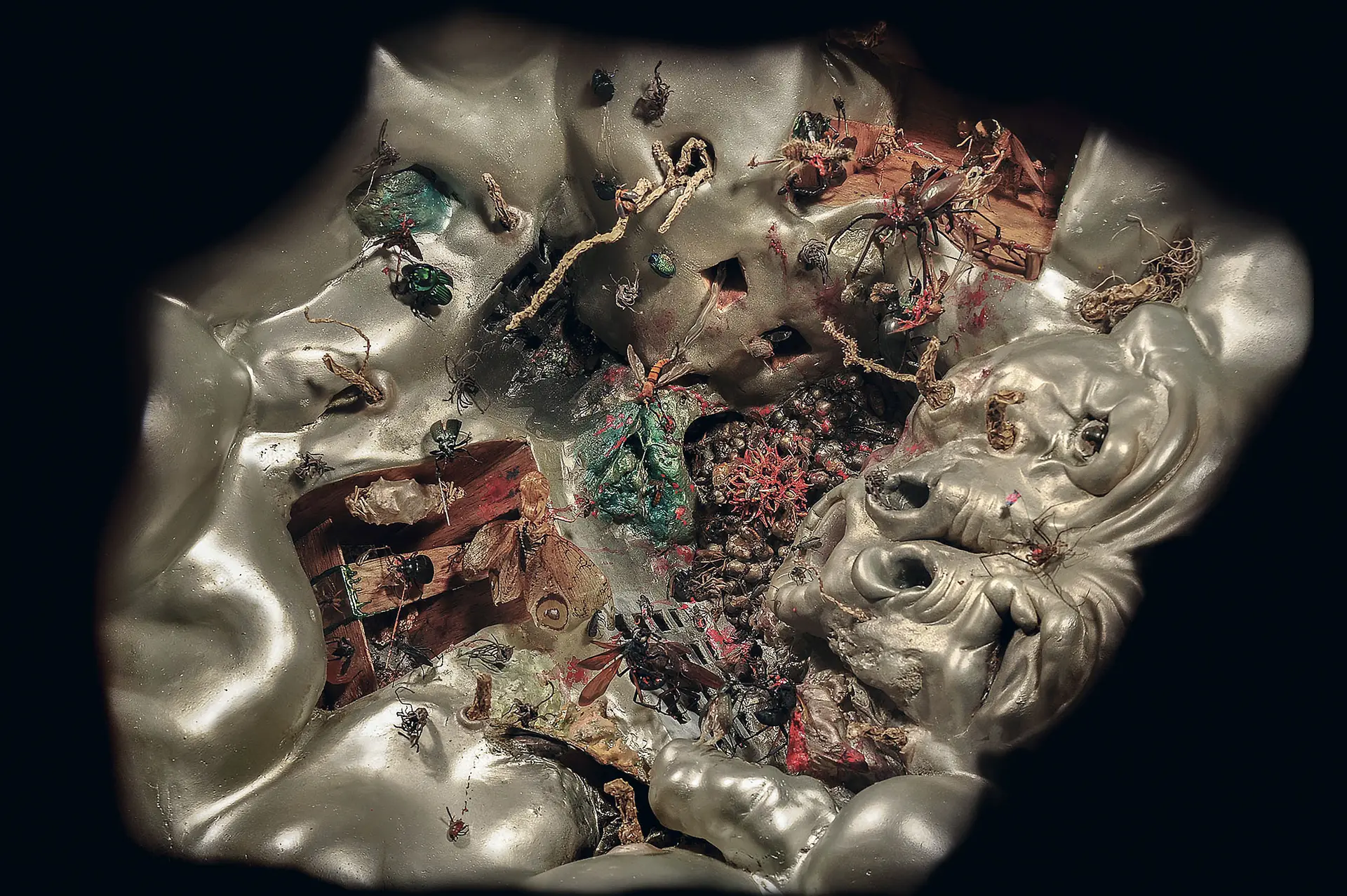
With its title, La imaginación del desastre (… o qué y cómo hacer con la maldad) [The Imagination of Disaster (…Or What to Do With Evil, and How)], this show at Arte x Arte might prompt in visitors the expectation of encountering all manner of ghastly sights. With the essay by the curators—“Crimes, satires, concrete and deliberate, abstract and suggested monstrosities, insults, laments. This could be the sampler. [Italics in the original] In every case, and of course in a fictional register. To show the left side of the human enterprise, the cruelty that lurks behind the mantle of civilization, our inclination towards that which any sane judgment would consider evil and perhaps has been, to a good degree, misunderstood”—perhaps others will expect to find a collection of political statements. But what Pablo Orlando and Jorge Zuzulich propose is an anthropological, even psychoanalytical approach to the notion of the evil that attaches to life itself: “the goal of this exhibition is to give shape to the malaise, staged as an escape valve for discontent.”
Susan Sontag looms large over this exhibition. She was the author of “The Imagination of Disaster,” an essay about what science fiction films reveal included in Against Interpretation (1966). There, Sontag writes: “Science fiction films are not about science. They are about disaster, which is one of the oldest subjects of art. (…) we live under continual threat of two equally fearful, but seemingly opposed, destinies: unremitting banality and inconceivable terror.”
Orlando and Zuzulich recover this knowledge and add the sentence “(…Or What to Do With Evil, and How)” for the presentation of 23 contemporary artists working in photography, video, painting, printmaking, installation, video performance, music (audio, live performances, and video clips), and texts. In tune with the idea of disrupting formats and leaping in time, the curators violated the unwritten norms of the institution hosting the show.
Arte x Arte, Alfonso, and Luz Castillo Foundation were launched as a site for the exhibition and study of photography and new media (new technologies). The 2017 edition of the Arte x Arte Prize included photography by Florencia Levy, with a QR code presenting another side of the same vista. A pioneer in the Villa Crespo neighborhood, now booming with art galleries, the Foundation opened its doors in 2002. The artistic director for this 1,800-square meter space—three exhibition floors, a reading and video room, laboratories, archive, auditorium—is Eduardo Médici.
La imaginación del desastre… makes it abundantly clear that its curators are academics, professors of aesthetics at Universidad Nacional de las Artes and Universidad Nacional de Tres de Febrero. Orlando and Zuzulich do not hide this fact: in the first page and a half of the catalog essay, they quote Lukács, Sontag, Bataille, Nietzsche, and Cioran.
Three Levels
Arranged on three floors, the artworks included in this exhibition represent different modes of existential tension, push forth different poetics and supports, amplify humor and unease, and depict a number of physical anomalies and alterations. They traverse a variety of temporalities and open a formal dialog between them.
The lower level greets visitors with a clip from Carol Reed’s The Third Man, a film set in postwar Vienna that offers much more than a police drama by focusing on a smuggler who adulterates batches of penicillin and causes the death of thousands. The curators chose this movie because the evil of the act summarizes the meaning of the exhibition, as does a photograph by Olivier de Sagazan (as well as his works on the second floor).
A text by German philosopher and writer Rüdiger Safranski is included as a provocation: “Art, which comes from the nothingness of a free imagination, can sink back into this nothingness. A potential for destruction and self-destruction takes shape inside art. Then, we speak of a crisis of narrative, of unintentional fragments, of the dissolution of the form (…). And precisely because of that, art is particularly threatened by the nothingness of a lack of meaning.”
Juan Cuello must surely find some kind of meaning in his work in progress on a wall in the gallery’s white-colored exhibition space. El placer de Sentir culpa (The Pleasure of Feeling Guilty, 2017) will disappear as soon as the show ends. Between irony, persistence, and vanity, the lines grow in front of the audience as Cuello draws a figure whose testicles are one (and a very inflated one at that). While the lyrics of Echo & the Bunnymen’s The killing moon (1984), playing in a video clip, equate desire with a hypothetical death, in Amablemente (Kindly, 1963), a milonga written by Iván Diez and declaimed by Edmundo Rivero, death indeed comes to pass by the hand of a man who stabs his unfaithful wife: femicide sang about in public without anyone raising an eyebrow!
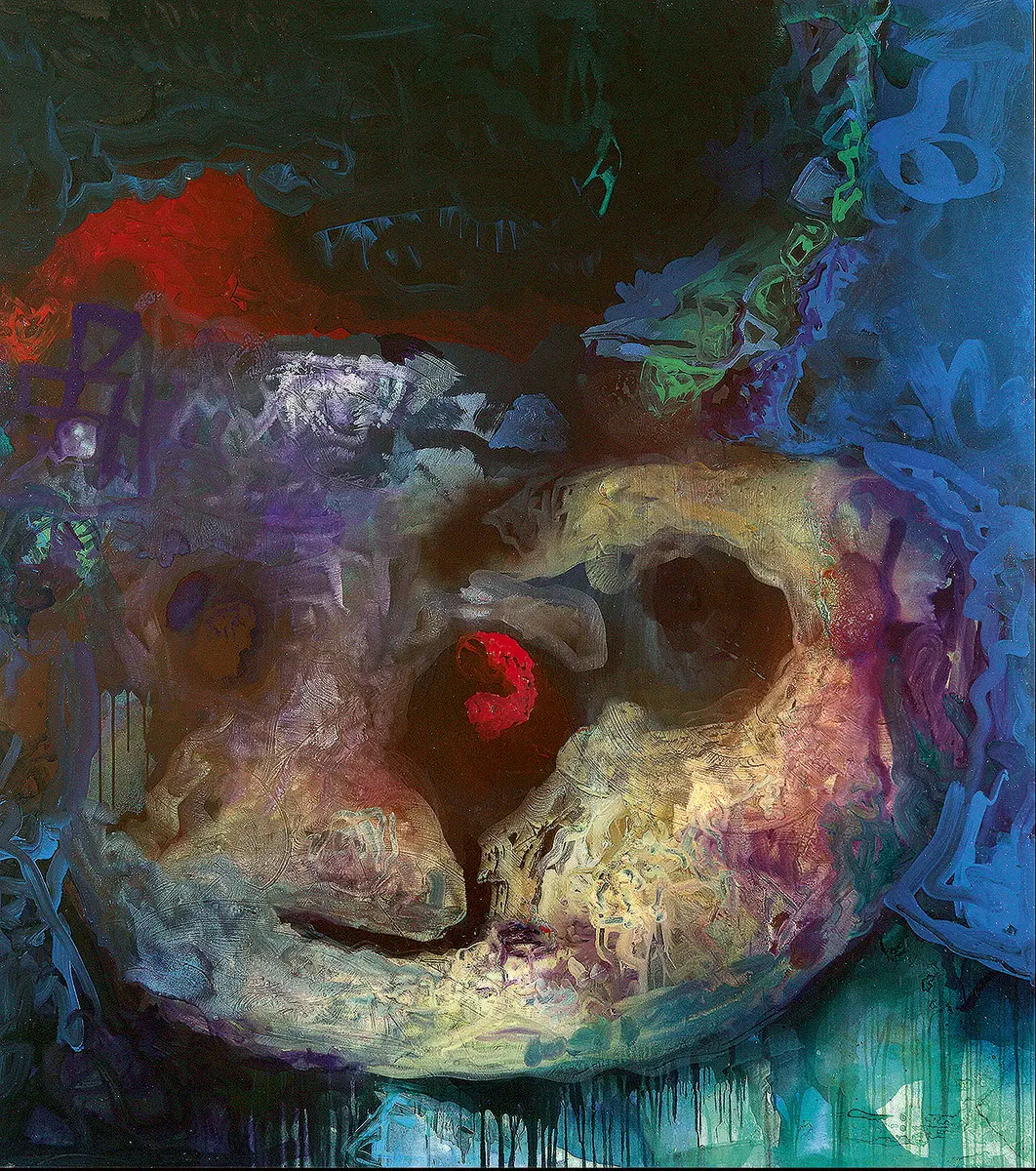
The photographs with which Juan Manuel Fiuza works in El concilio (The Council, 2016) are doubly lacking in identity: they are anonymous police mug shots (downloaded from the Internet), intervened by the artist in such a way as to render them undecipherable. In their deformity, they come into contact with Orpheo (2008), Alfredo Prior’s painting of a stuffed bear that speaks of… the loss of our childhood world? The loss of love? There is a primary form of violence in the open mouths of the series Monstruos (Monsters) and the potential for sexual violence in the objects of the series Bondage, with elements of self-flagellation and sex toys.
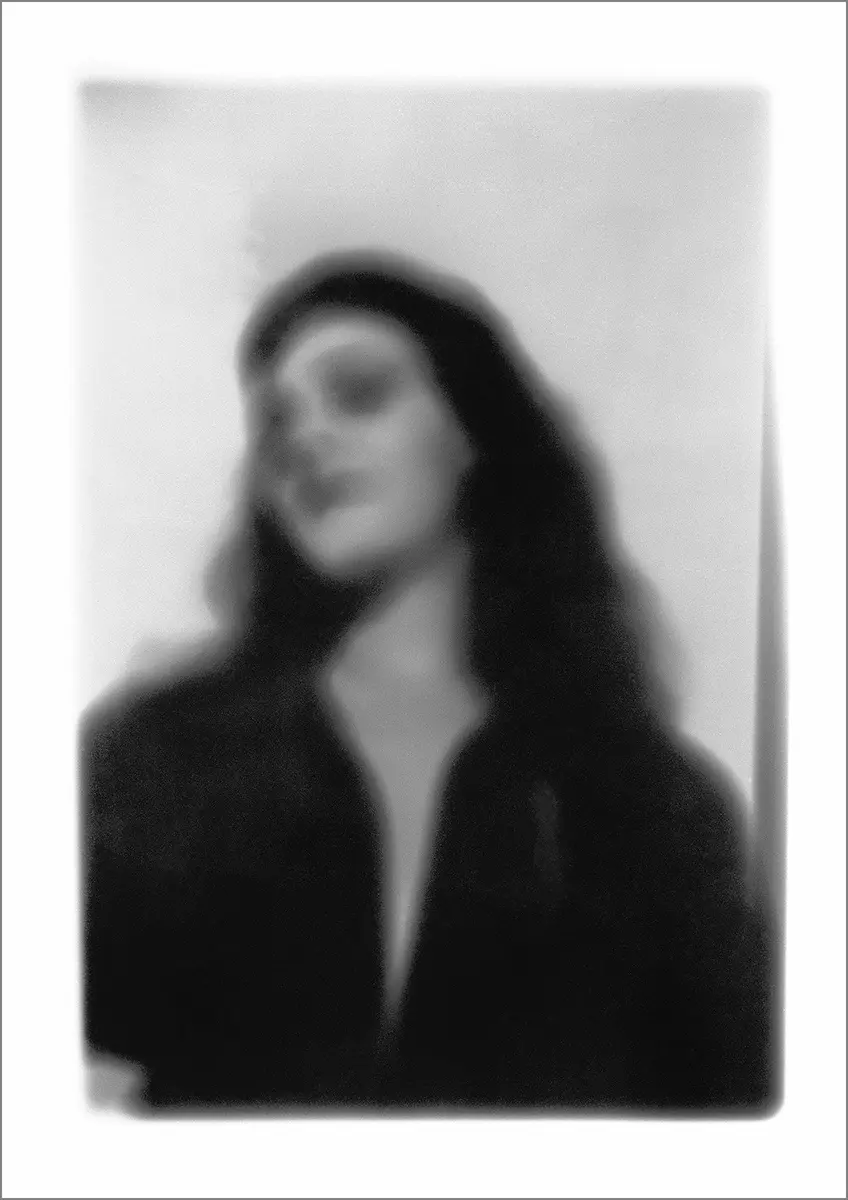
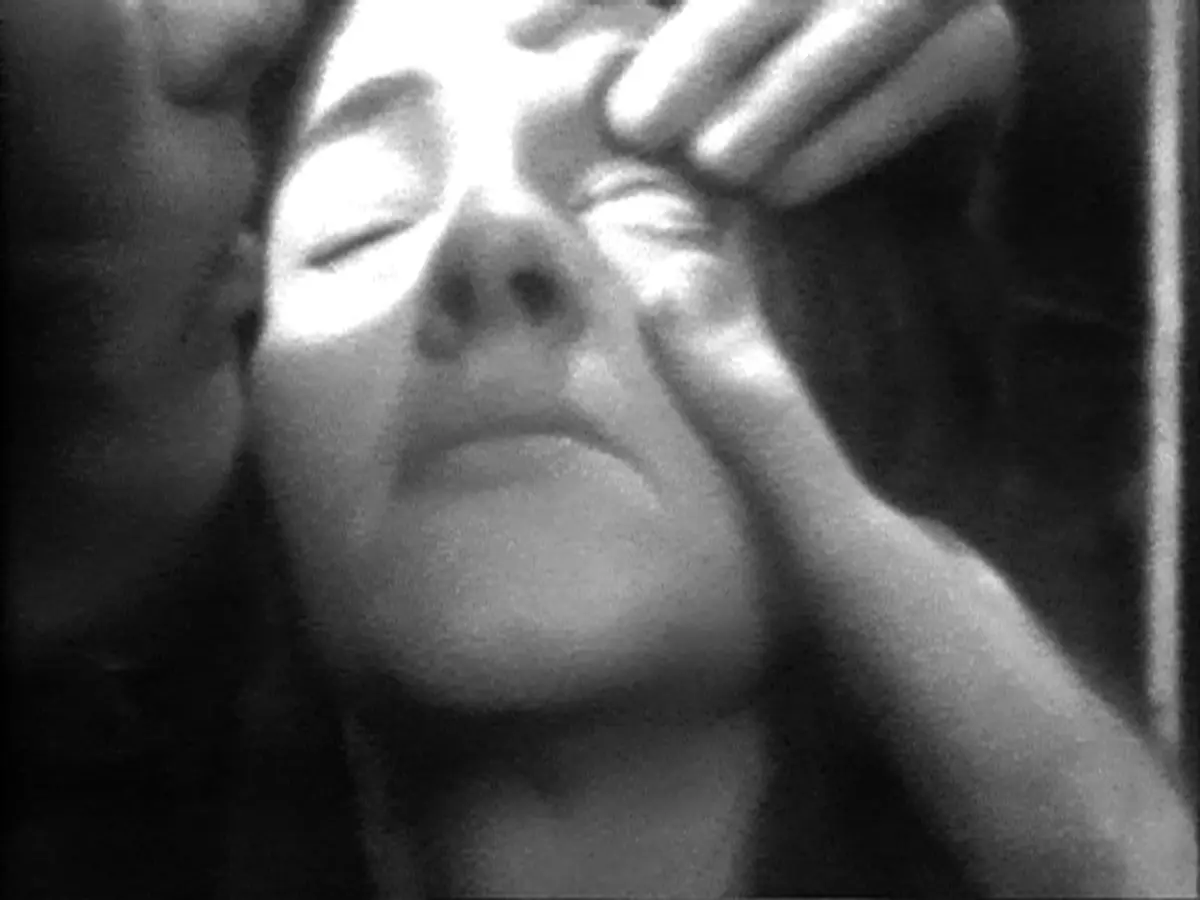
An apparent will to self-torture reappears on the first floor with Vito Acconci’s video-performance Pryings (1971), in which the artist attempts, over 17 minutes, to pry open a woman’s eyelids. The image also invokes the terror of seeing a razor blade cutting an eyeball in Buñuel’s Un chien andalou. “To pry”, of course, also means “to intrude”; the woman does not want to air or divulge her privacy—a lost battle in the social media era. We find another form of the religious in singer Liliana Felipe’s confession: in a matter of seconds (from a live performance recording), she ironically admits her defects and faults but keeps going—Voy a misa (I Go to Mass, 2007). Irreverence is also present in Marcelo Bordese’s Letrina (Latrine, 2015), with its cross, vaginas, two-headed torso, and toilet, and in other paintings by him, like Cabeza (Head, 2010), which suggests not symmetry but a certain messy eschatology. There isn’t any harmoniousness either in Alejandro Kuropatwa’s shaky photograph of a young woman with hollows for eyes, from the series Fuera de Foco (Out of Focus, 1982), developed during his New York City years.
The text in the gallery is by Georges Bataille: “If we don’t have the strength to destroy by ourselves the excess of energy, that energy will remain unused. And, like an uncontrollable wild animal, it will destroy us; this is to say, it is us who make the explosion unavoidable.”
Bad energy in Mother (1983) The Police’s hard-hitting song: “Well the telephone is ringing/is that my mother on the phone? (…) / Well every girl that I go out with / becomes my mother in the end.” As a comment on YouTube puts it, this (terrible) song could have been written by Sigmund Freud. Luciana Arias’s black and white performance (where she appears naked, wearing only a Mexican wrestling mask) and Néstor Baltodano’s photographs contribute bodies and another dose of bleakness and indiscernibility to the mix.
Texts by poet Nicolás Olivari and Ambrose Bierce welcome us to the second floor. New mystical allusions in Tom Waits’ appearance in David Letterman’s TV show. Holding a megaphone that brings to mind the gestures of an old-time preacher, with a sense of humor and a crackly voice, Waits extends his empathy to the child who would rather not go to Sunday service. He suggests going to the candy store instead and getting a chocolate, Jesus. After this, we see a TV interview with French thinker Bataille, about his 1957 book Literature and Evil. Among other considerations, he claims that the guilt felt by writers is due to the fact that “writing is the opposite of working.” Kafka and Baudelaire are guilty of not heeding the familial mandate, of infantilism: “They felt like children confronted by their parents. I think that when literature moves away from evil, it very soon becomes boring. (…) We must immediately realize that literature must activate anguish, that anguish is always based on something that goes badly….”
Leo Masliah is not boring. In just a few seconds he outlines a life of poverty for his descendent; his Imagínate m’hijo (Imagine That, My Boy, 1980) could not be any more pessimistic. Miguel Harte depicts nature under a different light, as in the photograph La furia loca (Crazy Fury, 2009): hybrid worlds; unorthodox fables or frightful nightmares? There is something phantasmagorical in Alfredo Castillo’s unsettling multimedia installation: in a darkened space, Castillo projects onto his lightweight canvases images of mannequins in various states of disintegration; in the background, we hear Gregorian chanting, and the figures sway slightly as viewers enter the space.
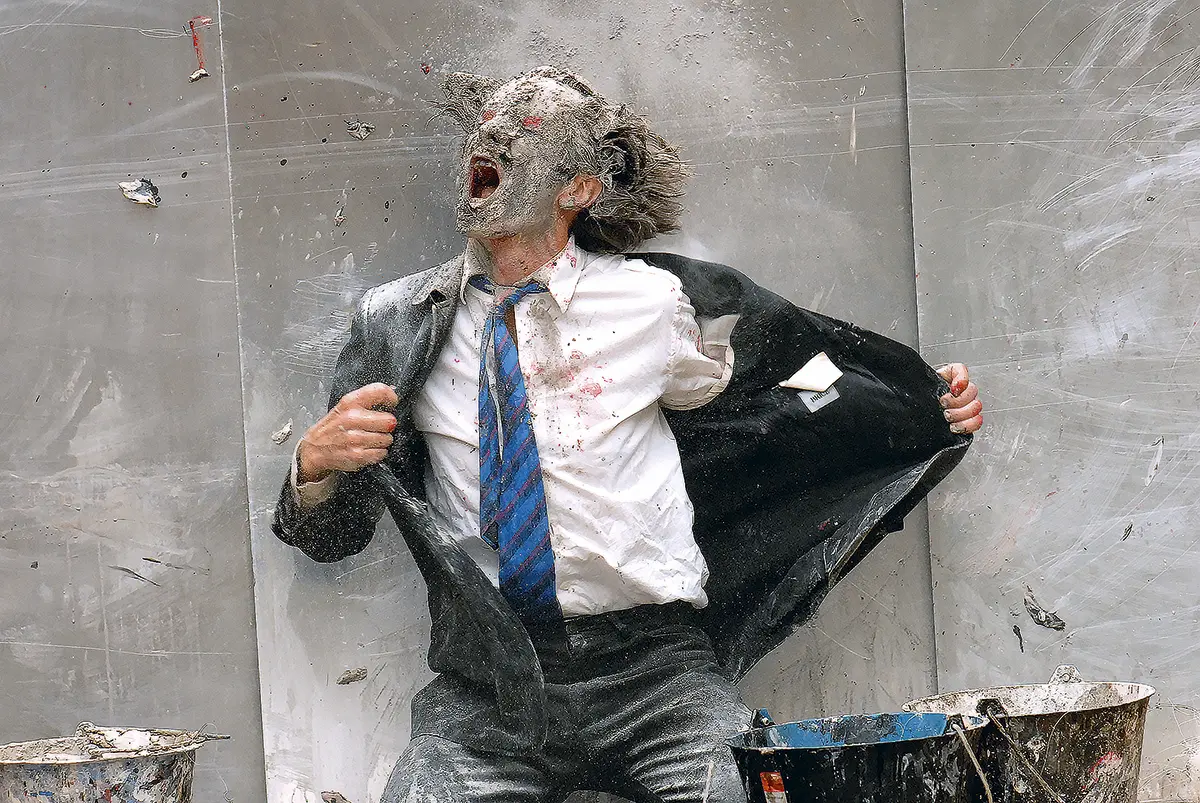
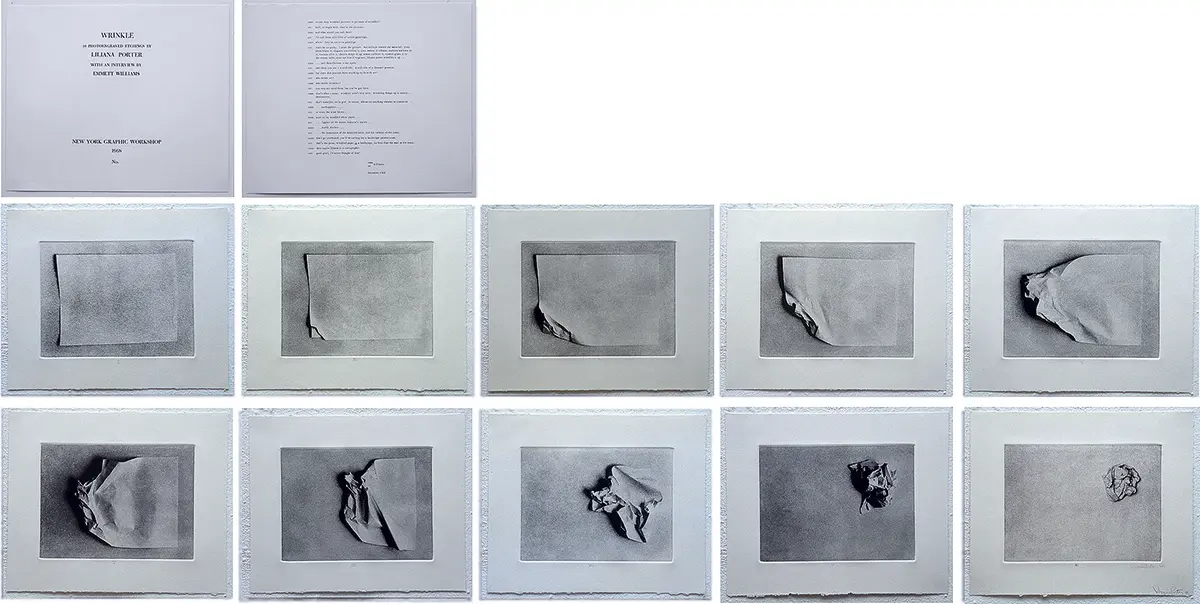
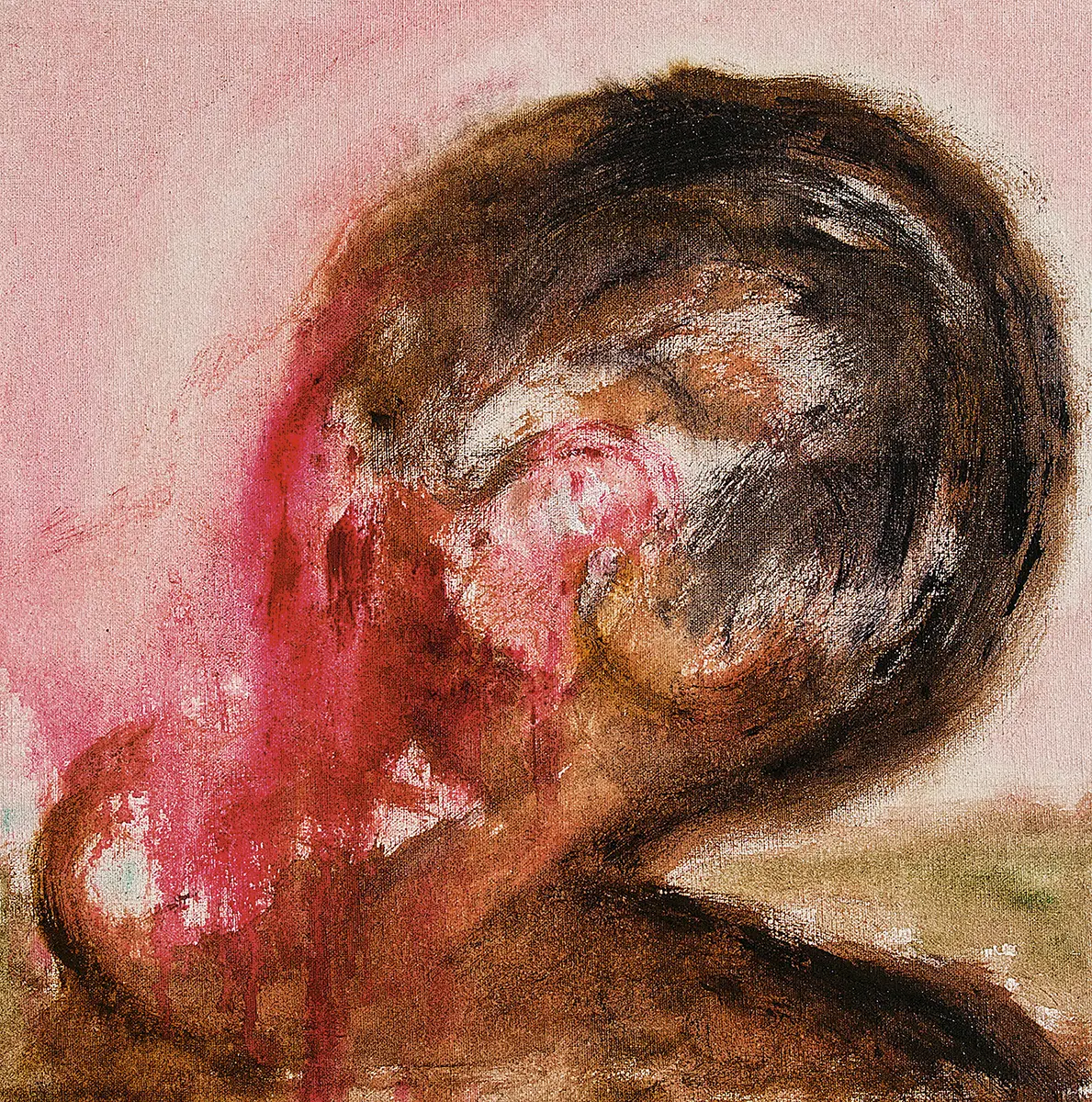
The polyptych Arruga (Crease, 1968), a photo engraving by Liliana Porter, “is a manual on how to create something on the basis of nonconformity. It is about destruction and its—possible—impossibility.” Olivier de Sagazan’s video performance and photographs—from two different series (2010 and 2014) of his Transfiguración (Transfiguration), one of them the catalog cover—appear as the epitome of evil and its effects. But the artist reconciles his practice as a sculptor with his immersion inside a sculpture. In the process of becoming a sculpture himself, he changes from a rational being into a Dionysian (demonic?) one.
La imaginación del desastre puts viewers to work. We will be richer for having seen it, given the unexpected discoveries and intelligent statements that underscore the challenges of the proposal.
VICTORIA VERLICHAK