
On March 26, Venezuelan sculptor Sydia Reyes (Caracas, 1957) presented two important events: the opening of her anthological exhibition titled Sydia Reyes at the Galería de Arte Ascaso in Caracas, and the simultaneous launching of the book titled Sydia Reyes. Escultora (Sydia Reyes. Sculptor), written by researcher and curator Bélgica Rodríguez and essayist and art critic Víctor Guédez, both experts on the work by Reyes and the curators of this important exhibition presented on three floors of the gallery.
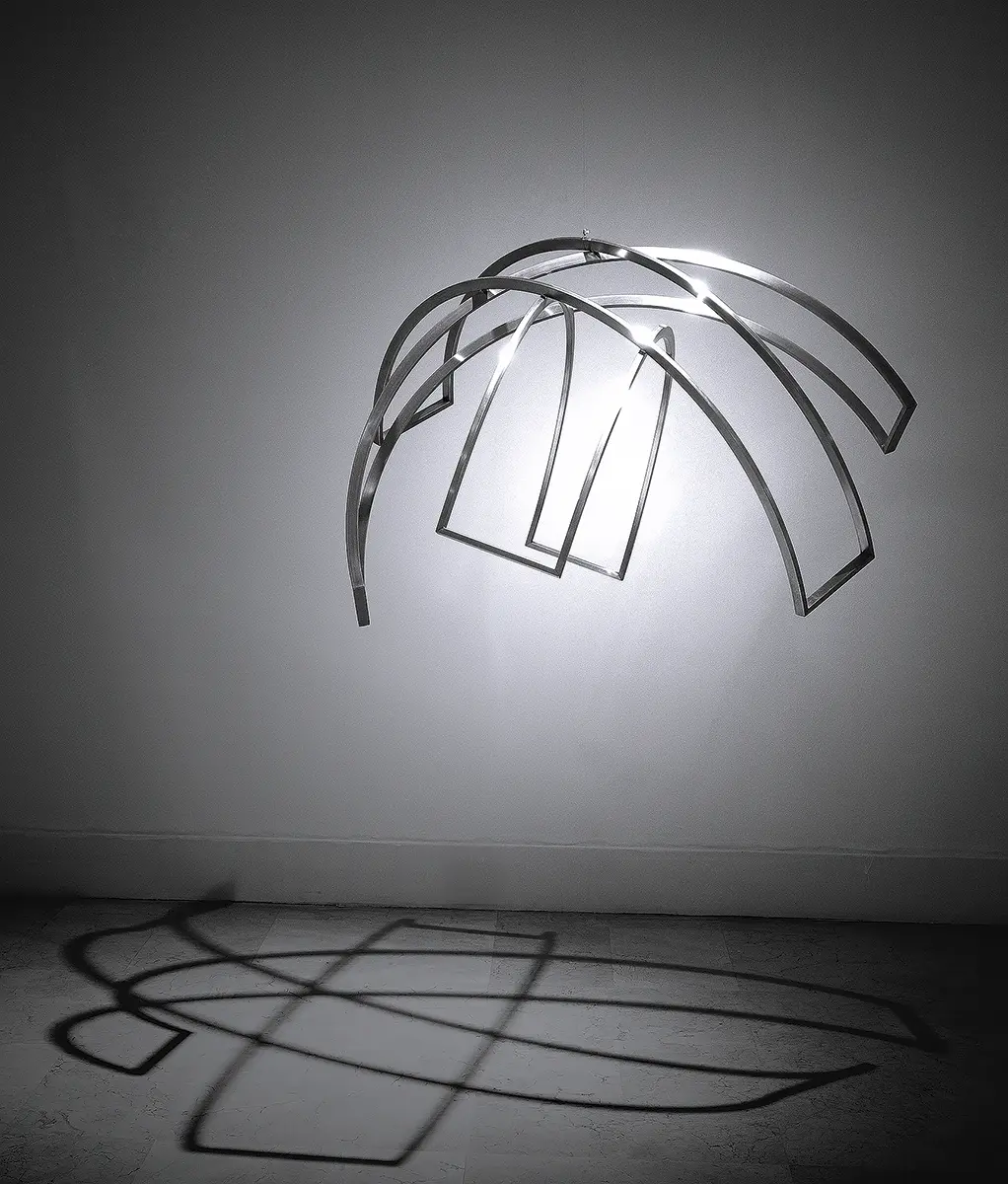
The exhibition stood out in several ways. First of all, by being ambitious in scope and as a result of the works included in it, which appropriately reflected a retrospective exhibition that covers an entire artistic trajectory. Secondly, as an anthological exhibition, the works displayed were representative of several periods in Reye’s career; periods not only defined by the material and formal treatment of the pieces, but also by the central narratives that have identified the work by this artist throughout the years. On the other hand, many of the works have been awarded important recognition at national and international events and salons, in addition to being emblematic of their corresponding series.
The show begins with Reyes’s most recent works displayed on the gallery’s main floor. The walk through the exhibition continued on the two upper floors, which showed the earlier periods. Upon completing the walk and going back to the beginning of the exhibition, it became possible to appreciate the clear evolution in Reyes’s work throughout thirty years of uninterrupted artistic production: going from political and critical works centered on the raw social reality of Venezuela, to more condensed works in which she borrows concepts from physics—such as the existence of parallel universes or multiverse—in order to establish metaphors about our current time-space reality. Nonetheless, these recent pieces are not exempt from content that is equally critical. The chronological order proposed in the exhibition can be explained in this manner: during the 1990s, Sydia Reyes represented the harsh realities in Venezuelan cities through series centered on sewers and pipes that became recurrent objects in her work. It became her way of approaching painful themes like the life of the children living underground or inside drainage pipes. Among these works are Refugio (Refuge), Descarriados (Outcasts), and Reflecciones urbanas (Urban Reflections). From an aesthetic and formal perspective, these sewers acquired unexpected forms when Reyes began to alter their geometry, whether by altering, recreating, or deconstructing them, but always maintaining the strong consistency of rusted iron. In this manner, that dirty and miserable reality was reinforced through the material used, which in turn becomes a simile of the theme presented.
Environmental issues were, and continue to be, part of Reyes’s preoccupations. In 1994, she traveled to the Amazons and, instead of what she thought were going to be visits to several forests, she was confronted with a “graveyard of forests.” Such was the devastation that she witnessed there that she left behind her subterranean representations to focus on representing the verticality of trees, showcasing their devastation through video installations like the piece Prótesis (Prosthesis, 1998), winner of the UNESCO and AICA awards during the 7th International Cairo Biennial, in Egypt; as well three-dimensional works that outlined the hollow silhouette of disappeared trees, some of them monumental in size (Panama and Caracas, 2014). Depending on the characteristics of the specific work and the space that they will occupy, Reyes relies on different materials like aluminum, reinforced concrete, and led lights, among others.
The lightness experienced through views of the emptiness left by absent bodies (the trees), the lighting on some of the pieces, and the idea of ascension conveyed through the tree’s verticality, encourage a new reflection that, in turn, leads to other important formal approaches: on the one hand, to the creation of pieces conceived as linear weaves that embody a sculptural lightness in pieces like Trama (Weave), Dances of the Auroras, and Miles Away, all from 2017; and, on the other, to pieces in which emptiness becomes significant and enables a greater exploration of the space as subject: the multiverses. Started in 2011, this series is represented in the exhibition by spherical three-dimensional pieces and by graphic works in which the multiverses appear multiplied by the superimposed translucent fabrics on which they have been printed. This is the case for works like A la Levedad (To Lightness, 2016) and Deep (2017). Sydia Reyes has also expressed the multiverses in other formats, defying the conventionally accepted scale of monumental works in several countries.
According to Sydia Reyes, multiverses “talk about parallel lives, about time and the future, about space and the people that inhabit it,” and adds, “We must change if we want to stop the destruction. […] If we continue on this path, we can only expect more tragedy.” Her work continues to offer critical content.
SUSANA BENKO