
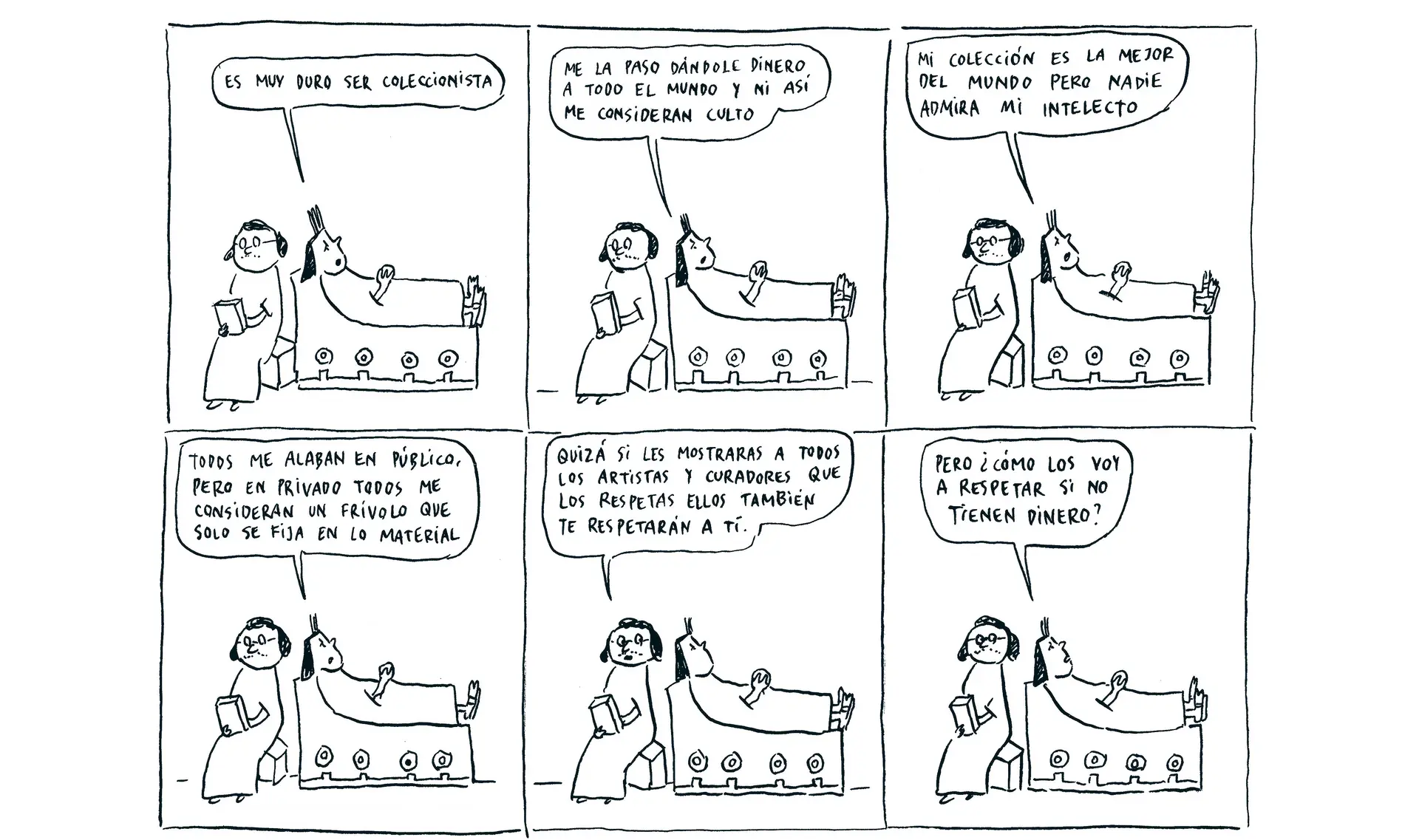
In the meantime, private art collecting is flourishing. A clear indicator of its increase – and of its power – is the boom of art fairs around the world, which is also the main component in the upsurge of art’s international circulation. Paco Barragán has analyzed that since the 2000s we are living in “the art fair age”, which has followed the “biennialization” of the 1990s.1 This is not only a result of art fairs proliferation but also of their qualitative change. They have transformed the way in which art is marketed, and very importantly, they have appropriated functions and methods of biennials and other art institutions and activities. It has become an axiom that today biennials look like art fairs and vice versa, and a frequent corollary is, as Anna Tilroy has exclaimed, that the art world “is one big market”.2 In a similar apocalyptic vein, José Fernández Vega considers that with globalization culture and market tend to merge, and global art becomes an effect of the market more than the execution of a post-national program, while biennials substitute their concepts for slogans.3
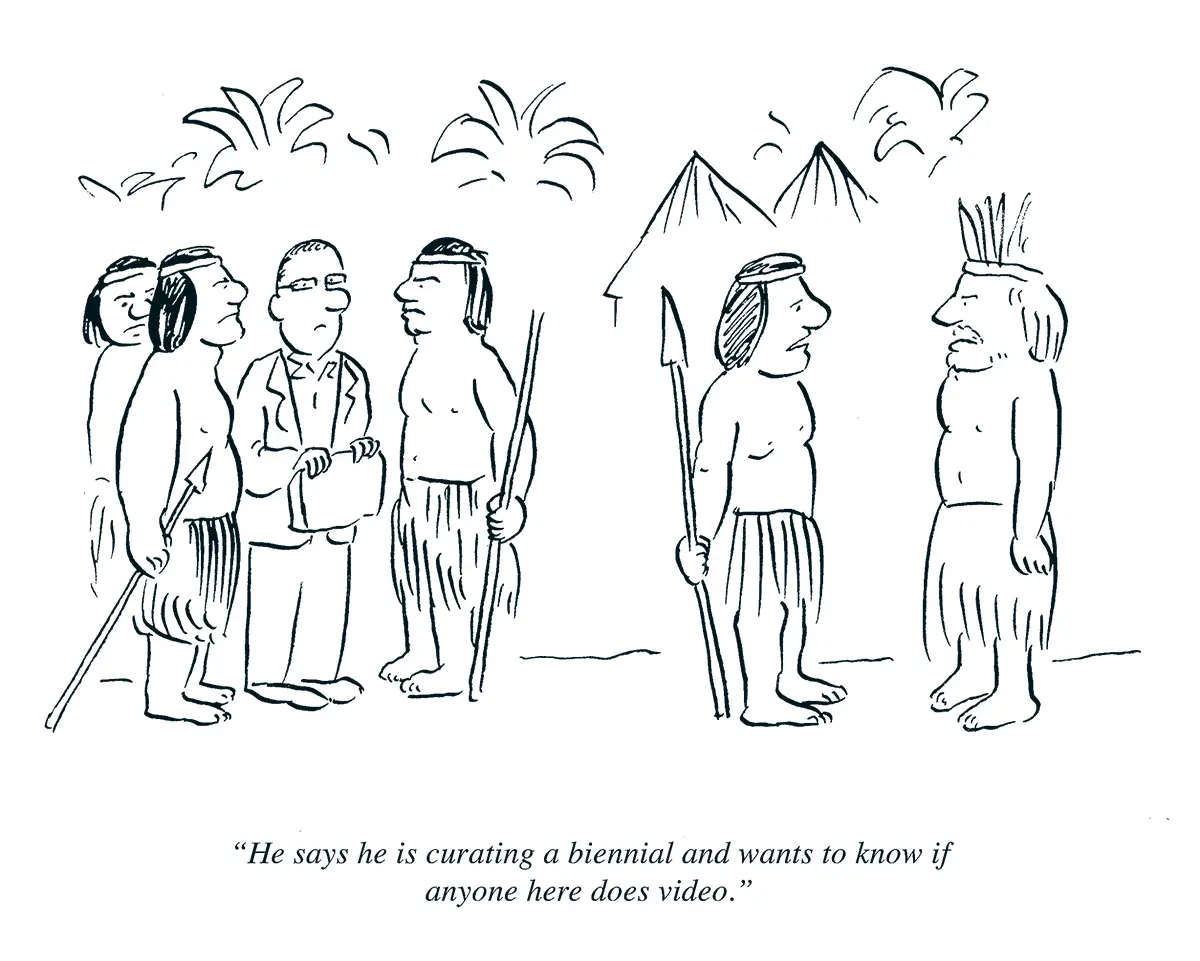
In contrast, Carlos Basualdo considers that biennials are “unstable institutions” that allow more room for trying new and more socially committed models than what is possible for museums and other, more established art institutions.4 I would add that the weight of these institutions’ collections contributes to their lower degree of operability and dynamism – collections can be a burden. This flexible character has been instrumental for the proliferation of biennials and art fairs since it has proven efficient to operate within a global, neoliberal world economy. Biennials and art fairs also create spaces for art in places lacking institutional facilities, while promoting the international circulation of artists previously secluded in their local contexts, as Okwui Enwezor has underlined.5 In some cases art fairs have a bigger impact in their contexts than biennials, as in the artistic and cultural energy brought by Art Basel to the “global Southern” city of Miami.
Are we now in the private collector’s age? For good and for bad, private collectors are acquiring a leading power in the art world, to the point of beating curators as legitimizers, promoters, and gatekeepers. Private collectors exercise their clout not only through the act of buying – which is an act of curating – but also due to the increasingly public role of collectors and their assets. There is a subjacent contradiction between the private accumulation of important artworks and the public responsibility that such possessions deontologically entail. Luckily, some private collectors have assumed very active and significant public efforts beyond participating in museums’ boards, supporting their budgets, lending artworks for exhibitions, or giving them in loan and donating them. As for the latter, it is a paradox that collectors tend to give substantial donations and loans to rich museums, instead of supporting less affluent institutions. Of course, a number of these institutions cannot provide the conditions that art conservation demands, but in many other cases, they can, or can be stimulated to create them. Private collectors would have to decentralize their generosity in search of broader social reach for their assets, seeking to act where crucial needs are.
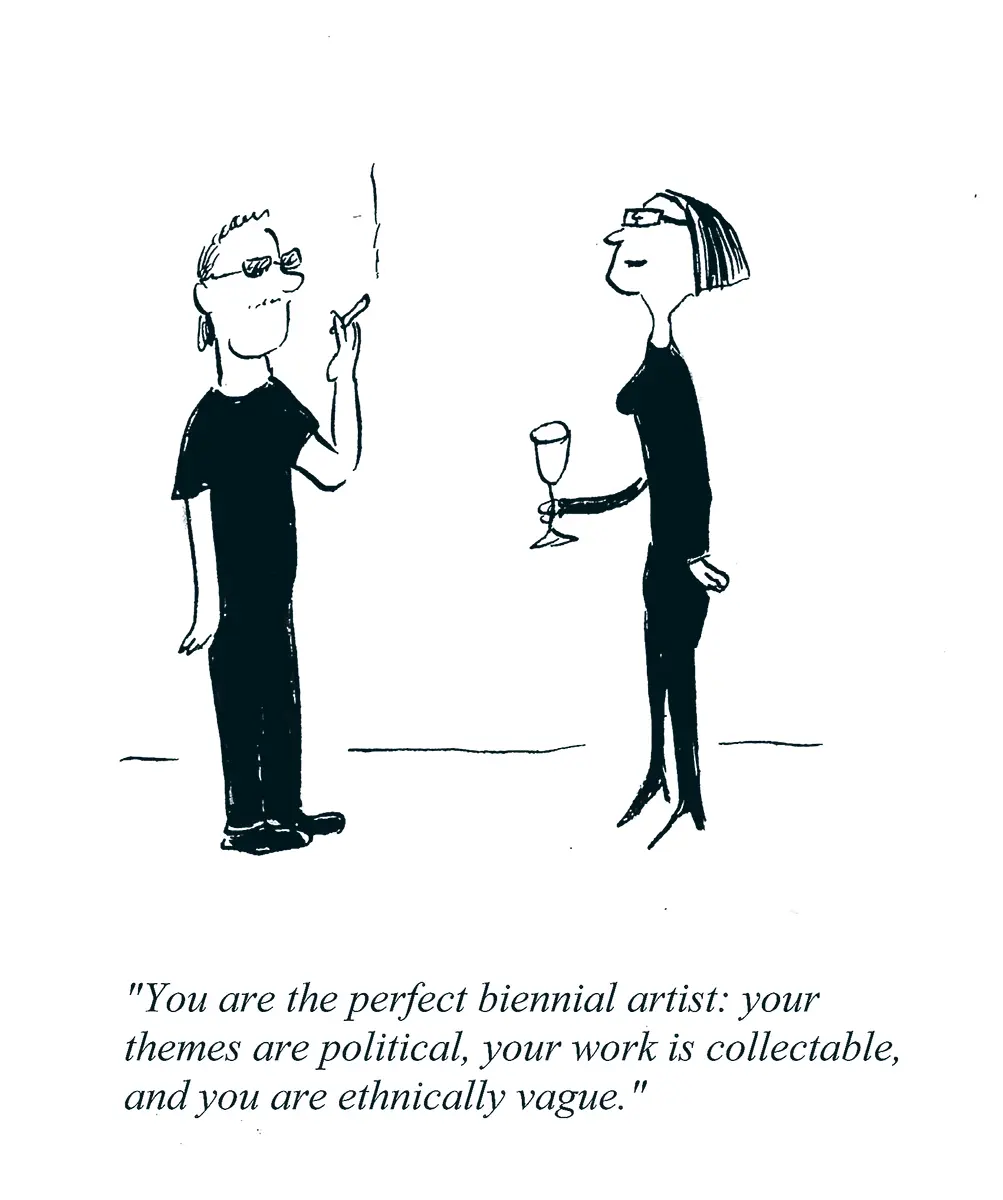
In the USA, major fortunes created major museums in the 20th century out of a modernizing and civilizing agenda, shaping until today a culture of private patronage. This contrasts with Europe and Latin America, which see art as a human right that the State has to guarantee – but that is increasingly proving to be a very difficult mission in neo-liberal times of crisis. In part because of this deficit, today we also witness a positive tendency among private collectors to undertake very active public initiatives. Some have set their artworks in the public permanent display, as in the remarkable cases of the Margulies, the Rubell Family, and the de la Cruz collections in Miami. Others have created museums and art centers that act far beyond their collections, as CIFO in Miami, MALBA in Buenos Aires, Jumex in Mexico, and the Patricia Phelps de Cisneros collection in New York and Caracas. Affluent private collectors from the postcolonial world are also advocating for and sponsoring the art of their countries or regions of origin within the boards of mainstream museums, to which they substantially contribute.
There is a shift from the public to the private that is being beneficial in countries with scant public institutions, which are moreover weak organizationally and economically. Naturally, the situation also entails a remarkable exercise of power, sometimes in the hands of individuals, and can be hazardous in vulnerable milieus. Private ownership can be inconsistent too, and lead to disasters such as the Swiss Daros Latinamerica Collection’s recent abrupt ending of their activities – which included closing Casa Daros in Rio de Janeiro after an enormous material and intellectual investment – or the tragic fate of Fundación Televisa’s collection in Mexico City. Private collectors can also dilapidate vast resources in creating whimsical, if not dysfunctional collections and museums, the paradigm being Carlos Slim’s Soumaya Museum in Mexico City.
It is natural that collecting and collections continue to expand and gain power over exhibitions, public art, community art, “artivism”, or “users-oriented practices” (as Stephen Wright might say), just because they make the foundations of what we call visual or plastic arts. Unlike music, film, or literature, which one can just roam or download from the web, visual arts are engaged in producing unique, sumptuary collectibles that can acquire a high market value. In contradiction to the times, the emphasis is placed on the artifact, which prolongs itself to turn into signed documentation in the case of dematerialized, ephemeral, time-based artworks, and even in a “live” art such as performance. This documentation becomes certified evidence aiming to function as a vicarious “original” to be collected. Art’s anti-Benjaminian strategy also contradicts technology’s reproductive capabilities by self-limiting its production to a small number of copies, each becoming again a sophistical “original”.
Beyond all the outlined discussions, I would like to speculate in more general terms about how global collecting is in itself. Even if their artworks travel or are lent, collections have a subjacent inclination to lock. This closeness comes from their will and function of gathering and preserving objects together, and because they have a subconscious anal origin. Collections are centripetal by nature, and lending their possessions, even if they do so, always carries an immanent tension. This has to do with the historical process of fostering the autonomy of art from its previous hybrid religious, communal, representational, and practical functions. There is an intrinsic contradiction between collections and global actions. Collections and museums tend to tighten, not to expand, while globalization is centrifugal: it is about openness and flow.
If collections and museums want to respond to the challenges of contemporary art’s escalating international production and circulation they will have to confront their own conservative nature. Museums began as collections that were shown publicly and permanently. Then their space acquired importance beyond collections, as a site where exhibitions and events took place. Perhaps today’s situation points to a third major shift in museum practice, one that will take it away from the prevalent collection-centered and space-centered routines to a more dynamic endeavor, in which the museum will be a moving activity spread over the globe. Such rhizomatic museum-as-hub practices will entail a decentralized institution that will conceive, curate, and/or participate simultaneously in a wide range of diverse projects at the very spot where art practices take place, and with very flexible levels of involvement.6
Once I was proposing these utopian speculations at a panel discussion in São Paulo and my colleague Aracy Amaral confronted my view by exclaiming: “What we need in Latin America is more museums and collections! Your ideas are provocative, but our challenge right now is to preserve and show artworks and archives that remain in precarious conditions.”
I think that both of us were right and that our concerns are part of the multifaceted predicaments and challenges that we have to face today.
NOTES
1. Paco Barragán, The Art Fair Age, Milano: Charta, 2008.
2. Anna Tilroe in METROPOLIS M, Amsterdam, n. 6, 2007/2008.
3. Gerardo Mosquera, ‘Cambian las bienales’, Exit Express, Madrid, n. 40, diciembre de 2008, p. 12.
4. Carlos Basualdo, ‘The Unstable Institution’, in Paul O’Neill (ed.), Curating Subjects, Amsterdam: De Appel Centre for Contemporary Art, 2007, op. cit., p. 47–52.
5. Okwui Enwezor, ‘Curating Beyond the Canon’, in Paul O’Neill, op. cit., pp. 116–117.
6. Gerardo Mosquera, “Seven Notes on the Museum-as-Hub”, Re-Shuffle/Notions of an Itinerant Museum, Center for Curatorial Studies, Bard College, New York, 2006; “El museo como hub”, Código, Mexico City, n. 74, April-May 2013, p. 40-43.
GERARDO MOSQUERA
Curator, critic, and freelance writer.