The concept behind this exhibition harkens back to a set of issues that lie at the very base of artistic creation: the representation of nature, its forces, and energies. Images of animals have occupied the walls of caves since ancestral times and they are also present in original, indigenous expressions, which include plants and the landscape: trees, the firmament, the Earth, the heavenly bodies.
Curator Susana Benko based the show’s discourse on the presence of this subject in the history of art: convergences and divergences, the possibility of contemplation and aesthetic enjoyment but also of conflict, critical visions, allusions to the environmental crisis, connections with instances of urban life, activations of fantasy, and, above all, the reconceptualization of the ties that bind us to our surroundings. This set of issues traverses the selection of eleven artists invited to participate, which made it possible to significantly expand the relationships between the 43 works that were sent in: to alternate formats, disciplines, and techniques that would otherwise look mismatched, and, ultimately, to sketch the complex extensions of the nexuses that exist in a natural world traversed by culture and to inaugurate the possibility of recognizing ourselves in that horizon from new perspectives. To prevent us from getting mired in the wide range of possible understandings of the subject, Benko decided to delimit the scope of her discourse and centered her attention on plant- and animal-based imaginaries. With that move she granted us access to the unity that exists within a heterogeneous universe in which we encounter artists of vastly varying trajectories, using different techniques, and at different stages of production. The exhibition gallery at the Centro de Artes Integradas—surrounded by natural light, open to a vast garden—made it possible for the differences between the eleven artists to flow together and generated dialogs between their works and their points of view.
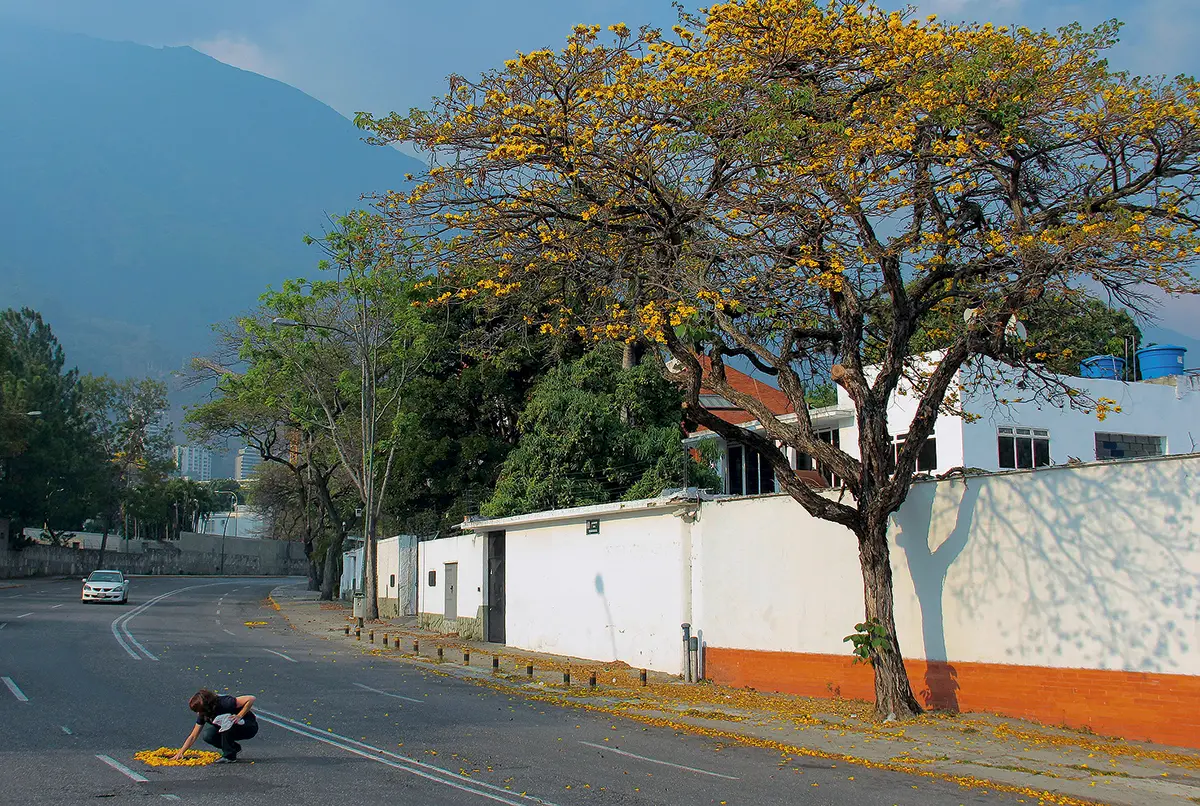
The realm of plants, the show’s first chapter, unfolds like a territory of poetic, cultural, and political activations. Zeinab Bulhossen contributes a critical vision of the urban context and the concept of still life. He brings together performance and photography as conceptual resources that move us closer to the pain of the city, as can be seen in a series of digital photographs printed on paper and xylographs on canvas. The series Flores en el asfalto (Flowers on the Asphalt), 2013-2015, is based on the action of picking up flowers fallen from trees. Bulhossen arranges them painstakingly around potholes in the streets of Caracas, in a kind of clarion call about the decay and disrepair of the city environment. However, this call to the political and this critique of neglect, in turn, triggers an appealing exercise that invokes the colors that carpet the urban space during the flowering season.
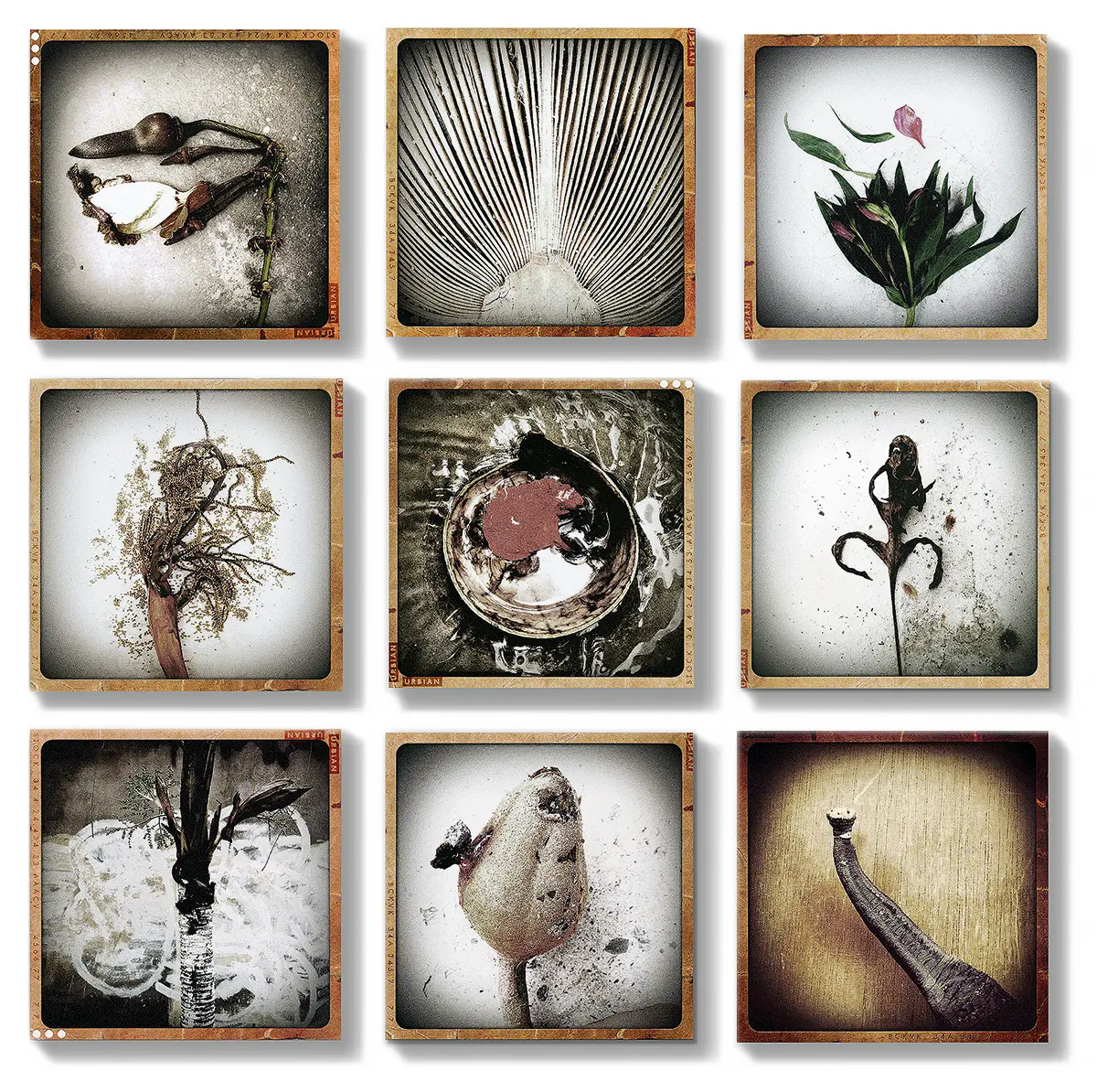
Bulhossen avoids pamphleteering denunciations and ideological simplemindedness while capturing the deepest and more perceptive planes of the geography of Caracas, the city’s aesthetic attachments, and affections. The beautiful and the ugly, the borders between the force of the tropics and mere neglect, come together in a single visual text. Ricardo Gómez Pérez’s series Botánica (Botany), from 2015, is part of a wide-ranging investigation titled Recorridos habituales (Habitual Trajectories), where the artist collected his routes around the city in images captured by his cell phone camera and reproduced using digital technology. In a nine-photograph polyptych, Gómez Pérez alludes to the death of nature in the city, to fortuitous encounters with dry flowers, to the disinterred bulbs of memory, to seeds and pieces of branches that refuse to perish. These plants, barely alive, contain a meditation about time: the instant of its capture in an electronic device and its passage into the distance. It is a narrative of transcendence, but also of the everyday. In Orinoco Garden, from 2016,
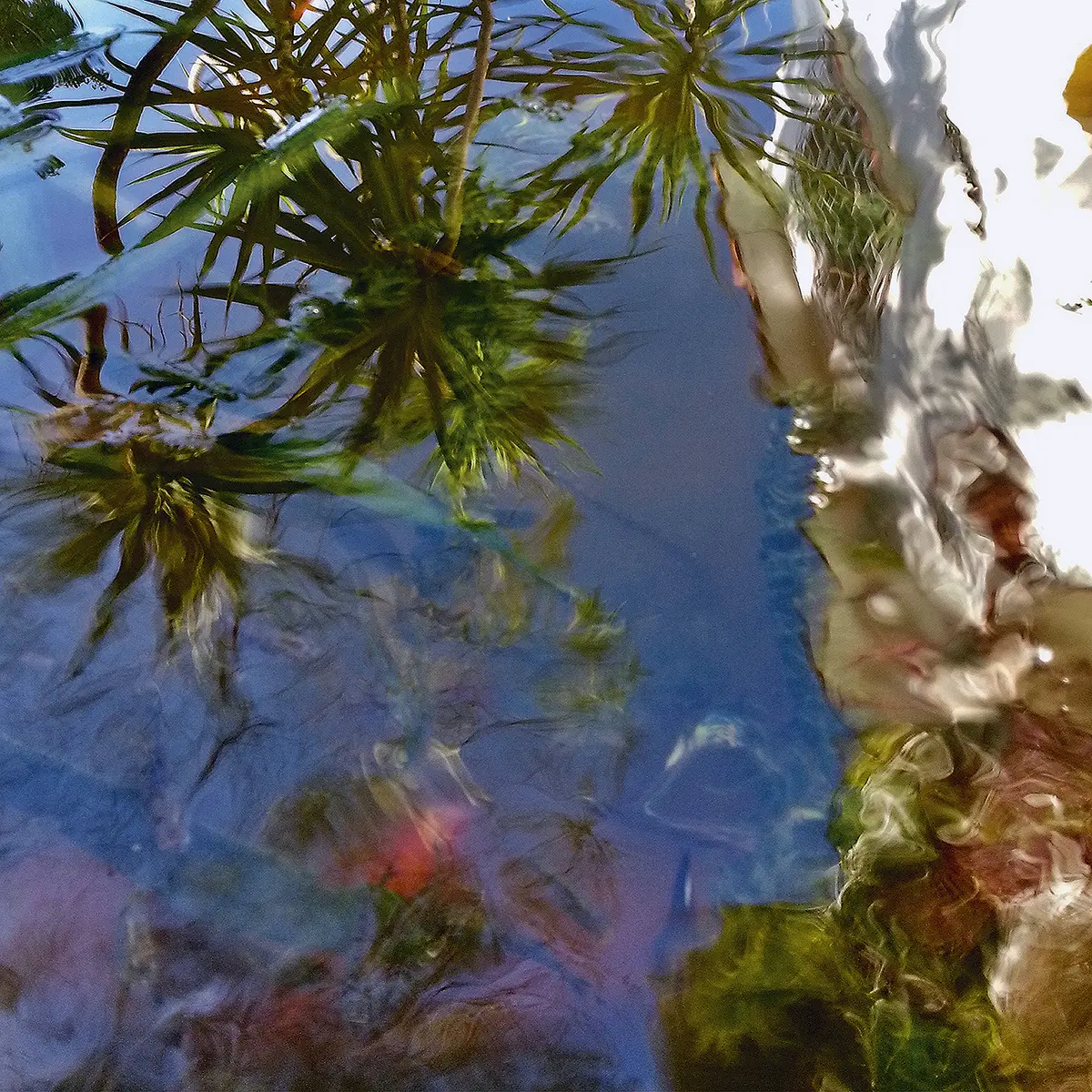
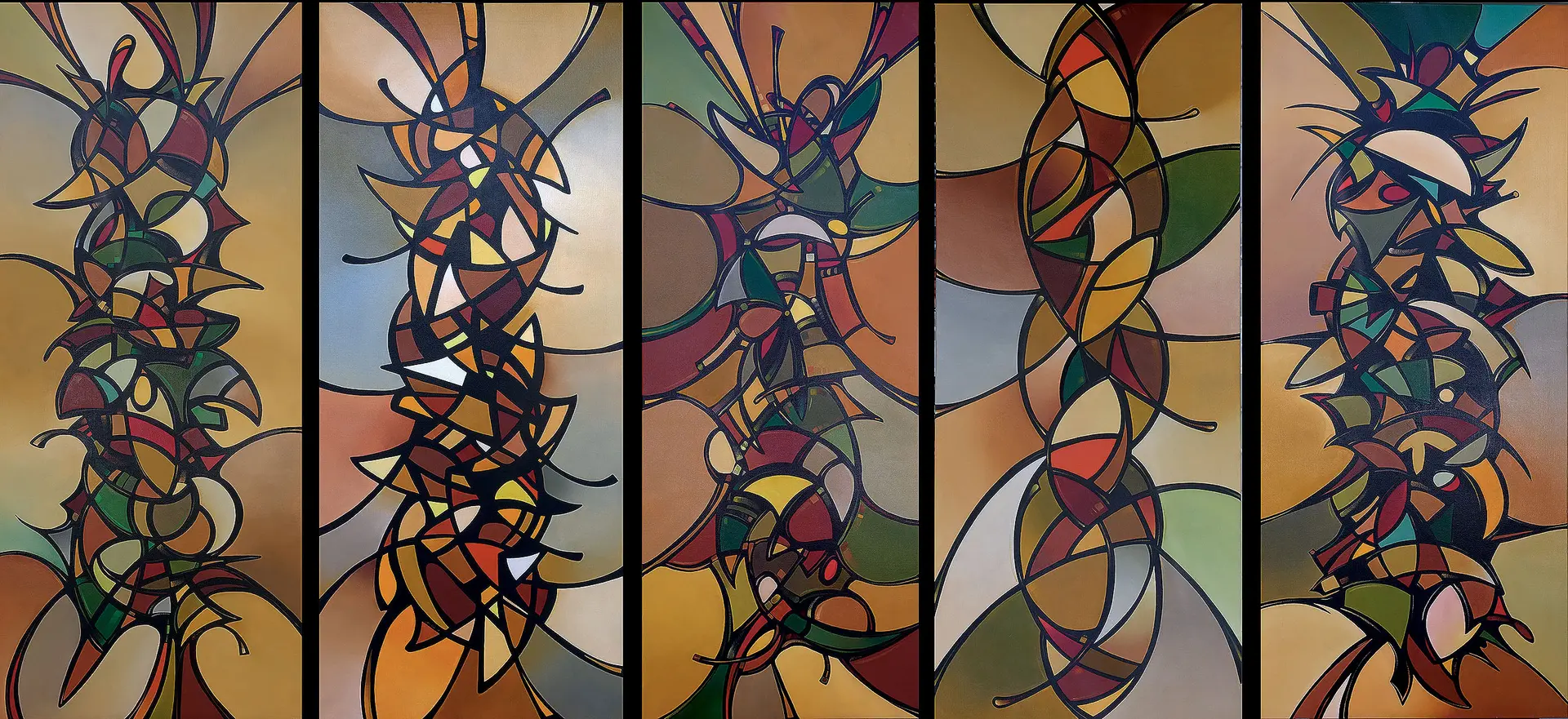
Rubén Falcón uses large-format painting as a medium to express his journeys to the banks of the Orinoco River in the guise of organic abstractions, capturing in the process a mural-like view of the climbers, orchids, and bromeliads that are endemic to the region. Consuelo Méndez reformulates our connection to the landscape, reconceptualizing its terms. In recent years she has traversed the city in search of startling, lost images that suddenly surprise passers-by as they move through the streets. Between the small cracks on the pavement, in a house’s garden, in her morning walk around the park, or from a window, there will always be a space for amazement and for an understanding of the way in which nature refuses to disappear in the face of neglect urban onslaughts. The element of water has a large presence in Mendez’s work, be it as dewdrops, torrential rains, large puddles in the street, or artificial lakes, and it is there that she captures, camera in hand and as if in a diary, her myriad images. The series Paisajes de agua (Water Landscapes) is one chapter in her vast and meticulous register of knowing how to observe. What we see is not the landscape but its reflection. Nature is a mirror of flowers, motion, and lights entangled with branches, of luxuriantly leafed trees that become nets and reticleareas. These photographs—which are very much like paintings—could be read as a highly personal yet widely shared chronicle of the landscape that besieges our urban memory.
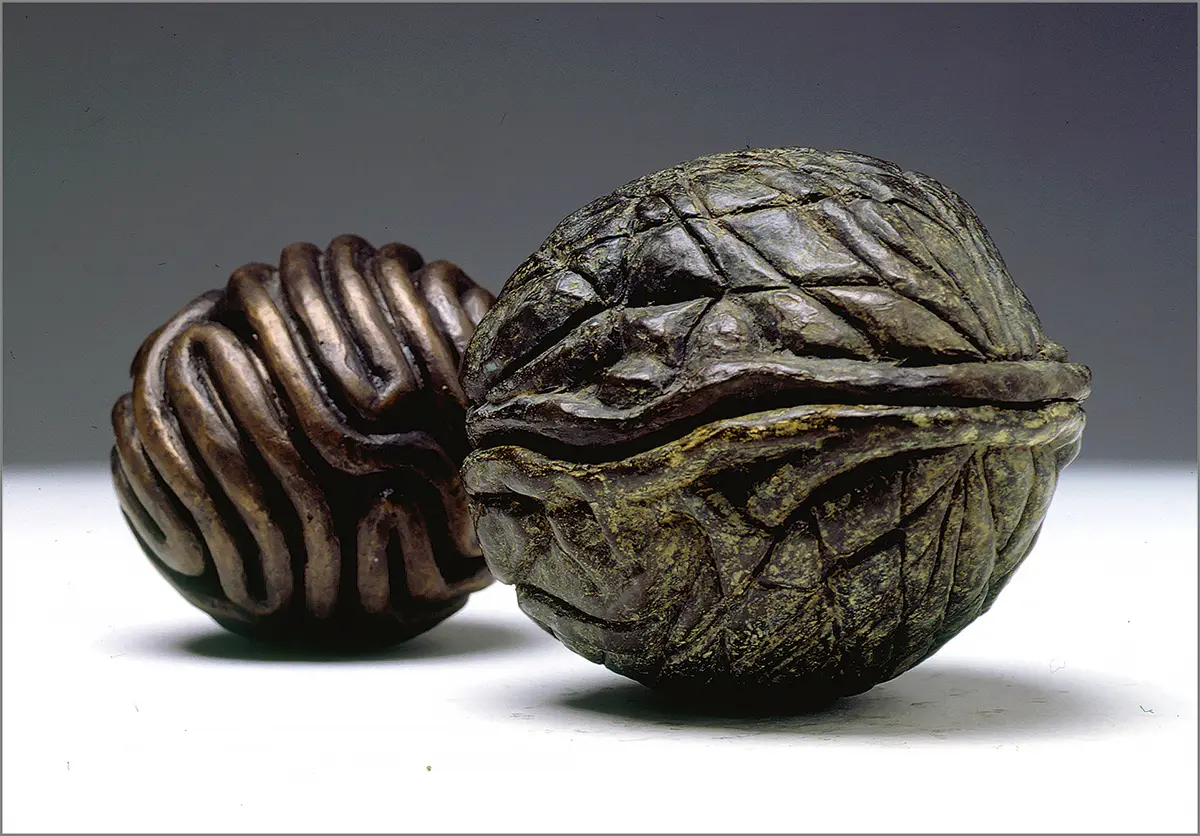
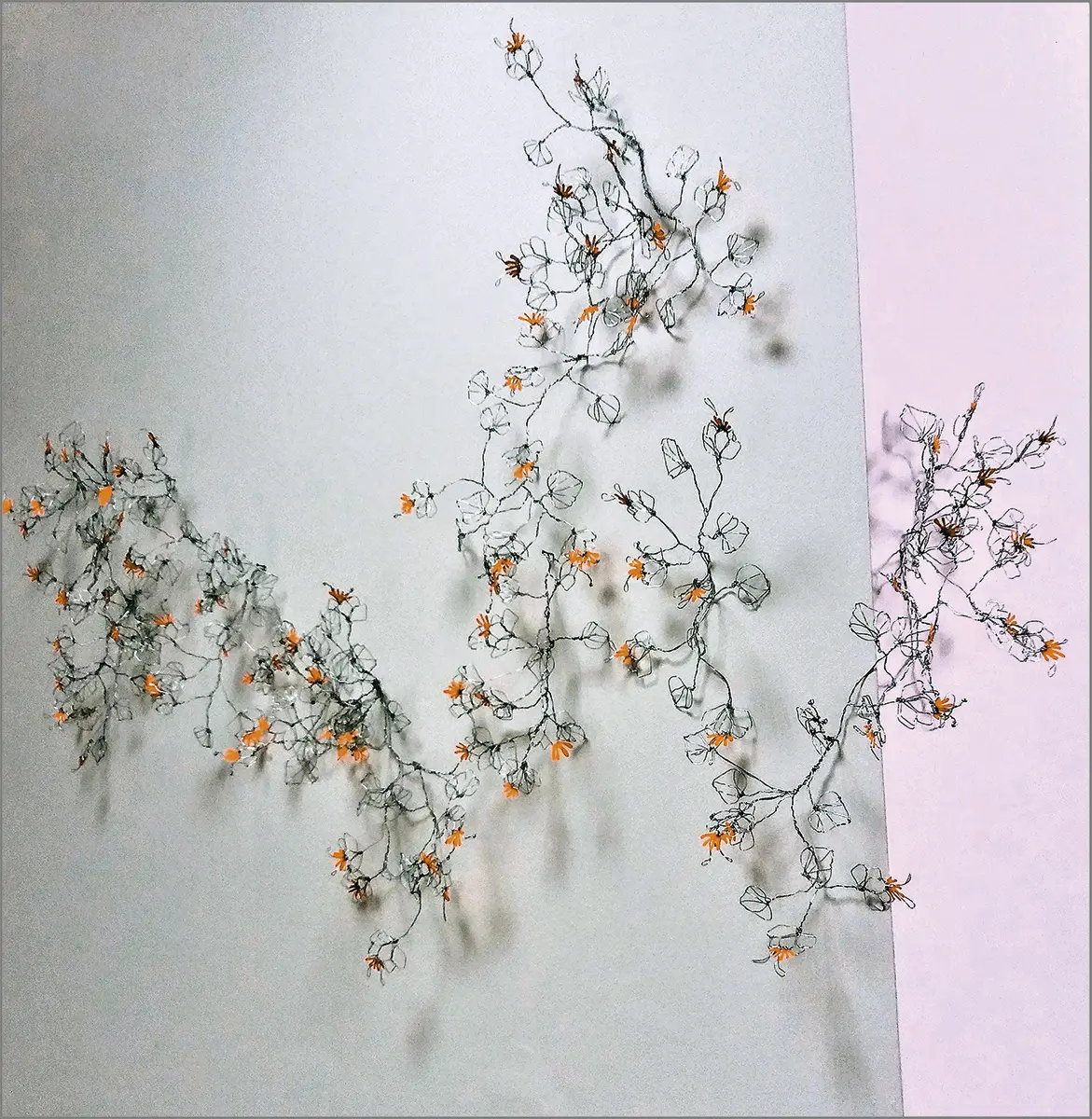
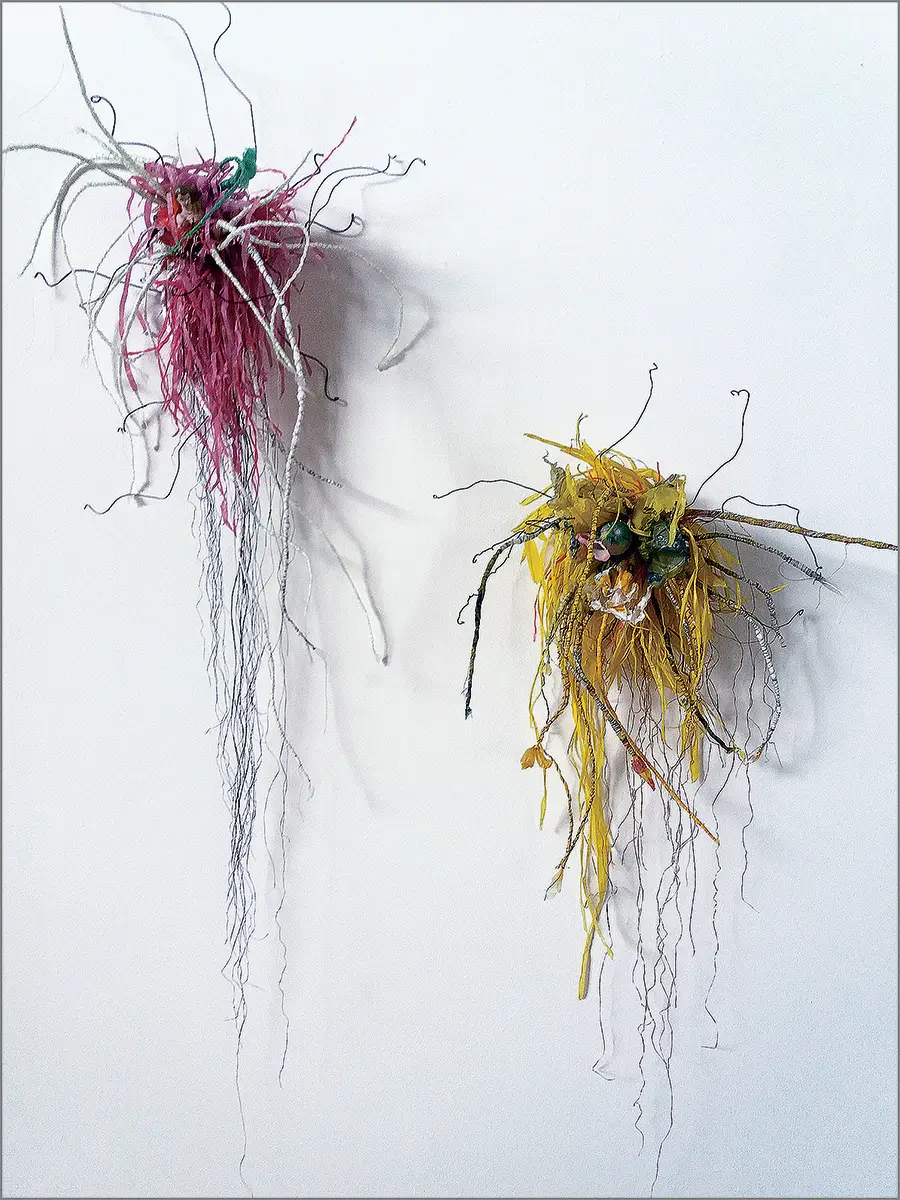
Sculptor José Antonio Fernández’s selection of bronze seeds works as a kind of organic inventory of our environment, as in Semilla VIII (almeja) (Seed (clam)), from 2000. Fernández alludes to the origins of life, to a germinal beginning in a dual plant and animal register. These are seeds and clams at the same time, and their small format makes them moveable and motile, like nature’s cycles. Ángel Marcano, halfway between sculpture and structure, invites us to contemplate a subtle nature woven from planes in the wire of varying quality, intervened with construction paper and objects. The effect is like a floating garden, with aerial shots of vegetation and flowers that appear and fade away between the fine color dots. What is interesting in Marcano’s work is his ability to generate drawings through the motion of shadows on the wall, which makes the static wire structure coexist with a tenuous luminosity. Pedro Tineo works like a collector of recyclables and uses collage to build worlds of found objects, plastic bags, and other urban and industrial flotsam. His are suspended gardens where rubber dolls, fragments of wrappers and fabric, birds, marbles, little horses, twine, or plastic flowers ripple around. Their shapes are sinuous, strange, with humid atmospheres, in different colors that emerge uncontrolled from what seems to be a common source. Our perception of the work is enriched by the texture of such diverse materials, but also by the effect that memory has on them, bringing to mind as it does those forgotten fragments of life now fallen into disuse.
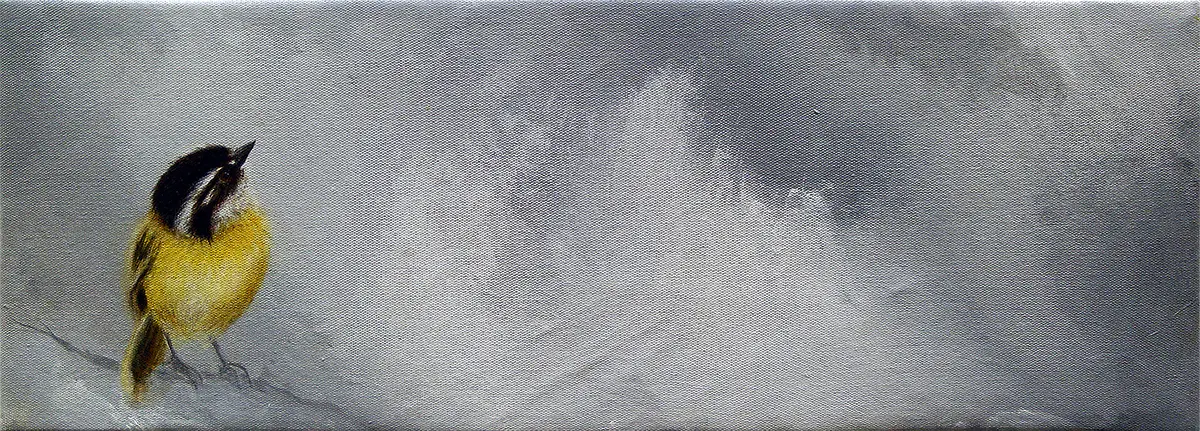
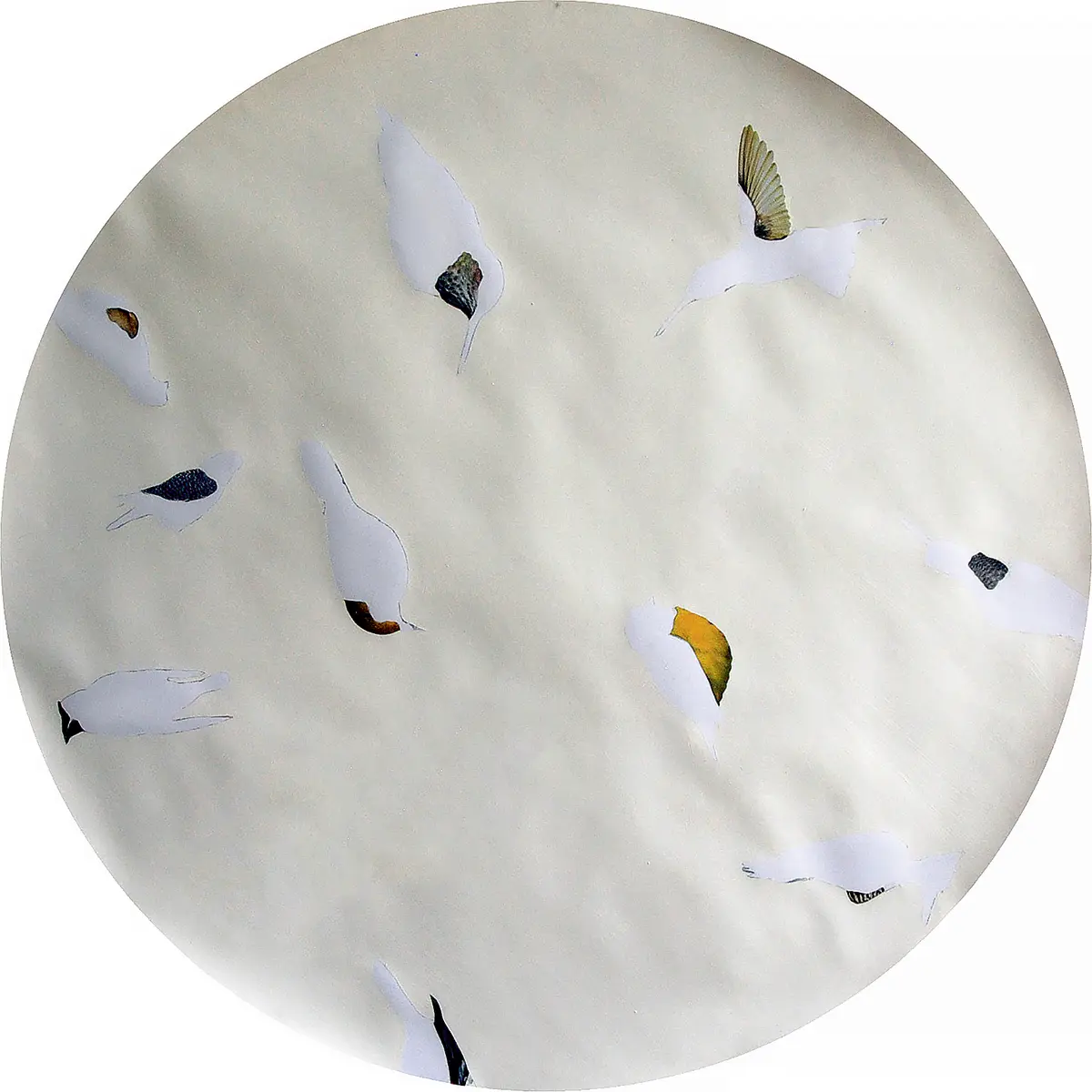
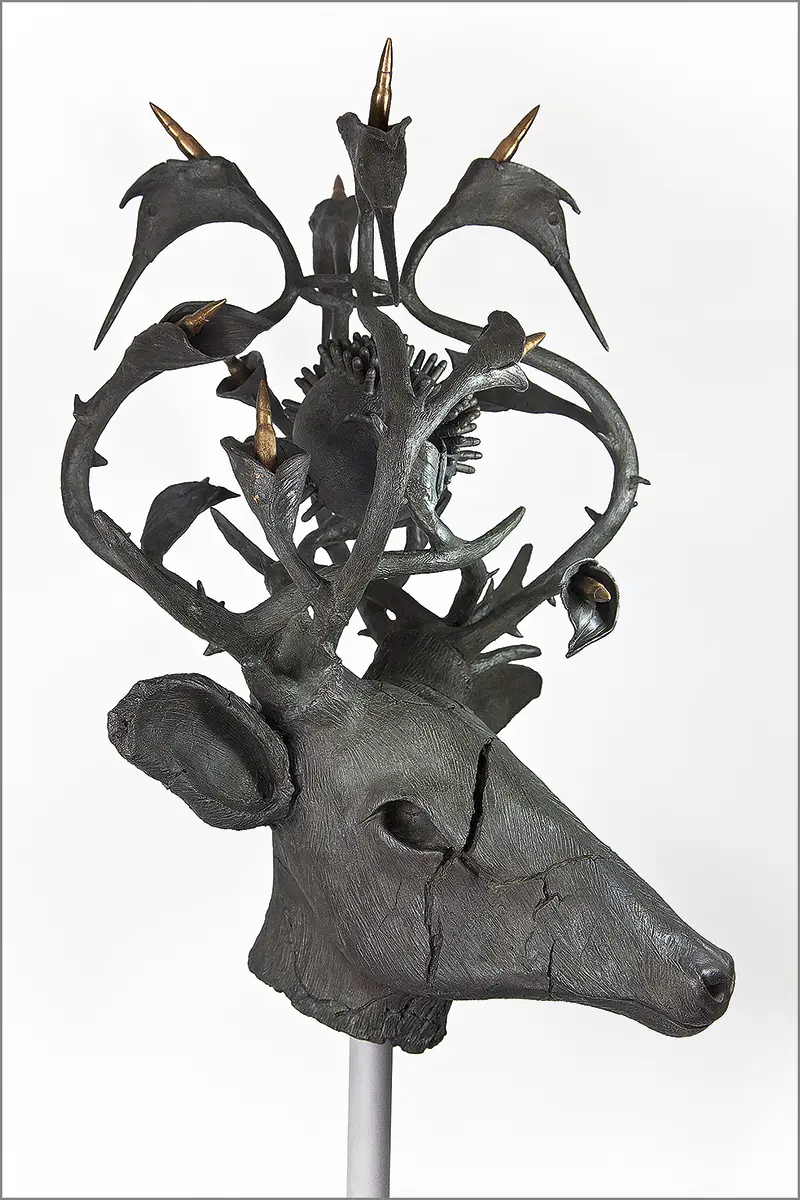
The second chapter of the exhibition focuses on the animal realm, under premises that activate cultural and social associations but also on the basis of formulations that put us in mind of a human consciousness/animal being hybrid. María Teresa González—who is building a pained, beautiful, and highly refined oeuvre—exhibits the series Desmembrados (Dismembered) and Agrupados (Grouped). In them, González connects human migrations with the torn bodies of butterflies and birds, and, in turn, with the emptiness of loss and the state of being unmoored, a conspicuous reality in Venezuela. Each segment is a fracture, a scream in the silence of farewells that have become everyday occurrences. Isbecia Llavaneras uses the naturalistic representation of birds as a metaphor for flight and serene contemplation. Her paintings and drawings dominate the space, creating a delicate stage for volatility. Francisco Pereira’s faultless bronze sculptures center on the integration of animal and human figures. His Bípedos (Bipeds) start from that principle as a way of activating the animal aspect of the human soul and the human aspect of the animal, with unquestionable anatomical anchors. In El Ciervo de Dios (The Deer of God), from 2017, Pereira includes vegetation alongside the signals of urban violence. The title in Spanish plays with the words ciervo (deer) and siervo (servant), in reference to the Venezuelan saintly figure known as Siervo de Dios (Servant of God), putting us in mind of the subject of sacrifice. In his assemblages.
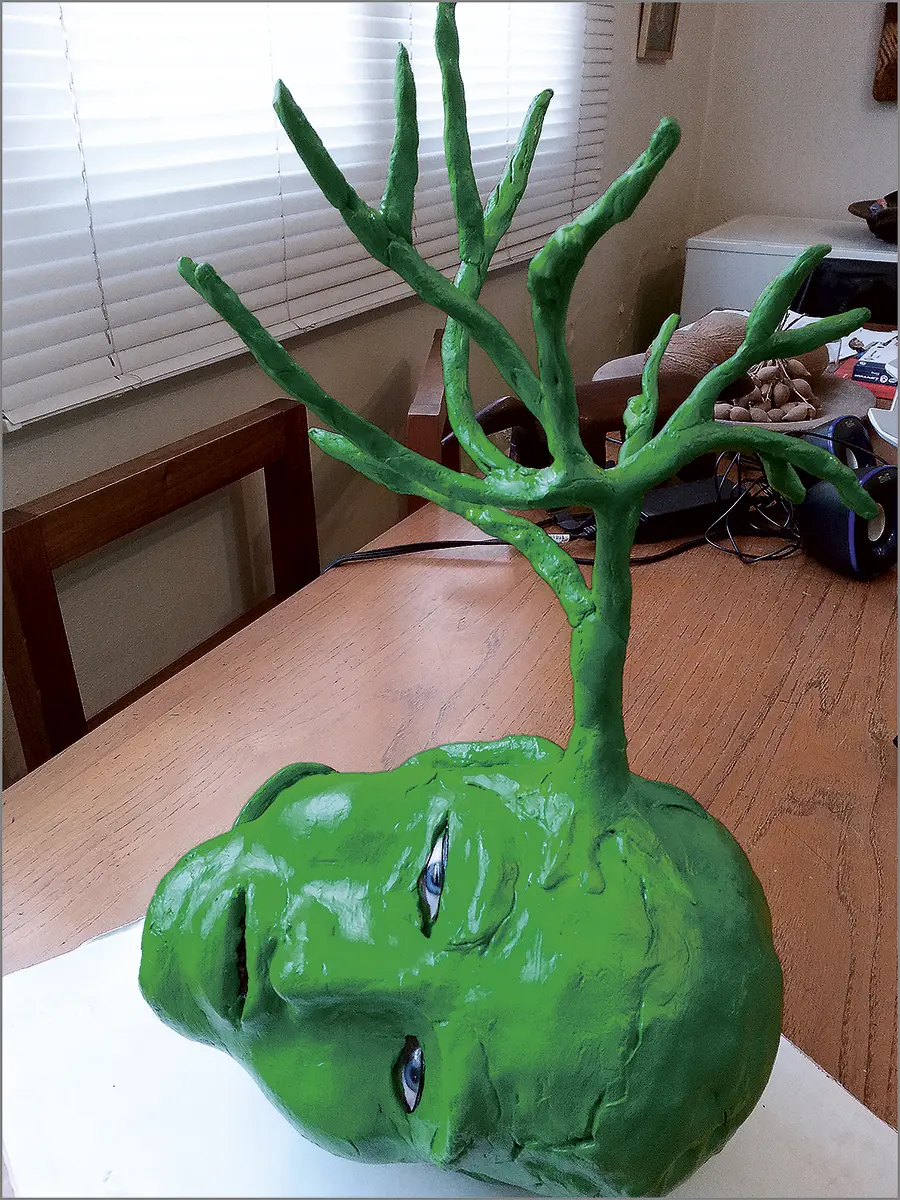
Carlos Zerpa alludes to human-animal-plant syncretism from a culturally open perspective, with a dose of folk customs and sayings. Zerpa invites us to the creation of new patterns of identity, to an encounter with our Latin American essence, which combines fantasy and reality without eschewing humor and a dash of tenderness. Niña y tigra (Girl and Tigress) and Eres un simio (You Are an Ape), both from 2015, playfully scold us for our rationality. El que escucha la tierra (The One who listens to the Earth) features the head of a man-plant that brings to mind Sixteenth-Century representations of the Americas. Zerpa does not discard his direct and incisive language, his versatile way of speaking, in order to show us how frenzied the universe can be.
The arrangement of the works in the gallery allows us to flow without hindrance between disparate proposals and means of expression. Reinvenciones de la naturaleza brings forth thoughts of creatures and plants that we know to be near but don’t normally see. This exhibition combines very different languages into the common denominator of an invention of every day; it provides us with an approach to the beauty of our surroundings from widely dissimilar perspectives that sway between smile and pain, contemplation and suffering; it deploys new sources in order to guide us—with its conflicts, pleasures, and heartaches—into nature, its processes, and its unending possibilities.
MARÍA LUZ CÁRDENAS