AM: Your artistic training was a classical one common to all our artists: first, fine arts studies in your own country. Peru, followed almost immediately by a journey to Europe. Let us begin with your European experience.
FS: I arrived in Paris in 1949, at the age of 24. I immediately became aware of two things: that I did not know how to paint and that I was Latin American. I wanted to achieve a dense kind of work, something which was not direct, but somehow I was working like an impressionist because the color which I put on the canvas was the same as that which was on the palette, that is, I did not mix it or shade it afterwards. I longed for a painting of transparency, a problem which I solved by going to Florence, where I began to copy Titian and Tintoretto in order to learn. The other point of which I became conscious in Paris was much more important because it had to do with myself as a human being. We Latin Americans were part of Western civilization, though we were only its poor cousins, essentially marginalized. Although Baudelaire was as familiar to me as César Vallejo, in art things were very different.
AM: Why was this?
FS: Because in literature, in the Americas, the other non- Western tradition had almost disappeared, a disappearance which began with the problem of a language that had no written form and had survived only orally. Even so, some of the examples that have come down to us are really amazing. In the sphere of the plastic arts, however, the legacy is not only amazing but inexhaustible.
AM: Did the fact that things were different awaken in you an interest in pre-Colombian art?
FS: I had already done some painting inspired by pre-Colombian textiles. I never copied or took pre-Colombian elements in any direct way, because, as Rilke said, “You have to have lived”, which means that we have to learn to use our own experience. Since then, I have tried to use all my cultural heritage, which includes not only Vermeer and Rembrandt but also the anonymous artists who wove textiles in ancient Peru. I have always been interested in primitive things because technique never overwhelms the content. Perhaps the opposite occurred during the Renaissance, where we have to look behind the elegance of Botticelli to appreciate the content. In primitive art, the form is a very fine skin that barely covers the content. To put things in another way, we could say that artists, although they have a name, are in the end always anonymous, because they express only the greatness and misery of our human groups.
AM: This is not exactly the case with other Latin American artists.
FS: We have to distinguish between two poles of attraction: Mexico City and Buenos Aires. Mexico exalts its own tradition, whereas Buenos Aires has wanted to become one with Europe. Pettoruti is a painter whose work is admirable, but his defect is that he has no roots. They have always been up to date in Buenos
Aires, but they have had to pay the price of renouncing the search for their own identity to do so. They have done some first-class work, but without any soul. Mexico has rejected outside influences and has exploited its circumstances: revolution, politics, and so on... It is here that the confusion arises. In the rest of Latin America, those who followed confused the local theme with the Mexican theme, as though the character lay in the theme. This was fatal because in the other countries, politics were eliminated, and what remained was the picturesque, in the belief that you could do Latin American painting by depicting Indians. Then Tamayo came along, and this was his greatness. Stimulated by the experience of his work in the Museum of Archeology, Tamayo discovered the essence and was able to recapture it in the 1930s, showing the path towards our own image.
AM: When and where did you meet Tamayo?
FS: I met him in Paris, thanks to Octavio Paz. This search for our own image was something that concerned a lot of us. On other occasions, I have said that Octavio Paz wanted to publish in the Paris of the 1950s a Latin American magazine to express the frustrations of Latin Americans. He wanted to call it El Pobrecito Hablador, like the figure from Larra. We used to meet in the Café Flore and in the Café de l’Hotel des Etats-Unis. Julio Cortázar, Serrano Palza, and the Nicaraguan Carlos Martínez Riva came along to these meetings. Paz then wrote his article on Tamayo and Mexican painting. My friendship with Obregón, Zanartu, Soto, Otero, and Vigas dates from that period.
AM: Did you converse with Latin American painters?
FS: I have had more contact with writers. I did not discuss these matters with painters. The person who really promoted the idea of Latin American art was Pepe Gómez Sicre. Before him, there was Argentinian painting, Colombian painting, Venezuelan painting, or Mexican painting. It was Gómez Sicre who was the first to speak of Latin American painting and to see the link between Lam and Tamayo. He proposed the idea and found an ally in Marta Traba, who was one of the initial promoters of the idea. Together, they worked towards making Latin American art something more than a mere appendix to other art.
AM: Were they really successful?
FS: To the extent of what had already been achieved by the painters in their studios. I myself have always followed Ortega’s philosophy: “I am myself and my circumstances”. If I lived in Lima, I could not paint like a New York painter. We in Peru are not overwhelmed by advertising but by poverty and underdevelopment. I cannot do conceptual art like an artist in SoHo in New York.
AM: Who agreed with you in this?
FS: I feel closest in this respect to Francisco Toledo, because he has the same interest in erotic, ritual, and sacred elements that I have. Mine is more clandestine, of course... I also feel close to the early Obregón, from the 1940s, 1950s, and 1960s, with the first period of Armando Morales, not with his current figurative work, which is very handsome, but with his work from the 1950s. I organized the first exhibition by Morales in Lima in 1959, pictures of dead guerrillas, which were almost abstract. I admire Negret and Ramírez Villamizar, who are great artists in my opinion.
AM: The roots of your work lie deep in various expressions of pre-Colombian art. Could you tell us what these sources are?
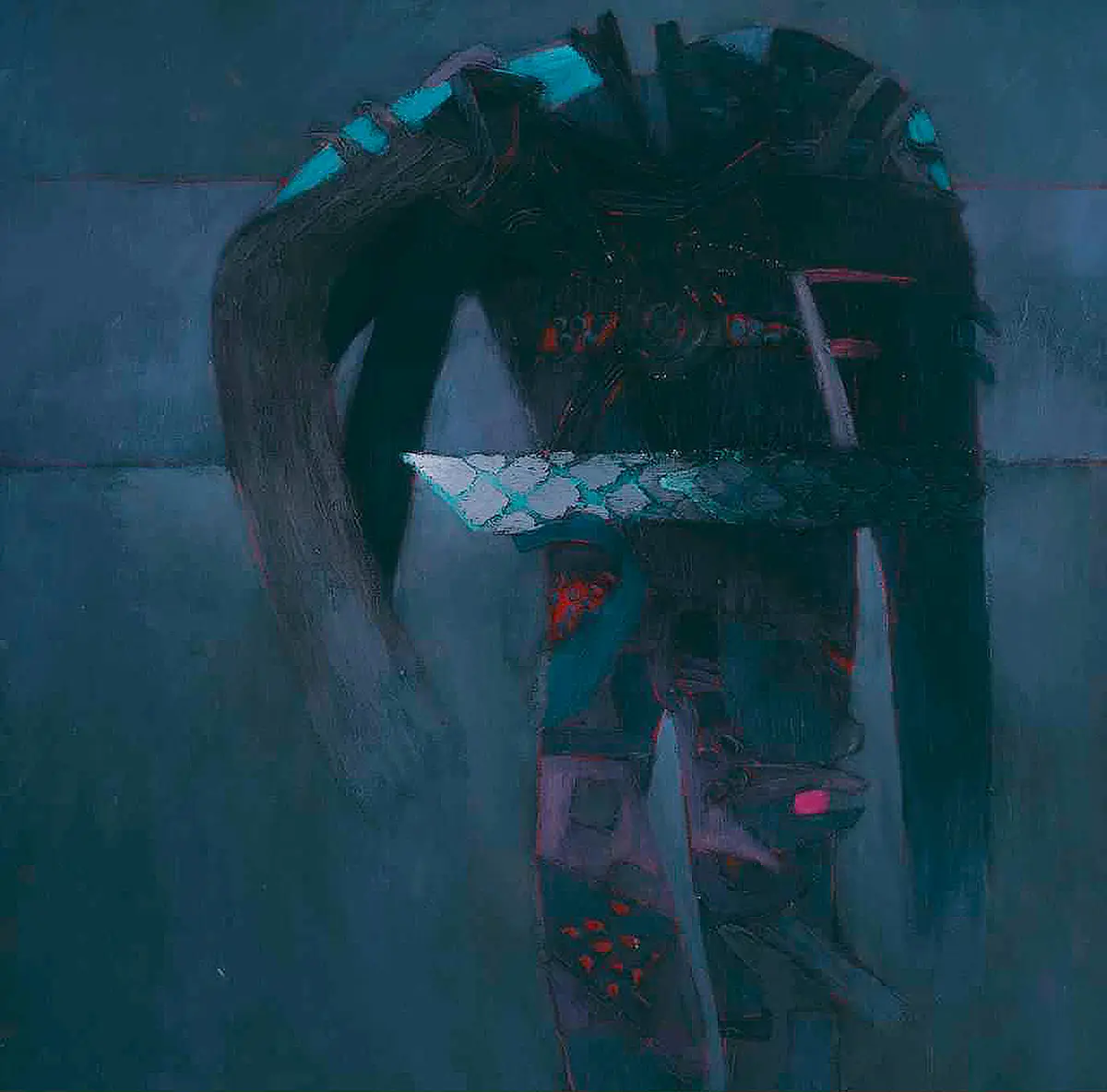
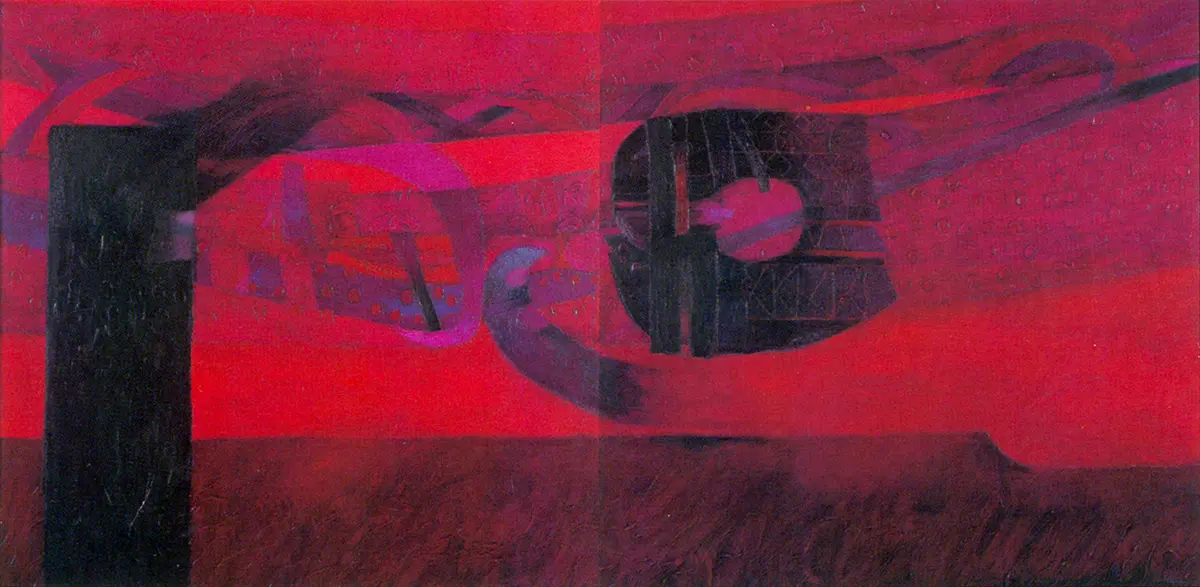
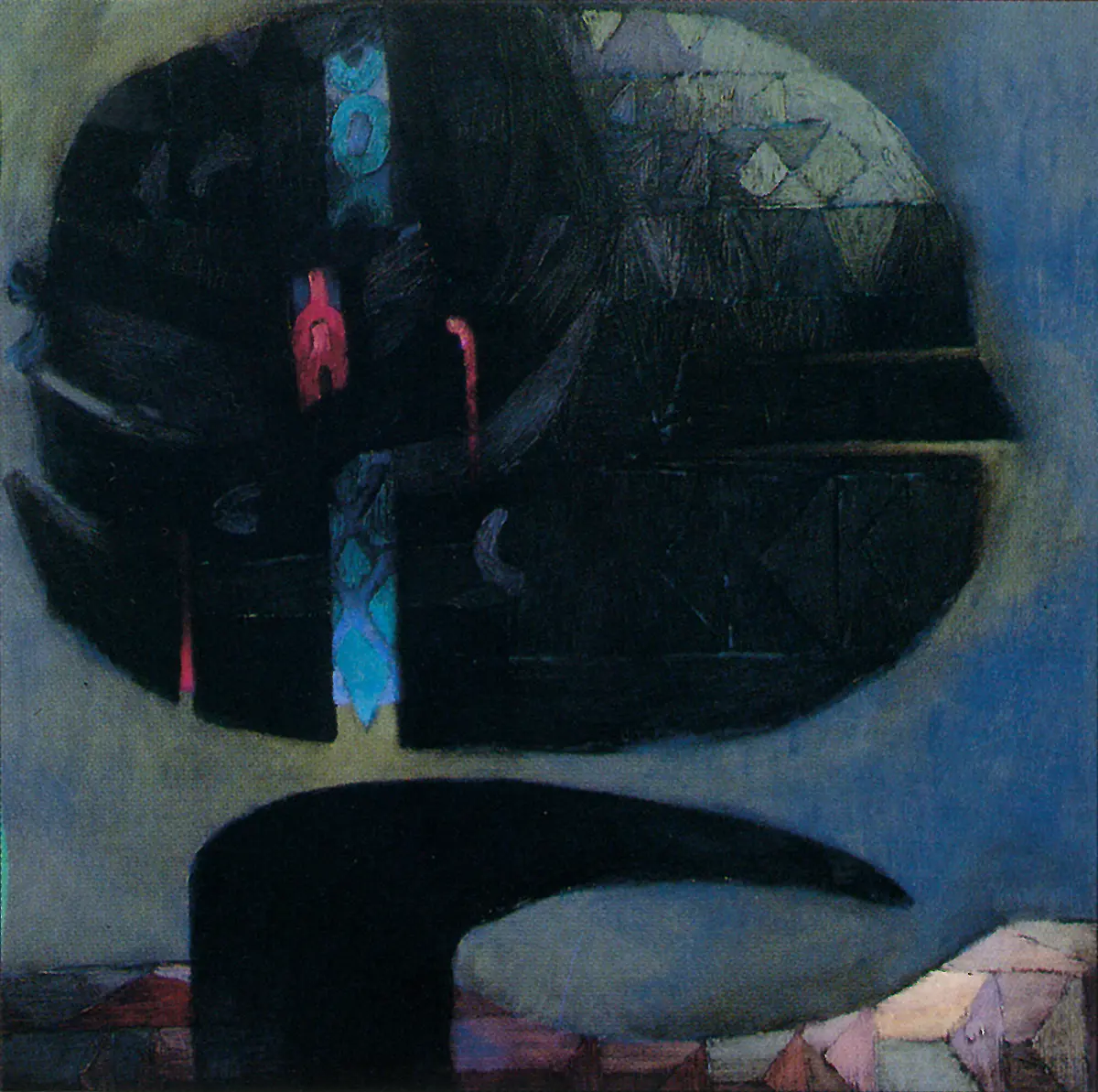
FS: I am very interested in the art of Chancay, particularly the painted fabrics, where there is an almost gestural kind of expression. They seem to me to be very free, naive, and innocent. The artists who did these textiles were, I believe, like Miró or Klee. Later, I became interested in the textiles of Paracas. I take a knife or teeth from a Chavin fabric... I do it unconsciously, and this is perfectly natural. Then we have The Goad of Chavin. There is thus a vocabulary which has gradually been established on the basis of forms of aggression, such as that of the tumi or sacrificial knife, forms which I connect to a table or an altar. The deep contact which I have had not only with pre-Colombian art but with the so-called primitive art of Africa or Oceania has inspired me to seek out inhabited forms, forms which are a cloak for a living content.
AM: These forms of aggression, of which you spoke, were also used by Orozco, Tamayo, and Lam. Obregon also used them at the same time as you did. How can this kind of morphological obsession be explained?
FS: I believe that the strength and possibilities of Latin American art lie precisely here. In our societies, there is still much to narrate, to name, and to attest. For me, this is why Latin American literature has proved so fascinating. Where else could Vallejo or Neruda have been born, but in these harsh, frustrating, and suffocating regions, which are at the same time full of marvellous things?
AM: You mentioned earlier the existence of two conflicting poles: Buenos Aires, with its tendency towards cosmopolitanism, and Mexico, with its nationalism. Which is the correct path in your view?
FS: There is no doubt that the Mexican path is the surest. The only way to do good art is to establish a relationship with the place. Fashion has fallen to the wayside. Dali used to say that “fashion is what goes out of fashion”. Cosmopolitanism is the contrary of universalism. To be cosmopolitan is to be provincial and therefore local. Art has never been a search for the superficial. It is true that there was a time when what was successful was what was in fashion, but time has passed and proves the contrary.
AM: But Marta Traba criticized Mexico and the Andean countries for being too closed, unwilling to adopt the open attitude flourishing in Buenos Aires.
FS: Both forms were, I believe, essentially provincial ones, present both in those who admire everything which comes from outside simply because it comes from outside and in those who refuse to see only what is strictly at hand. The provincial and the cosmopolitan join hands in their respective worlds where there is neither wind nor oxygen.
AM: Since 1959, your work has been organized around a thematic series with very suggestive titles. How did you choose these titles?
FS: In each case, the title has come afterwards. I do not try to find forms that explain a title, but rather forms that, in turn, suggest their own title. In general, they are a set of aggressive forms that are like daggers or the beaks of birds. This violence is consonant with a general pattern with which I have been working for a long time, in which there are both birds and angels. At the moment, I am working with winged figures. I have always been very impressed by a verse of Rilke, who said: “all angels are terrible (...) because they are disdainful of our destruction”. I have always remembered this. I had the same impression when I visited the Cathedral of Chartres in 1949 and read that “this place is terrible, God inhabits it”. This fusion of what is beautiful and terrible has always moved me. That is why I like writers such as Georges Bataille and Samuel Beckett and am interested in anything dealing with the idea of sacrifice. Breton spoke of the laicist-sacred art as a way of achieving this, something to which only religion previously gave us access.
AM: Let us turn to some of the implications of the titles, and begin with Cajamarca, one of your first series.
FS: With the death of Atahualpa in Cajamarca, there was a sacrifice. I must point out that my interest in pre-Colombian culture is not limited to its visual dimension. When I paint Atahualpa, I am evoking an event which is part of my cultural heritage. It is my political and social commitment that is brought into play, the way in which I establish a relationship between myself and one of the components of Latin American art. Of course, my position goes beyond just art and encompasses man and all that he is. Art that is only art is but a fragment. If it is merely visual, then it is mere entertainment.
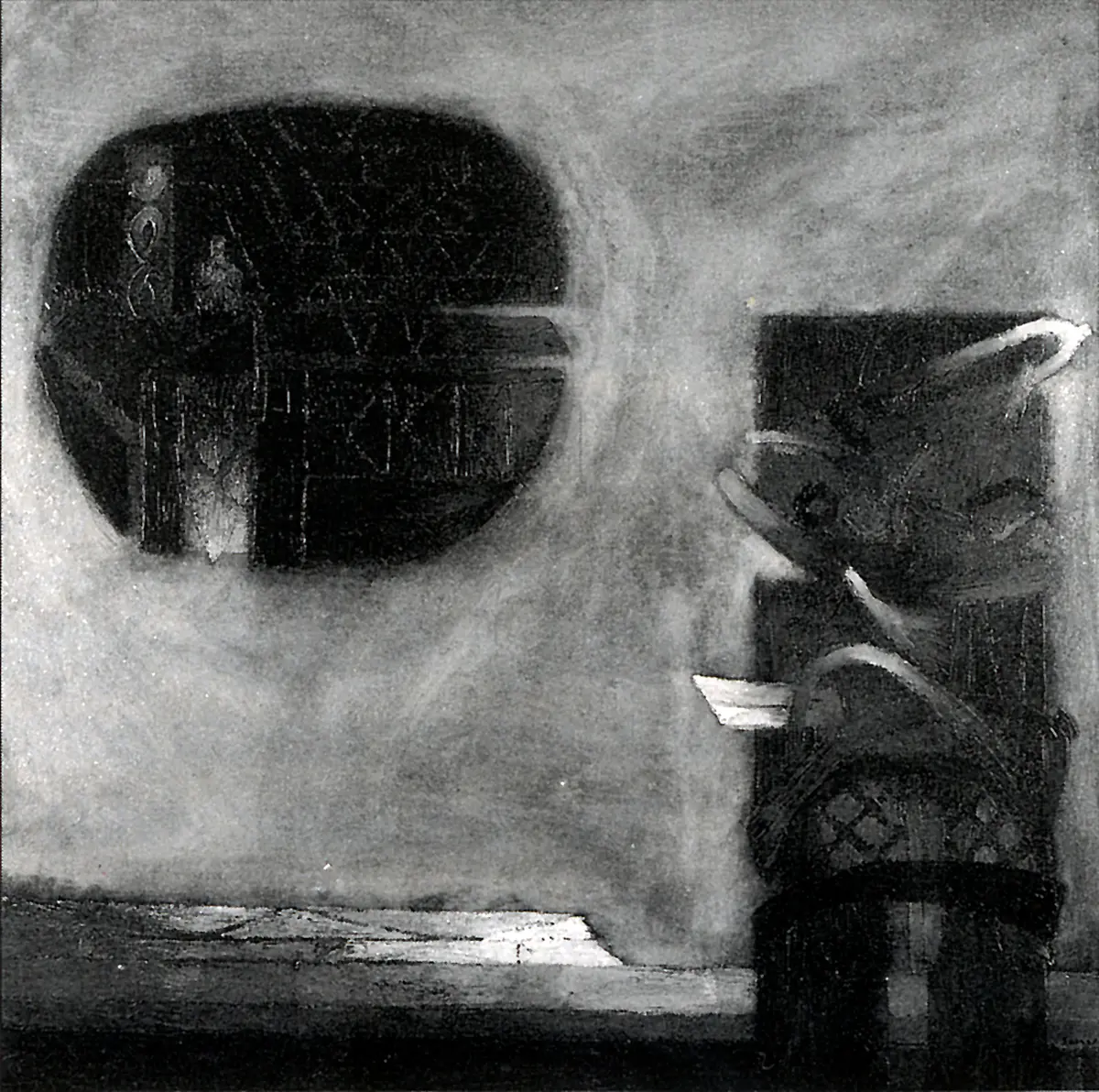
AM: Could you say something about two series with titles that are apparently clear, but in the end very secret: Path to Mendieta and Sea of Lurín?
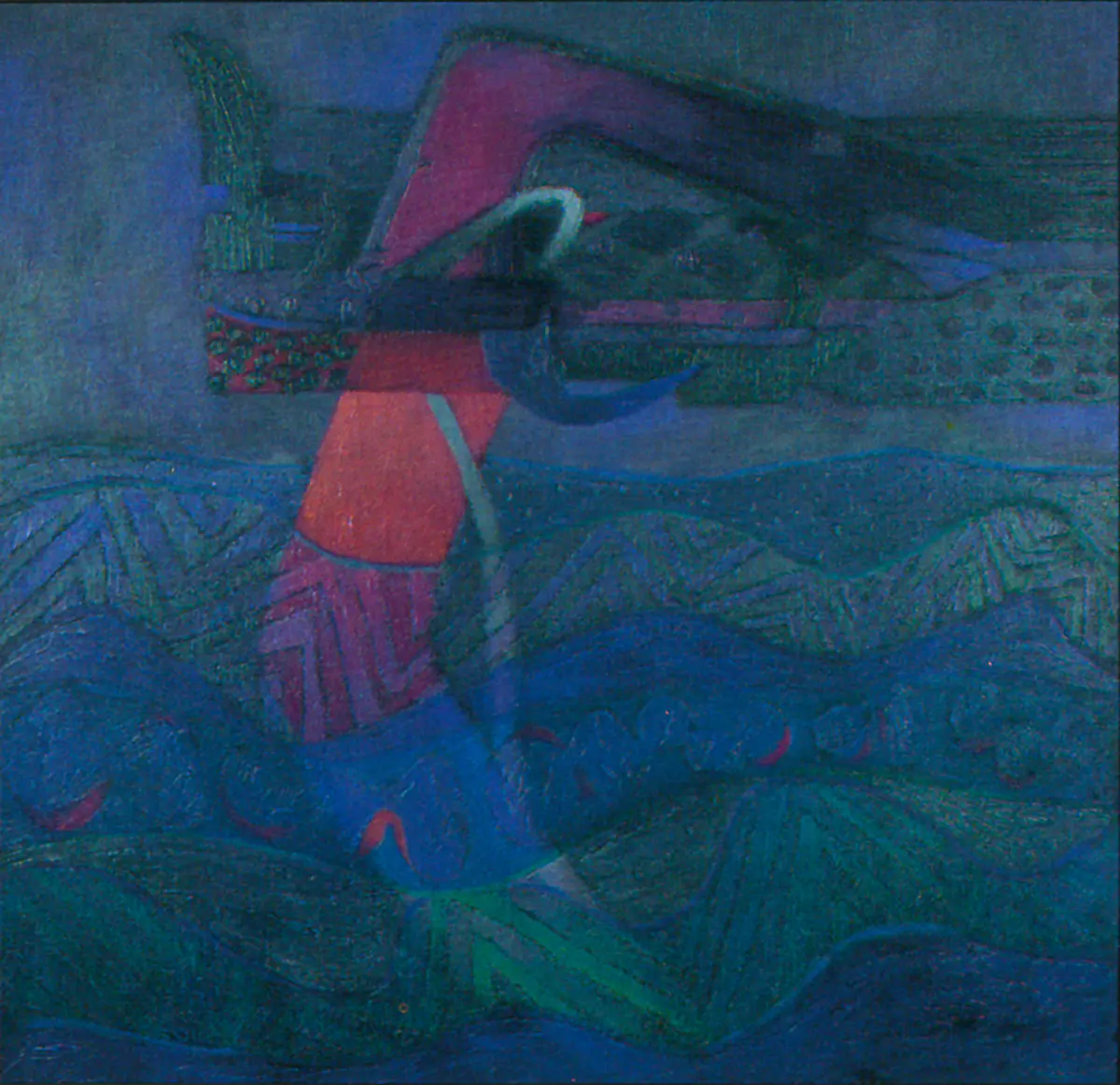
FS: Mendieta is a beach in Paracas, to the south of Lima. On the one side, there is the desert, and on the other, the sea. On this sand-strewn place, a thousand years ago, there emerged a culture which produced some of the most handsome and elaborate textiles ever created. Why were these textiles so elaborate when these people lived in cane huts? The most curious thing about the textiles is that they were woven not for the living but for the dead. The old inhabitants of Mendieta lived alongside the graves and spent their time visiting the dead. Lurín is a desolate and mysterious desert. I have had a small house and workshop there for three years. José María Arguedas used to say that all the places settled by the pre-Colombian peoples are of immense beauty. This is the case, for example, with Machu Picchu and Chavin. This beauty continues to shine, and it helps me find the past.
AM: You seem to have a great nostalgia for ancient Peru prior to the arrival of the Spaniards. Does this explain why the titles of so many of your works are in Quechua?
FS: I use Quechua because it is a way of seeing Peru that is not exclusively Western. I am not trying to present an alternative, but rejecting the notion that we are purely Western. Fashion makes us look outwards, rather than inwards. The kind of painter that I am has only one kind of painting. Each picture is a failure to capture that picture, or if you like, the gap between what I want to do and what I can do. I am not interested in the past just because it is the past. I am above all interested in poetry, which is fundamental in my work. I have worked from César Vallejo, Saint-Jean Perse, Samuel Beckett, Rilke, and Octavio Paz, among many others. In one of his poems, Saint-Jean Perse describes a journey through a desert which seems to me so like that of Peru... For me, the titles in Quechua possess this poetic connotation. Inkarri is the name of a Quechuan myth whereby Tupac Amaru, the Inca chief who was cut up, is recovering underground and preparing to recapture his land. Uku Pacha means the underworld; a world full of evil and good, but on a different scale from that in which we live. Apu Inka means Lord Inca. The series entitled Apu Inca Atawallpaman is an elegy for the death of the Inca Atahualpa. It means, literally, Lord Inca Atahualpa. Ruma Macii means my fellow-creature, my neighbor. Puriq Runa means traveller, walker. Puka Wamani is a red falcon, and Waman Wasi is the home of the falcon. Ilia is a magical stone; the moon, for example, is killa.
AM: I was surprised by your move from painting to sculpture.
FS: The sculpture that I recently did took years to incubate. For a long time, I had been curious to see how these images would look in their dimensions. This urge has now been satisfied.
AM: It was thus an isolated experiment?
FS: Sculpture requires concentration on things that do not really interest me. The plaster, the smelting... I am 66 years old, and all I want to do is paint.
ÁLVARO MEDINA
Colombian historian and art critic. Contributor to ArtNexus / Arte en Colombia since its founding.