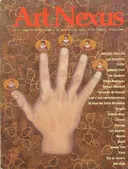
A Kantian may regard the title Witnesses of Time as a witless cliché, for it suggests that a consciousness is bearing witness capable of placing itself outside time instead of presupposing it. And yet if one insists on giving this title a plausible interpretation, perhaps he ought to assume as a witness anyone who can feel the change in the passage of time from a linear to a cyclical pattern. Indeed, those who lead lives split between a history whose beginning is Creation and whose end is the Final Judgment and another where the founding events of their cosmology are ritually reenacted ad infinitum could perhaps separate themselves from time just enough to become its witnesses. To participate in both types of times, however, is to undergo a kind of schizophrenia, since it seems impossible to believe simultaneously that events are ineluctably left behind and that the same events present themselves to us over and over again. If the title of this book in any way amounts to a promise of exploring this divided mind, one ought to expect from this work of Garduño that it not only dwells on anthropological matters but also on a metaphysical discourse.
However, before examining these lofty issues, let us begin more modestly by judging Witnesses of Time as a publishing accomplishment.1 The first edition that came my way was the Swiss one, Zeugen der Zeit, then the Italian text, Testimoni del Tempo, followed by the French version, Gardiens du Temps, the Spanish one, Testigos del Tiempo, and finally the English one. This simultaneous multilingual publication that sums up a decade of the photographic work of Flor Garduño has no precedent in the history of Latin American art. The Thames and Hudson English edition sold out the same year it was published, and once it acquired out-of-print status, its price went up from forty to seventy-five dollars. The demand for Garduño’s book is partly due to its timely release in the midst of the Quincentennial commemoration, to the enigmatic force of its images, and to its exquisite duotone printing. Perfectly printed editions such as this one raise the question if perchance they unfairly compete with actual print sales. If a collection is thinking of purchasing three prints, given the book, he might buy two and not buy the one he has doubts about.
[[IMAGE]]
Witnesses of Time contains two essays and seventy-two images from four countries: Bolivia (21), Ecuador (9), Guatemala (23), and Mexico (23). In this set, the obviously absent members are Colombia and Peru. If Garduño’s project consists of tracing the important indigenous cultures in the American continent that survived the holocaust of the Spanish conquest and the “ethnic cleansings” of the criollo republics, then the two aforementioned countries are certainly missing. Their absence is probably due to the terrorist violence in those countries that kept them out of Garduño’s photographic pilgrimage. This confirms that the world described by the photographs of Flor Garduño has a continuing and unfinished history of tragedy.
Next to a history of people is a history of their ways of describing the world. In art, very often the way of describing the world is as important as or more important than the world described. As a book, Witnesses of Time, does some justice to the world described by the photographs it contains, but pays little attention to their way of describing it. Neither of the two essays in the book by celebrated Mexican novelist Carlos Fuentes and Elisa Ramirez is about Garduño’s photography, but about the world her work describes. Sound information about the symbolism of the rituals that she photographs would enrich the book and protect it from the accusation of being a mere exotic fetish. But the essays do not accomplish that either, presented as they are, in a rather superficial and arbitrary style. Isn't the reader entitled at least to a simple insight about the symbolism of the iguana so pervasive in some of Garduño’s most important images? Moreover, can one reduce the many pre-Colombian cultures, as Fuentes does, to a handful in a more or less inspired generalization? Just take the case of Peru, where there were pre-Colombian cultures such as the Moche and Huari, which were so unlike each other that one might even regard them as antithetical.
A text about the world described by Garduño’s photographs should have been written by an anthropologist or a historian of religions with the proper credentials. Only then could essays like those in the book, about which we would be less gracious if they were written by somebody alien to our culture, be more digestible. But if critical commentary about Garduño’s work is to be omitted, let it not be for the sake of prose which is neither this nor that. It is paradoxical how all too often coffee-table books of little interest to the scholar are published while at the same time exhibits are curated in a mostly unappealing way for the general public. In my view, it ought to be the other way around: books should be above all for the scholar, and exhibits should be specially for the general public. We do not know if the content of Witnesses of Time was an editor’s decision or Garduño’s choice, but Fuentes’ introduction follows the recipe of other recent books of Latin American photographers. For the Spanish edition of Martin Chambi, 1920-1950, the editors included a modest albeit sober prologue by Mario Vargas Llosa, and the English edition of Sebastião Salgado’s An Uncertain Grace has an unfortunate essay by Eduardo Galeano. But while these two books also include critical essays whose virtue is another matter, Garduño’s book does without one. We assume that the essays of Fuentes, Galeano, and Vargas Llosa meet marketing needs, the idea being to give prestige to the work of the photographer with an endorsement from a celebrated writer. But why not serve both the scholarly and the commercial ends? For the English version of Chambi’s book, Martin Chambi: Photographs 1920-1950, the Smithsonian Institute Press has kept the Vargas Llosa essay, but has added an essay by Edward Ranney, the only expert on the legendary Peruvian photographer among the writers in that book.2
[[IMAGE]]
Is it perhaps the case that photography is still not well respected in the Latin American intellectual circles? How much have Fuentes, Galeano, or Vargas Llosa researched the history of the photography they have been asked to write about? Does it suffice to have an abundant literary culture to write competently about photography? Would they try harder if they had to write about Duchamp, Stravinsky, or Diaghilev? Is it possible to do armchair criticism?
What kind of text would be adequate for Witnesses of Timel?In addition to having a serious essay about the world described by the images, it would be desirable to have another describing the connections of Garduño’s work with that of her predecessors and contemporaries (national and international), with Latin American and Mexican culture (the Mexican Revolution, Muralism, Indigenismo, folklore, the literary and painterly avant-garde) contemporary art, etc. In other words, it would be interesting to know what in Garduño’s life and social-cultural milieu is relevant to her photographic work. There are Mexican critics like Alejandro Castellanos or Olivier Debroise, quite capable of writing such analyses. Why am I so adamant about the texts? Anybody who faces the task of learning about Latin American art history knows how frustrating it is to discover that the few books on the subject often fail to do what I recommend here and choose instead to embellish the publication with celebrity endorsements or magically realistic onanisms. The writers of the Latin American boom taught us to appreciate the Latin American book. Flor Garduño’s is one of those books we ought to appreciate from its conception all the way to its reading. In what follows, we will try to do a bit of what was left undone in the texts.
The front cover of the English edition of Witnesses of Time features the image Woman Who Dreams (Mexico, 1991): a woman of Indian features sleeps on a straw mat next to a couple of iguanas. This is an image that functions in two denotational frequencies. In one, it denotes an iguanera, a character of Mexican popular culture is ever-present in the work of Mexican photographers (for example, Our Lady of the Iguanas (1979) by Graciela Iturbide, and Iguanera (1983) by Pedro Meyer).3 Indeed, in The Woman (Juchitan, 1987), Garduño confirms the fascination for the iguana and its hermetic symbolism. In this first frequency Woman who dreams is part of that mythic vision of the American indigenous person, which inspires Garduño’s project. But what is denoted in a second frequency is the history of the image’s own representation. Its framing angle —vertically looking down- recalls the 1924 nude of Tina Modotti that Edward Weston shot on a Mexican rooftop.4 That angle reveals the modernity of the Woman who dreams and alludes to the passage of Modotti and Weston through Mexican photography. But Garduño’s image also involves one of the most important Latin American images of the Twentieth century: Manuel Álvarez Bravo’s The Good Reputation [Fame] sleeping (1938). This allusion is not surprising because Garduño was Álvarez’s assistant (1978-1981) and collaborator in a project about the indigenous Mexican communities (1981-1982), with which, in a sense, she set off on her own quest.
[[IMAGE]]
According to Álvarez himself, The Good Reputation was commissioned by Andre Breton for the catalogue of the surrealist exhibitions, which the latter organized in the late thirties. The production of that image adhered to the letter of the automatistic surrealist recipe; namely, Álvarez put aside any rational calculus about the meaning of the symbolic elements in the picture (bandages, cacti, stained wall, blanket, model) and allowed these to find their way into the construction of the image freely and subconsciously.5 That procedure came naturally to Álvarez because his focus has always been more poetic than objective. If one ignores the title in the interpretation of the image, one feels that the peaceful sleep of the model runs the risk of coming to an abrupt end by any false move towards the prickly cacti; indeed, the bandages suggest that some such damage has already occurred. Once the title is reintroduced, that sensation of danger becomes a metaphor of the precariousness of fame, or more generally, the vicissitudes of notoriety.
Does this mean that Garduño’s work fits into a surrealist tradition? The imminent danger, the tranquil dream, the marginal character (the model is a Mexican mestizo) have an ancestor in another favorite image of the surrealists: Henri Rousseau’s La bohémienne endormie (1897). Although it would be anachronistic to regard Rousseau himself as a surrealist, the fact that in his painting the oneiric world appears “outside” the sleeping gypsy —ie, the opposite of what happens when someone dreams—explains why it captured the surrealist imagination. Álvarez Bravo himself has confessed admiration for the painting, and the framing angle of The Good Reputation—almost at the same level as the model—more closely resembles Rousseau’s painting than Weston’s nude. One can understand how the parsimony of Weston’s image follows from the modern penchant of the straight photographer to separate himself from pictorialistic intervention. But Álvarez does not share that attitude militantly and therefore has no such inhibitions. To be sure, the suggestive titles that abound in Álvarez’s work differ drastically from the telegraphic and tautological titles favoured by modern photographers. Curiously, Garduño oscillates between both titling traditions, but in the Woman who dreams, she opts for that surrealist tradition, which shows a good understanding of the free play of mental faculties resulting from the interaction of title and image. Thus, if we pursue the analogy Rousseau-Álvarez-Garduño, what imminent danger threatens Garduño’s dreaming woman?
Although Garduño herself is reluctant to accept the label of “surrealist”, the title Woman who dreams penetrates into the favorite realm of surrealism: the psyche. Neither Rousseau nor Álvarez was so bold. Both stopped at what is merely phenom enal: the women appear to be sleeping, so their titles express the conclusion that they are sleeping. But to conclude that Garduño’s woman's dreams are to guess, or to wish, dreams in her sleep. Nevertheless, Garduño wants to keep a certain distance from surrealism for either or both of the following reasons. The first is the same that led Cartier-Bresson—a photographer who has exerted a powerful influence in Mexican photography—to hide his surrealist inclinations on the advice of Robert Capa. In 1947, the latter told Cartier-Bresson that if he wished to get jobs as a photographer, he needed to avoid the label “little surrealist photographer” and to adopt instead that of “photojournalist,” keeping the rest buried in his heart.6 When Cartier-Bresson heeded that advice, the ability to reveal the surreal side of the world of some photography became invisible to critical writing. A second reason for Garduño’s rejection of the surrealist label is that her own teacher, Kathy Horna, was a self-confessed surrealist. However, Homa’s work —focused on the absurd and unbeliev able—bears little resemblance to Garduño’s recent work. It is quite logical, therefore, to expect Garduño to reject a label that would conflate her work with Homa’s conspicuously different oeuvre.
[[IMAGE]]
But the story does not end there because, if some photography has an intrinsic inclination to what is surreal—regardless of whether its producers share the premises of surrealism—that feature of the medium deserves further scrutiny. Andre Breton said that “automatic writing is a true photography of thought.” In an essay about the work of Cartier-Bresson, the philosopher Arthur Danto interprets that statement as meaning that “the absurd illogic of automatic writing replicates a corresponding rhythm of thought, recording the creative pulses of the subrational mind. If the real —or, better, the surreal—world has the same dislogic the Surrealists attributed to the mind, then a true photography of it would record the magic to which rationality is blind."7 The habit of ordinary living blinds us to the surreal aspect of the world that photography rescues for us. If we add to Danto’s reflections that the world of the Indian is still more opaque to the rational mind than the cosmopolitan habitual world, it becomes clear why Garduño’s photographic unveilings may be surrealistic, not in the preferred art-historical meaning, but in Danto’s philosophical sense. In other words, Garduño’s images give our rational minds access to a world that is alien to them. The masked characters do not impersonate, but they are the characters they represent; the eruption of the volcano and the passing of the tornado are not unforeseen events but long-awaited occurrences; and —why not?—time is a substance whose properties one may bear witness to. However, these claims, which fit perfectly in the mythical world that Garduño depicts, demand a radical revision of our most cherished metaphysical biases.
Such metaphysical revision, however, borders, as suggested in the first paragraph of this essay—on schizophrenia. One cannot simultaneously believe that time is always different and that at times it is the same without endangering one’s mind. A tragic example is that of the now-defunct Peruvian novelist Jose Maria Arguedas. Although not an Indian himself, Arguedas’ first language-and his first understanding of the world-was Quechua; he learned Spanish only in his adolescence. His novels are not those of a white man well-acquainted with the Indian world, but those of an Indian who feels it. They are the bridge that connects the two cultures that make up the mestizo mind. Arguedas came from that world that, for us, as for Graduno, is on the other side
of that bridge. Seeing the world from halfway across that bridge must be terrifying because it drove Arguedas to suicide. Garduño once commented that her artistic quest is also a search for the characters of her dreams. In other words —as in the case of Rousseau’s gypsy—for Garduño, the world outside her psyche is inhabited by her dreams. In that equivalence, one can perhaps find the explanation for the boldness of the title Woman who dreams: it is Garduño herself who—identifying with her model—dreams a world of iguanas outside herself. For her not to cross the bridge is to risk self-alienation. Garduño’s work —like Arguedas—must not only be understood as a merely documentary endeavour but as a very personal one. Their work signifies not only towards its intended audience but also towards the authors. It is their way of describing the world that defines the latter before those of us who regard their work.
However, much of Garduño’s project escapes the surrealist vein. Its iconographic ancestors are different from those of Álvarez Bravo and Cartier-Bresson. On one hand, the anthropological dimension of her work links it to the romantic iconography of the European travelers of the eighteenth and nineteenth centuries and its strict conventions for composition and framing. Basket of Light (Guatemala, 1989) echoes both the costumbrismo of Carl Nebel or Jean-Baptiste Debret and the indigenismo of Diego Rivera. Where as the penchant for the sublime in nature of Tornado (Lake Titicaca, Bolivia, 1990) and Eruption (Volcano Pacaya, Guatemala, 1989) has direct corre lates in the work of those immersed in the romantic aesthetic such as Johann Moritz Rugendas (see, The Colima Volcano) or Daniel Thomas Egerton Gust of Windat the Summit, Iztaccihuatl).8 If the romanticism of these travelers filtered what they saw, making them depict only what their philosophy and ideological prejudices allowed them to see, Garduño filters according to a more modem photographic narrative and a histrionic vision that reveals what is basic from scene to scene. One of the problems of labeling Garduño’s work as simply documentary is that this label somehow ducks the problem of tracing the iconographic lineage and ideology of her images.
Unlike the European traveler who was attracted by the exotic because it was something different from his own world, there is in Garduño’s work a clear disposition to identify with the people she portrays. This identification does not follow the moral dictates of a leftist Sartrean solidarity, but becomes a genuine search for a mestizo artist to find what is culturally hers. In that sense, it is Martin Chambi, the Indian and indigenista photographer, who is kin to Garduño’s project. There are two additional aspects to this relation. Garduño’s portraits, such as The Zinacantecan Wedding (Mexico, 1987), show rigid poses similar to those in early twentieth-century studio portraits as practiced by Chambi. Moreover, Chambi undertook an ethnic indigenista taxonomy often resembling Garduño’s work.
....
FERNANDO CASTRO