
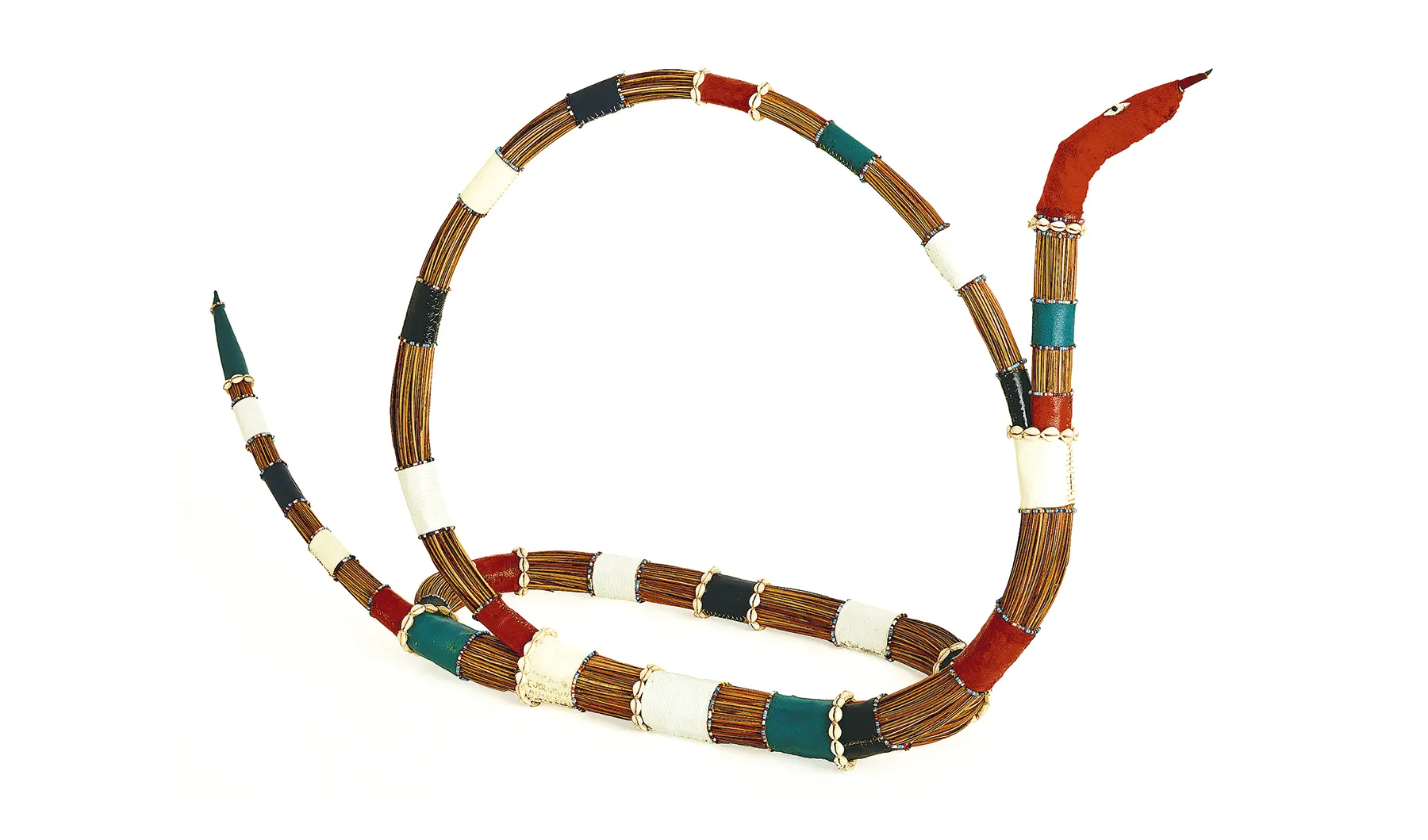
In Yoruba culture, “art” (ona) serves not only aesthetic purposes but is also deeply intertwined with religious beliefs, social structures, and daily life. In its many forms, Yoruba art is used to communicate with the divine, honor deities and ancestors, and express cultural values. The same is true of Candomblé, a syncretic Afro-Brazilian religion rooted in spiritual traditions, primarily of Yoruba origin, introduced by enslaved people who arrived in Brazil between the 16th and 19th centuries. The art of Candomblé encompasses visual and performing expressions intertwined with religious practices. Numerous Afro-Brazilian artists have developed their work based on a holistic concept that combines the spiritual, the ritual, and the aesthetic. The exhibition Mestre Didi Spiritual Form is a fitting tribute to one of the most prominent figures in Brazilian culture, Mestre Didi (1917-2013), whose artistic practice was closely linked to his role as a spiritual leader of Candomblé…
Keep reading this article
This article is exclusive to artnexus subscribers. Subscribe to unlock the full content and our entire archive since 1976.