Sergio Camargo's

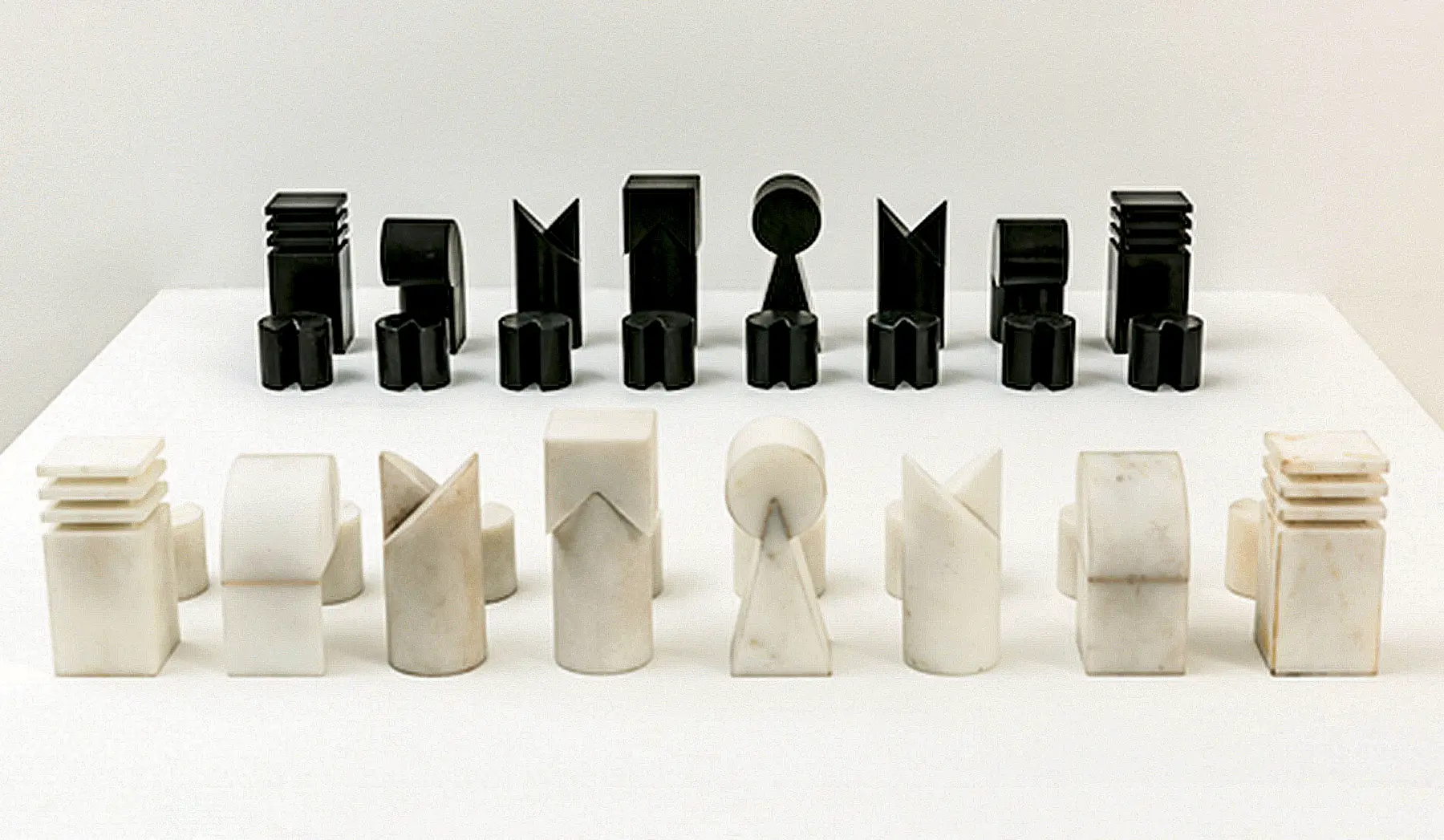
Sergio Camargo. Chess Game, 1973. Carrara marble and black Belgian stone. 32 pieces. Variable dimensions. Courtesy: Galeria Raquel Arnaud

MonographJune – November 2026· By Francine Birbragher-Rozencwaig

Sergio Camargo's

Empirical Geometry

“The visual artist thinks with his eyes; the world comes to him through his eyes. In the same way, I believe, the musician thinks with his ears and structures his life, his relationship with the world, through sounds, that is, through hearing. The visual artist –including myself– connects with the world through their vision of it. Now, what I look at, what I see, how I feel about the things that surround me –what things do I feel?– all of this, in short, is revealed through the work.”— Sergio Camargo 1

Sergio Camargo is one of the most prominent Brazilian sculptors of the 20th century. While he is often associated with the Constructivist movement in Brazil, it is important to clarify that he was not associated with any of the groups inspired by Concrete Art, such as Grupo Ruptura, founded in São Paulo in 1952 and led by Waltercio Caldas, or Grupo Neoconcreto (1959-1961), formed in Rio de Janeiro by figures such as Lygia Clark, Hélio Oiticica, and Lygia Pape. Camargo’s sculptural work is clearly abstract, yet it emanates a certain organic quality that arises from the combination of geometric volumes and responds to a principle he himself defined as “empirical geometry.”2

Keep reading this article

This article is exclusive to artnexus subscribers. Subscribe to unlock the full content and our entire archive since 1976.

More articles from this issue

artnexus #126 — View full issue