The Museum of Fine Arts of Caracas, undoubtedly the most important museum in the Venezuelan capital, has in recent years been presenting retrospective shows of the work of various Colombian artists. In 1992, there was Luis Caballero; in 1993, Manuel Hernandez and this year, Beatriz Gonzalez, in a show curated by Katherine Chacon. The exhibition included some 90 works -paintings, objects, curtains, murals, prints and drawings- done between 1963 and 1994. It was complemented by an excellent catalogue of 56 pages, 23 full color photographs and texts by the curator, Carolina Ponce de Leon, Roberto Guevara and Geman Rubiano. I am sure that the show will be widely admired because Beatriz Gonzalez’s production has always been full of striking images and clear messages. Furthermore she is, without doubt, one of the most recognizable Latin Ame-rican artists in terms of her themes, her social and political concerns and her tastes.
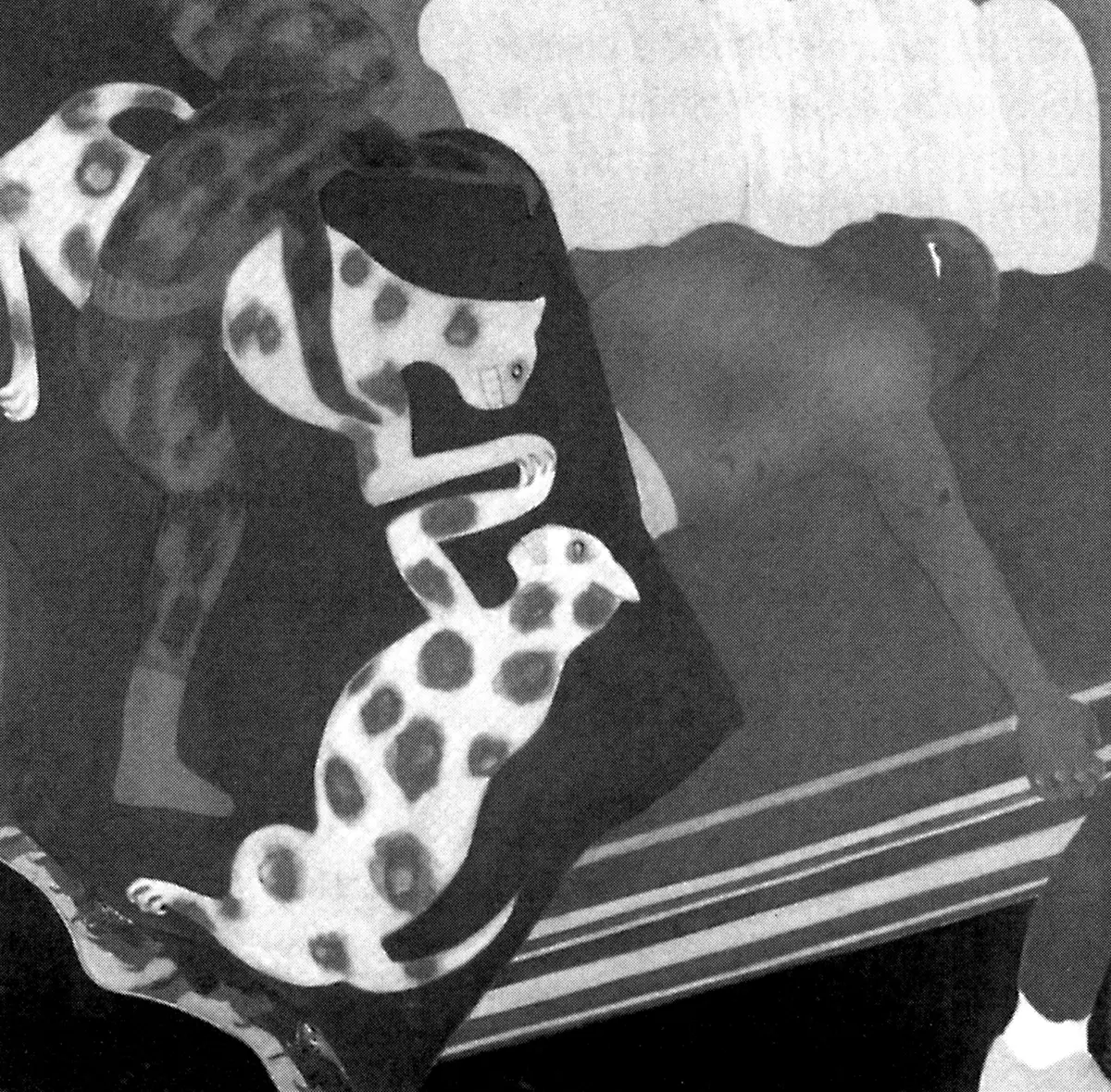
The possibility of seeing good examples of all her work (including furniture) will certainly have facilitated comprenhension of the many interests of her work -from the purely formal, to the most polemical, experimental, iconographical and semantic (with account being taken of the titles of the works). In the midst of the crisis in the plastic arts and above all, painting in recent years, her production is indeed comforting. Her art retains the essence of painting and drawing and reaffirms the idea that art must have an identity and say something. These works do indeed communicate many things: the early pieces are full of humor; from the 1980s they become fully commited socially and allude directly to personalities from the world of Colombian politics and, less explicity, to the anguished situation of recent years. Of all the works included in the exhibition, mention must be made of The suicides of , in two ver sions in oil from 1965, which ushered one of her most well known and admired periods, in which she revealed her observation of the idiosyncracies and tastes of people in the country; Tragedy of Passion: former corporal kills the wife of a friend and then commits suicide, a small inkwork on paper from 1967, anticipating her summary, incisive style; I was born in Florence and was 26 when my portrait was painted, an enamel work from 1974, one of her many variations on the history of art, where in this case she transforms the Mona Lisa into a flatterned image full od intense and arbitrary colors; Mr. President, what an honor to be with you at this historic time (1986), a dramatic allusion to the violence resulting in such tragic events as the storming of the Palace of Justice; The Altar, an oilwork from 1990, a complete scene which is presided over by an anonymous postrate figure, surrounded by two images of the Colombian goalkeeper Higuita and a host of exotic natives traveling in small boats.
GERMAN RUBIANO CABALLERO