About a hundred works, mostly drawings and engravings, make up the Carla Rippey exhibition at the Museo de Monterrey. Aptly titled The Use of Memory the show is divided into series that evoke the poetic wealth stored in the artist’s own memory. The latter is partly constructed from the various spaces she has lived in - the midwestern United States of her childhood and youth, later Paris, New York, Chile and finally Mexico, where she has worked since the early seventies For those who like to refer to postmodernisms and visual appropia- tions the sources for Rippey’s borrowed images may be a painting by Rossetti, a psychoanalytic treatise, or her own family album, all doused with the poetry of Eliot and Arnols. More than merely re-presenting images and playing with their meaning, the artist uses them to create a dreamlike, sensual world and an enticing sense of nostalgia.
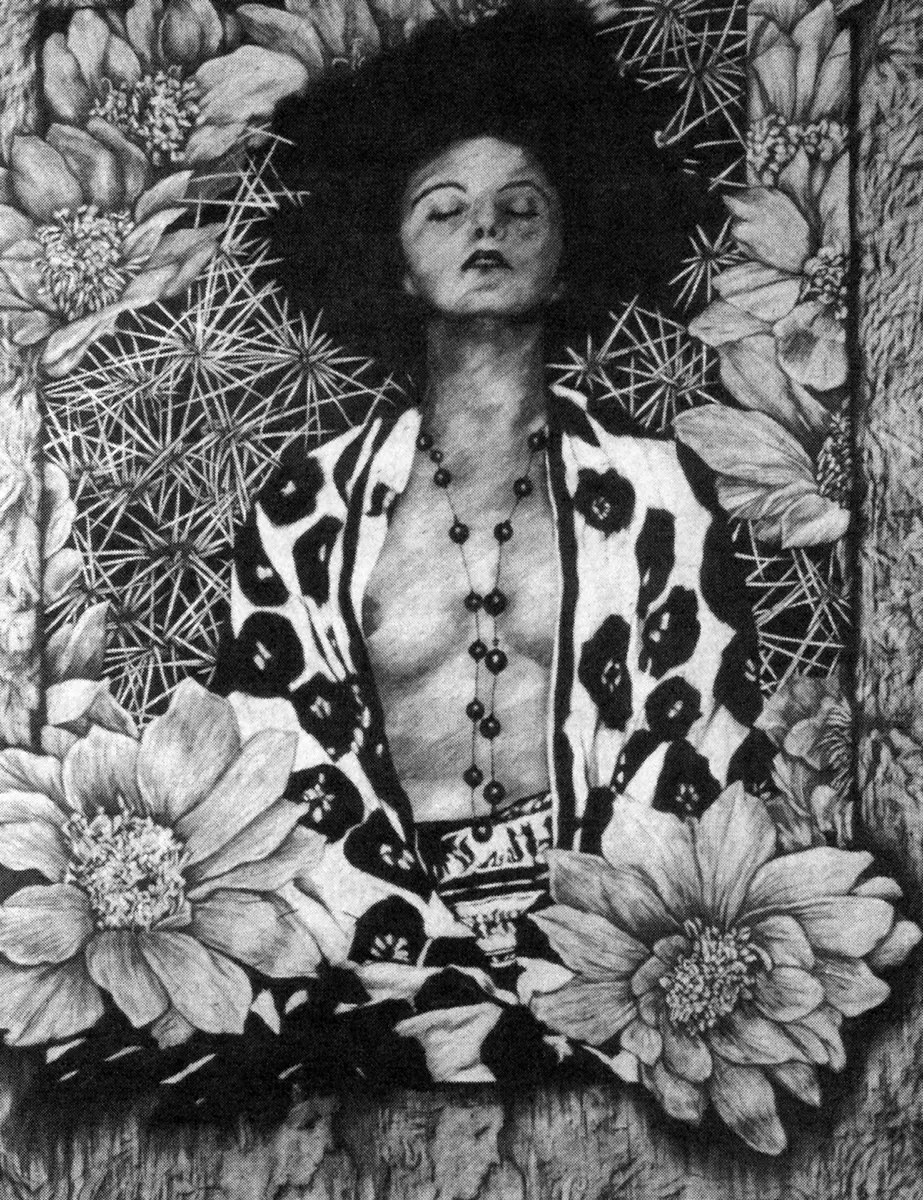
This world is unabashedly feminine. Almost all of Rippey’s characters are women, some of them of the type preferred by the Symbolist painters: nude, in an almost trance-like state or immersed in sleep and their own sensuality. The women in the series Slaves of Sleep for instance, take part in a kind of self-eroticism: in sleep they have access to the deeper recesses of the mind and another, more instinctual, consciousness. They are not aware enough of their sensuality to seduce the (masculine) viewer, they discover it freely and do not share it. Although we are reminded of Fuseli, Rippey’s visions are erotic dreams ratherthan nightmares. Instead of monsters we find butterflies, birds, ferns and stars -a lush, sprawling nature that entraps the figures while also liberating them from the more limited consciousness of waking. The artist’s deft handling of black and white drawing renders the effect quite dramatic.
In the series such as The Parallel Planet memory is historical or mythi cal, where woman appears as the key to deciphering the past and is represented together with images of ruins: the Sphynx and the pyramids of Egypt, classical goddesses. Similarly, we see female figures in scenes that suggest their ties to the uncontrollable and unpredictable forces of nature (the «chtonian» nature of woman that Camille Paglia speaks of), for instance in the striking drawing of a live Paricutin volcano. Rippey has said that she would rather have people remember how her works made them feel, and not how those works looked. It is evident from this exhibition that either one is difficult to forget.