An exhibition of 27 works by the Uruguayan artist Gonzalo Fonseca was recently presented at the Bellas Artes Museum in Caracas. The show, curated by Iris Peruga, assembled works from a period of almost 20 years by this artist who is well-known in Venezuela. Indeed, he has more than 20 works in Venezuelan collections following his successfuul one man shows in Caracas in 1974 and 1977 (Conkright Gallery and Aldo Castillo Gallery respectively). A member of the Torres- Garcia workshop between 1943 and 1949, Fonseca further developed his creative language in New York, here he was able to take stock of his experiences as a wandering traveller and move towards his mature work (1). He gradually began to distance himself from the forms of constructive univer- salism and to explore resources which were subsequently to become fundamental to his language.
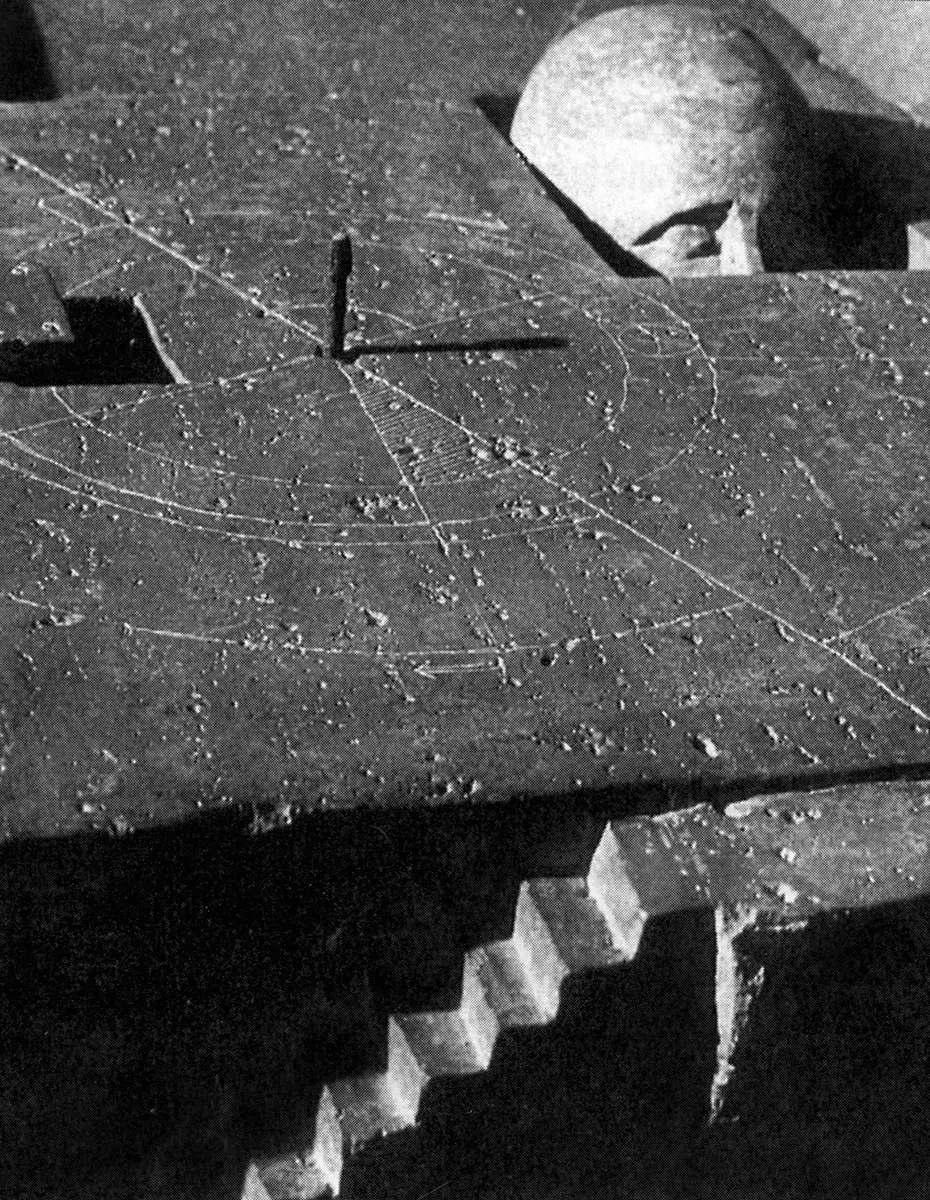
Iris Peruga, who is a specialist in the work of Gonzalo Fonseca, did extensive research for this show, which provided a careful study of the artist’s career and work as a «metaphor of the cosmos» (2). Peruga begins with the analysis of the plastic space of the work, emphasizing the co-existence of opposities to explain the foundational nature of Fonseca’s art. The configuration of space is, according to Peruga, both intellectual and sensorial, flat and profound, internal and external; the pluralistic vision which it thus engenders --it is both open and closed, far and near-- leads to knowledge which is generaal, distanced and rational; at the same time there is a nearness, as from within things, a kind of intimate contact with them and, as it were, beyond aesthetics and art, reflecting the age-old struggle for knowledge and survival: the ever new, inexhaustible founding of the world (3). Unfortunately, the excellent curatorial work by Iris Peruga was marred by the misguided montage of the pieces. Instead of abiding by the classical principle of highlighting the works themselves, rather than their mu- seological presentation -a principle which should have been all the more respected here given the graceful beauty of Fonseca’s art- the show virtually «masked» the actual works themselves through its mimetic kind of montage (textured cement bases for the works in stone, pieces of wood scattered throughout the room, security cordons which made it impossible to see the works properly). This resulted in a spatial imbalance which proved confusing and detrimental full appreciation of the show.Since the treatment of space is a seven steps. decisive factor in Fonseca’s work, it is Red travertine, regrettable that the exhibition space here was not given greater attention, so that the pieces could speak for themselves, allowing the visitor to enjoy fully their subtle interplay of space and symbolic configuration.
Once again, special mention must be of the fine selection of works and through research, as well as the impeccable catalogue which, in addition to a text by Peruga, contained a brief chronology of the artist, a partial list of his exhibitions and excellent reproduction of all the works on show.
NOTES
(1) . Iris Peruga: Gonzalo Fonseca. La soledad habitada, text for the catalogue exhibition, Mundos de Gonzalo Fonseca. Museum of Fine Arts, Caracas, July-October 1994, p.13.
(2) . Op.cit., p.28.
(3) . Op.cit., pp.10 and 31
KATHERINE CHACÓN