After many years without any exhibitions of the work of Miguel Carlos Victorica (1884-1955), the recent show at the Klemm Gallery paid hommage and recognition to an artist who helped shape the pictorial tradition of our country. It can be said without exaggeration that there is no Argentinian artist who does not owe something to this master.
The show, which included just over 30 works in oil, water color and pastel (the human figure, still-lifes and religious themes), confirmed that the protagonist in all his work was the treatment of color in the creation of an atmosphere which combines symbolism and restrained drama. Although the treatment of his plastic language conforms to the classical principles governing the preparation of texture and the structure of composition, the use of transparency and empasto contrast with areas in which the canvas appears stripped of matter, a process which creates a disturbing ambiguity. In some works the line appears as a distinctive touch in what is otherwise strictly pictorial treatment.
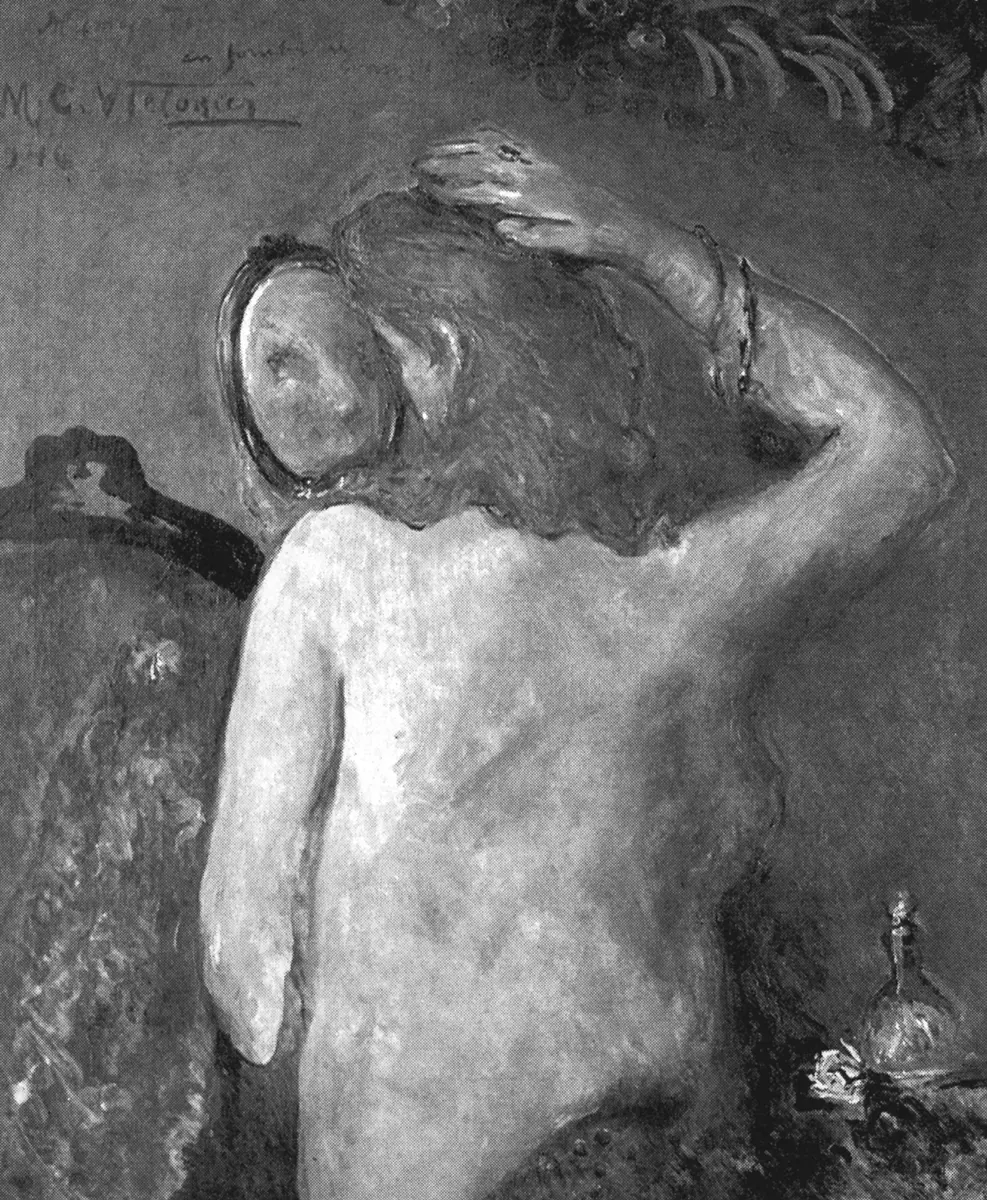
Although most of these works dated from the 1940s and 1950s, some were from the 1930s. The images, at first sight traditional, contain some disturbing features which surprised many younger artists who flocked to the show. This unexpected feature of the rediscovery of the old master is worth examining a little closer. Victorica studied at the Academy for the Promotion of the Fine Arts, before it was nationalized at the turn of the century, with Eduardo Sivori and Ernesto de la Carcova in Buenos aires and in Paris for seven years from 1911 with Luis Desire Lucas. Shortly after his arrival in Buenos Aires he settled in the working class district of La Boca, away from the high society to which he belonged, a bohemian and marginalized artist, his only support was that of his parents. Although he won all the most important prizes, his reputation began to become consolidated only from the 1940s, as some thought he went too far from academic rules: the major critics of the time saw him as one of the introducers of modernism. Victorica was fundamentally a colorist who worked a range of intermediate to low colors, achieving great sensuality in the treatment of texture through the use of layers, transparencies, extremes and rich empasto, contrasting with an almost total lack of texture in certain sectors of the picture. This treatment is coupled with a sense of ambiguous space which includes in many cases the forms being depicted. A good example of this is Nude with mirror, an oilwork from the 1940s, in which the female figure is a source of disquiet in her transgression of the conventions of anatomy and because of the interplay between reality and reflection. The relationship between the figure and the background meditizes the spacial depth and generates a sense of the unreal which becomes almost grotesque. Perhaps it is this aspect which marks the point of convergence between the master and the young artists, calling into question the concept of post-modernity in the characterization of contemporary artistic production in Latin America.