Despite all the predictions, skepticism and rumors, the fifth edition of the Havana Biennial not only opened on schedule but included an impressive array of international collaboration.
The visitor arriving in the city could see no apparent signs of its forthcoming success. From the plane, the streets seemed to be empty of cars and there were no ships in the port. People walked indefatigably along the unlit streets, swarms of children asked for sweets; friends seemed to have lost half their weight, a confirmation of theirideological integrity. The city itself was riddled with holes: houses in Old Havana on the point of collapse, a challenge to UNESCO's patronage. Torricelli can take comfort - the stangulation is taking its toll.
Against such a backdrop, it is not surprising that rumors were rampant saying that the German chocolate manufacturer and collector Peter Ludwig had "bought" the Biennial and the institution had lost its independance.
It is true that Ludwig offered his help and that a selection of works from the show will travel to the Ludwig Forum in Aachen. But the money - 25,000 German marks for mounting materials - was deposited in a bank for use in an emergency. Ludwig will take some of the works to Germany, a selection made by officials of the Wifredo Lam Center (the institution responsible for the Biennial) and he will pay the transportation costs.
But the Biennial (except for the first class catalogue subsidized by the Canaries) was paid for by Cuba. The twenty thousand dollars which had been obtained from UNESCO by Jacques Lenhard, president of the International Association of Art Critics, to bring works by African artists, never arrived. To achieve the miracle without harming the population. Cuba invested all the profits from the Cultural Goods Fund in the Biennial. It alsoobtained some private help, such as that provided by Manuel Mendive, who financed the participation of an African
artist.
The sacrifice was rewarded with the impact the show had the international community. 104 of the 171 artists representing 41 countries came to Havana to install their works. As a result, this edition was better presented than previous ones and benefited from a high degree of interpersonal exchange. With the presence of more than 400 foreign visitors, including technocrats, gallery owners and collectors, the Biennial confirmed its institutional stability and its consolidated position on the global art calendar.
The fourth edition had already achieved international impact which went beyond the artistic tourism typical of the three earlier editions - whenthe publicity and publications about the Biennial emanated from the Biennial itself and its friends. At the fourth edition, international journals and magazines began to become interested in the event... the show had survived hegemonic scrutiny and had ceased to be the ugly duckling. From being an excentricity of underdevelopment it had become the other side of the coin - a side without which the coin would cease to exist. This transition from experimentation to maturity was consolidated and confirmed by the fifth biennial.
Throughout the ten years of its existence, the Biennial has opened the international market to Cuban art and a good deal of art on the periphery. It was a process which helped reeducate the market and proved beneficial to everyone.
But it was also a process that posed certain dangers. The Havana Biennial had always been a forum for the periphery.
However, in this fifth version, there was a subtle change. Its acceptance within the hegemonic circuit may mean a qualitative change: it might lose its Independence and become a first world alternative biennial.
The small difference between the past and the present concerning the First World is that which exists between being ignored and being necessary for a more global definition of art. The change may seriously distort what set out to be a laboratory of images which provide feedback for the periphery; it might cease to serve the Third World and serve only the First World. And so what at first may seem to signal the achievement of a goal - to compete in a dignified way with the hegemony – may in fact be a warning sign.
The Havana Biennial has always tried to ignore the market and reorient the dynamics of art towards culture instead of business. The danger of moving into the scope of the First World also brings with it mercantile interests. So the importance which it has now acquired may well be a possible death sentence.
It was during the fourth edition that for the first time many artists attended not so much to meet with other artists, but to distribute promotional literatura among visiting critics. The growing international public no longer comes to see works which are inaccessible on the international market, but to seek out works that can still be acquired at low prices and are therefore a good investment.
In other words, what began as a declaration of independence and a purely cultural enterprise may now gradually become a "backroom" of the same market it was fighting. This argument was illustrated at a round table in which the North American gallery owner, Alex Rosenberg, said that the business (and survival) of art should be based on the acquisition of avant-garde work that at present are low in price. It is these works which will form the basis of valuable collections in the future.
The implicit message of the round table was that to attack the art market was tantamount to attacking the artist. Unfortunately, there is no solution tothe problem. By deciding to do art we are dreaming about being able to live from our work and the negation of potential sales would be pure maso-chism. By deciding to create a Biennial of international stature, Cuba wanted and deserved recognition, including the comercial implications of such recognition. Dogmatic purity would be an exercise in masochism similar to that of the artist who shuns the sale of his works. Perhaps the subject of a future biennial should be: "How can we take advantage of the fruits of corruption without becoming corrupted ourselves?"
The path of the Biennial (and that of Cuba in its attempt to use capitalism without being used by it) appears to fork in two directions. There were very clear signs of this. Even more than in the previous edition, foreign artists came loaded with their color catalogues and besieged critics and curators. Visiting cards, which were something unknown to Cubans in the past, became the necessary method of presentation for any local artist with pretensions.
The Cuban group of artists known as "the carpenters" (1) sold all their works. Kcho, another Cuban artist at the Biennial, sold in advance all his drawings for the next year. The Minister of Culture Armando Hart organized special meetings with foreign gallery owners. Students from the Higher Institute of Art, who traditionally present an exhibition of their work alongside the Biennial, this time organized the largest – and therefore most uneven - show of their work ever, in an attempt to guarantee exposure to the foreign public. Some students even received visitors, for the first time, armed with sets of slides.
Ludwig, who bought almost all the Kuba O.K. exhibit held in the Diisseldorf Kunsthalle in 1990, received an honorary doctorate from the University of Havana.
The Biennial can be said to have become "objectualized". This year the emphasis was on the exhibitions themselves, whereas in the past, it was on the round tables, practical workshops and less orthodox spectacles, such as flying Chinese kites. This edition was an enormous showcase spread out over a large number of buildings, a feature which emphasized the consumer aspects of art.
But there is also the other side of the coin. The students of the Institute themselves organized another show in the enormous Cuban Pavilion which tried to create a kind of Arabian bazaar (the rather hermetic conno-tation being that there was a desert all around and all the Works could be haggled over). The show was opened by a group of students disguised as Arabs, one of whom addressed the "masses" with an unintelligible discourse which imitated the sonorous cadences of minister Hart.
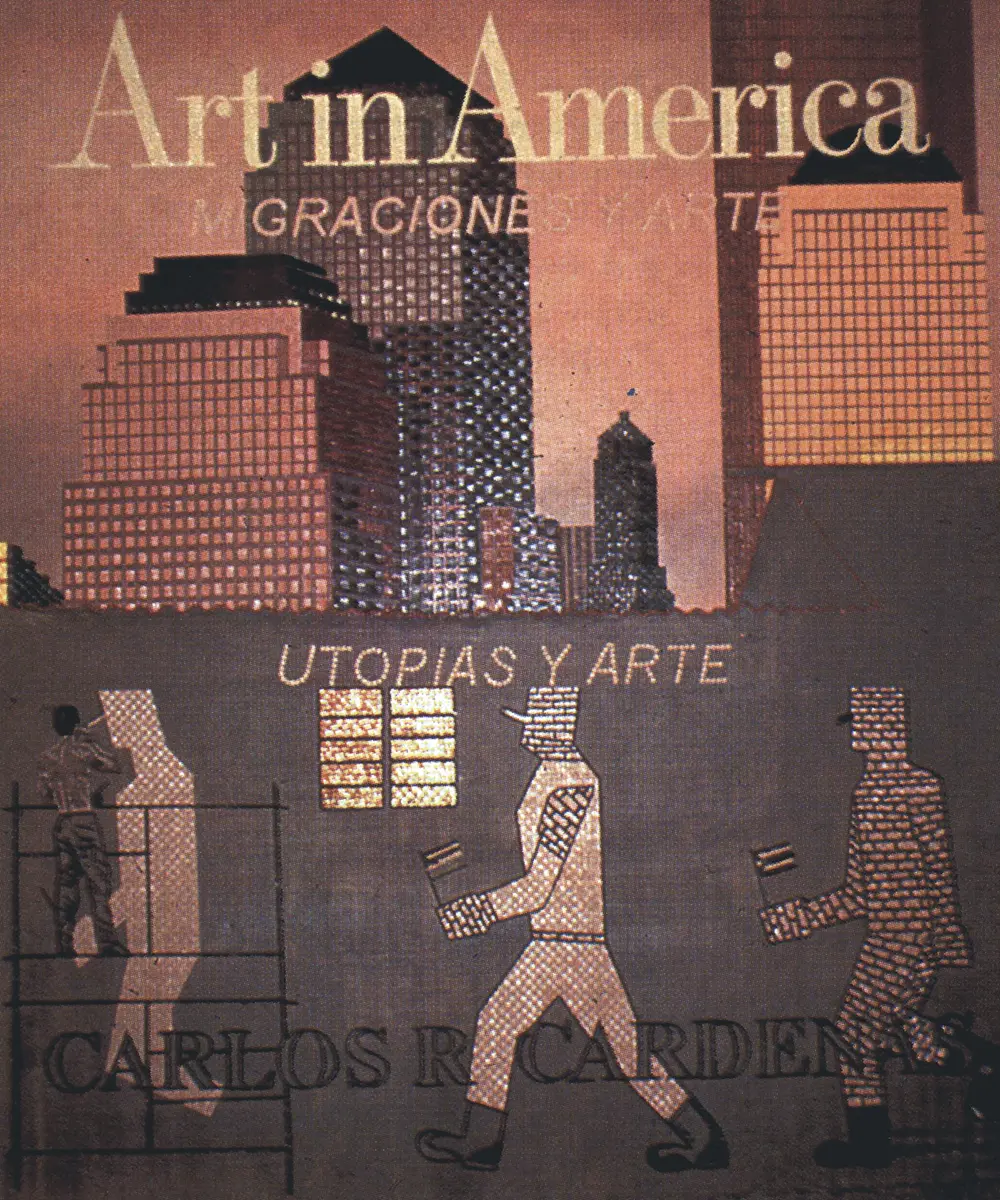
The title of the show, without any ambiguities, was: Since there is no bread, camels: An oasis on the way from the need to the market.. The tone of the exhibition was set by a fictitious publicity campaign: the Eighties. On sale were works attributed to artists from the previous decade (most already within the capitalist circuit), at prices which according to the accompanying economic forecast were supposed to triple within a few years. In the Biennial itself this position was represented by Eduardo Ponjuan and Rene Francisco Rodriguez, a prestigious team of Cuban artists from the previous generation, who presented an installa-tion entitled Dream, Art and the Market with portraits of the collector Ludwig and his curator Becker. The works between the portraits included a ficticious cover of the journal Art in America devoted to the Cuban Carlos Cardenas, who presently lives in New York.
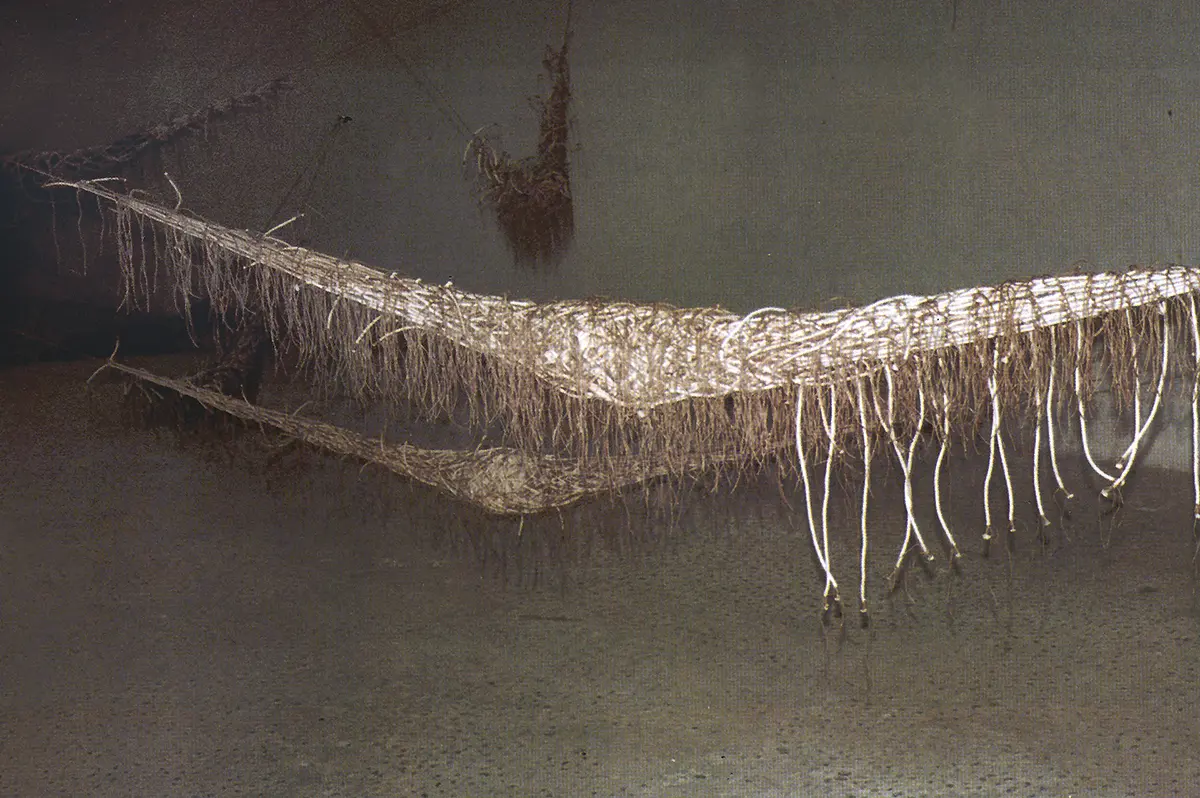
The danger that the Biennial may become commercialized has also been recognized by the organization committee.
Llilian Llanes, the director and "soul" of the last four editions, wants to have nothing to do with the market and prefers not to organize a sixth biennial if it is likely to become a "sales outlet".
Her position is that a future edition would only make sense if it dealt with the problems of the non-geographical periphery, information flows and a comparison between technological and non-technological solutions to the same problems. Whatever the future proves to be, Llanes believes that the Biennial has now completed its cycle and needs an urgent revision if it is to avoid becoming fossilized.
Whereas in previous editions the main exhibition center was the National Museum, with other venues acting as satellites, this time the interest was spread out homogenously.
The Cabana and Morro fortresses, the Museum of Education, the House of Handicrafts, the Simon Bolivar House and the Lam Center itself (in its new and imposing premises) all housed major shows. The Biennial was organized into major themes: "Art, power and marginality", "The other shore", "Appropriations and inter-crossings", "Contexts and circumstances" and "Art and the individual on the periphery of post-modernity". These themes were not especially evident in the works, although they enabled the curators to invite artists and distribute them evenly over the different presentation sites. The Museum itself, which traditionally has been overfull with artists showing few works, this time was more generous with space.
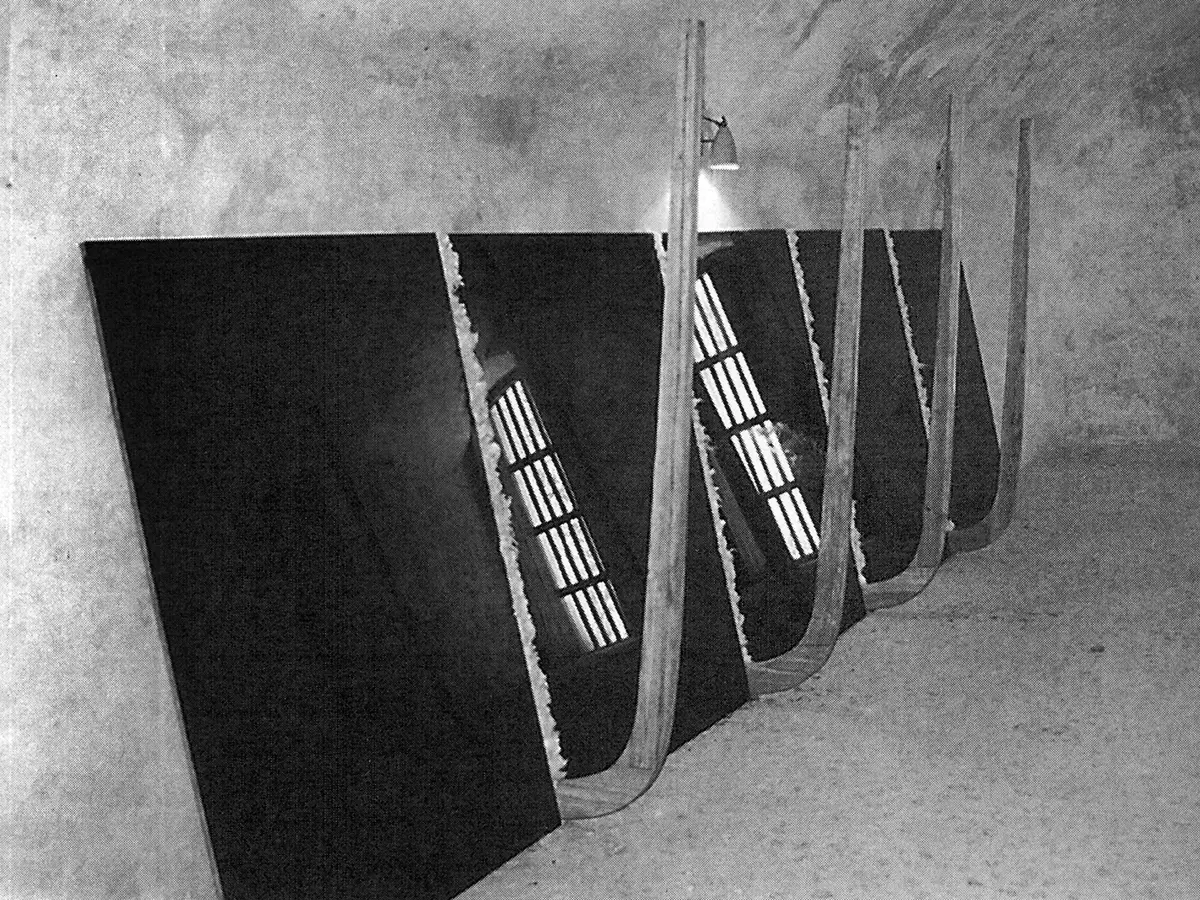
Coupled with a number of artists who set up their own shows, the final result was an unusual curatorial authen-ticity.
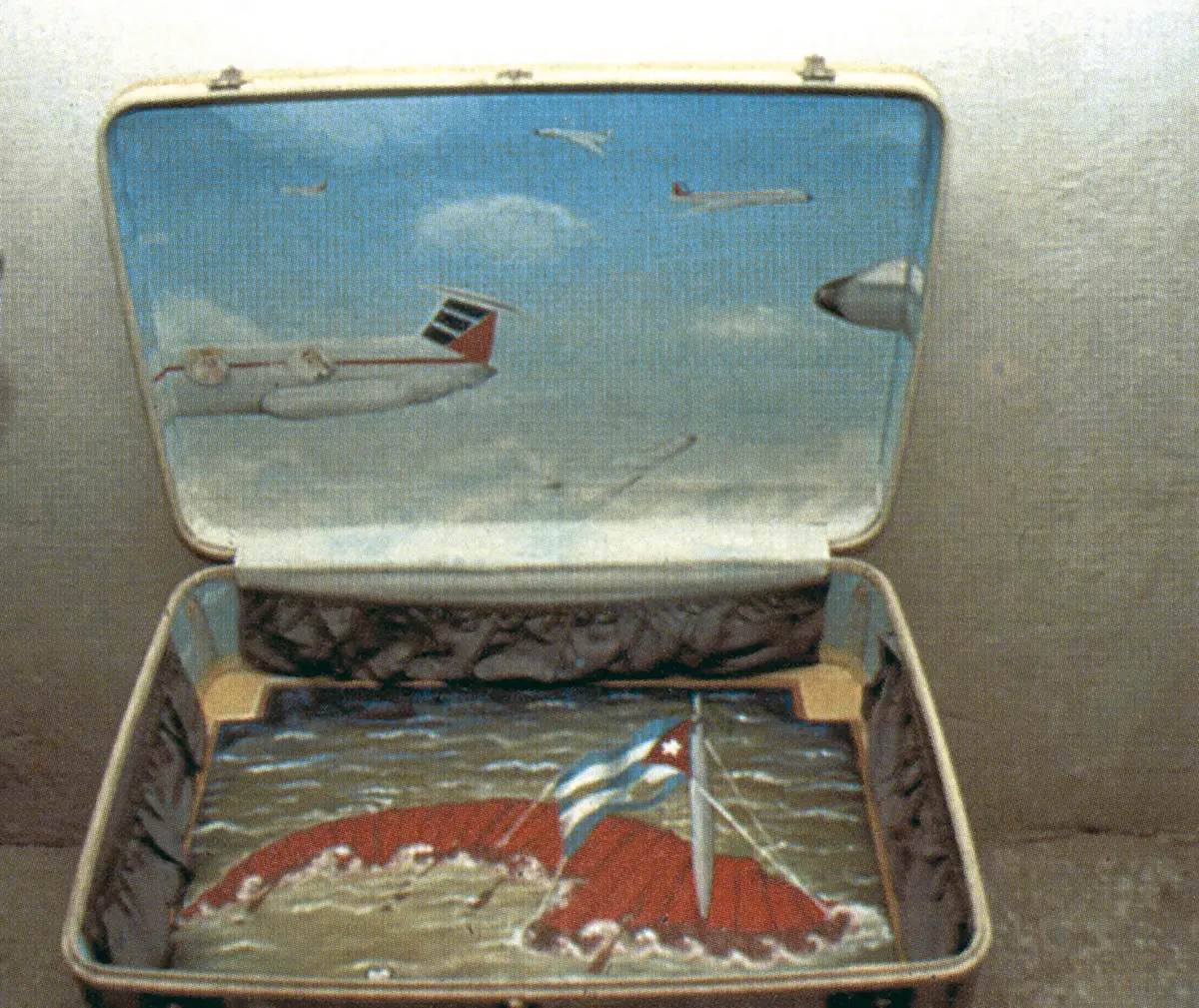
The Biennial also suggested a number of thematic configurations beyond those selected by the organizers and which emerged in a kind of a posteriori manner. They included AIDS, ecology, the nostalgia of identity and, particularly amongst the Cuban artists, the theme of migrations.
There were several memorable exhibits.
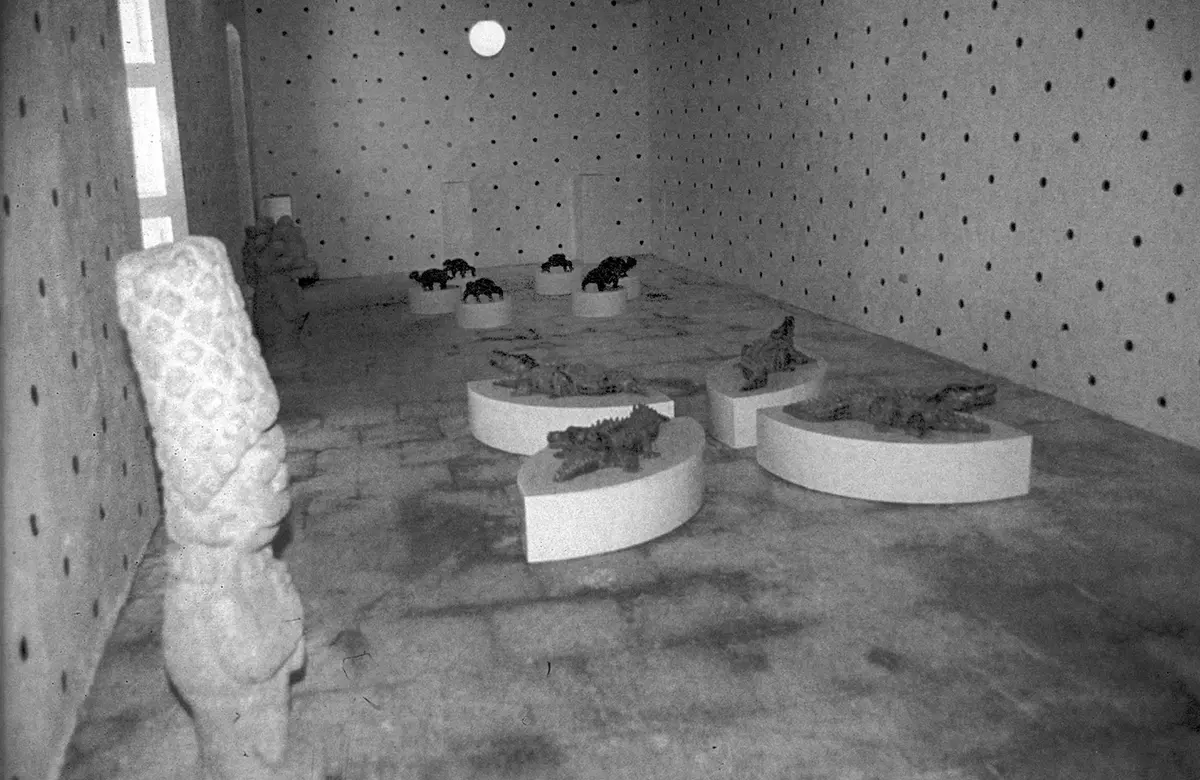
Nadin Ospina (Colombia) passed a pre-Columbian format on a number of playthings, and in particular the Simpson cartoon family. The ceramic and stone pieces, executed by profesional copiers, unified two totally different cultures through a fictitious common denominator. The massification of our culture is based on what appears to our eyes as a pre-Columbian massification - Ospina uses the term"neo-pre-Columbian" - in a depressingly credible and savagely comic manner.
Carlos Capelan (Uruguay) continued his exploration of memory, which is increasingly becoming an instrument of knowledge - a kind of filter for consciousness. Exiled by the Uruguayan dictatorship and now living in Sweden, he uses this filter as a source of nostalgia, which has tinged all the information acquired since his departure. Of the series of installations Capelan has done in recent years, this was the one which achieved the greatest penetration of space, so that even the air became part of the work. Victor Grippo (Argentina), with a series of tables with texts that at times overflow onto boxes, isolates the phrases and thoughts remaining in his memory after what is superfluous has disappeared. He achieves a kind of spiritual skeleton, where everything is pared down to produce a collapse of his essential self-portrait.
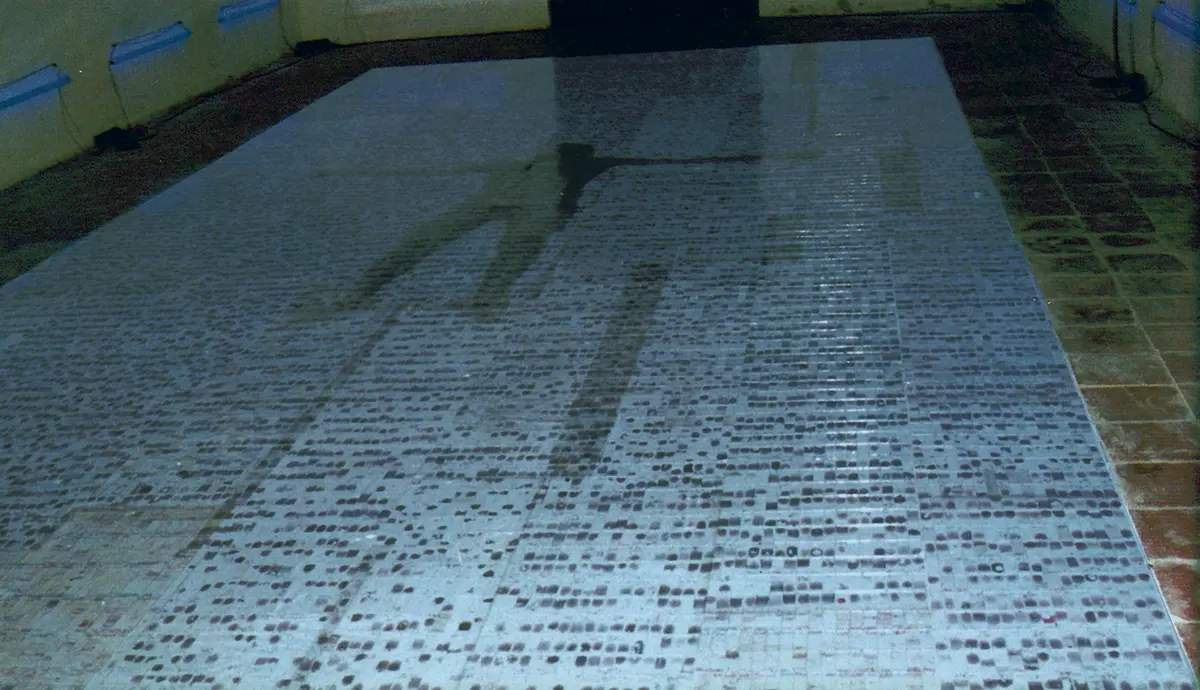
Fernando Arias (Colombia) proposed a phantasmagoric installation on thesubject of AIDS: a life-size photograph of a victim on a carpet of laboratory tests filled the room, which was semi-lit with ultra-violet light. The work, although giving no indication about future proposals, was one of the most spectacular in the Biennial.
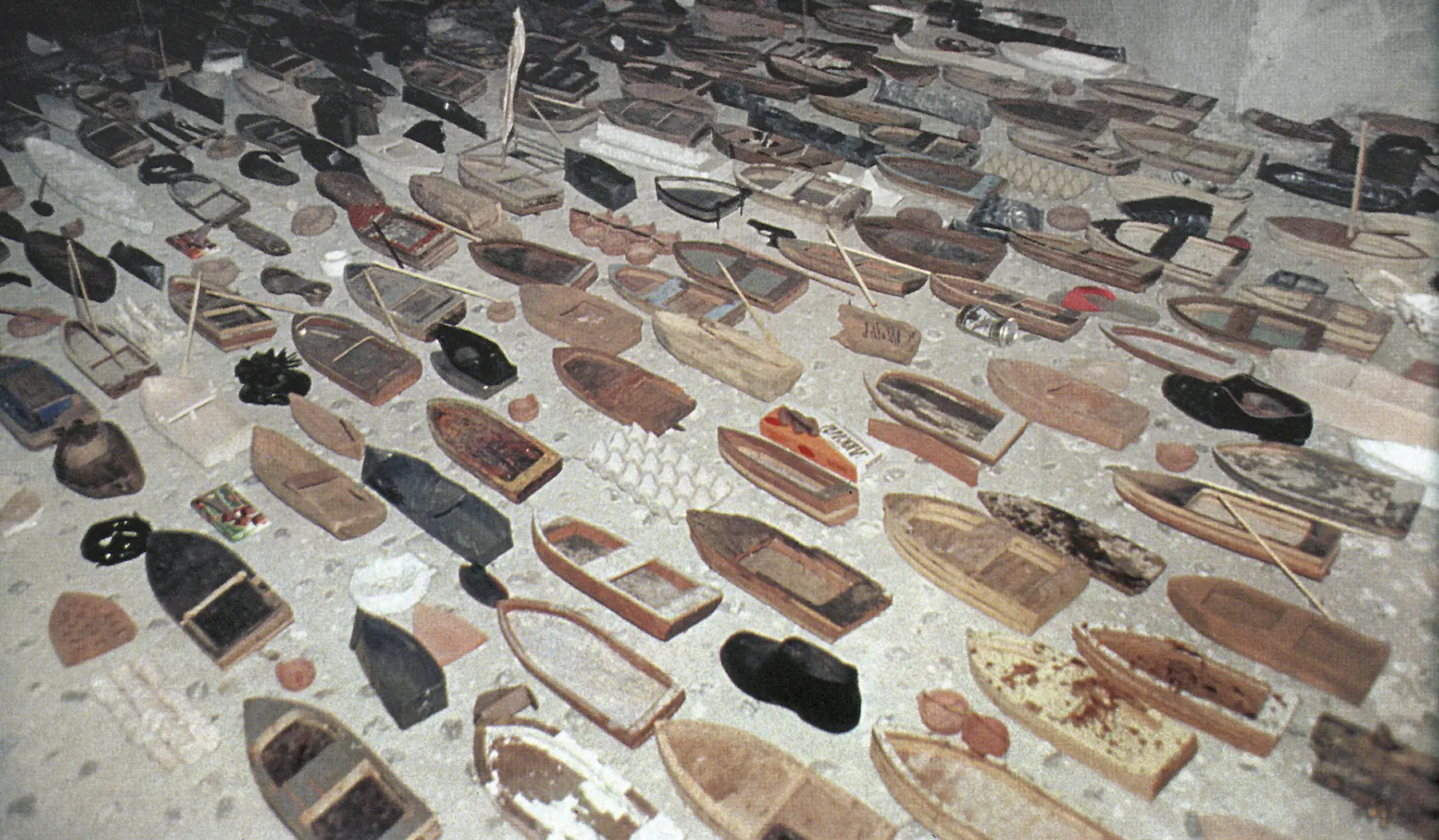
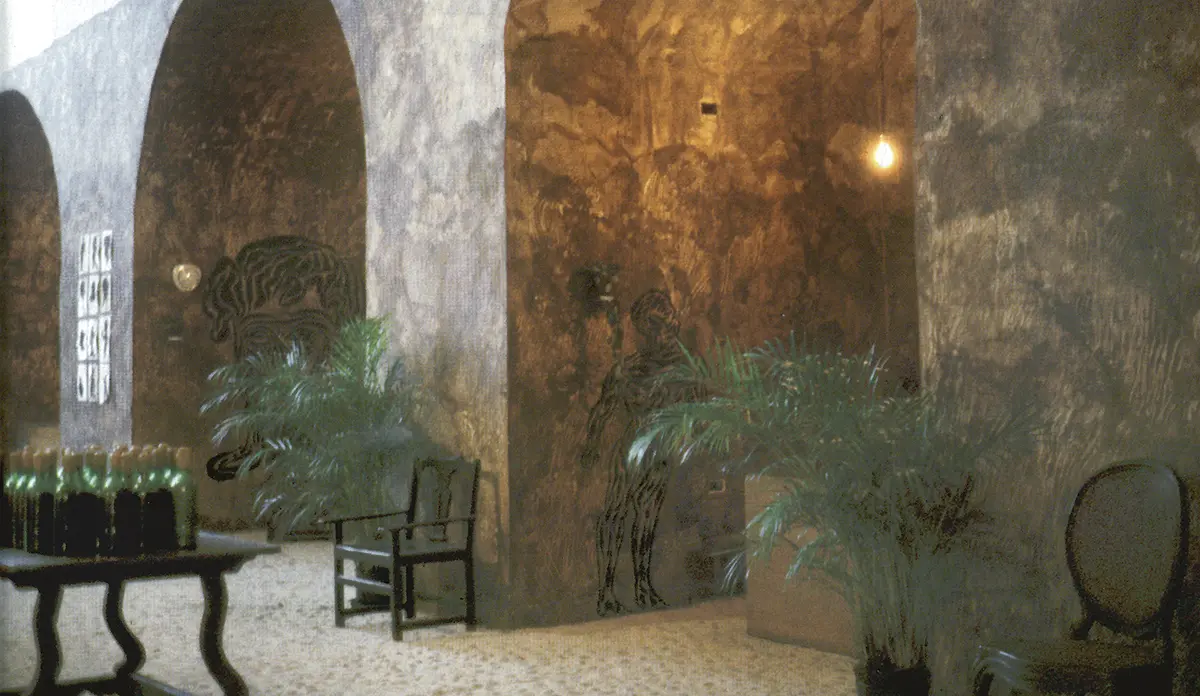
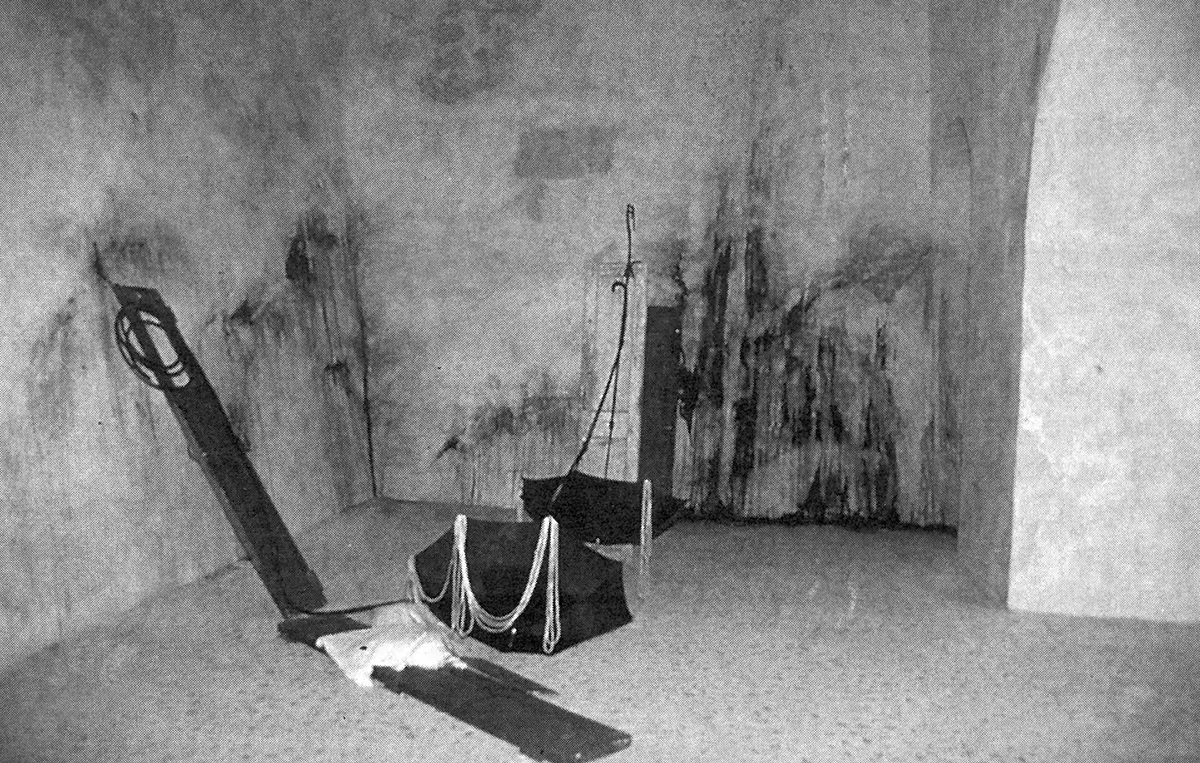
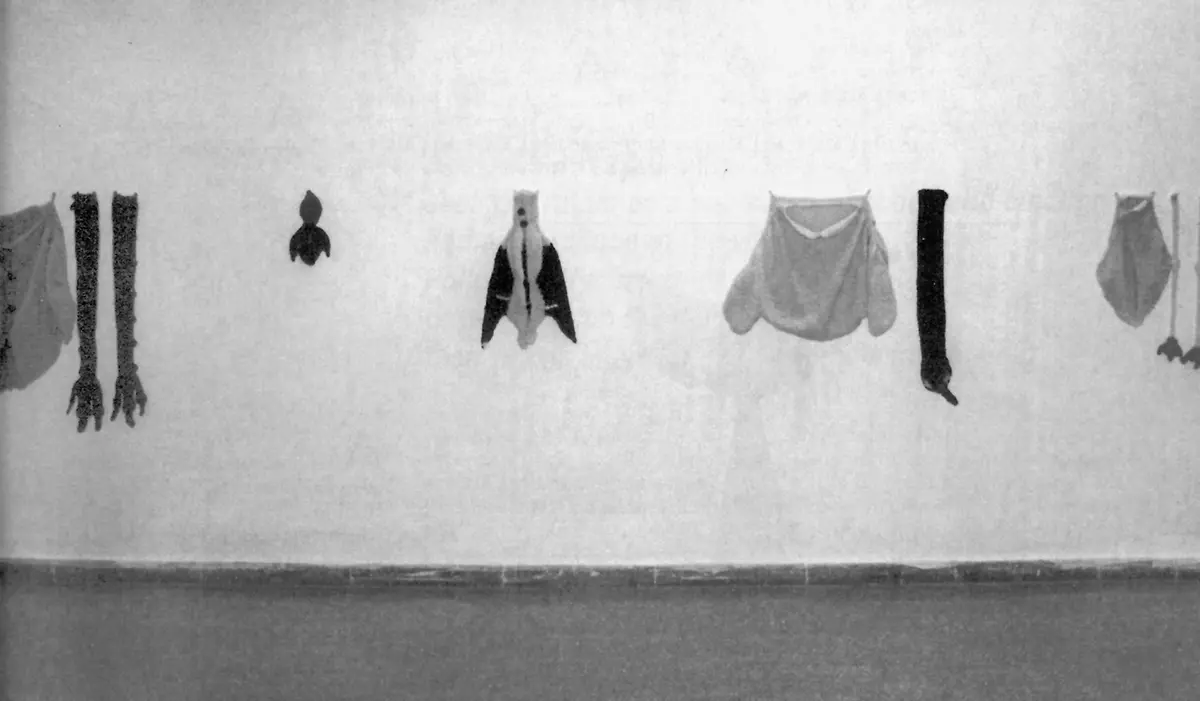
Monica Giron (Argentina), in her Apparel for a Conquistador, presented a series of clothing woven for Argentinian birds threatened with extinction, which combined an almost ridiculous sense of tenderness with bitter humor and the real threat of death. What could have become emotional cacophony was in fact one of the most complex andsuggestive works in the event. Kcho (Alexis Leiva) (Cuba) grouped together an infinite number of small boats made with found materials, shoes and deformed receptacles, all carefully pointing in the same direction. One of the best Cuban artists from the 1990, Kcho refers to those who travel on rafts towards Miami and to the bricolage, both the manual (the construction of the raft) and cultural, bricolage. Ricardo Rodriguez Brey (Cuba) presented a series of works which, although not forming a premeditated installation, did collectively generate an atmosphere, a kind of surrealism of poverty.
In fact, his work is better when it becomes environment-oriented and transcends objects. Brey, who exhibited at the last Documenta and who since then has lived in Belgium, seeks inspiration in his resistence to what the First World.
LUIS CAMNITZER