An exhibition of recent works on paper by twelve artists from Nicaragua - Alejandro Arostegui, Rafael Cas- tellon, Bernard Dreyfus, Arnoldo Guillen, Carlos Montenegro, Armando Morales, Hugo’Palma, Roger Perez de la Rocha, Leoncio Saenz, Orlando Sobal-varro, Luis Urbina and Julio Vallejo -confirmed that in a country expe-riencing crisis, it is still possible to give free rein to talent and creativity.
The show highlighted part of the very good artistic production coming out of this Central American country. Within a plurality of languages, these artists have produced work of considerable quality. The guest curator of the exhibition, Mercedes Gordillo, writes in the introduction to the ca-talogue that «they have sought and found, through experimentation and convincing argu-ments, their own personal form of expression which is both contem- porary and of high calibre#. It is important to emphasize the commitment by each of these artists to their country and region. In the difficult present circumstances, when it is almost impossible to buy materials, they have become a kind of force with a living spirit, bearing the banner of the struggle for a better future.
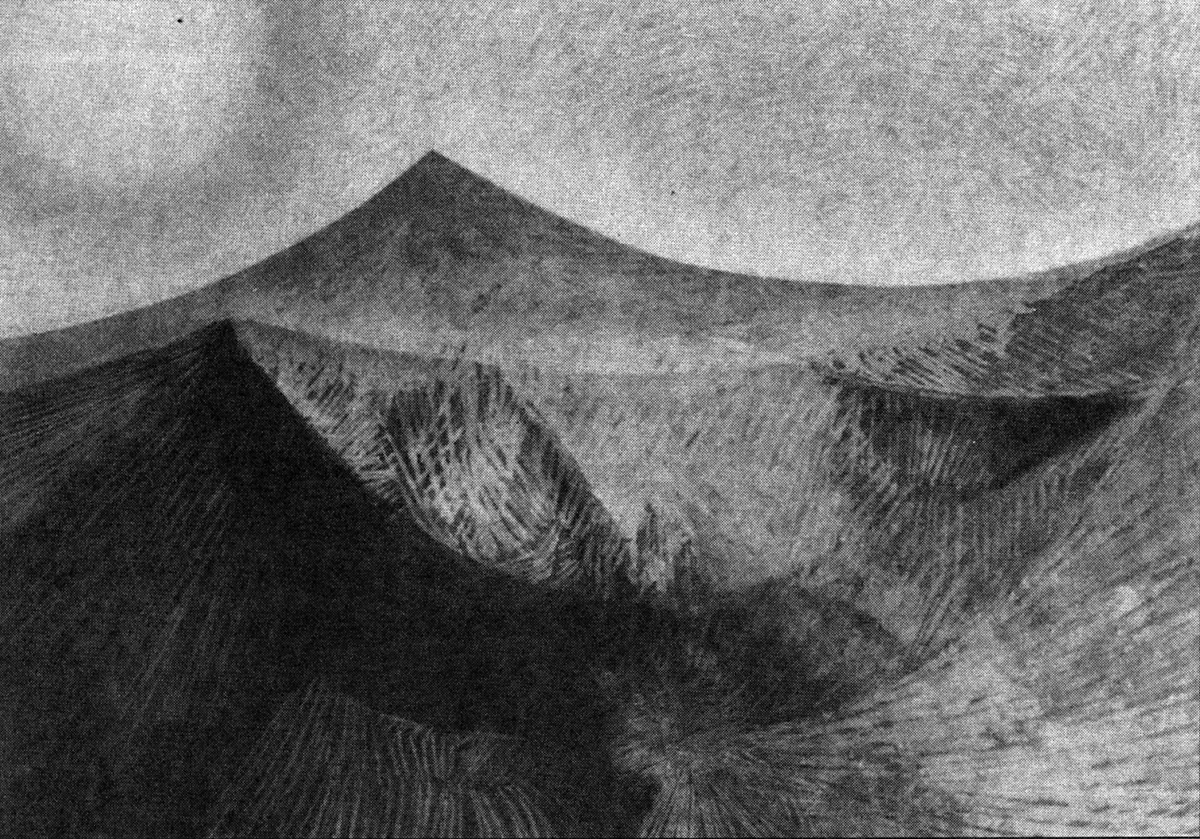
Armando Morales was represented by his well known decapitated figures immersed in a dream atmosphere. Alejandro Arostegui sent two works that emphasized his symbolic treatment of Nicaraguan landscape with collages of found cans. Orlando Sobalvarro continued his exploration of almost abstract images reminiscent of pre-Hispanic forms. Rafael Castellon, the youngest artist in the show, presented drawings of a kind of abstract landscape structured in horizontal bands. Bernard Dreyfus’s work continued to be domi-nated by protozoan and humanoid forms. Arnoldo Guillen’s drawings, for their part, express the essential landscape with which the artist is confronted day after day. Roger Perez de la Rocha presented some of his new work, with enormous explosions of light breaking up the space and pulverizing forms. Leoncio Saenz sent two recent works, semi-abstract in composition and figurative in the structuring of their images. Luis Urbina’s work clearly and directly evoked the presence of the country’s pre-Hispanic heritage, with geometric forms set within soft atmospheres. Finally, Julio Vallejo presented two drawings clearly inspired by popular art. In short, all these artists use their own context and environment as a starting point for their works. And it is in this context and environment that we can find their real themes.
BELGICA RODRIGUEZ