The language of Gabriela Morawetz shows a solid artistic training, and a marked interest in philosophy and certain deeply human problems. Herclose relationship with a variety of different cultures has led her to protect herself from bland influen-ces and assert her artistic autonomy. The series of works presented at her last exhibition was a good example of her forceful handling of formal resour-ces to resolve the structure of her works in either two or three dimensions (large and medium format works on paper and sculptures).
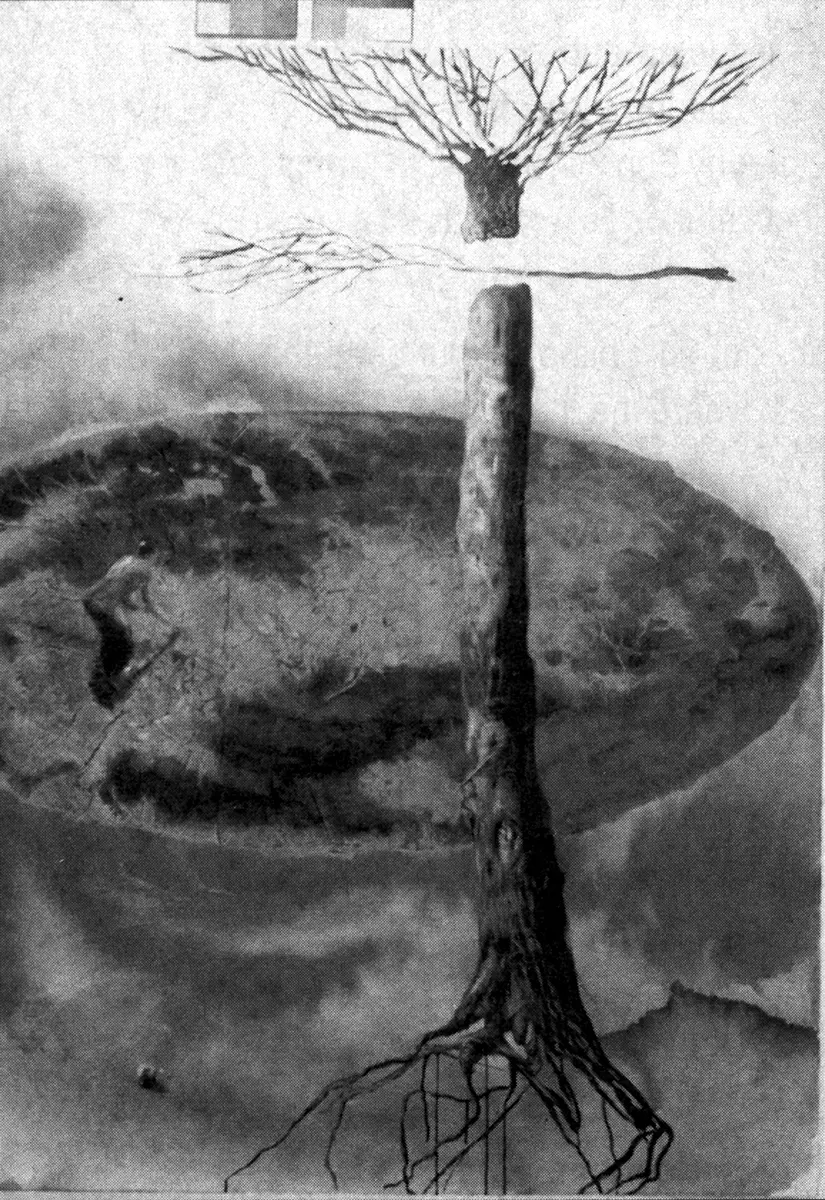
As we look at these pieces, we find evident the spontaneous sense of jux taposition and the deliberate formal control exercised by the artist’s hand and mind in creating the surface and structure of the composition. From within a transparent space emerge ambiguous forms of plants, human beings and animals, which take over the more superficial space and create a kind of foreground that advances giddily towards the spectator. The artist seems to be working without any preconceived concept and to be following the challenge posed by the theme in isolation. However, she comes out on top in the struggle between herself and the work, with the act of creation becoming a game where the artist must be the demiurge of his own destiny.
There are some of interior landscapes in these works that can be seen as a metaphor of another reality, in which ideas and concepts have a privileged place. Although it is not a new feature, the fact that the two dimensional works have no defined edges implies a sense of marked out space in which the images are placed (in virtual movement), in accordance with lines of tension projected from within and outside the space and from the indefinite edges of the surface. Thus the composition suggests that it is the result of a high degree of automation of an almost trance-like kind. The titles of the works are very suggestive of this process. Dreams and aquatic atmospheres produce the impression that the artist is trying to create a cosmogony beyond everyday reality. The images vary in their degree of resolution, with their organic qualities being suggested by concentric lines that appear almost always in the center of the support, while the energetic calligraphy produces a sensation of unreality.
BELGICA RODRIGUEZ