Argentinian sculpture has flourished in recent years. This is not due to any stimulus by the State; the requests which were made to Argentinian sculptors in the 1930s and 1940s to create monuments for public places have now practically ceased. This may be due to political changes, or official sloth, the disappearance of the meaning of "monuments" or perhaps the growing gap between the public and the new language of sculpture. To some extent it is beneficial th^t there have been no proposals made (or at least not many) in response to "official" taste.
While discussing the major exhibition at the Centre Pompidou entitled "What is modern sculpture?" in 1986, Pierre Scheider spoke of "one of the great artistic phenomena of our time: the updating of sculpture" (1). Of course, a few lines later he admitted that "sculpture, which has invaded all spheres (...) no longer identifies itself with anything".
In her article titled Sculpture in the expanded field (2), Rosalind Krauss noted that "over the last ten years a series of rather surprising things have been described as sculpture"; she sees a very interesting interplay of relationships between landscape and architecture (and non-landscape and non-architecture) in a logically expanded sphere which opens up the original oppositions between themselves and sculpture to ensure greater precision through the universe of terms.
The new Argentinian sculpture has been presented not only in individual and collective shows at various galleries and cultural centers, but in the outdoor wood sculpture competitions which have been held periodically in Resistencia, Chaco, (first on a national and then international basis), in the competitions organized by the Argentinian Credit Bank Foundation in Barrancas de Belgrano, Buenos Aires in 1989 and 1993, the granite sculpture competition held in October 1993 in Cordoba, Argentina and the outdoor air sculpture exhibitions which the Larreta Museum holds each year in its handsome gardens.
These activities, coupled with each artist's individual research, have led to the emergence of artists of considerable interest.
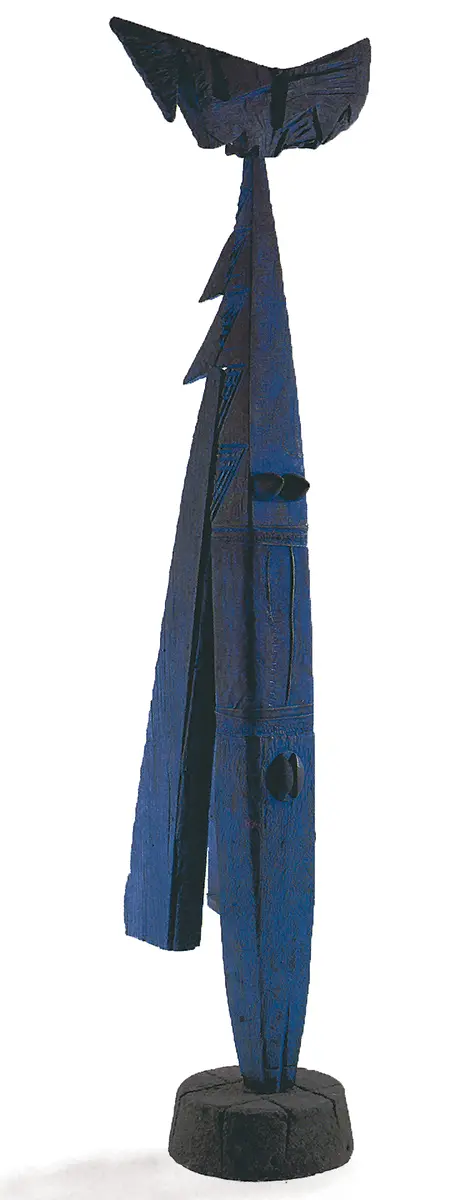
One such artist is Hernan Dompe, the winner of the Chaco competition in 1988 and the Barrancas de Belgrano competition in 1989. Hernan Dompe works with monumental forms which evidence archaic links with primitive art. The assembly of his works is experienced as an unusual encounter, the development of a scene in which his internal fantasies create a ritual and magical object that is full of spirituality, as in primitive civilizations.
His sculptural pieces usually allude to a specifically male world of warriors, weapons and ships, of ancient conquests and dominations.
He uses sculpted, burned, or pigmented wood; marble, sheet copper, pieces of leather, stone, iron and resins. What always interests him is the physical sensuality of the materials that he integrates with the found objects, creating impressive forms which sometimes have a surprisingly ludic quality.
There are many re-contextualized fragments in his work which are sometimes transformed through unusual extrapolations. For example bones and teeth that may be seen as the prow of a ship, or less threateningly as elements which emphasize gender, the hieratic nature of an attitude or the seductive curve in female forms.
Motivated by a constant need for experimentation and the break with anything that might subtract freedom from his work, Dompe uses the seductive energy and unaccessibility of mystery to avoid the latent threat of aestheticism.
Argentina has also seen the emergence of a wide variety of other contrasting trends by artists working on memories and recycled objects.
Alejandro de la Cruz has established his studio in the northeast part of the country, in the midst of the mountains.
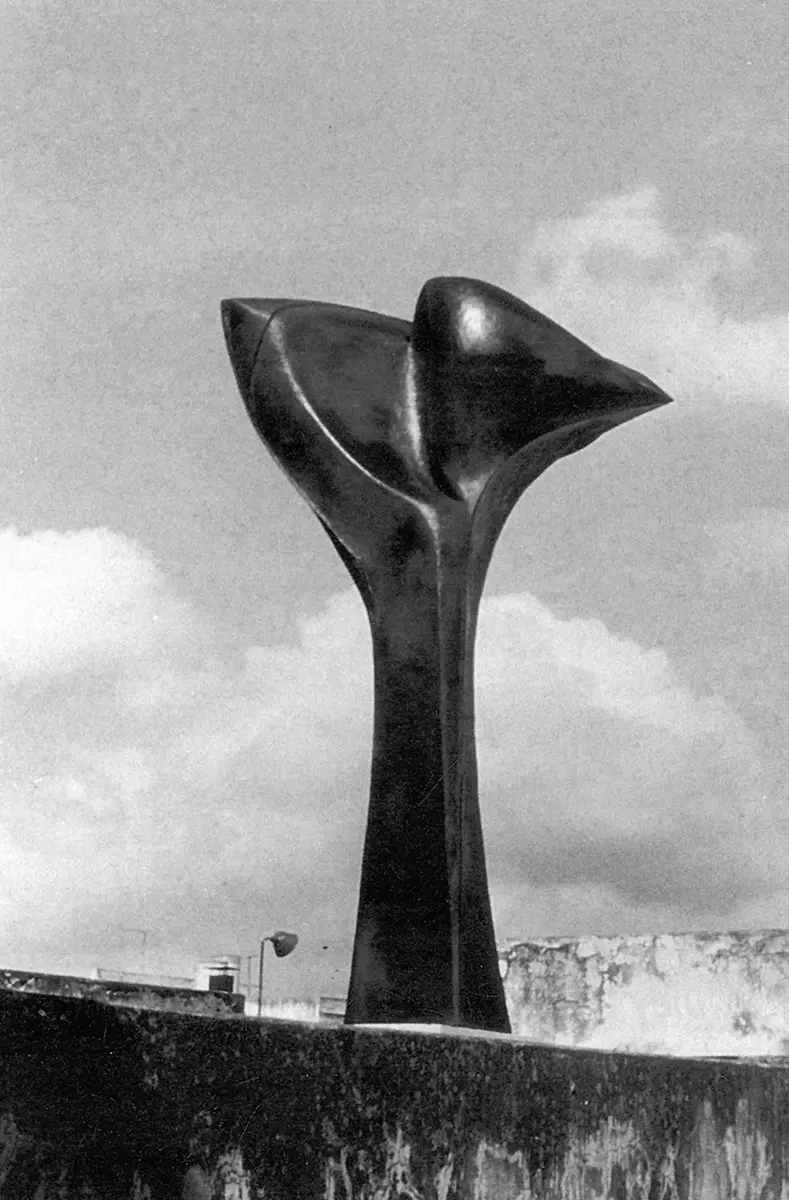
He comes down to Salta or Buenos Aires from time to time. Many other artists have also moved to the provinces to find the necessary peace for their creating. This is the case with Hernan Dompe and Gloria Priotti amongst sculptors and Remo Bianchedi, Daniel Zelaya, Carlos Alonso and Miguel Ocampo amongst painters.
Working in solitude poses a large number of requirements, that in the case of de la Cruz are resolved by a certain cleanliness of spirit which allows the artist to use the powers of the land and the landscape, to listen to himself and acquire a sense of place.
As a student of indigenous cultures, de la Cruz also explores their symbols, rituals, sacred places and the power of their shamans, the use of masks and the magic of transmutation they can generate.
His monumental doors, totemic columns and zoomorphic figures are not only an immersion in the roots, the search for a Latin American identity, but a desperate cry for meaning and transcendence in a world ravaged by nihilism and left unprotected by the death of God.
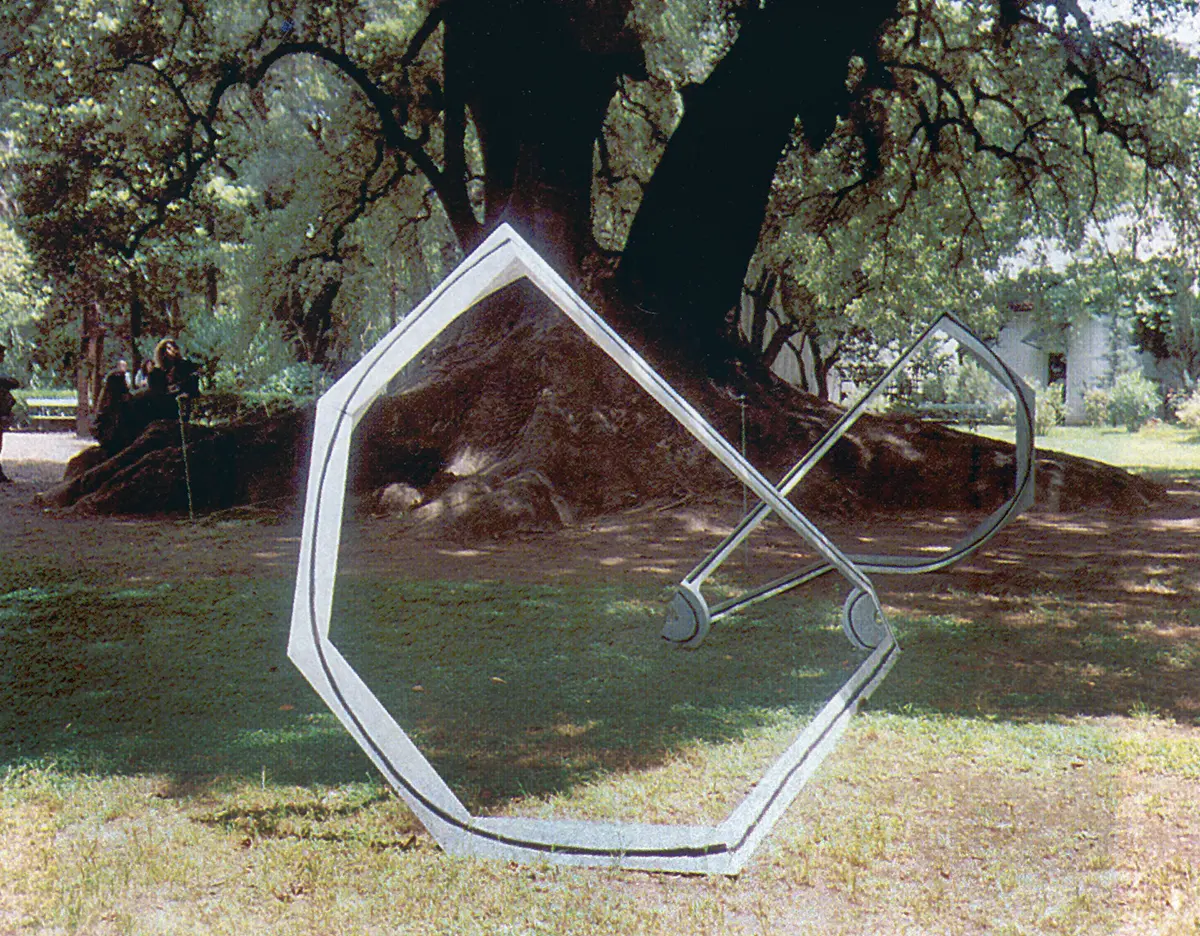
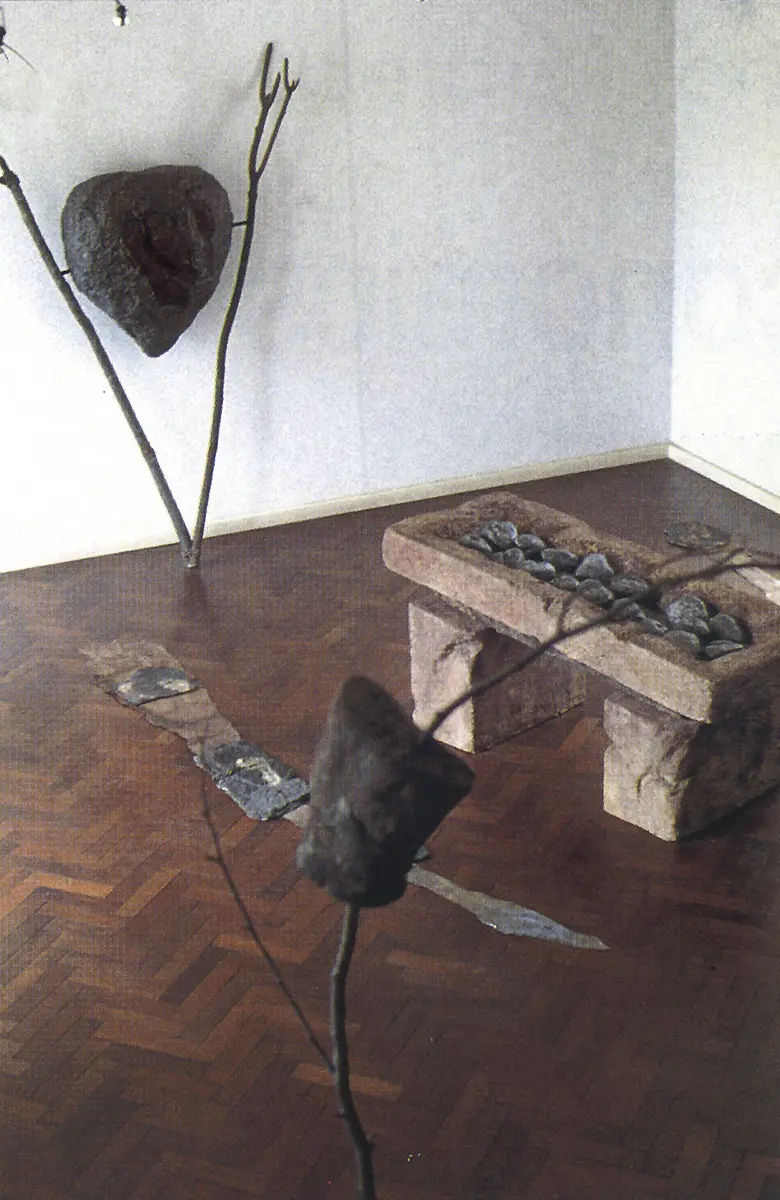
Another example is that of Claudia Aranovich who works with a wide range of materials, especially wood and poly-ester resin, although she also uses pottery, metals and found objects. For some time now she has been interested in the enlightening power unearthed objects have as a symbolic recuperation of cultural traditions of indigenous cultures from America and other places.
The titles of her exhibitions - Relics for a monastery of the next millenium, Memory Spaces, Tracks and Discoveries, Archeological Finds from the Age of Manual Work - illustrate the importance of the world of memory, the history of man, the mark he leaves, his efforts to survive, our awareness of a past that is ours and which is part of our apprehension in Claudia Aranovich's work. In the first of these exhibitions the artist worked with masks of human beings, the imprints of hands and other fragments of the body in an attempt to emphasize the impossibility of a union between all the parts, something which, in her words, had to do "with the concept of man as a temple and the need to rescue the remains and relics of our humanity".
In Traces and Discoveries hearts appeared in a crypt, like some palpitating offering to a divinity in ancient rituals. It is perhaps this distancing in time which allows her to work on her obsessions: violence, death and destruction.
In a recent installation entitled Plantation of Hearts, the ripped organs appear on a plantation of grass that dramatically combines the horror of anguish, pain and human precariousness with hope and the affirmation of life.
With regard to recycled objects, mention can be made of the sculpture of Marita Causa. It is the product of a nontraditional concept in which assemblage is used to begin a process of integration with the surrounding environment. She first embarks on what she calls an "urban recollection", where she gathers her materials. She uses everyday objects and spaces, such as doors, tables, chairs, washboards, clothes hangers, which she transforms into assemblage, without any prior concepts.
Any intellectual reflection happens a posteriori. At the first instance it is related to the unconscious and is clearly ludic. In general, her compositions are related to the archaic and because of their rising strength, they evoke the idea of the totem.
There then follows the painting. Color invades everything, although the texture of the material and the memory of past events are respected. Color -generally red, blue and green – is symbolic and also defines the structure of the work.
Thus Maria Causa expresses her ideological commitment; her need to create, which imposes objectivity on previously unexplored linguistic situations, is linked to the implicit communication of materials determined themselves by socio-economic context. The artist herself has said: "Fortunately, I also believe in the existence of the possible (...) in the intention of converting or transforming everyday precariousness into a magical and creative act".
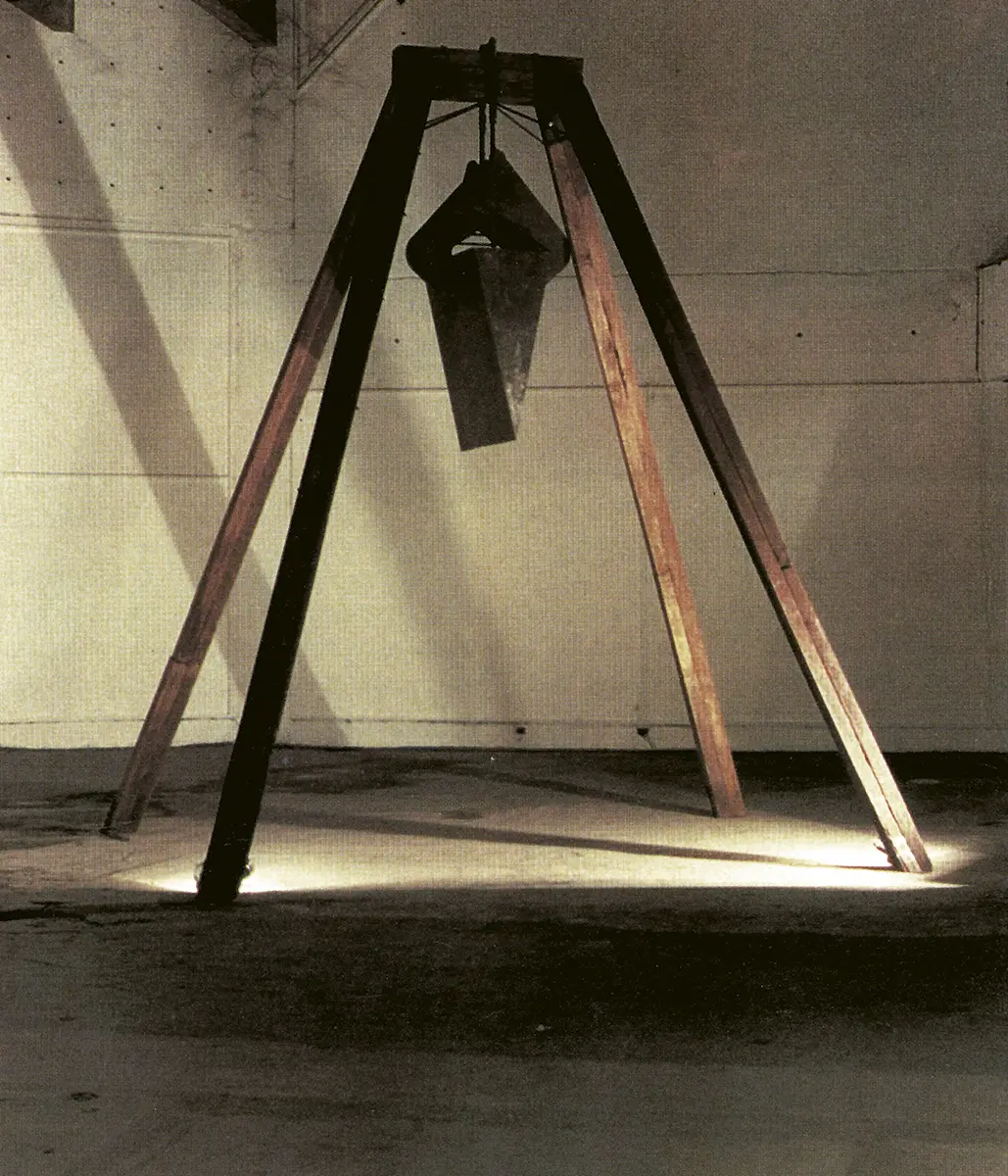
Alberto "Baston" Diaz is a great builder of complex, useless artifacts, rough gins and prehensile machines, pendular or hanging structures. Sometimes he takes the tension of his works in iron and granite or iron and wood to the limit in anti-classical structures, either upright or recumbent, sustained by tiny contacts. The ideas of rupture, breaking, destruc-turing,splitting and intermission rule over his work. A faithful interpreter of his times, he usually titles his pieces Reflection, thus encouraging the specta-tor to become aware of the moment being lived. A high flying artist, Diaz dismantles his tools and transforms them into fantasies.
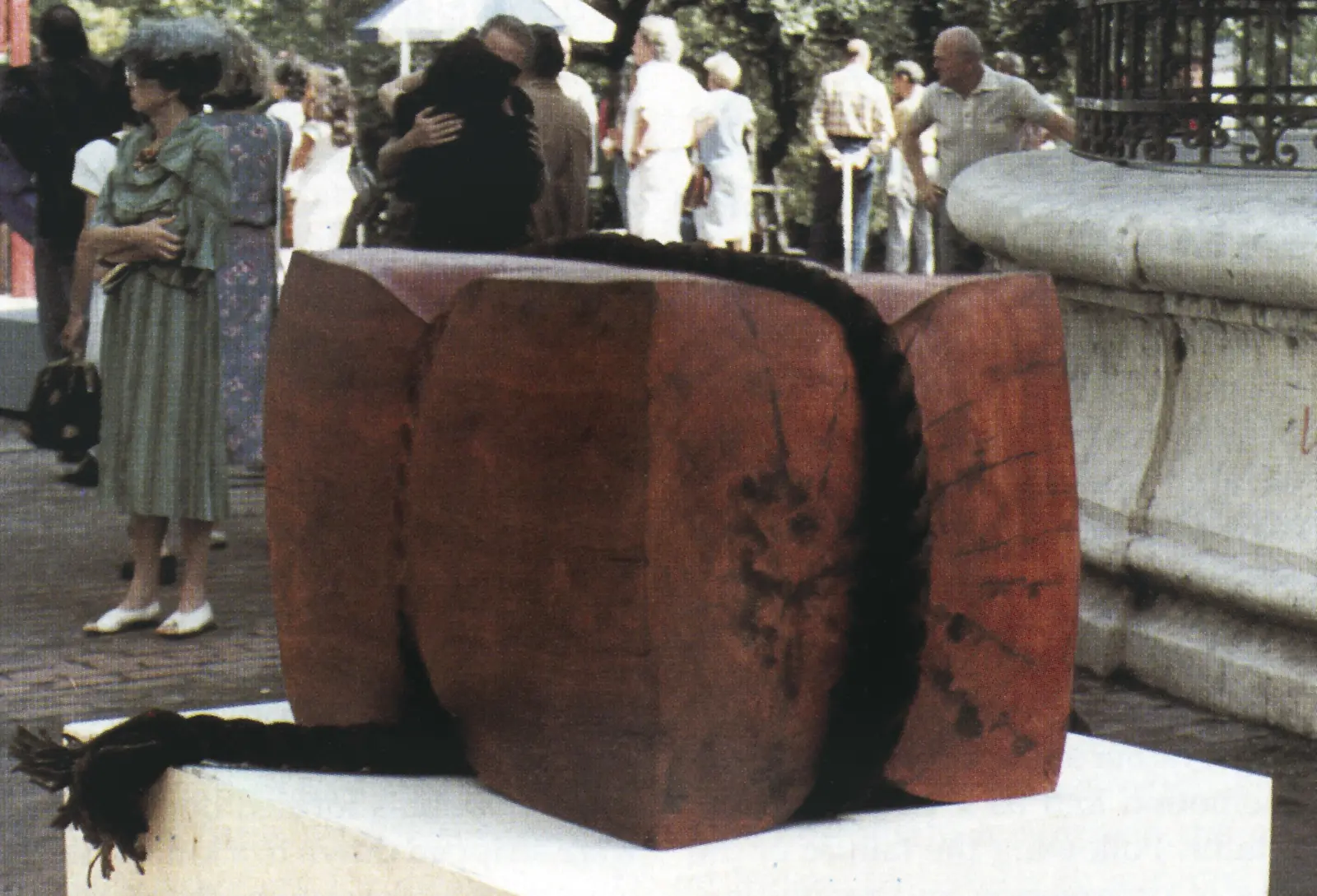
Another sculptor who tries to engage he spectator's commitment through iconography laden with connotations of a personal nature and of the community he belongs to is Ricardo Longhini. It is difficult to remain indifferent to his sculptures. He brings out expressiveness from heterogeneous materials, such as rope, stone plate, marble, strips of leather, wood, waste materials - indeed, all the sharp and interrelated elements which he comes across.
The title of his last -exhibition, Sculptures on Ethics Justice, Love, Power, Hate, Death and other Obsessions, indicates that we are in the presence of an artist who compulsively makes us think.
The state of our times or our environment, with its shadows, fears, pains and impossibilities, its acts of forgetfulness and irreparable absences screams at us pitilessly from Longhini's work, like some tormenting and pursuing cry.
Rescue, exit and hope are communicated through the poetic exaltation of his work. Mariano Schapiro came to the forefront during the 1980s with his Emerging Figures, veiled human bodies half submerged or half hidden. At that time they were linked with the theme of water, as an element which gives rise to life, or in which everything rots or where things can be concealed.
He then moved towards a mass-like sculpture, full of vigorous pulsations in which rough and smooth surfaces contrast. The use of crates and drapery introduced a new area of exploration, where Schapiro extended the interplay of contrasts by juxtaposing old, tired materials with plastic toys, disturbing dramatism side by side with ludic fantasies.
Through the unexpected alliance between different objects which are made homogenous through paint or other coverings Schapiro creates works with a powerful ecological impact.
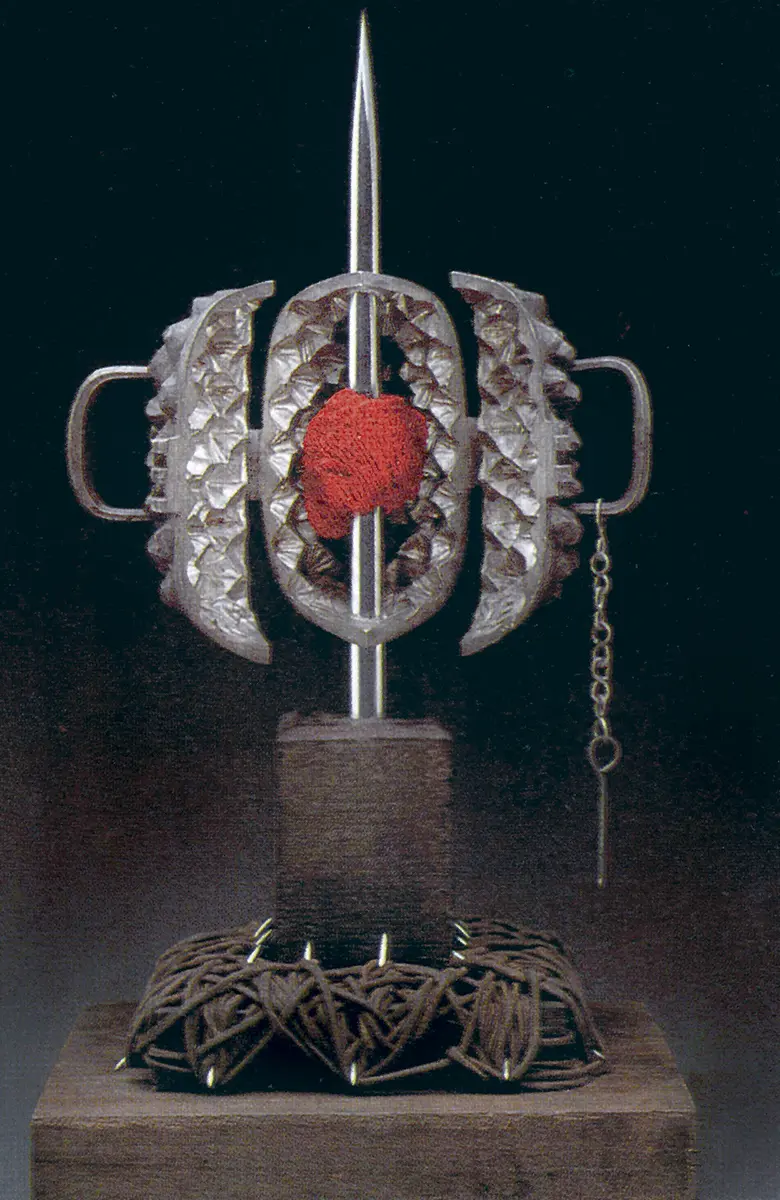
Pajaro Gomez and Adrian Dorado, who are both well known in the country, also use symbolic American values and the temporal circularity of recycled objects in works with a marked upward sweep or in which space plays a protagonistic role.
Thus the work of art becomes an act of faith with the possibility of finding meanings which go beyond the merely circumstantial, exorcising the ghosts of indifference, cynicism or despair.
They are not artists whom the mass media have led towards a "light art". On the contrary, they show their scars, their awareness of their responsibilities vis-a-vis others, their search for meaning, their lack of truths which however does not lead to despair, but is a challenge.
Hugo Fortuny began by using burned wood in his series of very symbolic works entitled Elevations and Altars. Set in unstable balance, his fragments and waste materials formed objects which were stripped down to a kind of destabilized geometry of monochrome wood, drawing ambiguous and dynamic space.
Cesar Belzic also creates a geometry that could be called postmodern, if the term had not become so hackneyed through misuse. The slender wood constructions, which are totally white and with a marked verticality, are pure yet complex structures in which subtle relationships are established between the pieces themselves and with space. At the top or in some inner, secret space, there is an element of surprise, aggression, an archaic suggestion which emerges suddenly in opposition, producing a semantic fission.
Danilo Danziger frequently uses the interplay of duplicity and contrasts in his work. He dismembers the sculpture into pieces that can be recombined,opening up the possibility for many different dialogues. The tension of these works is accompanied by a sense of contradictoriness created by the painting, the clarity of which seems to overturn the weight of the material. In other cases monumental forms impose their presence, with a suggestion of disquieting instability. Eulalia Gentile Munich, an artist from Rosario, uses metal like Danziger in a constant interplay of affirmation and negation. She creates beaten metal plates that are heavy in appearance but also light, oscillating and barely held up. These pieces of an almost organic resonance are now giving way to a monumental series of Characters.
Many artists are working freely within a plurality which knows no frontiers; they are experimenting with space, reclaiming the space they need for communication; they are ready to mix different times and disregard historical chronology; their new attitudes are impossible to classify...
Tulio Romano the creator of some very original work in wood is the strongest and most interesting of the young sculptors from the province of Cordoba.
His direct figurative carvings are surprising in their angles and approach, their almost impossible equilibrium. His small figures on the verge of falling or caught in unimaginable attitudes and movements hide a secret tenderness for mankind reflected in an absolutely novel surface. There is a certain deliberate roughness in the work which indicates the artist's refusal to accept any automatic satisfaction in his search for fresh and living expression; he is not interested in form as such but in the exultant affirmation of life with all its disturbing and endless possibilities.
If Tulio Romano is a good example of irony and humour, so too is Edgardo Madanes, although of a different kind: His gigantic resin insects seem to mock the influence of the media on collective imagination and the predominance of "special effects" over our concern for our fellow human beings.
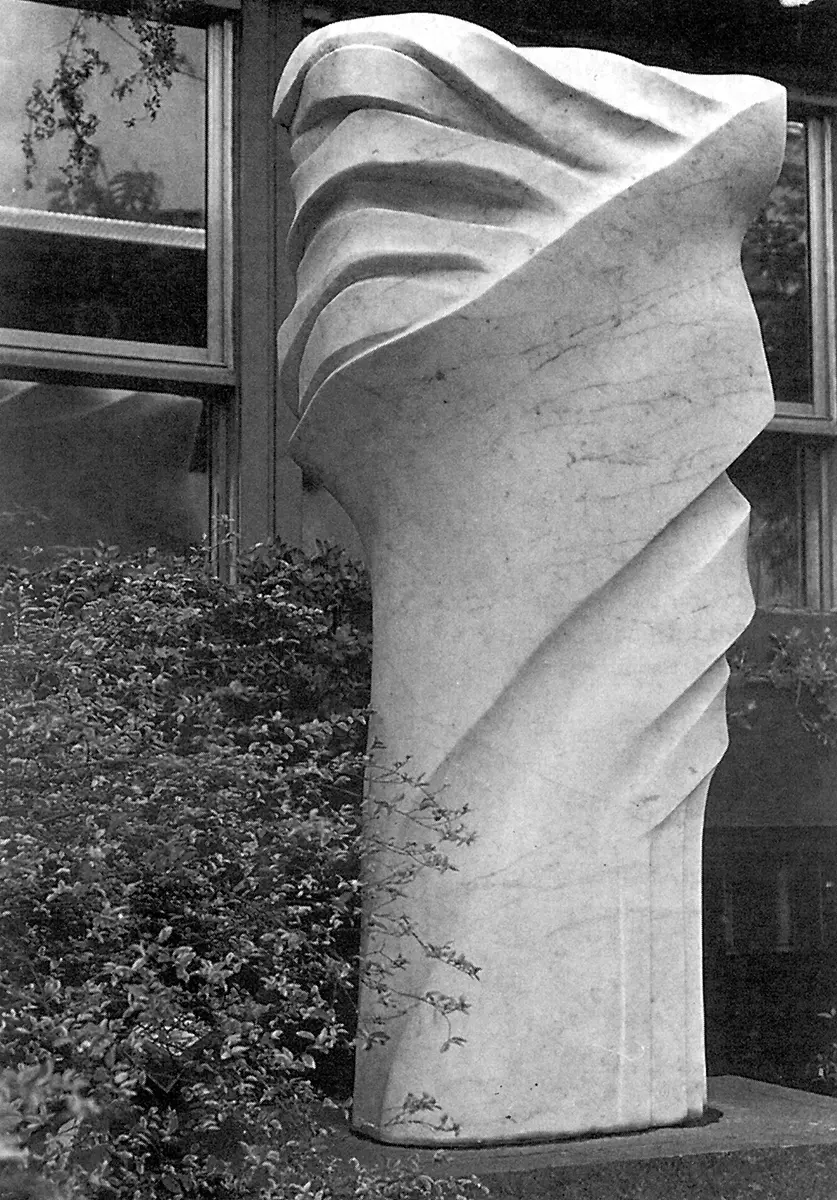
Jorge Gamarra works with wood: African mahogany, guaiacum, coloured quebracho, cancharana. His forms are always simple, almost prismatic and although he retains the geometry and rigor of the shape the work gradually becomes imbued with a process of transformation and transmutation.
Gamarra places an emphasis on the body: the perfume of the wood, the volup-tuousness and organic nature of the forms, with the light slipping over the changing surfaces, where everything is curved, with no hint of sharp edges, the volumes filled with the pulse of life.
References to the animal and vegetable world fill the sculptures of Rodolfo Nardi, where the forms are split and vertical, volumes that invite us to run our fingers over them and which seduce us with their potent and refined eroticism.
Seduction is also evident in the manner in which Lucia Pacenza resolves her relationship with her materials: her marbles are morbid evoking mysterious presences that eschew any reference to the real.
Special mention must also be made of Nora Correas and Carola Segura, two powerful sculptors who have worked in textile arts, the techniques and materials of which they use to give their work some unusual features.
A number of young important sculptors are now working outside the country: they include Pablo Garcia Reinoso and Ines Vega, in Paris, Jorge Romeo in Italy, Enrique Jesick in Mexico and Gloria Priotti, who has worked for some time now in Germany.
The new names now emerging and worth noting include those of Patricia Hatkin, Cristina Tomsig, Patricia Landen, Ana Lizazo and Marina Dogliotti, amongst others.
Many artists are working freely within a plurality which knows no frontiers; they are experimenting with space, reclaiming the space they need for communication; they are ready to mix different times and disregard historical chronology; their new attitudes are impossible to classify; they are ready to assume the past, as they face up to the challenge of a historical period of rich and difficult change about which they reflect, inviting us to reflect as well.
Both their convictions and their practice are expressions of their faith in life.
NOTES
1) Scheider, Pierre, “Cuando la escultura se emancipa”, in La Nacion. Buenos Aires, 29 August I986.
2 ) Krauss Rosalind, “La escultura en el campo expandido”, La Posmodernidad. selection and prologue by Hal
Foster, Ed. Kairos, Barcelona, I985.
Nelly Perazzo:
Critic, professor and historian of contemporary art. Member of the Argentinian National Academy of Fine Arts.
Curator of the Libero Badii Collection for the Argentian Credit Bank Foundation.
NELLY PERAZZO