At the beginning of the 1950s, Octavio Paz used the word «rupture» to referto a group of artists who reacted against the predominance of muralism, with its narrative objective, its clear political content and testimonial message. Artists who were in advance of their times - such as Rufino Tamayo and Carlos Merida - along with Gunther Gerzo and Mathias Goeritz, amongst others, questioned single directions in art and proclaimed the validity of incorporating proposals based on an international language, without detriment to their own roots. Although they had no pretensions about forming a school or group with rigidly defined ideas, they were interested in developing formal and conceptual options outside, and sometimes in opposition to, a model which they considered obsolete This exhibition entitled Painters in Mexico in the XXth Century, curated by the director of the Museum of Modern Art, Teresa del Conde, gathered together the work of 29 outstanding artists who were part of this “generation of rupture», an expression which, as the curator points out, is questionable but has met with critical acceptance.
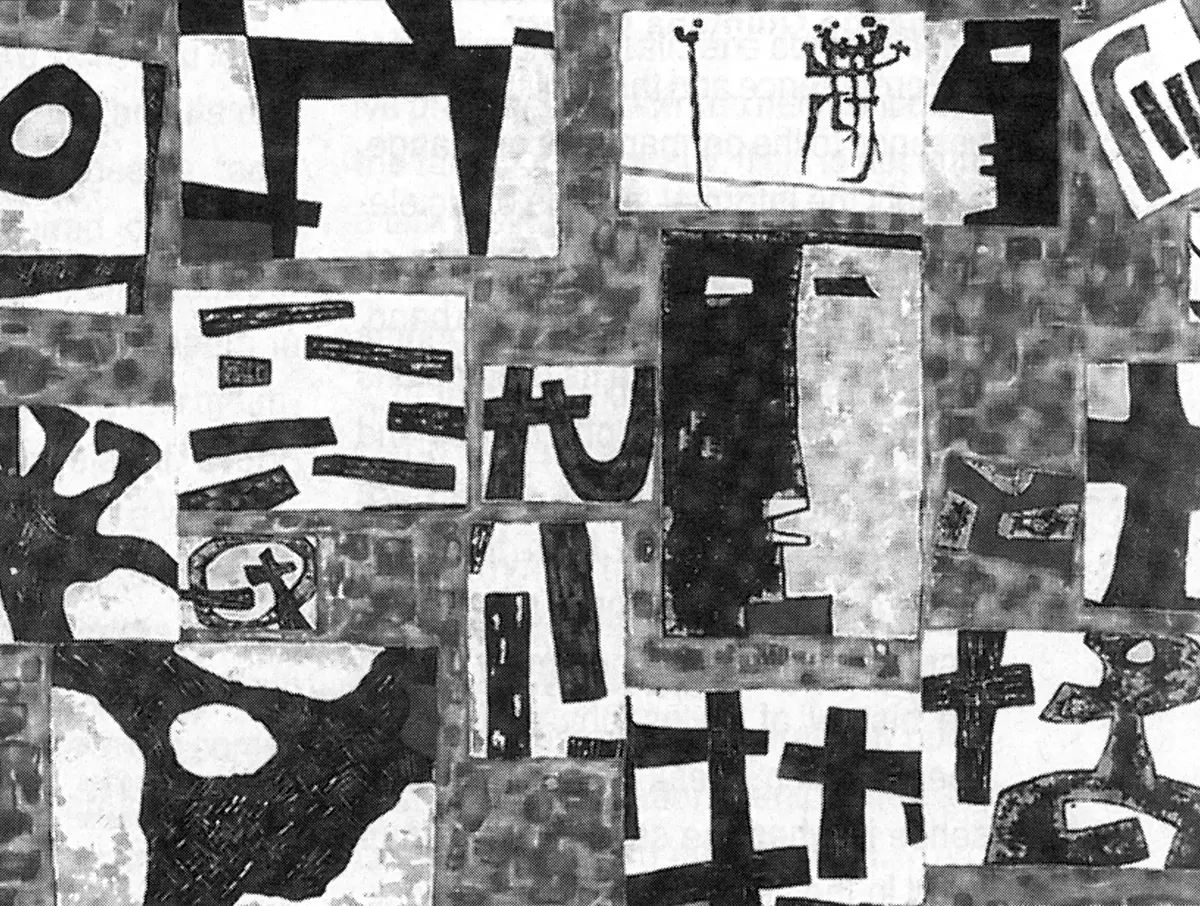
The show highlighted the fallacy of criticisms expressed in the 1950s about the work of these painters. To argue that these 29 artists simply followed trends current in the international art of the time is to disregard the fact that their work went much further than simply taking over proposals from the new figuration, the Cobra Group, or the various alternatives offered by abstract art.
It is sufficient to mention the example of Jose Luis Cuevas, who early on joined this group. His fierce opposition to what he considered the excesses of muralism, or muralism as a model, did not prevent him from recognizing or assimilating the importance of such figures as Jose Guadalupe Posada or Jose C. Orozco, influences present in his earliest work.
In addition to the criticism that these artists merely transposed styles from outside and turned their backs on their own realities, they were generically referred to as abstractionists. This exhibition confirmed the predominance of figuration over abstract art. It is figuration which - in general - moves away from realism as such: the interest is more self-referential, less explicitly social,although the figure remains there, in sentially gestual and reflect personal perception. A very good example of this is the work of Gilberto Aceves Navarro, whose work is a rethinking of the real world in terms of stains, lines and color.
In addition to these artists, mention must also be made of such figures as Vicente Rojo, Manuel Felguerez, Fernando Garcia Ponce, Lilia Carrillo and Enrique Echeverria, seminal figures of abstract art and the promoters of which came to be known as new Mexican painting.
The show was accompanied by a good catalogue which provided a clear and precise introduction to each artist, along with reproductions of the 60 works on show from the collection of the Museum of Modern Art. The selection was based on solid criteria and offered a wide and at the same time judicious review of the plastic arts in Mexico during the period under review.
We can conclude, as Teresa del Conde does in her catalogue text that although the appearance of what is now known as the «rupture» group did not inaugurate any new method of perception or any original ordering of plastic elements in the strict sense of the term, it did mark for Mexico a point of departure towards a new phase in its artistic history.
IVONNE PINI