The recent exhibition by Soledad Salame, a Chilean artist resident in Baltimore, showed a substantial change in her work. She explores the relative nature of the internal scale of her work and the various points of perspective and tension appearing throughout the surface of the support. Her internal landscapes, which are almost monochrome, mark a break with traditional perspective. The surfaces are worked with a kind of crossed superimpositioning to create a relatively complex compositional structure. The pictures can therefore be read in various ways. The composition simulates in an analytical manner certain architectural patterns consisting of figurative and abstract elements. The fragments, or virtual fragments of images are ordered into coherent free asso-ciations, forming figurative elements which fuse and become abstractions in the eyes of the spectator.
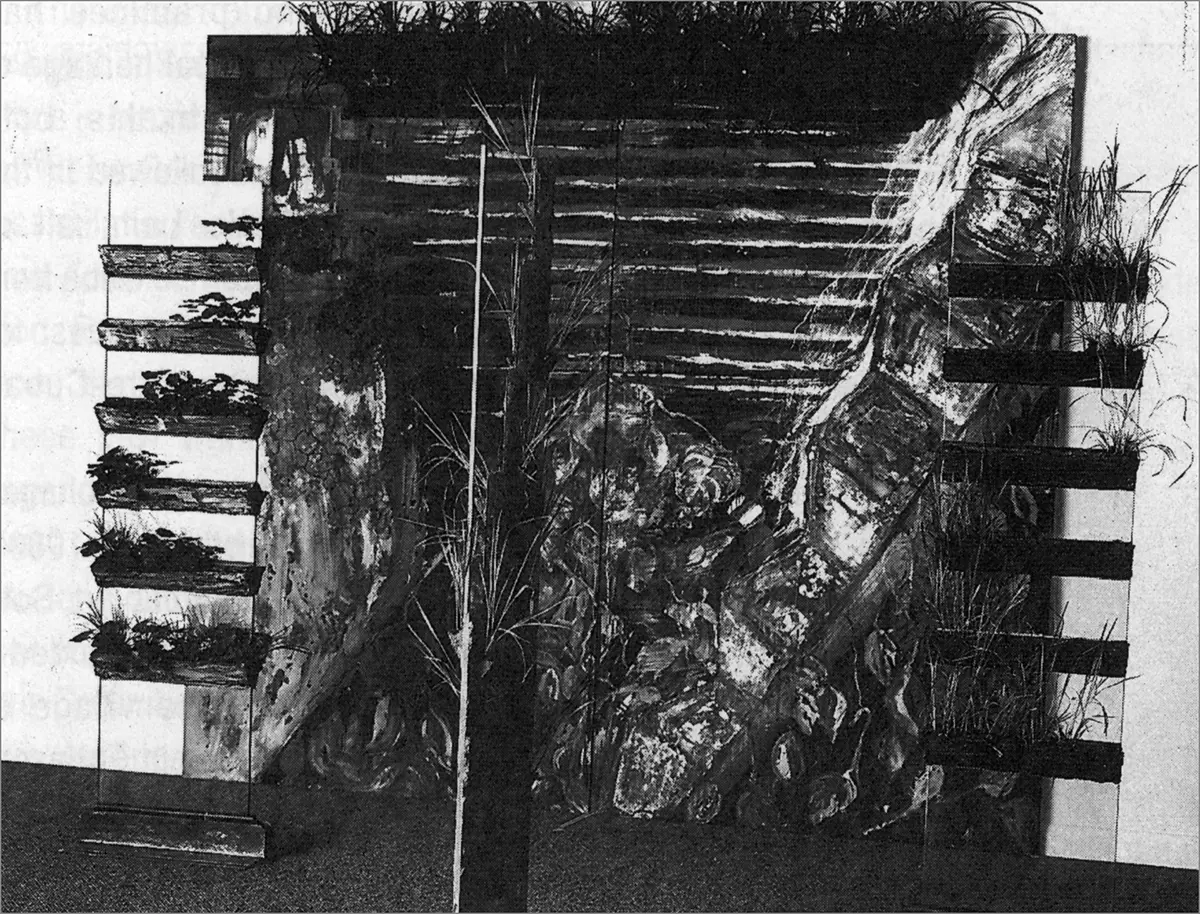
Window frames, fragments of landscapes, collages that seem to have come from some other reality. Plants and the hint of human forms, ambiguous and hardly recognizable, are the visible elements which the artist uses to explore her portrayal of the real image within the ambiguity of a vision that is both external and internal, real and spiritual. The surfaces advance and recede without any contradiction. The interplay between them, in terms of theme and technique, is essential to Salame’s creative interests, centered on an image of synthesis which can be traced back to her existential experiences. An air of nostalgia fills the surface, creating a somewhat romantic feeling where a breeze seems to be rustling through the fragmented images, but without altering either their position or nature.
Salome's internal landscapes create a certain withdrawal in the spectator. The extraordinary strength they generate and the subtlety they embody convert them into a sort of inner refuge, where solitude is a way of being happy. They are part of a human poetics. The goal, therefore, is to capture a new symbolic meaning, in which the external landscape and the internal landscape become personal elegies of the existential concerns of the human being. All this was confirmed in these works on paper in which Salame expressed deep human feeling.
BELGICA RODRÍGUEZ