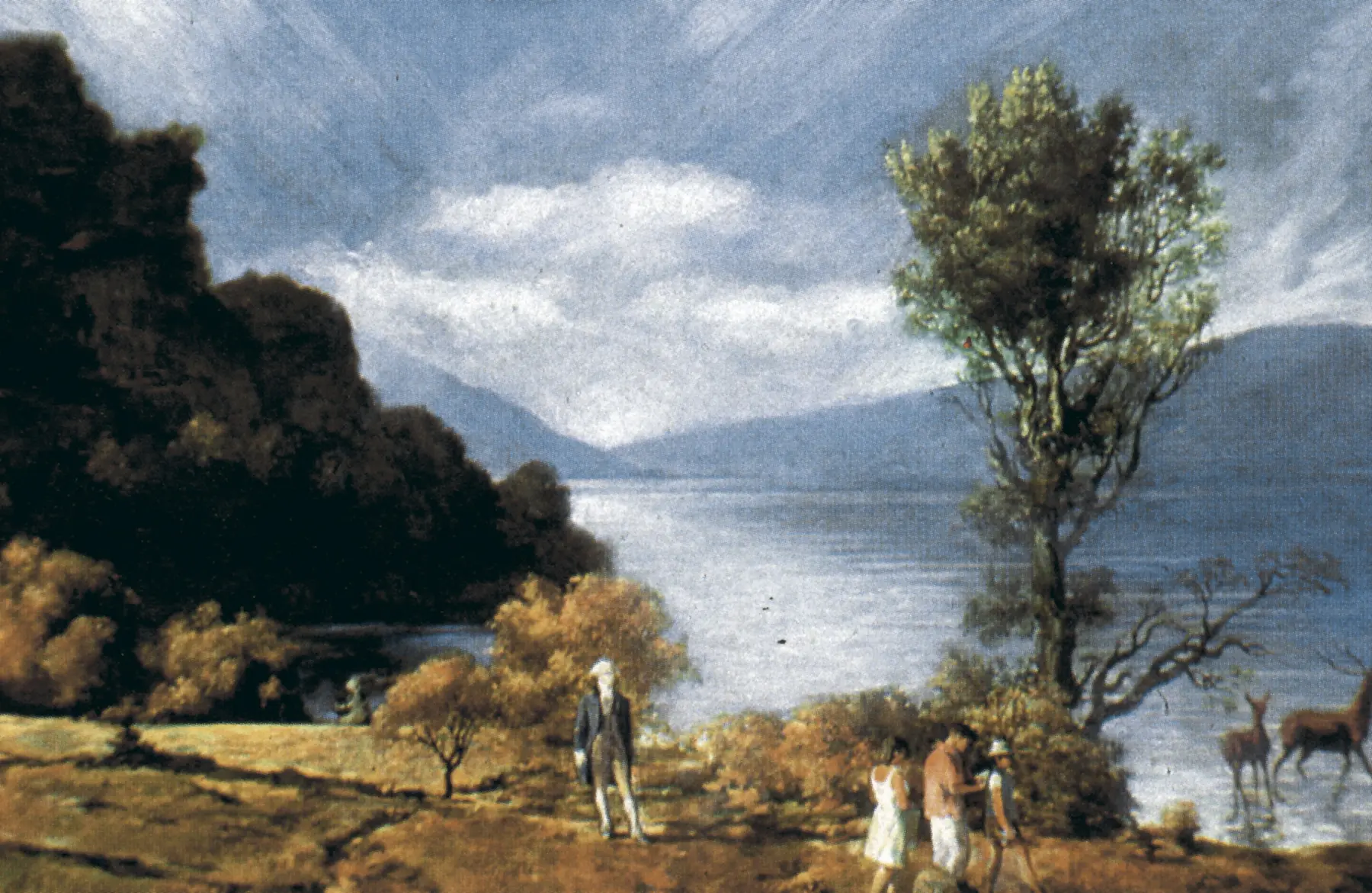
Vitaly Komar and Alex Melamid, Soviet artists who left their country many years ago to go to the United States via Israel, were labelled as "dissidents" before their departure. Once they settled in the United States, they themselves believed they were dissidents vis-a-vis the new culture which they found there. Their work has always been done as a team (neither can be identified individually), and what was formerly a satire of socialist realism now became a satire of capitalist consumption. Their works have always been characterized by academic deftness and humour. Their new exhibition at the Alternative Museum in New York, however, confirmed that they have now embarked on a larger enterprise - not so much in terms of the artistic value of the work but in its social implications. The show was the result of a survey on North American tastes and culminated in two works: the picture which is the most pleasing and the picture which is the least pleasing.
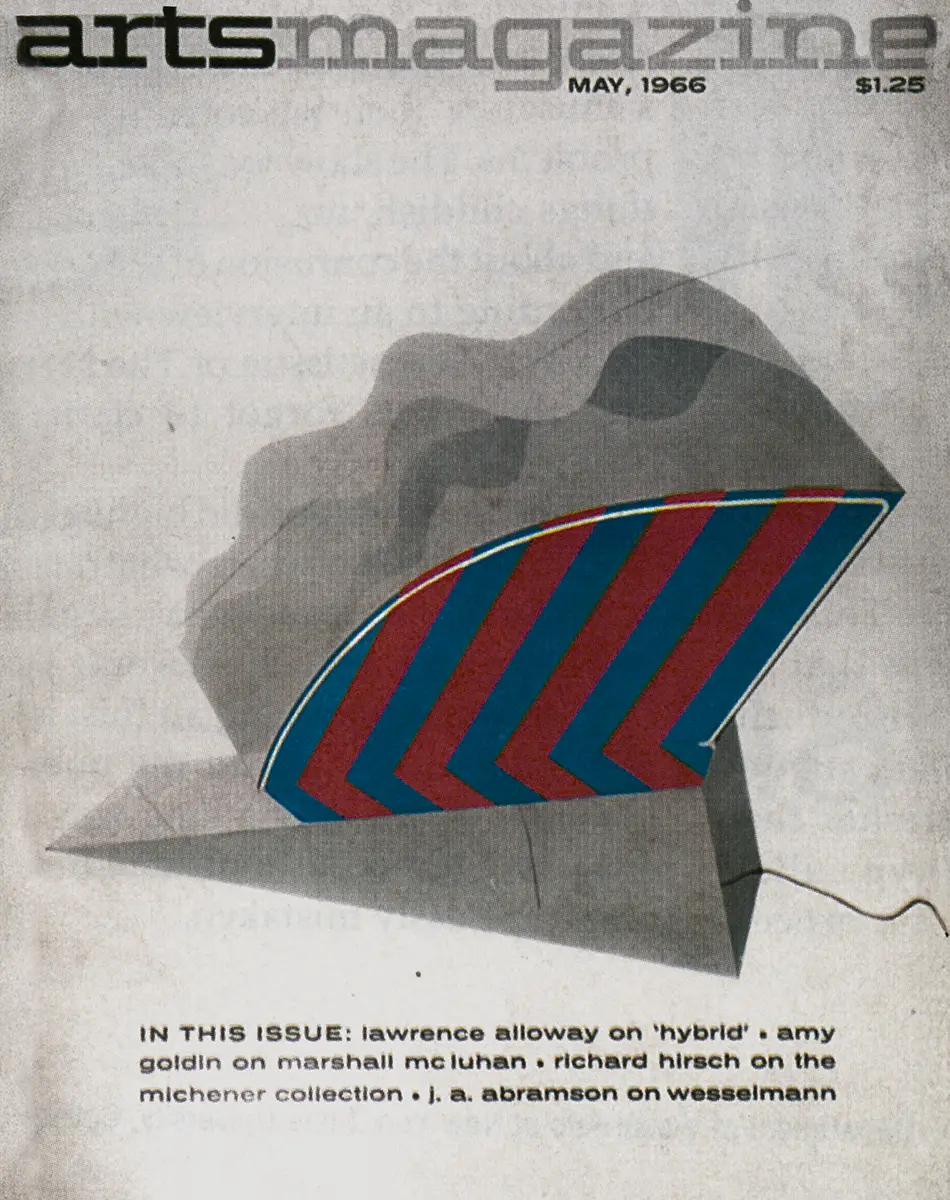
Neither the enterprise nor the concern (and not even the work, by definition) is original. There was a similar attempt in the 1960s, although at a more modest level, when the British artists Gerald Laing and Peter Phillips, who were living at the time in New York, prepared a suitcase with samples of forms, colours and textures and rudimentary questionnaires with which they tried to define "the" work of art of the moment. Unlike Komar and Melamid, who were concerned with reflecting representative opinions of the entire population, Laing and Phillips selected a public essentially made up of persons from the art market and the power structure. The result, product of interviews with 137 persons, was called Hybrid and decorated the cover of Arts Magazine in May 1966. As an assemblage it was not fully successful, although it accurately reflected the tastes of the time in the elite artistic circles. It was, furthermore, not a very rigorous experiment. For example, 49 persons chose aluminium as their primary material (from a limited collection of samples), 46 preferred rubber and 29 chose fur. The artists decided to follow only the majority of 49, and thus used aluminium, thereby creating and satisfying a new elite.
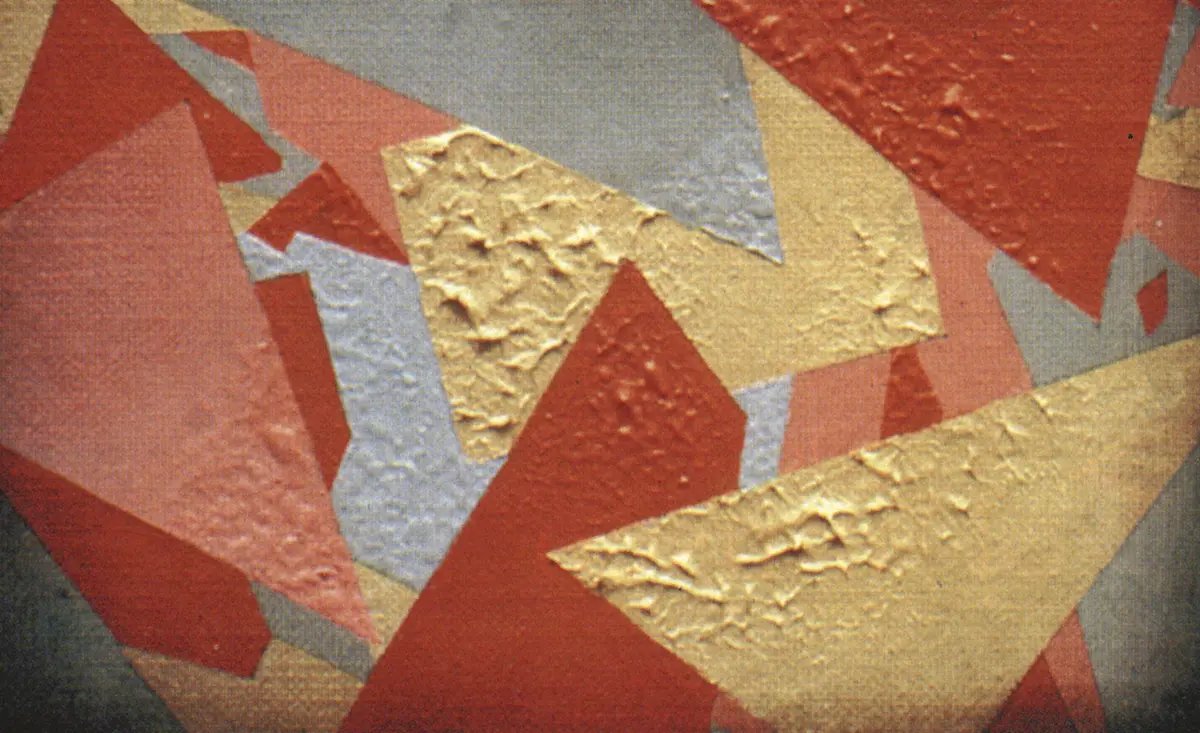
A market analysis in this respect is a process which has occurred - from the most crude to sophisticated levels - in all ideologies. Intuition or knowledge of this market have determined the aesthetics of commercial and government advertising campaigns and also influenced State sponsorship. And it is the hypothetical protection of the "public" which is generally cited as a reason for applying censorship. Censorship criteria are based on the values attributed to what is often no more than an unknown abstraction that is the target of the prejudices of mediocre bureaucrats.
The ironical premise of Komar and Melamid is ideological: in a democracy where everyone has the right to decide who the president will be, it is obvious that these same people have the right to decide which elements should make up a work of art.
Up to here the artists' idea is not particularly important (or correct), except that they decided to confront the problem with what initially appeared to be total frankness. More original were the scale and seriousness of the survey itself: after establishing contact with the liberal left-wing publication The Nation and its Institute of Social Analysis, they secured the necessary funds to finance a professional survey (at a cost of 80,000 dollars, with a 50 per cent discount because of the nature of the project). A total of 1001 persons were surveyed, proportional representing of all socioeconomic (and geographic) strata in the US population - a study comparable to any institutionally organized opinion poll.
The "ideal" work, as it came out from the survey, isn't much more important than a good joke: Washington and a deer against a fall landscape with blue sky. It must be accepted, however, that a national plebiscite would prefer such a work to others executed according to the criteria given by the negative replies.
But there were other results which transcended artistic illiteracy and fashion. The questionnaire established, for example, that blue is the most popular color (44%), followed by green (12%). Red (11%), although it was not placed first by any population group, rises in direct relation to group sophistication. This conclusion has important communication consequences and gives rises to strange speculations.
For example, assuming that the survey results also apply to the population of the former USSR, one might ask what would have happened with the USSR if eighty years ago the communist leaders had decided on a blue rather than red flag.
The results of the survey oscillated between the obvious and the unexpected. 75% of those surveyed believed that art does not need to have a message and that its main purpose is to please. However, 19% said that art should serve high causes and that it should challenge our ways of looking and thinking. Surprisingly, 79% would back their children if they wanted to become artists. Only 26% said they would like their children to marry an artist, although there was little opposition: 65% said they were indifferent. As regards with whom they would like to have dinner, people seemed to prefer a writer (29%), a television or film actor (25%), a sports figure (24%), ahead of an artist (14%).
During the interviews, respondents were informed that of the taxes paid by each North American citizen, an average of $420 per person were spent on defense and $38 dollars on education.
On the basis of these data, 66% of those surveyed said that were willing to pay 25 dollars for investment in the arts. However, at the individual level, 75% would only invest 500 dollars or less to acquire a work of art and 57%, given the choice between a work of art and its equivalent value in cash, would take the money. While expressing their preference for the money, 62% said they would choose a work of art because they liked it and only 16% would base their choice on the potential rise in value of a work.
The independence of taste was made relative by ideas on the importance of colours and everyday things. 56% of respondents said the choice of an overcoat was important; 49% said the same thing about the choice of a car. But only 16% said that care was needed in the choice of underwear. It was clearly a matter of appearances.
The ideal size of a large work of art, according to 65% of those surveyed, was that of a dishwasher, as opposed to other possible sizes (such as a wall or freezer). In the case of small works, 69% gave a 19 inch television set as their preferred size, as compared with a magazine or paperback book.
Supposing that they had no financial limitations, 14% of respondents said that they would pay an artist to paint a family portrait, followed by 5% who would choose respectively an individual portrait, a mountain landscape or paintings of animals. Only 3% said that they would let the artist choose the theme (a sort of "open theme").
Although most people said that art did not have to be realistic, 60% said that the closer a painting was to a photograph the better. The idea that the public has the right to decide what kind of art should be shown publicly was more popular amongst respondents with incomes under 30,000 dollars a year. The better off groups believed that the public should not decide such matters. Of the respondents as a whole, 60% believed in the right of public control.
Komar and Melamid merely presented the data and did not discuss the problems, in part because such discussion was not one of the objectives of their exhibition. On the one side there was the survey material, a report of more than 100 pages compiled by the Marttila & Kiley firm, from Boston, which drew up and tabulated the questions (a smaller scale version was published in The Nation on 14 March 1994). On the other side, there were the pieces in the show: graphs carefully painted in acrylic on canvas, sculptures representing survey percentages, and finally the dessert - the two works resulting from a synthesis of the research. The fact that both works, the positive and the negative, were not satisfactory in artistic terms constituted the only comment on the show. In a gesture similar to poking their tongues, Komar and Melamid implicitly wash their hands and say to us: "This is a selfportrait of North American society. Don't blame us - all we have done is follow orders".
If we remember that the Degenerate Art exhibition which Hitler organized in Munich in 1937 was visited by some two million persons who presumably agreed with the show's premise, then the democracy proposed by Komar and Melamid becomes a problem. The washing of hands, which is acceptable in terms of the artistic game in question, is also deceitful. The "democracy" on which the game is based is a false one. It is a democracy based on taste and not on analysis and the questions. In their proposed simplicity, they ignore the complexity of things. Both the questionnaire and the show itself establish a process of impoverishment and simplification which are contrary to art. Both appear as the final consequence of a democratic process underway up to the time of the survey and the works. This first finale is a poor reference, in that the works of art which defined the concepts resulting in the survey questions are better and richer than the results which the survey illustrates.
There has thus been a process of deterioration in the event that artistic democracy, as understood by the artists, was really put into practice. The error lies in imposing a political definition of democracy on art, rather than democratizing access to art.
What Komar and Melamid did was to some extent (and keeping in mind the different contexts) similar to that of the Degenerate Art exhibition. Hilter's show wanted to prove that art was sick, but it only confirmed that people (including Hitler) did not understand what art was doing. It suited Hitler that people did not understand and at the same time thought they did. Komar and Melamid want people to understand and at the same time know that they are not understanding very well. Without realizing it, Komar and Melamid have been trapped by a certain kind of frivolity in contemporary art and stopped halfway along the road. The proposal of the show was interesting, but their washing of hands ruined it. True democracy is about sharing power. Komar and Melamid simply gathered together the symptoms which define consumption, rather than the energies that are applied to the solution of problems. In addition, they were forced by their own proposal to renounce using their own resources. If we want to judge the exhibition in other terms than the undeniable playful pleasure it provides in a typical visit to a museum, then we come up against problems. The show was about making things childish, not about democracy, and about the confusion of the art scene (according to an interview with Melamid in the same issue of The Nation), and the artists forgot to clarify the difference.
What the exhibition did highlight was the difference between what an elite considers to be art and what the general public accepts as such. The only viable conclusion, after seeing all this, is that probably both elite and the public in general are not only a long way from any possible mutual understanding, but also hopelessly mistaken.
Luis Camnitzer
Uruguayan artist. Professor in the Department of Visual Arts at New York State University, College at ‘ Old Westbury.
LUIS CAMNITZER