The 1995 exhibition of work by Cesar Paternosto at the Cecilia de Torres Gallery in New York was balanced at the artistic level and mature in personal terms. The artist’s resume reads: "American, born in La Plata, Argentina, 1931. Has lived and worked in New York since 1967." I mention these geographical references, which are important, although the lack of space prevents me from examining that importance. This artist is now exploring a powerful source of expression, an abstraction of geometric-tactile references which encompass painting and objects, combining the intangible and the solid, as are aesthetics and architecture.
For a number of decades, Paternosto has been working the hard edge, hierarchizing the object-painting. When he was younger, he found himself in the middle of two powerful tendencies: geometrical abstraction and abstract expressionism. He moved away from both flat hues and total spontaneity to create structures that depend on the wall. His works have not been characterized by the formats and habitual concentration of easel pictures or disengaged sculpture, but have been reliefs with swollen profiles and irregular contours. Over time, Paternosto has covered all the lands of Latin America, which were previously inhabited by indigenous tribes. He has studied and written about these; they have motivated his paintings, and for this reason, he has sometimes relinquished his use of irregular contours. He has placed symbolic Andean forms in his canvases, meditated on them, and through form returned to his very marked contours, although now irregular and noticeably architectural, almost definable in geographical terms, like plans for squares, or the well-preserved vestiges of the pre-Columbian architecture of some unknown civilization.
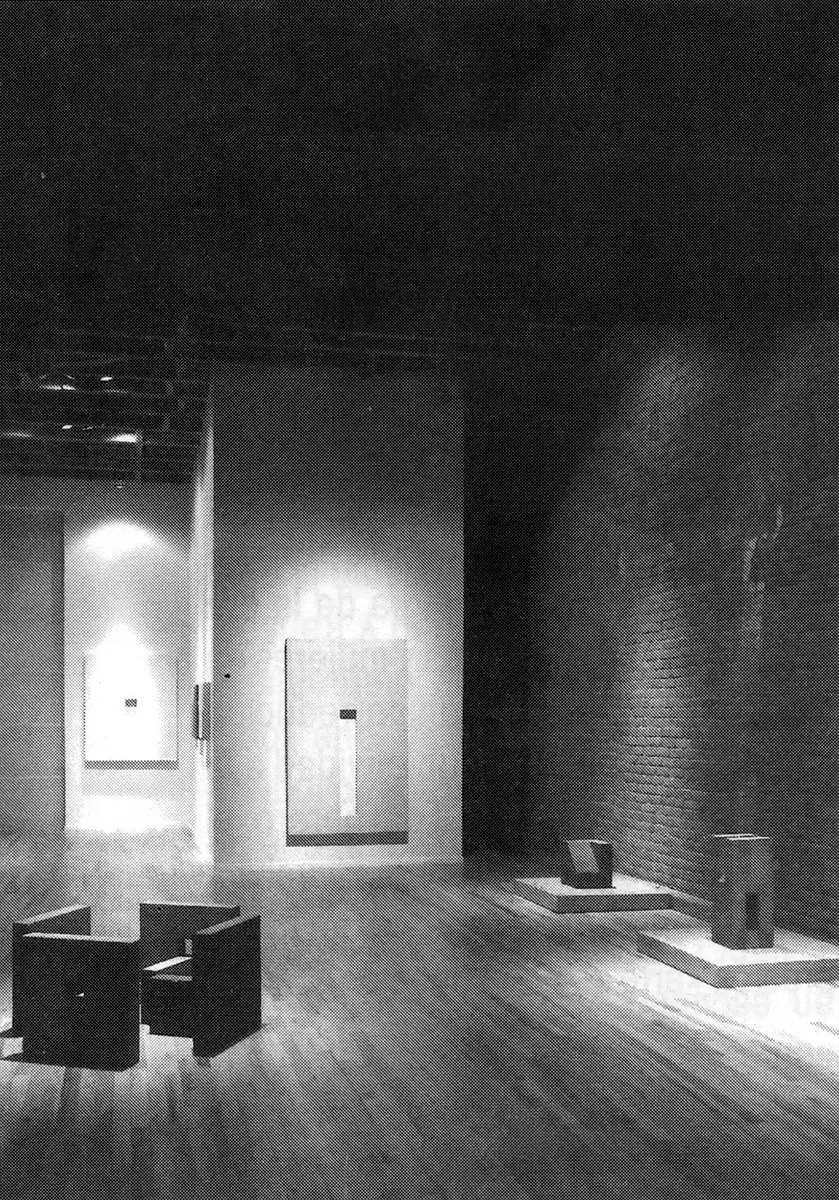
The paintings of the portico series, in acrylic emulsion on canvas—sometimes including ground marble—and the small-format sculptures and installations in pigmented cement which made up this show, were given satisfactory museographical treatment in this very New York and Latin American gallery -with its open brickwork (the land present in a means of construction), impeccable walls, and very effective lighting. In terms of art, Paternosto summarizes the period in which we are living, showing us that the proper response today lies in creativity, without distancing ourselves from the personal and with a balanced attitude towards existing trends.
GRACIELA KARTOFEL