Painter, sculptor, engraver, muralist, illustrator, critic, archeologist, lover of Mexico. The figure of Jean Chariot is perhaps not as known as those of other foreign artists working in Mexico at various times during this century. The Mexican public would be more likely to recognize immediately the work of Remedios Varo, of Tina Modotti, of Carlos Mérida. For one thing, his work covers several fields. One might have seen the famous mural at San Ildefonso, but not his engravings, or know his drawing of Diego Rivera, but not his paintings of Mexican peasants. One of the achievements of this exhibition is that it makes us converse with his visual work while at the same time giving us the broader scope of his contribution to Mexican art and culture, as well as of his relations with figures that we know well, such as Rivera, Siqueiros, and Vasconcelos.
The show thus includes not only more than 300 works by Chariot, but also photographs by Modotti and Edward Weston, engravings by Pablo O’Higgins, and drawings by Rivera, Orozco, and Siqueiros. Chariot shared with the muralists the ideological agenda of the post-revolutionary Mexican government, but he also held a sincere interest in the indigenous people of the country: their customs, their crafts, their dress. Like Carlos Mérida, his aesthetic principles were European, but in indigenous Mexico, he found subject matter and inspiration.
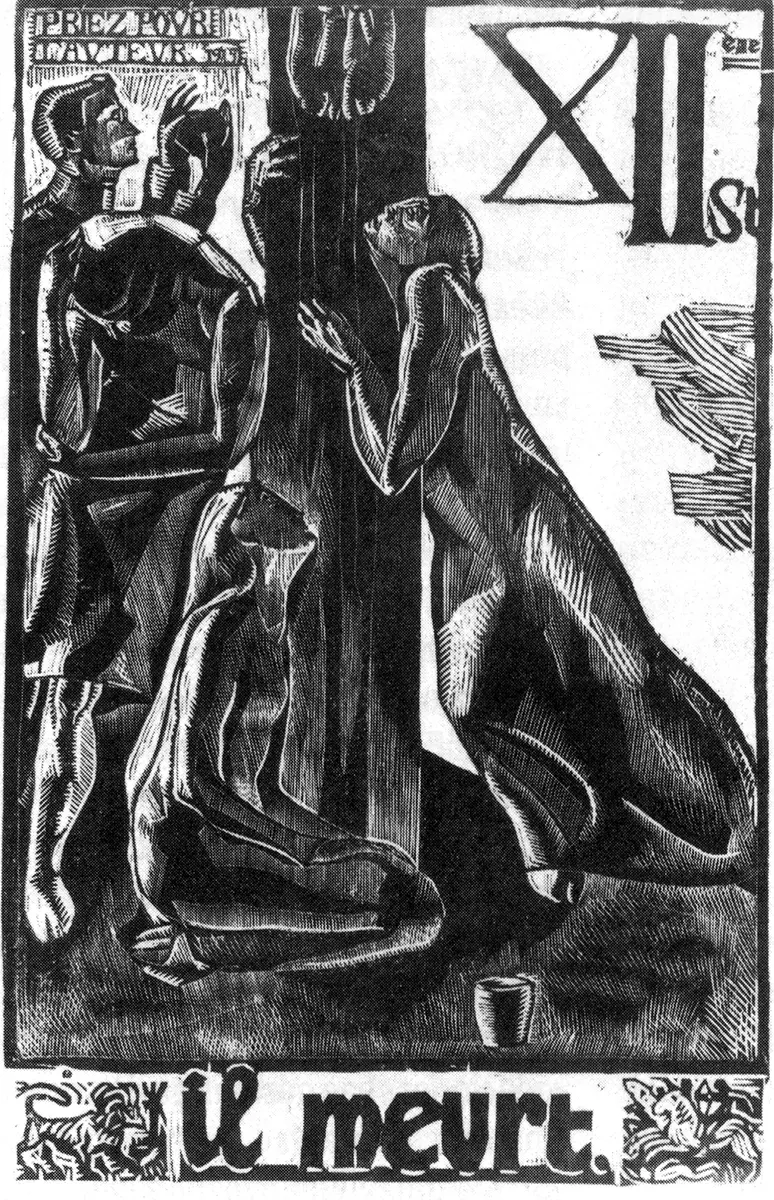
Chariot’s early engravings are a beautiful example of his adherence to a strict geometry. In the series of the Stations of the Cross, for example, the figures are completely subordinated to the diagonals in the composition, and the result is a clean graphic quality. In later works, however, his depictions of poor Mexicans lack the spirit that attracted him in the first place, since the figures are strictly angular and symmetrical. His drawings have a more natural quality, with the same economy of line but without the rigidity, as in the portrait of Nahui Olin of 1924. Chariot’s book illustrations deserve special attention; the same aesthetic rules are applied, but with an exceptionally lively use of color.
PAOLA SADA