
The first MARCO Prize was awarded in January in Monterrey. Conceived to recognize achievement in the visual arts with a prize comparable to those given in other disciplines, the award consists of a trophy and $250,000 to a sole winner. When it was announced that Julio Galán had been selected by the international jury, the fact that a local artist had won caused something of a stir. There had been some controversy earlier, due to the fact that participating artists would donate their competing works to the museum’s permanent collection.
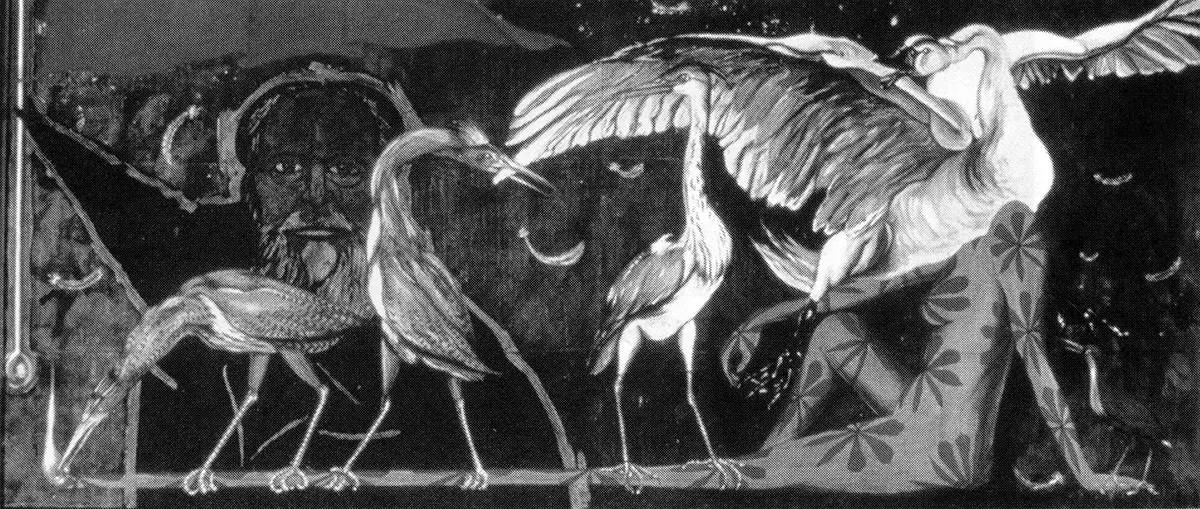
Controversy or not, what is true is that the resulting exhibition is a sweeping view of the best and most recent art from Mexico and America (with a few European entries) that might not have otherwise come together. Perhaps the most valuable element of the competition is that it allowed young artists of little renown to participate alongside and on an equal basis with established names such as Alfredo Castañeda, Mimmo Paladino, and Ray Smith. Besides the Mexicans, the show includes artists from Ecuador, Brazil, Cuba, Argentina, Guatemala, Haiti, Colombia, Venezuela, Bolivia, Canada, England, Italy, Puerto Rico, Chile, Peru, and the United States. It came as no surprise that Galán’s winning entry was a self-portrait, the artist’s favorite genre. More unexpected was the brilliant study in black and white that included the striking figure of a skeleton set against the dark body of the artist. Ray Smith and Mimmo Paladino both presented large, bold works that were included among the finalists. One of the most talked-about pieces was the immense wood-and-metal sculpture by Rosa Maria Robles, whose award at the Museo de Monterrey Biennial not long ago came as no surprise. Also memorable is the oil painting by Arturo Rivera, representing the Last Supper but with Mexican personalities and friends of the artist as protagonists. Martha Pacheco’s intriguing composition of human figures also made a strong impression. Carlos Zerpa made the most of his play on Latin kitsch with an altar-like installation that included, like the rest of his work, icons of popular culture and religion. Juan Sanchez employs a similar strategy in two dimensions, taking a flag, the image of Christ, and a ten-dollar bill as symbolic images to comment on the U.S.-Puerto Rico problem. The youngest artists (those born in the early and mid-sixties), such as Claudia Fernández and Francisco Fernández, were so audacious in the conception of their works that it would not be an exaggeration to consider them likely candidates for a future MARCO Prize.
PAOLA SADA