
Photography has now assumed its various unitary and simultaneous roles, where different degrees of reality and fantasy coexist. The photographer, his camera, the picture being taken, the negative and positive (film), and the final photograph produced all make up the reality, whereas the fantasy lies in the expectations of the artist, whether verbalized or not, his personal history, and environment.
This exhibition, entitled Still/Life: The Body as Object in Contemporary Life, curated by Elizabeth Ferrer for the Americas Society of New York, examined such realities and fantasies as expressed in parameters ranging from the classic to the most recent. Six artists were represented in the show: Eugenia Vargas, Marco Antonio Pacheco, Marta María Pérez Bravo, Ricardo Zulueta, Víctor Vázquez, and Alberto Chong, who were born between I949 and 1962 in Chile, Mexico, Cuba, Puerto Rico, and Jamaica.
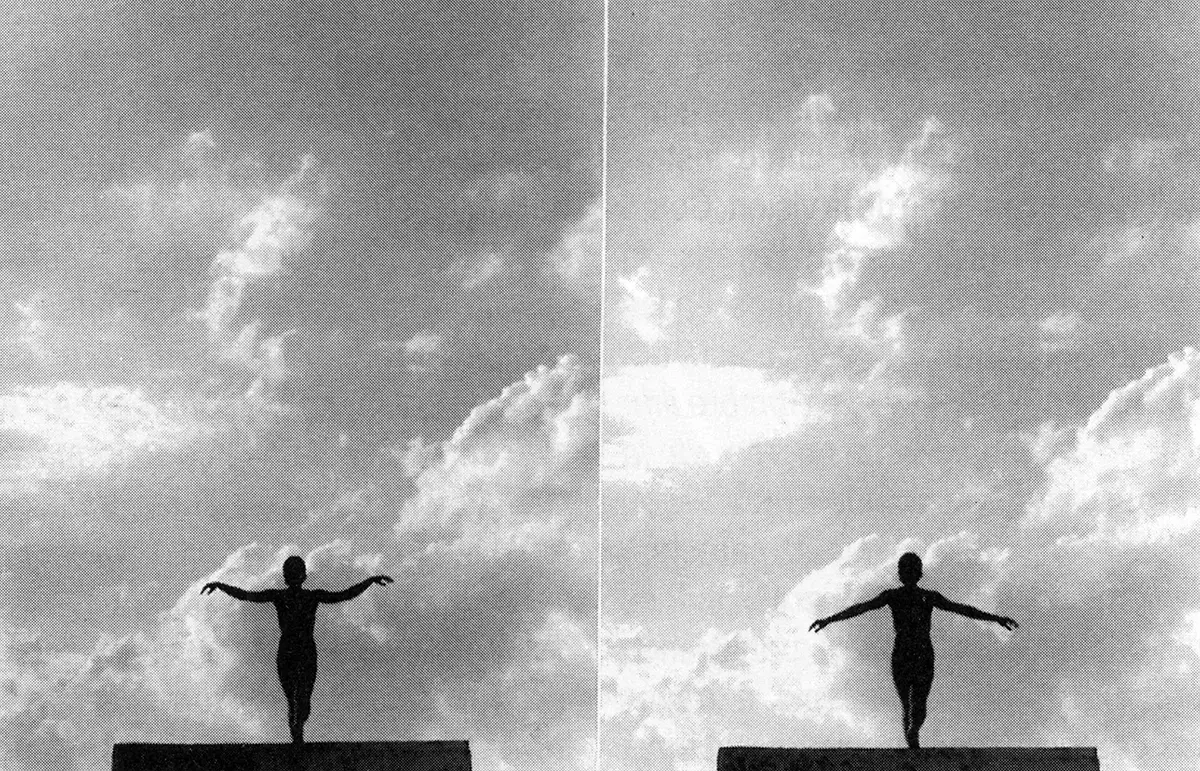
In such a powerful contemporary medium as photography, the body has been a subject of representation, indication, and connotation. In Still/Life, the body appeared as an object and lectern, an artistic, documentary, psycho-social, political, religious, scientific, and above all ritualistic support within the epic setting—highly conflictive, chasm-like and decadent—of the late twentieth century. Today, the well-known phrase, "love your neighbor," has become fragmented at the affective, sexual, and moral levels. In any language and religion, it should now be accompanied by the rider: with care, restrictions, and considerations, or the entire body of humanity will succumb to AIDS, to torture, and the other alienating atrocities which surround us.
The thirty or so works in this show, the production and representation constituted an anticipated ethnography for the inhabitants of the next millennium. Vásquez, Chong, and Pérez Bravo disinter pre-Columbian, Afro-Caribbean, and syncretic (indigenous and Catholic dogma) rituals, with references to punishment, isolation, and laceration. In these three artists, as in Eugenia Vargas, Pacheco, and Zuluta, constructed or "assembly model" images were predominant, with the human being viewed as an object. Almost all were resolved in interiors, with the emphasis being on fragmentation, rephotography, and serialization. There was no concern for physionomy or status, with pairs of referents coexisting for each and for the works as a whole: oil-natural space vs. interiors-atmospheres; presentation-masking; life-death and solid-sublimation, recalling that all objects are ephemeral. In the works as a whole, there was an upward-moving sensation which suggested the freeing of the body from its own physical existence. Traditional still-life works show fruits, meats, ceramics... and thus refer to the "physicality" of these elements, a vision which is extended to the other senses through the mnemonic memory of the spectator, who provides smells, intangible qualities, and tastes to the picture—whether painting or photograph. This state of reality and its transcendence as reflected in traditional still-life works had its equivalence in Still/Life through the body and its sublimation in each composition.
The Romantic ideal of Latin America of the eighteenth century was present in the show, along with the decadent whiff of deconstruction. What was irreversible was the fact that the tools used by the artists were of the neo-conceptual kind—cords, threads, nails, photographic registers, the legacy of the desire to achieve a documentary duration for performance art—a medium in which several of these artists have worked.
GRACIELA KARTOFEL