
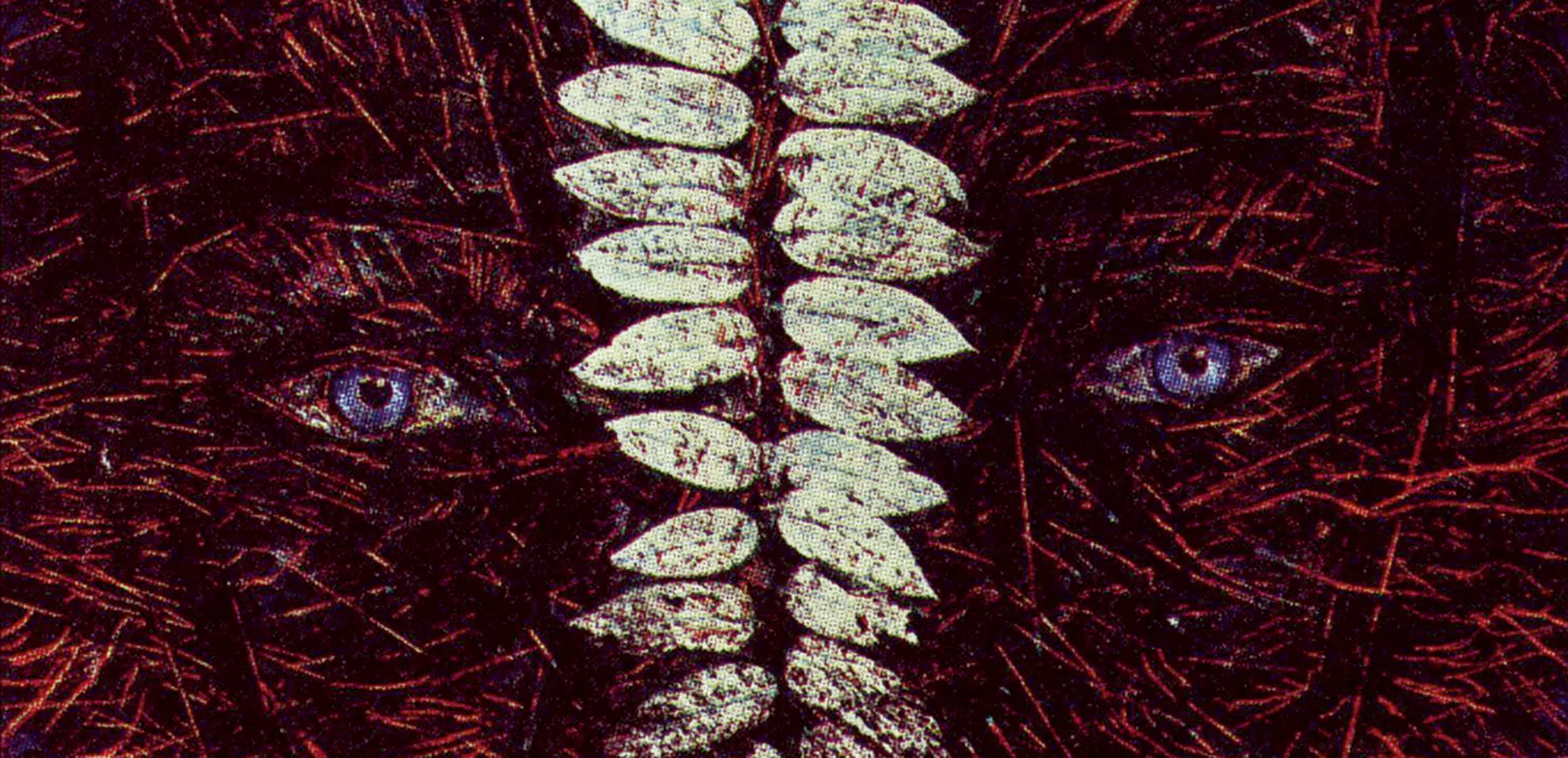
I first saw Amaldo Roche’s paintings in 1991, at the memorable inaugural exhibition of the Museum of Contemporary Art (MARCO) of Monterrey, Myth and Magic in the Americas: The Eighties. Roche was the only Puerto Rican artist invited to participate, and he sentfive works: Woman Afraid of Cutting her (oil/canvas, 1988), The Complete Woman (oil/canvas, 1988), Maud, Let me Dream For You (oil/canvas, 1988), We, the Dream (oil/canvas, 1988) and The Sacred Actor (oil/canvas, 1989). A year after that first encounter with his work, there was another - this time at the house of Andrés Blaisten, one of the most demanding collectors we have in Mexico. Hanging from one of the walls in the house was a recently acquired work, Wounded (oil/canvas, 1991) by Roche. In that splendid picture in which a green figure without a head and covered with foliage occupies the center of the composition, I saw an error in the signature of the artist which the collector had not noticed: instead of "Arnaldo," the signature had three extra letters, appearing as "Arnarnaldo."
These experiences with Roche’s painting were not sufficient. My interest in his work really became serious after his show entitled Arnaldo Roche: The First Ten Years, which was presented at MARCO in Monterrey between January and May of 1993. The exhibition contained 52 works, mostly large-format oil paintings, and was for me a fortunate and definitive encounter with the artist’s work, with his autobiographical inclinations, his love of the baroque and drama, his strength of expression and rich sense of texture, as well as his restoration of Caribbean culture. I became convinced that he was, in fact, one of the greatest representatives of contemporary Latin American art. Hence, for me, the importance of the 1993 exhibition and the more recent show at the Museum of Modern Art in Mexico City, which provided a further opportunity for exploring the work of this master Puerto Rican artist.1
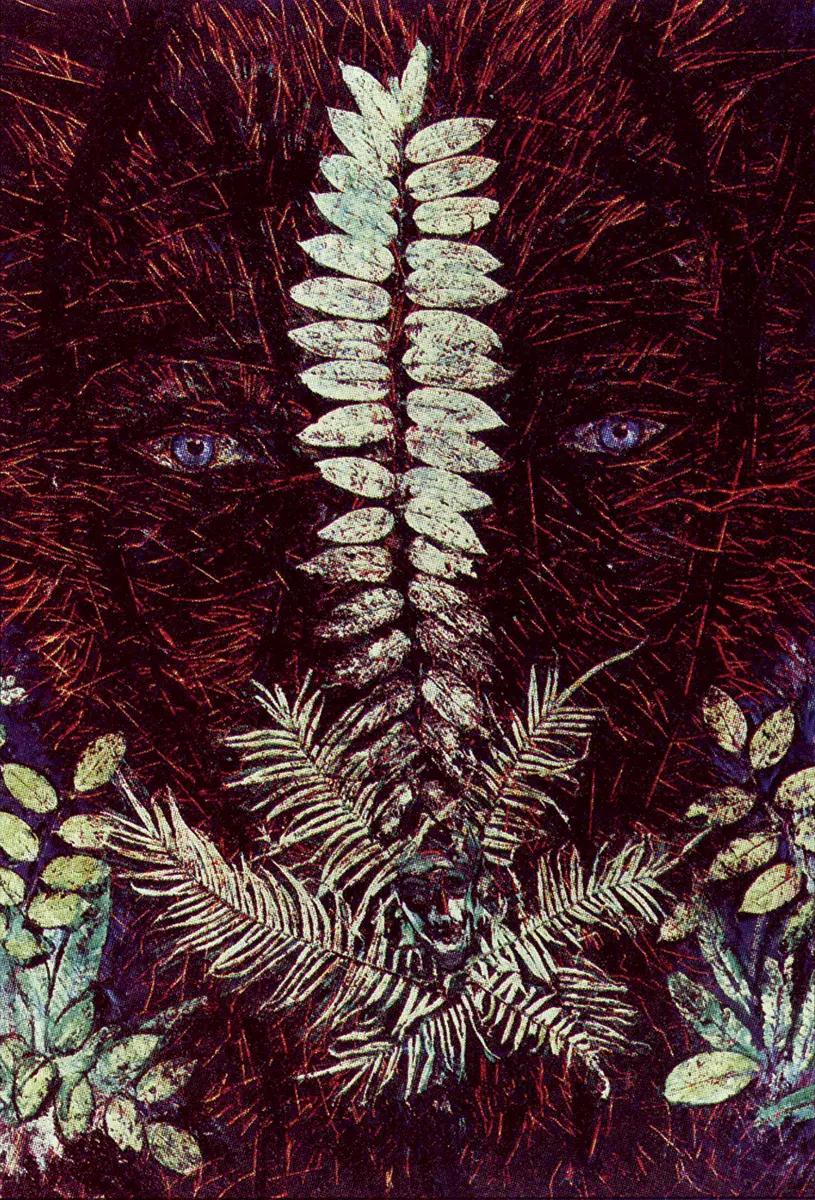
Arnaldo Roche Rabell (Santurce, Puerto Rico, 1955) began his artistic adventure as a student at the School of the Art Institute of Chicago (1979-1984), where he obtained a master’s degree in fine arts. He was 23 when he left his native country for the United States, taking with him the cultural universe of his island, which over time came to dominate his painting. One of his first paintings, The Magic of the Island-Man (oil pencil/paper, 1981), already revealed much of the spirit of his future work. With this spectral self-portrait, done in the very entrails of the monster (dixit Martí), Roche reclaimed his Latin American, Puerto Rican, and Caribbean identity. He would have no need to return to his country to rediscover his cultural roots, since they were always there inside him and had already produced their fruit.
Enrique García Gutiérrez, the critic who has studied the work of Arnaldo Roche, points out in a text on the painter: "Any Puerto Rican is an island man. Such a circumstance may be a source of inhibition or destruction, or it can be an incentive for creation and the protection of our personality. This antagonism is a vital problem of the man-island-artist. Our artists have had to fight with the reality of isolation from many different angles, but the main one has been the need, from the beginning, to go abroad to pursue higher studies and gain first-hand knowledge of the international avant-garde movements."2 Roche resolved this "vital problem" in a very fortunate manner. He used vigorous contemporary expressionism to explore his Caribbean culture, to discover his identity and reality as a Puerto Rican artist.
What does the image that Arnaldo Roche presents in one of his most famous and well-known paintings, We Must Dream in Blue (oil/canvas, 1986), say? Here, the colossal face of a black man with blue eyes, emerging from the jungle, openly questions the spectator. Roche knows history, the conflict between the races, the defeat of the black man by the false superiority of the white man. And he believes that in the face of attack by men with blue eyes, men with black skins might begin to dream—and act and think—in blue and lose the only thing that remains for them: their culture. This is not an exaggeration. The painter is from an island that went from being a Spanish colony to a North American possession in 1898, and which won the status of an Associated Free State in 1952, a country that has a long artistic tradition of political and social content (art understood as a militant commitment and the message of freedom). Roche broke with this tradition, but not with the need to define the national Puerto Rican identity and to defend it in the difficult conditions of dependence in which the island finds itself. This need led to the creation of such critical works as Empty Island (oil/canvas, 1988), The Spirit of the Colony (oil/canvas, 1995), The Island of Fears (oil/canvas, 1993), and The Hope of the Poor (oil/canvas, 1994), among others.
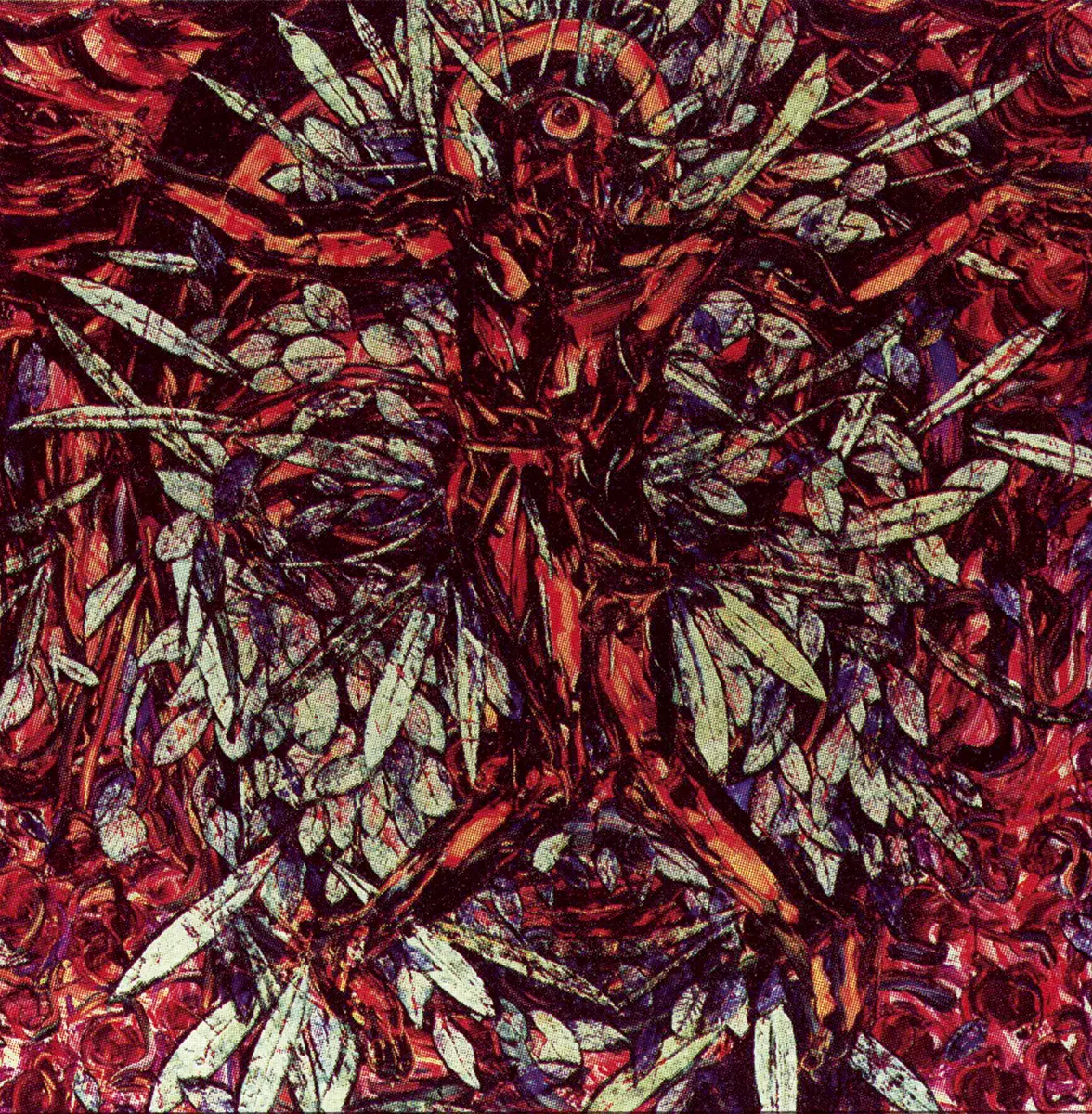
In We Must Dream in Blue there already appears one of the features that was to become one of the characteristics of Roche’s art: vegetation. Caribbean nature in all its exuberance (trees, flowers, grass, plants, leaves, branches, stems) overflows in his work to "capture" or "protect" his figures, which are often hybrid monsters, as in Esteban’s Fear (oil/canvas, 1988) and The Kingdom of Pantaleón (oil/canvas, 1991). From these mysterious jungles, inhabited by men, animals, and animal-men, there often emerge enormous vigilant eyes, looking out for any imminent danger (from the "spirit of the jungle"). Roche’s fantasy overflows and eliminates all the barriers between the animal, vegetable, and human worlds. Everything becomes a dream, an oneiric autobiography worthy of Freudian psychoanalysis.3
There is in the painting of Arnaldo Roche a baroque combination of real and fantastic elements, which are fused into a complex symbolic and visual fabric. His canvases combine the most diverse ideas concerning the existential problems of man, allusions to sexuality, critiques of political dependency and racial discrimination, references to Afro-Caribbean mythology, and the Christian religion. Everything is incorporated into a ferociously expressionist discourse in which gestural violence replaces all traces of complacency.
It would be useful to say a few words about the pictorial technique used by Roche: frottage. Here I should like to refer to what Edward J. Sullivan says about the relationship between Roche and surrealism: "Many of the structures in Roche’s work recall the amorphous and suggestive forms of the surrealists' canvases. They often acquire a palpitating kind of autonomy in the general context of the canvas and endow the surface with vital energy. Automatic writing was another characteristic of surrealist painting and drawing, and although Roche does not make direct use of this technique, the frottage which he does employ in some of his most striking paintings does have a spiritual affinity to automatic writing, in the same way that it is intimately linked to the frottage method invented by Max Ernst."4
Equally close to the North American action painting technique, the frottage used by Arnaldo Roche consists of the following stages: the painter spreads several layers of paint on the canvas or paper, and uses this prepared support to envelop his models (human bodies or objects), which he rubs with his hands, tracing out their forms, using the oil to the maximum to achieve the best impression. During the process, which is carried out in a dark room, the colors emerge from the different layers and the images begin to appear. The corporeal frottage is concluded when the model is "liberated" and the support is extended once again. Then the painter continues working (touching up, adding and removing paint, adding representations) until he is satisfied that the work is finished.
It is true that any work of art is the result, above all, of the physical action of the artist. But in the case of frottage, the physical action goes beyond that: it sensually involves the artist's body and the theme of the work. This has a deeper meaning than what one might think. As Charles Merewether has explained, "such a technique (the frottage) mobilizes a series of metaphors and associations that make the painting into a kind of ritual practice. The painting aligns next to nature and comes to possess a magical, transforming power."5 It is the power of a Latin American master, an expressionist of the Caribbean, a painter who, without forgetting his own roots, has been able to create a universal kind of art.
NOTES
1. The exhibition entitled Arnaldo Roche Rabell (Sala José Juan Tablada, Museum of Modern Art, February-May) contained a total of 40 oilworks from 1986-1994.
2. Enrique García Gutiérrez, "Arnaldo Roche Rabell. Odisea del Hombre-Isla," in Arnaldo Roche. Los primeros diez años, Museo de Arte Contemporáneo de Monterrey, enero-mayo de 1993.
3. I recommend the text with a psycho-analytical focus published by Teresa del Conde in the MAM show catalog, "Arnaldo Roche Rabell y el mito del heroe", Arnaldo Roche Rabell, Museum of Modern Art, Mexico City, February-May, 1995, pp.13-27.
4. Edward J. Sullivan, "Arnaldo Roche Rabell: Sueños azules de un espíritu candente," op. cit., p.38.
5. Charles Merewether, "Una gruesa fibra que atravesara el cuerpo: transformation y renovation," in Mito y magia en América: Los ochenta, Museum of Contemporary Art of Monterrey, junio-septiembre 1991, p.XLV.
ANTONIO ESPINOSA
Mexican Art critic and historian resident in Mexico City.