
The recently inaugurated Mun Gallery opened its 1995 season with a one-woman show by Graciela Hasper. Strategically located in the Bajo Retiro district—where art galleries have traditionally been established —the gallery, under the direction of Pipele Salonia and Manu Froidevaux, wants to offer an alternative space for work by the artists of the 90s. This show was the first of eight exhibitions by young artists scheduled for this year.
Hasper (1966) proposes a subtle exploration of certain topical aspects of the theme of gender in art. With precise brush strokes, a skill which she acquired at the Antorchas workshop, directed by Guillermo Kuitca between 1991 and 1993, Hasper uses details which refer to the cultural stereotypes of the female world. Without excesses or dramatisms, her painting can be set within the general framework of the new geometry. Squares, circles, ovals, and rhomboids alternate in a series of flat works, characterized by a disturbing asepsia which is interrupted only by the strident use of her saturated and vibrant palette. The singularity of the image is sharpened by the complex combination of colors. Pure and deliberately grouped pastel colors, a kind of makeup kit, mask a travesty of the female condition. Between obsession and indifference, her painting is a reflection on the psychological conditions associated with female subjectivity and the organization of domestic rituals in front of the dressing table mirror. With a hint of irony, Hasper alludes to the almost maniacal habits of Western women, with their love of pretentious ornamentation, which hides behind a very aestheticized public figure, a sense of deep sadness. Like other artists of her generation, such as Siquier or Guagnini, Hasper uses an absolute simplicity of means, which concentrates on the decorative details of the image.
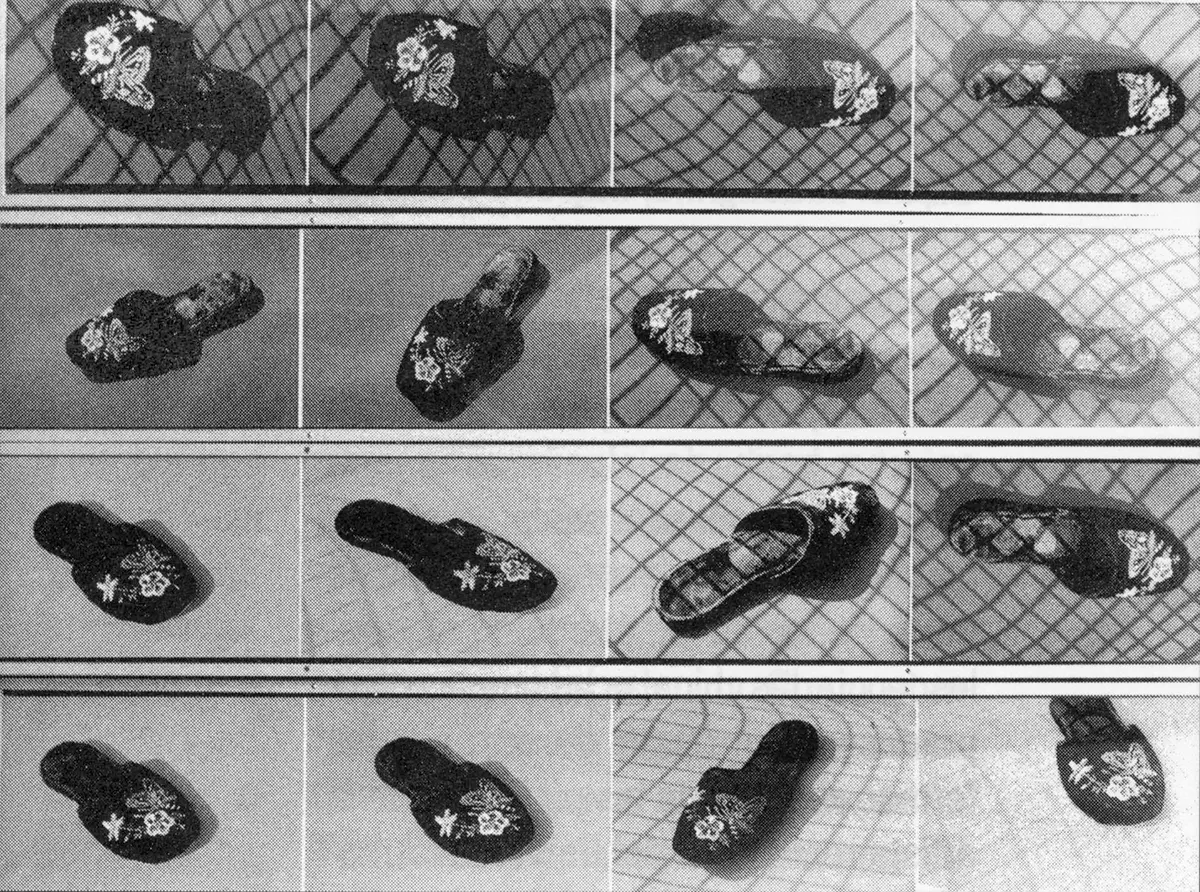
The representations are echoed in a series of allusions to the artist’s personal iconography—memories of the decoration and fashions of the 1970s of her adolescence, the Japanese slippers bought in some neighborhood market, the ovoid shape of the pills which the artist remembers from the pharmaceutical universe of her father, a doctor.
Between rigor and excess, Graciela Hasper offers another possible perspective in the approach to matters of gender in contemporary art, suggesting ways of using humor to capture features that make up her personal view of femininity.
LAURA BATKINS