
This traveling exhibit is a retrospective of Kuitca’s work from 1982 to 1994. It appeared in Miami at the Center for the Fine Arts from January 27 to April 16 of this year. Before that, it was shown at the Wexner Center for the Arts in Columbus, Ohio, and will be in London at the Whitechapel Art Gallery and at the Museum of Art in Tel Aviv, later this year. The show is impressive as much for its museographic consistency as for the volume of the works. Eduardo Lipschutz-Villa, the curator, has been able to absorb Kuitca’s torrential production with the clarivoyance of an alchemist.
There is something infallible in the success of a young artist in his own time. In spite of that, Kuitca is not a dinosaur petrified in the magnificence of his achievements (multiple solo exhibitions in New York, South America, and Europe. Instead, he has survived his own obsession to fit into the mainstream of the art world with his credibility intact.
Magical realism, that patronizing label that colonialism manipulates from the art marketplace, has been represented instead with a figuration that is original and maddening and is not a partner of the gods of neo-expressionism or the formulist devils of the abstracts. Even the repetitive gnomes of pop-art, that spark their humor in his most recent work, are exploited "a la Kuitca," with capital K. Maps, lyrics, blueprints for houses and mattresses are manipulated massively with his personal touch.
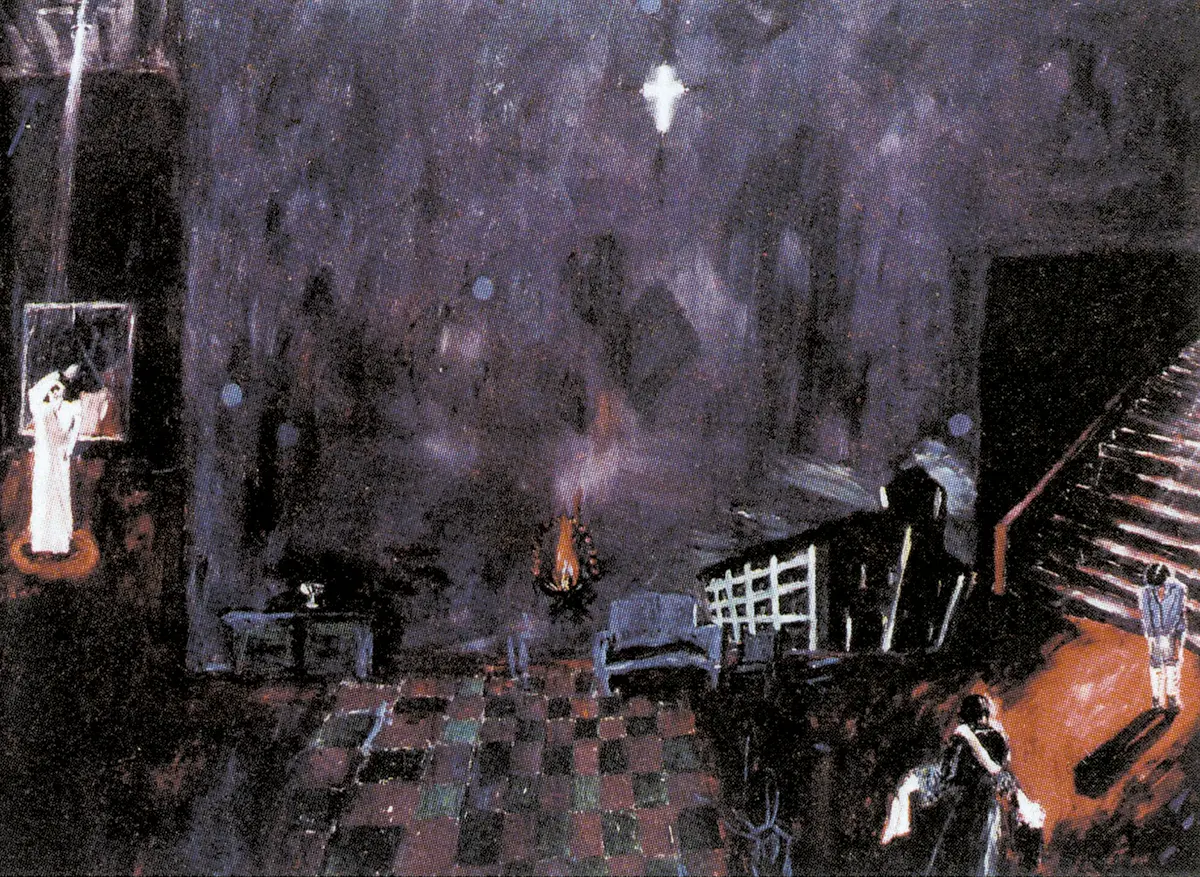
Kuitca’s figurative work from the beginning and middle 80s, in other words, just the other day, has a theatrical, quasi-erotic quality. Seven Last Songs, The Sweet Sea, and No One Forgets Anything are titles that repeat themselves in different canvases, and they seem to hold the clues to condemn one thousand assassins, except that we don’t know the nature of their crime. There are also chairs that dissolve in a cryptic equation of smoke and ice, reminding us that all the objects we see in the real world are just an extension of a cruel game of our imagination. The imateriality of oblivion and the absence of child-like candor are what make his world of a child painter a positive and universal regression.
Sometimes we are not so sure we’ve been invited to such intimate representations, and we can’t feel altogether comfortable. He seems to demand that we stop pretending to see what’s there. In any case, there are the maps, many of them, along the blueprint for houses that he started painting in 1987 and are still an important part of his recurrent pictoric production, there we can relax a little bit, just like Kuitca who says: "The idea of the blueprints gave me the tranquility of using them like a structure that could help me forget everything, as if I inherited something that would reassure me of obtaining a positive result. I found the prototype in a pamphlet called The Child Builder."
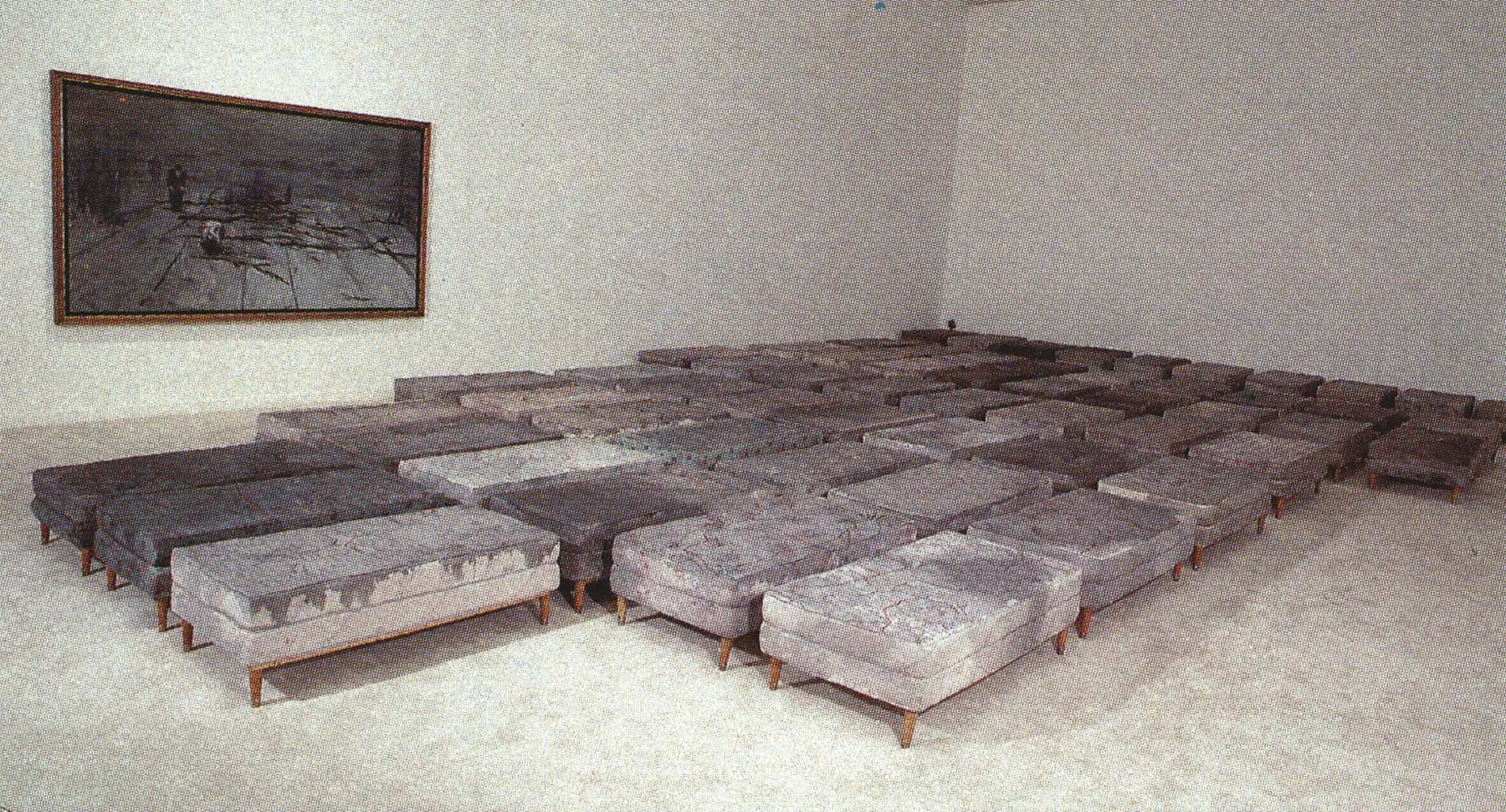
The most epic point of this exhibition was nailed (without spines) in the installation Burning Beds, produced for the Center IVAM in Valencia in 1993. It consists of 60 child-size mattresses soiled with maps and mistreated artificially with fire. The room of spectacular dimensions was like an immense wagon covered by the gases of some ancestral hermetism. This is where Kuitca’s European heritage acquires an explosive quality in the recreation of another moment of fatality and its process. In his familiar hemisphere, Kuitca’s evasive symbology eludes its own precondition and clear allusions to the psychological aftermath of the Holocaust are presented with an unexpected and painful vehemence. The inks and carbons of small format that surrounded the installation like magic barbed wire, preserved the horrors of the ghosts of a dream without "roibnols" or syringes in the beds in which "no one forgets anything."
Kuitca has reshaped some of the content of the Story Art of the late 70s with a conceptual sophistication where a messianic preoccupation for the good of all is present. Along with a great part of his figurative moments, his maps and burning beds are impregnated with promises of redemption.
Guillermo Kuitca is an artist circumscribed within a new geography without limits and "isms," a creator of his time, ample and exhaustive, that washes his face with the cursed water of his precocity.
ALANA LOCKWARD
Dominican journalist who writes for the editorial page of El Nuevo Herald for the monthly cultural supplement "Atelier" of El Siglo, a newspaper in the Dominican Republic.