Last February, Ofelia Rodríguez presented some of her recent paintings to the Bogotá public—a series of large-format canvases with a marked emphasis on color. The artist, now in a period of maturity, has made this element one of her main sources of expression: the color is vibrant and festive, a reflection, for many, of her Caribbean origin. In these recent works, the palette is not extensive within a single work, but refined down to achieve, through subtle recourse of contrast, an effect of optical vibration. The large surfaces, within their monochrome backgrounds, function as chromatic fields for the figurative elements painted or added through collage. There is an evident intention to highlight each of these. The closed color is the field within which the figurative signs function, and in almost all these works, this field is marked out through a kind of "frame"—a line which encloses it entirely or partially (Mission Impossible), a denticular form which establishes lateral limits (Measuring the Damage), a row of pins which acts like a fence (Blue Dream). This technique further emphasizes the color field.
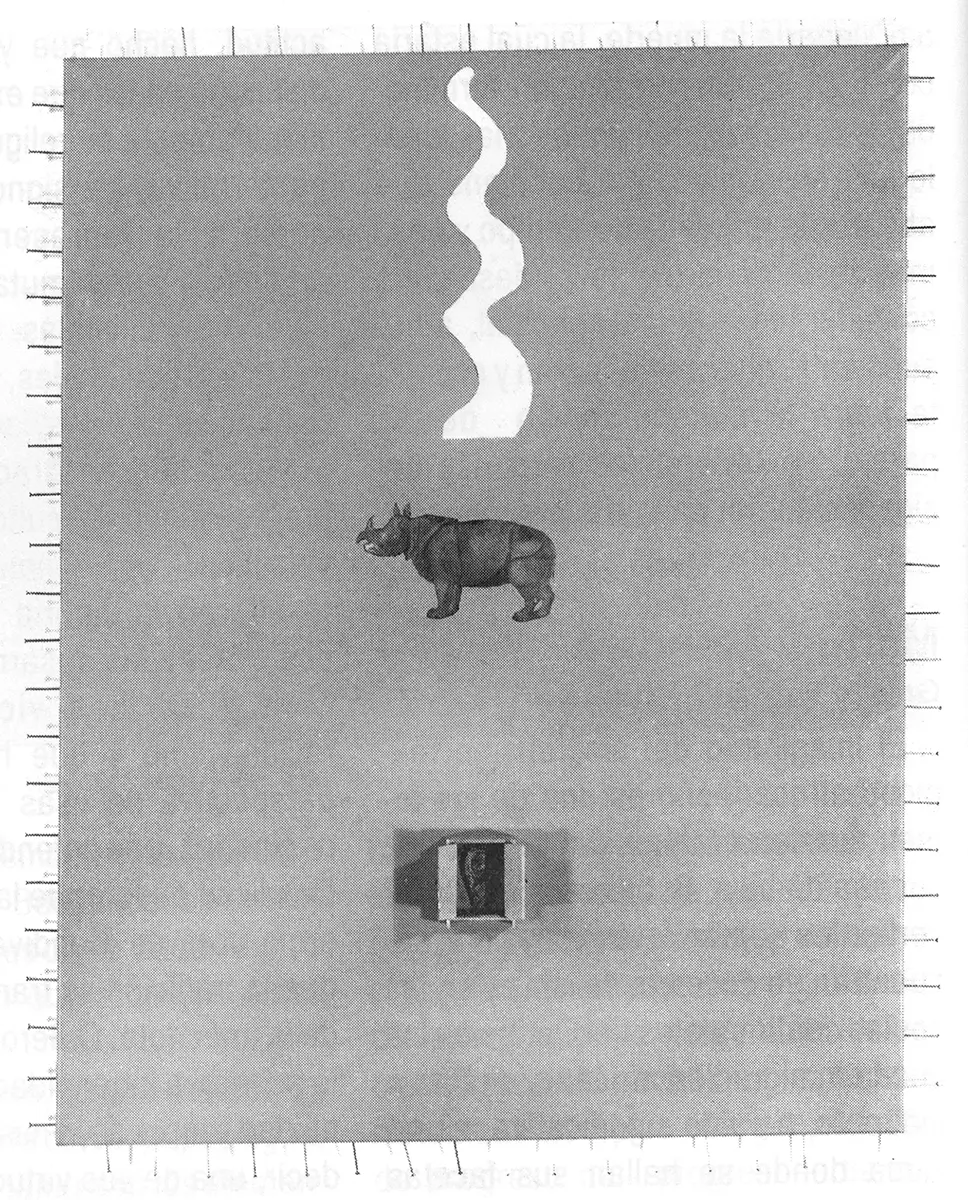
There is a clear compositional change in these works. The objects have become much smaller in relation to the large color background and appear isolated from one another. This results in an obvious tension between the objects and the color support, between the image of the ear kept in a little cupboard, the plastic crocodile, the tiny little chair with a palm tree, which all seem to be floating in enormous monochrome fields of green, yellow, blue or pink. Color totally envelops the objects, making them even more intriguing. We need to see them both up close and from afar. They require a dynamic perception which itself seems contradictory: the dazzling color creates a sense of distance and becomes an abstract field of reference. The figures, like signs in some fragmented alphabet, draw us nearer, inviting the spectator to scrutinize them closely. The tension takes the works to the verge of decomposition.
Her works from the preceding period reflected an obvious interest in landscape. This is no longer the case in these new pieces. In a sense, Ofelia Rodríguez now relies on definitions which are more conceptual than descriptive. Narrative, as such, has disappeared, and the figurative objects propose a decontextualized reading in which they function as signs and references to unspecified meanings. The titles, too, have become less inductive, allowing the spectator a greater margin for speculation and interpretation. All of which is complemented by the artist’s caustic irony in her compositions as she maintains her discourse without repeating herself, "the irony of sweetly poisoned darts," as Alberto Ruy Sánchez writes in the accompanying catalog.
MARÍA ELVIRA IRIARTE