
This exhibition dedicated to Rodolfo Nieto comes ten years after the retrospective held at the Museo de Arte Moderno in Mexico City shortly after the artist’s death. Despite the posthumous tributes and the various exhibitions of Mexican art in which his work has been included, we might still ask why Nieto appears as the most underappreciated artist of his generation. It is almost impossible to mention his name without hearing those of his contemporaries, Tamayo and Toledo, and rarely is he considered in his own right rather than in the context of the art of Oaxaca. Only a few years ago, this same space was devoted to a show of the art of Oaxaca from pre-Columbian to modern times, of which Nieto was obviously a part but certainly not the protagonist.
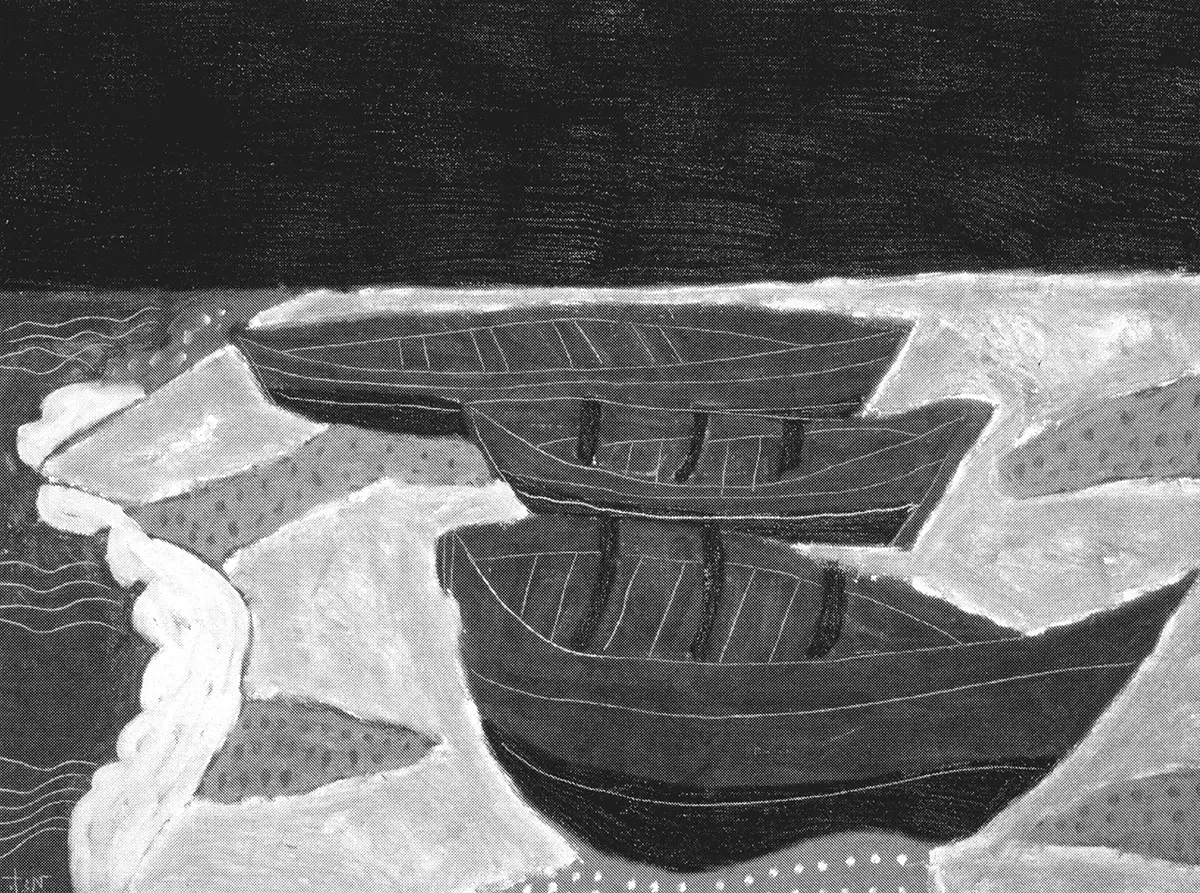
It may be difficult to dispel the clichés surrounding Nieto: his alleged debt to Tamayo and Dubuffet, his insecurity regarding his work, the tragic figure of the misunderstood and tormented artist who died prematurely. It is easy, however, to take in Nieto’s work and be convinced of his genuine and unpretentious talent. Of more than 100 paintings and drawings in the show, not one is subtle. All are powerful. Nieto reveals himself as the great Mexican colorist, particularly in the works of the 70s and early 80s. On the other hand, one of the delights of this exhibition is the series of drawings of animals done in pencil, which underscores his mastery of and inventiveness in this medium.
In an exhibition like this one, we like to trace the evolution of an artist from the first tentative steps to stylistic maturity.ƒ In the case of Nieto, the large abstract compositions of the late 50s and early 60s lay the ground for the later figurations: first animals, then sculpture-like characters inspired by pre-Columbian art, and finally a fantastic repertoire of musicians, acrobats, and women. We can only imagine what would have been painted if the artist had been alive in the last ten years.
PAOLA SADA