
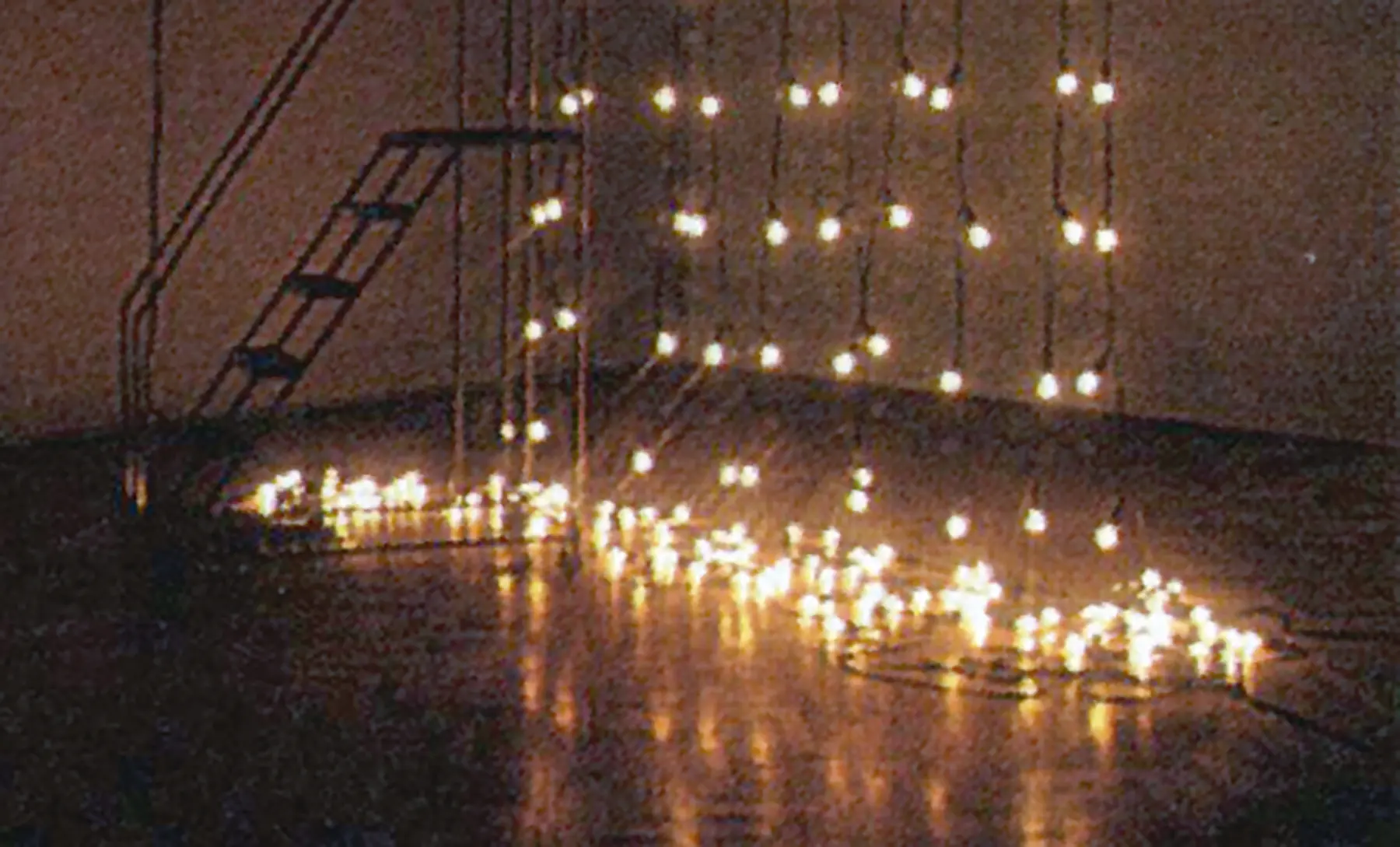
Unlike most exhibitions discussed in this magazine, About Place has only a slender connection to discourse in contemporary Latin American art. The exhibition, which is the latest installment of the Art Institute of Chicago's venerable Americas series, is the first since the series began in 1888 to include art from beyond the US borders. Of the sixteen artists represented, five are Latin American: Eugenio Dittborn, Félix González-Torres, Guillermo Kuitca, Jac Leirner, and Doris Salcedo. (There are also Canadians included: Rodney Graham, Barbara Steinman, and Jeff Wall).
While these artists are well-known in Latin American art circles and even in many contemporary art circles in the US, they are less familiar to the very mainstream audience that the Art Institute addresses. One of the difficulties of attemping to evaluate the exhibition is the fact that, from one point of view, the selection is bordering on monolithic (these are among the most sought- after Latin American artists within the current market), yet from another, namely that of the Art Institute, it is reformative (the more geographically accurate use of America, as noted above). Conversely, if you accept that ethnically-specific exhibitions «otherize» their participants, then this exhibition, with some intentional irony, "otherizes" the likes of Brice Marden, included here as simply another "American" rather than as a New Yorker blue chip. The exhibition also crosses the Art Institute's well-policed border between the art of the past and that of the present moment, in that this is the first contemporary exhibition mounted in its galleries for several years, and furthermore is one which contravenes the museum's material norms by including installations and even performance (also a first). The elegance of its presentation, along with a set of lucid explanatory texts (and, for those able to attend, a number of highly articulate and engaging curator's talks by Grynsztejn), made a strong argument for the acceptance of contemporary art, of several varieties, into the rigid hierarchy of the museum.
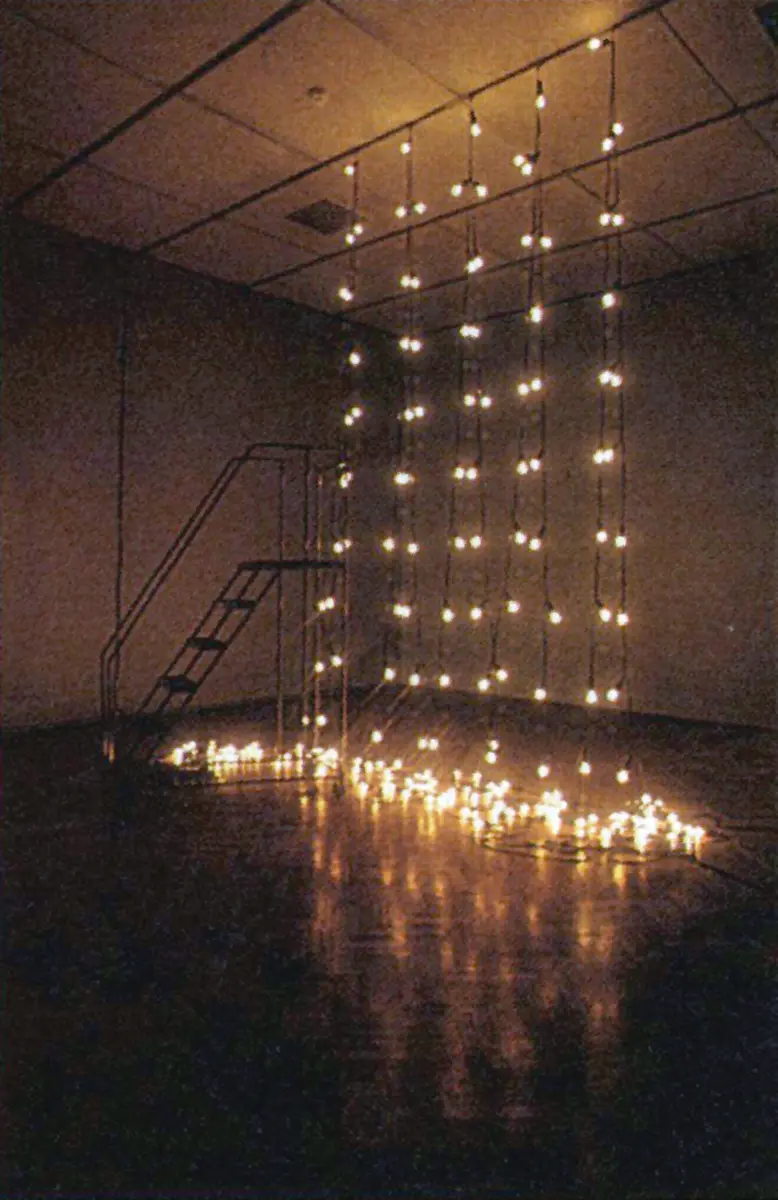
For all these reasons, About Place has quite different weight and importance on each side of the borders that divide north from south, contemporary from resale market, Art in America from Third Text.
Within the scope of the discussions of cultural pluralism which have become ubiquitous in the North, About Place enlarges the penetration of the outsider into mainstream discourse, accomplishing this in a way which is, depending on your perspective, either excessively polite or extremely strategic that is, the moderate Latinization of the Americas series is either pushing the borders of acceptability only as far as they will comfortably go in this particular moment, or it is asserting the necessity of abandoning segregationist criteria within as monovocal an institution as exists in the US.
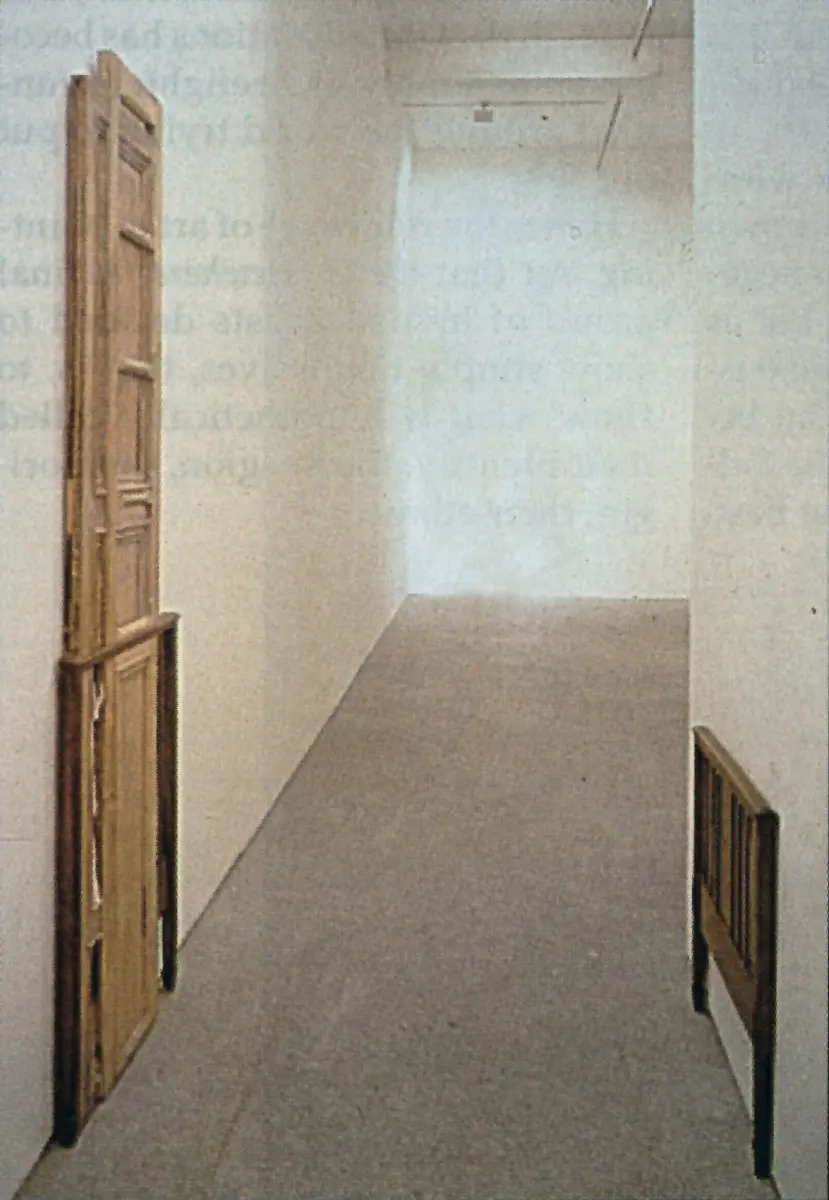
Probably, there is a little truth on both sides. The exhibition overall is marked by a certain restraint, both in the selection of works and in the density, pacing, and flow of its installation. It is meticulously well-considered. On the other hand, for the typical Art Institute visitor, drawn by the museum's legendary impressionist collection, About Place was likely to be surprised by the exhibition's refusal to presuppose a separation between North and Latin America, or to circumscribe either in distinction to the other.
While uncomfortably trapped within a welter of ethnic and art world politics, About Place has a voice that is still fascinating and, at times, very moving. The exhibition's thesis, a focus on place-ness as a way of coping with the proliferations and intersections of "identity" in a time of massive migration and technological surrogacy, is explored in a series of vertically linked scales and across related epistemological axes.
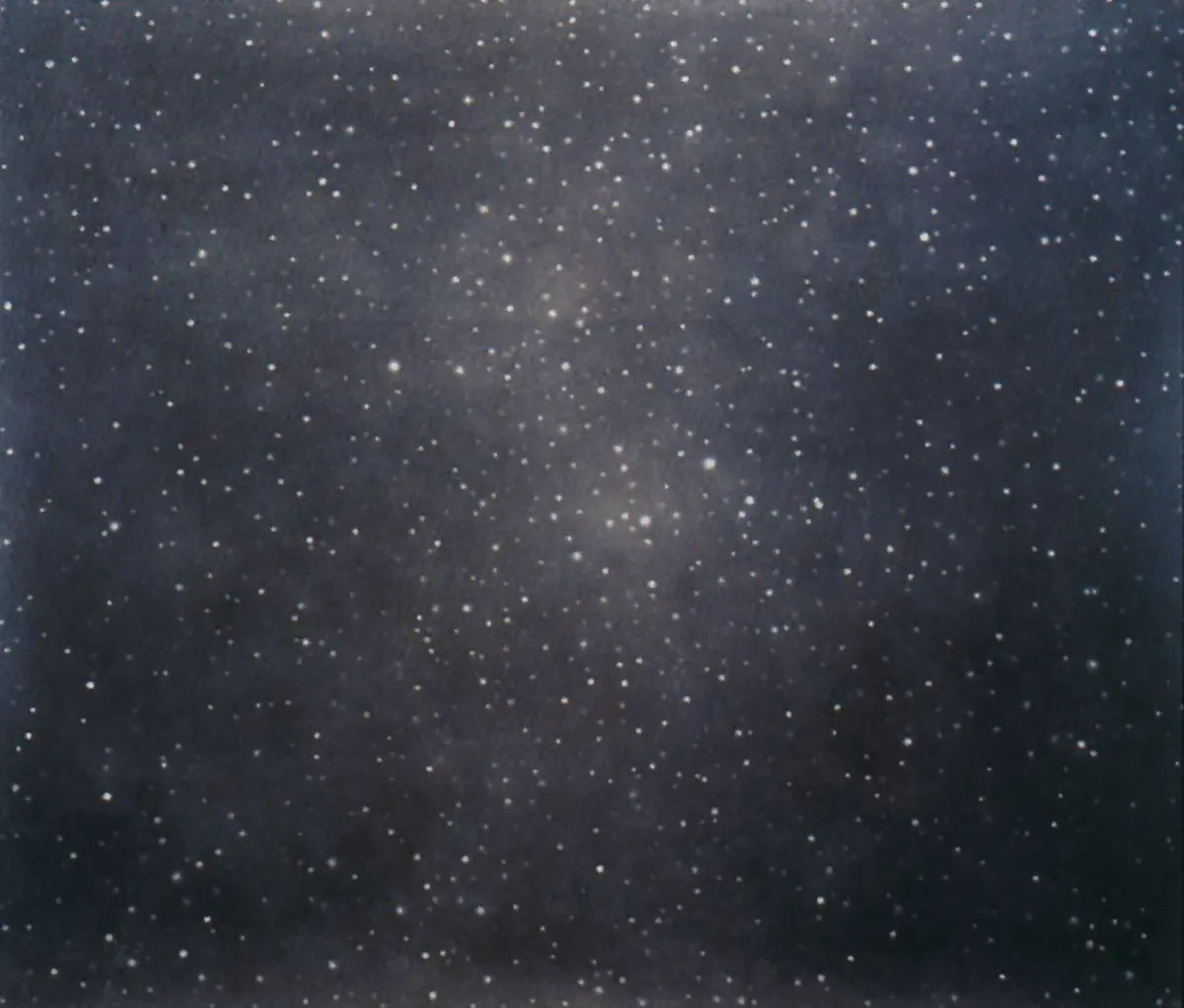
About Place opens with a kind of Overture, moving from Doris Salcedo's Atribiliarios, to the gorgeous intimacy of Vija Celmins's small paintings of macro and microcosmogonal points, to Rodney Graham's immense upside-down trees. The first "place" the exhibition visits, then, is a politically-determinate one, that of the ubiquity of violence in the Colombian landscape, with its attendant emotional impact. Celmins, next, with her vast panoramas painted on a very small scale, reintroduces a sense of the enormous context within which individual lives occur, while Graham's sepia-colored photographs at once insist on the materiality, and the explicitness, of reality, and also on the supremacy of doubt (the trees may be "real" but they are also upside down).
In some ways, it seemed that the strongest connective tissue between the works was in the material qualities of the works. Unexpected kinships seemed to emerge, for instance, between the handling of surfaces, and thereby in the tone of voice, in Marden's and Salcedo's work, and the physical sense of loss familiar in the work of González-Torres also seemed to echo through Ann Hamilton's grandiose, yet silent, installation. At times, the curatorial insistence on "place" becomes schematic, for example, with Dittborn's Air Mail paintings, with their literal travel from place to place, or Andrea Zittel's environments, which are compact, super-designed "places" for people to live in a crowded and messy world. The economics of place, which create gigantic chasms between locations that have nothing to do with geography and which are only indirectly parallel to ethnicity, are generally not explored; for the most part, About Place's places are simply contiguous.

The museological strategy of the show seemed to be one of establishing dialogue among the works, rather than the more usual assertion and defense of an argument. Expanded metaphorically, this might be useful- suggesting a dialogic, rather than episodic, conversation among audiences about the art they consider to be related to themselves. A postmodernism of connective threads rather than of distance. This may strike some as excessively utopian, tending to, as Monica Amor has pointed out elsewhere, efface difference in the name of inclusion.
This may be true, and for those who live daily with these issues, About Place will probably bring little new to the table.
Within the highly rhetorical and divisive climate of the US subaltern discourse, About Place makes its points with quiet insistence. The exhibition is a landmark of institutional savvy, installing this checklist in this museum; hopefully, it will establish a somewhat firmer ground within the museum from which curator Madeleine Grynsztejn will be able to work in the future.
RACHEL WEISS
Curator and critic based in Boston, and Director of the Arts Administration Program at Lesley College.