During the month of July, the Institute of Ibero-American Cooperation in Buenos Aires—which operates under the curatorial supervision of Laura Buccellato—presented a show of work by Claudia Fontes. The artist is currently on a scholarship from the Antorchas Foundation and attending the Barracas Workshop, a vocational training project for artists wanting to work in object art and installations.
Fontes (1964) belongs to the emerging nineties generation in Argentina, a group of artists whose aesthetics are based on a new subjectivity which incorporates certain postulates of conceptual art but without shunning other, more emotive aspects that bring visual discourse into a more private domain.
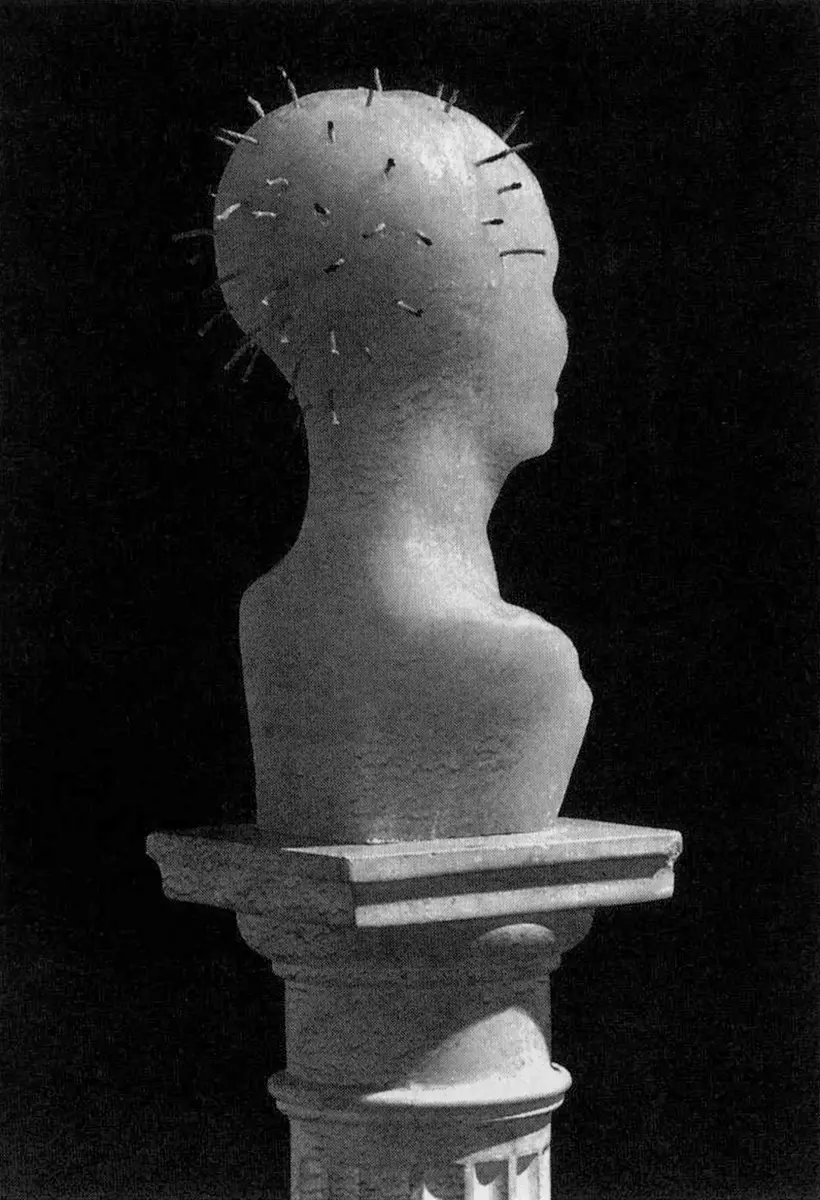
The entire exhibition was centered on the concept of the fatality of tragedy, the moment when, in a given situation, an irreversible critical event is about to occur, which will involve the continuation or suspension of human life. It is a moment in which we know what is going to happen, but which has not yet happened, and the action is suspended for a moment in a brief pause between two events. Fontes freezes this brief moment to create an indefinite wait. In Strange, as if it were, there is an ashen mask with a small immobile ventilator placed above it and a speaker which produces the sound of the device as if it were functioning. An acrylic dome both records and protects this moment prior to disintegration. In this climate of rarefied austerity, everything is just barely suggested. Solitude and the absence of a mistaken feeling, the fatality of an ill-fated encounter, which will lead to disaster. In the case of the work which refers to the literary drama of Romeo and Juliet, there is a marble pedestal with the inscription of the name of the protagonist and a pillow molded in soap, on which a drop of water is falling just at the place where the head has left its mark. The spectator witnesses the process of transformation occurring in the work, its gradual disintegration through contact between the soap and the water. In this way, Fontes carries out a conceptually-based analytical operation which is structured around the idea of inter-textuality. The visual text comes from other texts, in this case, a literary iconographical source, which builds up a reticular system of meanings that are updated through the use of metaphor in the process of depicting the image. The mark, the pillow, and the little pool of water are all metaphorical references to Juliet Capulet sleeping, whom her lover believes to be dead. The idea of the pedestal holding the portrait of a person is repeated in Happy, Happy in your day, where the artist, with some irony, replaces the traditional marble of the bust with wax, with little cotton wicks, which can be lit and put out as on a birthday cake. The show was accompanied by the sound of persons coughing, produced by speakers placed in pieces of women’s clothing, which moved under the effect of an electro-mechanical device, the repeated sounds and the sinuous movement of the objects creating a sensation of anxiety felt at the anguished shouts of a woman drowning. Finally, the strange beauty of a small wooden violin case sculpted by the artist contrasted with the aseptic presence of a fluorescent tube, which illuminated it in a kind of funeral ritual. Fontes uses her work to create a performance-like attitude, a reflection on the manual skills of the sculptor who, as the artist says, "is in contact with the material when many decisions are made."
LAURA BATKINS