I. The 45th edition of the Venice Biennial marked the 100th anniversary of its creation, and the 1995 edition reviewed the century which has elapsed since its birth. The last edition was a well-intentioned, but chaotic and flawed attempt by Achille Bonito Oliva, who tried to eliminate, in post-modernistic terms, the idea of national frontiers. One of the legacies of this attempt seems to be the process of restoring the campanile in the San Marco Square, which, with its upper scaffolding, became a kind of Chinese pagoda. The other was the appointment, for the first time in the history of the Biennial, of a non-Italian director, Jean Clair, the French director of the Picasso Museum, who received the honors and the respective criticism.
Jean Clair eliminated the "Aperto" section, the show which was "immune" to governmental dictates and dedicated to young artists (and the market), and which was created some fifteen years ago by his predecessor. He also said that the abstract art of this century did not have the importance usually attributed to it, and therefore gave the Biennial a figurative tendency, or at least the show which he organized in celebration of its birthday. With both gestures of undeniable courage, Clair became the obvious target of attacks not only by Oliva but by the abstract artists themselves, under the leadership of the painter Piero Dorazio. In addition to more or less open conflict with the intendant of Venice concerning the renovation works on the "Italia" pavilion (which complicated the installation of the exhibition), the new director was assured full and frequent coverage in the press.
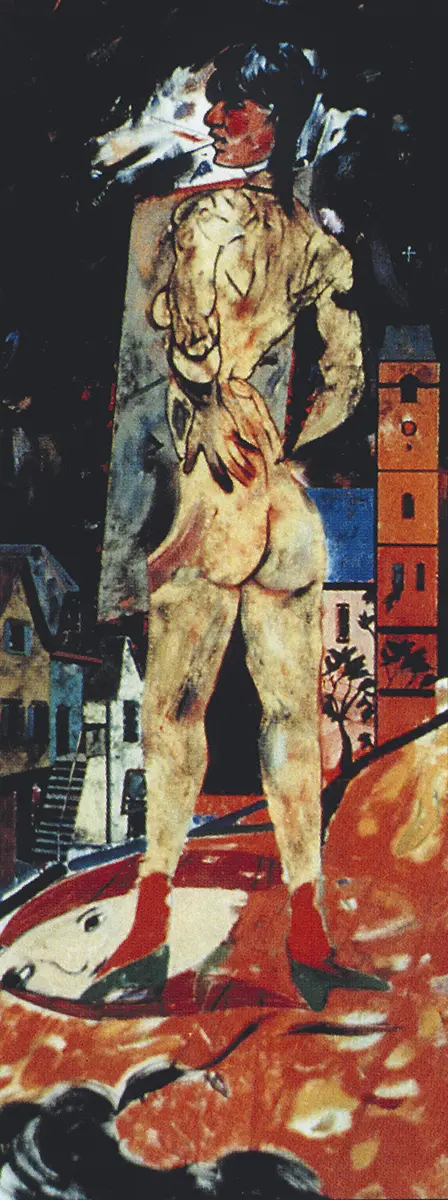
Once the storms had passed and with everything in place, the Biennial appeared, as always, an ambitious and unsatisfactory project. The usual observations were made, as they are every two years: that this was the worst edition in the history of the Biennial and that it should be the last. This doesn’t mean it won’t take place again, and that everyone (or at least the journalists and those in the know) won’t flock to the event once again. To a large extent, the blame in each edition is attributed to countries that (in this edition in particular) are really poorly represented. As to any evaluation of Clair’s work, the matter is quite a complex one. After what was unanimously considered a disastrous "Aperto" in 1993, its abolition (or probably only its temporary suspension) does not appear to be a major tragedy. But where Clair did clearly show his talents and limitations was in his exhibition entitled Identity and Alterity: The Figure of the Body 1895- 1995. A serious scholar, Clair here used his experience from a show which he mounted in Paris two years ago, in which he introduced an anthropological approach to a view of art as a history of the intellect.1
With 900 works by 300 artists, the exhibition was held in and throughout three buildings: the Palazzo Grassi, the Palazzo Correr, and part of the Italia pavilion. The Palazzo Grassi is a particularly significant venue, since until now it has organized its own superspectacular shows in conjunction with the Biennial, but never subject to it. The Grassi show was self-contained and the best of the three parts.
Clair’s exhibition was not intended to be a history of the Biennial, even if many of the classic works of the century were presented there. On the other hand, it was an attempt to review one hundred years of figurative art by presenting the human figure not only as a metaphorical recourse of reality, but as an integral recipient of culture. The Westernism implicit in the proposal is not too debatable, since the Biennial itself has never tried to do anything other than study and determine the Western aesthetic canon. The very ambiguous and not fully explicit use of the word "alterity" at a time when words such as "otherness" are laden with political implications was perhaps less fortunate. In a report in the Biennale News of May 1995, Clair limited himself to speaking of the importance "of the relationship between self and others" in explaining the term. At all events, the general idea, idiosyncratic but interesting, was a good excuse for setting the development of the Biennial within a wider cultural context than that provided by the different ways of covering a canvas with the brush.
Appropriately, the exhibition began with a study for The Supreme Agreement by Giacomo Grosso. The complete work (destroyed in a fire) showed five naked girls around a coffin, which presumably contained the dead body of Nietzsche. This picture was the first scandal of the first Biennial and won the "people’s prize" awarded by the visiting public and earned the condemnation of the man who was subsequently to become Pope Pius X. Both reactions were the result of what was then perceived as unacceptable suggestions of sex and necrophilia, subjects which Clair explores throughout his show. The different ways of measuring and attacking the human body, images of the morgue, and various kinds of orifices reappeared throughout the many and not always very coherent sections of the exhibition, giving them a certain kind of continuity. But more seriously, Clair also pointed out that in the same year as the first edition, radiography was also invented, which opened up not only the visual history of the representation of the human body but also different definitions of what the human body is in perceptual terms. The final theme of this exhibition, curated by Clair himself (along with Catherine Pichler) at the Palazzo Correr, predictably bore the title of The Real and Virtual Body.2
The curatorial structure proposed by Clair was an attempt to demystify the influence of the avant-garde movements as major ruptures ("The Incoherence of the Avant-garde Movements" was the title of the third section, covering the period 1905-1915) and to minimize the importance of formalism. There were a few purely abstract works, such as the Black Triptych by Rauschenberg (1951) and an Acromo by Piero Manzoni (1958), which appeared decontextualized (in the section on "The eclipse of the face"). Others, as in the case of Miró and Fontana, were biomorphic, or as in the case of Malevich, mystical. Mondrian was represented, but with a three-dimensional self-portrait.
This reluctance to give space to abstract art in this kind of exhibition was the most problematic part of the project. Not necessarily because of the philosophy governing Clair’s decisions, but certainly because of the schematic simplification to which such an approach leads in the case of this century of hegemonic art. Implicitly and absurdly, it negates the possibility of a vacuous formalism in the representation of the human body and, even worse, the possibility of a corporeal relationship with abstraction, particularly in that kind of abstraction related to architecture or that left by the body. When it came to works by Pollock, one was a figurative self-portrait from 1933, another—abstract—was Eyes in the Heat from 1946 (which indeed is reminiscent of eyes) and the third was one of his final works in which he made a regrettable dripping shape in the form of a face (Number 7, from 1952). Here, Clair was clearly editorializing on aesthetic problems, choosing and grouping objects together on the basis of a superficial content that fitted into his schema.
This tendentious approach was masked by an apparently objective presentation. For example, Clair clearly rejected the idea of "progress" and sympathized with Baudelaire, whom he quoted as opposing the steam engine, electricity, and socialism, concluding that it is not history that makes a genius, but a genius who makes history.3 But the show did to some extent establish a link between artistic evolution and technical change in the century under study. Although there was no explicit acceptance of the idea of technological progress, the jump forward indicates the way. It runs from a bust of Descartes, which could be dismantled, by Paul Richer from 1913 (the face could be taken away to reveal the skull, part of which in turn could be removed to reveal the brain), placed at the beginning of the exhibition, to the final part which culminated in a CD ROM (allowing the brain to be cut slice by slice on the computer screen), all of which implies the existence of such progress. The exhibition did not venture into the possibility that there was no aesthetic leap accompanying the technological leap. The lack of political progress appeared briefly (and purely as visual data) in the section on Totalitarian Arts and Degenerate Art, although this was not editorialized either. In this way, the show gave the impression, valid as a proposal, of presenting a series of examples which "objectively" described the century, but without taking up any curatorial position or making any value judgements.
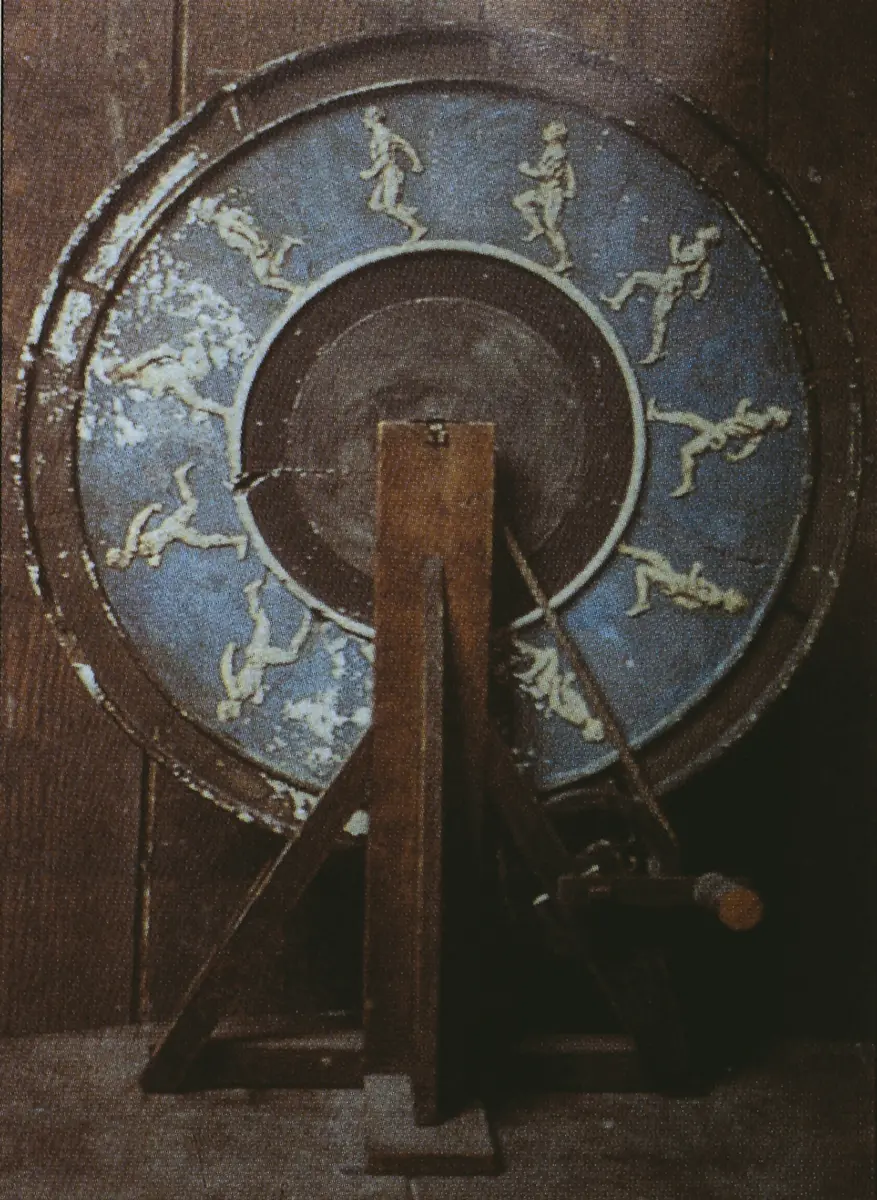
Clair gave his exhibition an anthropological character. But the anthropology sometimes appeared as a method, and sometimes as an ideology. When it was a method, the show reached its high point in terms of quality and interest. The artistic events were illuminated with extra-artistic expressions, and the art became collectivized as a cultural manifestation. The entire section on "The Age of Positivism 1895-1905" was brilliant and offered the visitor two sub-sections: "From Callimetry to Anthrometry and The Search for the Invisible." The former included Rodin, Duchamp, Degas, and others, along with Bertillon, Richer, and Lombroso. The second sub-section contained Kandinsky, Kupka, Boccioni, once again Duchamp, and kinetic photographs, spiritualists, and radiographies. Spiritualism was related to the definition of the artist as a "medium." The great revelations of the show were not the artworks but the work by Bertillon and Richer. Bertillon, through his obsession with the precise identification of the individual, which resulted in the frontal and profile photographs used by the police, but also—something which is perhaps more important philosophically speaking—with his systematic attempt to eliminate variables to achieve some kind of "essence." And Richer, with his search for aesthetic canons for the human figure, a task which resulted in a series of supremely ingenious works such as the above-mentioned bust of Descartes and a wheel with bas-reliefs showing the positions of a running man, which gain their own momentum as the piece is rotated. Thanks to Clair’s methodology, the exhibition was full of little eccentric and picturesque jewels.
When anthropology becomes ideology, Clair revealed his artistic taste—which is relatively conservative, as could be seen even more clearly in the national selection of Italy. Clair’s taste is not open to criticism, even though it is strange that he focused so strongly on Schlemmer, leaving Klee or Le Corbusier to one side, or that he placed much emphasis on David Hockney, or devoted an entire room to Clemente, both in this show and in the national selection. But to mask this use of ideology within a framework that seemed methodological is indeed open to criticism. The disappearance of formalism in this "history" or interpretation by Clair is a way of avoiding the discussion of formalism in humanistic or anti-humanistic terms. It is to presume that figuration cannot be formalist. And although in fact the North American Pearlstein was not represented, and there was only one work by Léger, Jawlensky, the Neue Sachlichkeit, and the "cold" Italian realists of the 1920s, such as Casorati and Sironi, were all very well represented. To get into Clair’s show, therefore, the work had to refer thematically to the human body. In this sense, Clair’s attitude was as reductionist as, in its time, Clement Greenberg’s, whose abstractionist formalism Clair attacks.
And so Clair’s exhibition, despite all its fascinating, entertaining, and enlightening information, was also reactionary, not only because of the absence of certain political figurations (Heartfield, or Gerhard Richter, for example), but because of the emphases which it contained. In his catalogue introduction, Clair asks, "What would have happened if instead of Cezanne, the origin of modern art had begun with Meissonier, Klinger, or De Chirico? Or if the twentieth century had been, more than any other, the century of the self-portrait?"4 Clair justifies his concerns and lack of confidence in formalism with the fact that we are living in a century clouded by disease, death, and sex. The idea that there is a need to re-center art on the human being and to relativize the formalism of recent decades is worthy of support. But it is the "formalism" with which Clair implements his idea that seems to weaken his position.
With all its ambivalence, the exhibition did offer a good number of works that are rarely or never seen and which, irrespective of this discussion, are worth seeing. Side by side, there was a photograph of Boccioni lo-Noi (1907-1910) and Duchamp (Marcel Duchamp autour d’une table, 1917) in which both artists photographed themselves five times, thus forming a circle of persons. A series of self-portraits from 1895 to 1945, almost a kind of mini-exhibition in themselves, reintroduced Helen Schjerfbeck (who had a retrospective at the 1956 Biennial), strangely, a little-known Finnish painter. Fautrier was represented with a self-portrait from 1916 and by several of his "hostages" (Rehen) from the 1940s. Andrés Serrano, with his aestheticizing photographs of morgues, was forced to compete with the more frightening visions of Jeffrey Silverthorne, and both were set against a wax sculpture of an Old Woman Who Died Crippled with Rheumatism by Paul Richer (1895).
Towards the end, the exhibition lost some of its focus, with images accumulating in purely figurative terms, without any discourse. Clair’s taste seemed to be more solid as regards the past than the present, and seemed to interfere with the exhibition when the works were not rooted in history. The section on The Return of the Body (a body which had never officially left; the previous section, entitled The Post-War Period, included Bacon and Giacometti) had a plethora of inconsequential works by Baselitz, Kitaj, and Hockney. The last two artists shared a room with Lucian Freud, who eats them alive. Even so, Kitaj, with his four pictures in this show, inexplicably won the Golden Lion award for painting. The jury5 cited "the coherence of a work of investigation which rediscovers, in modern art, the roots of European painting and has led to a new opening towards the collective imagination." The other Golden Lion, for sculpture, went equally inexplicably to Gary Hill, a North American video artist. The jury’s language was equally oracular: "for having felicitously proposed, with means of expression which reflect the new technologies, a personal, refined, and radically 'ingenuous' kind of investigation." Hill’s work here was frankly mediocre, especially when compared with some excellent pieces at his current retrospective at the SoHo Guggenheim in New York, and with the work of his compatriot Bill Viola in the United States pavilion. But the prizes awarded to Kitaj and Hill were undoubtedly prizes for the exhibition mounted by Clair. The question remains whether they were for the show itself or for its ideology.
II. The Biennial prizes are always a symptom of the political movements underlying the institution. They can generally be decoded in terms of chauvinism and the power structure. This time, the maneuvering appeared to be more subtle, or at least, more incomprehensible, except for some recognition of the Third World. The latter included Egypt, Korea, and Uruguay. Egypt received the prize for the best pavilion (Golden Lion awarded to a country), with a labyrinth created with work by Shafik, Ahmed, and El-Magdoub. Although the labyrinth was not especially impressive, the operation involving three artists with their own individual languages who tried to create a unified whole had its merits. Jheon Soo-Cheon, a Korean artist who studied in Japan and the United States, did indeed bring one of the most interesting installations to the Biennial: a floor of glass on which the visitor could walk in between small votive sculptures in terracotta, above a visible accumulation which seemed to oscillate between a pile of refuse and a collection of memories. As the jury noted in its irrefutable citation, the prize was a recognition of a work that "proposed a complex and ambitious theme with vivacity, imagination, and narrative maturity."
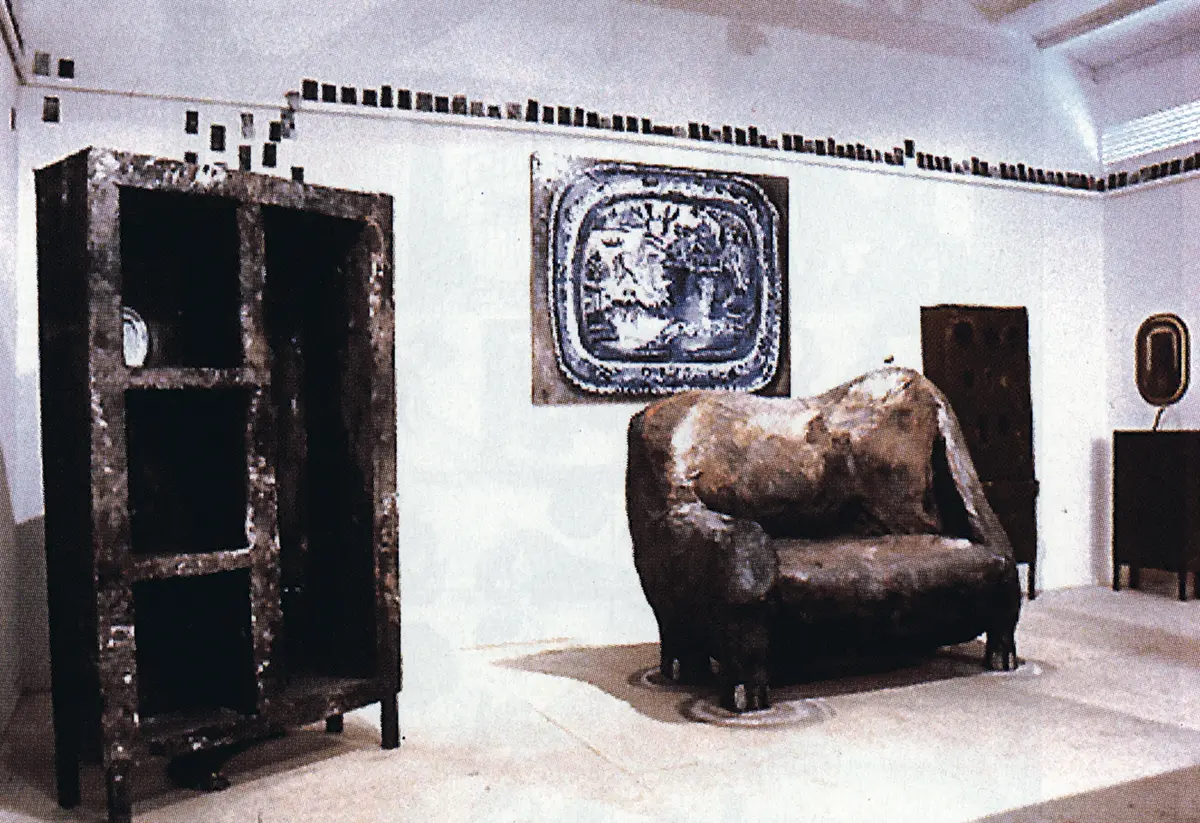
Ignacio Iturria, representing Uruguay, won the Fondazione Cassa di Risparmio acquisition prize, the first prize to go to Latin America since that of Julio Leparc in 1966. Iturria is an excellent painter, with an easy and at times demagogic wit, but his exhibit seemed to oscillate between being an excessively overstuffed show and an installation lacking in design. Works which would have acquired more life if there had been more space, such as Elephant Sofa, My Trip to Willow, and many of the furniture pieces, whether painted or constructed, cancelled one another out by competing for space in this apparent desire to show absolutely everything.
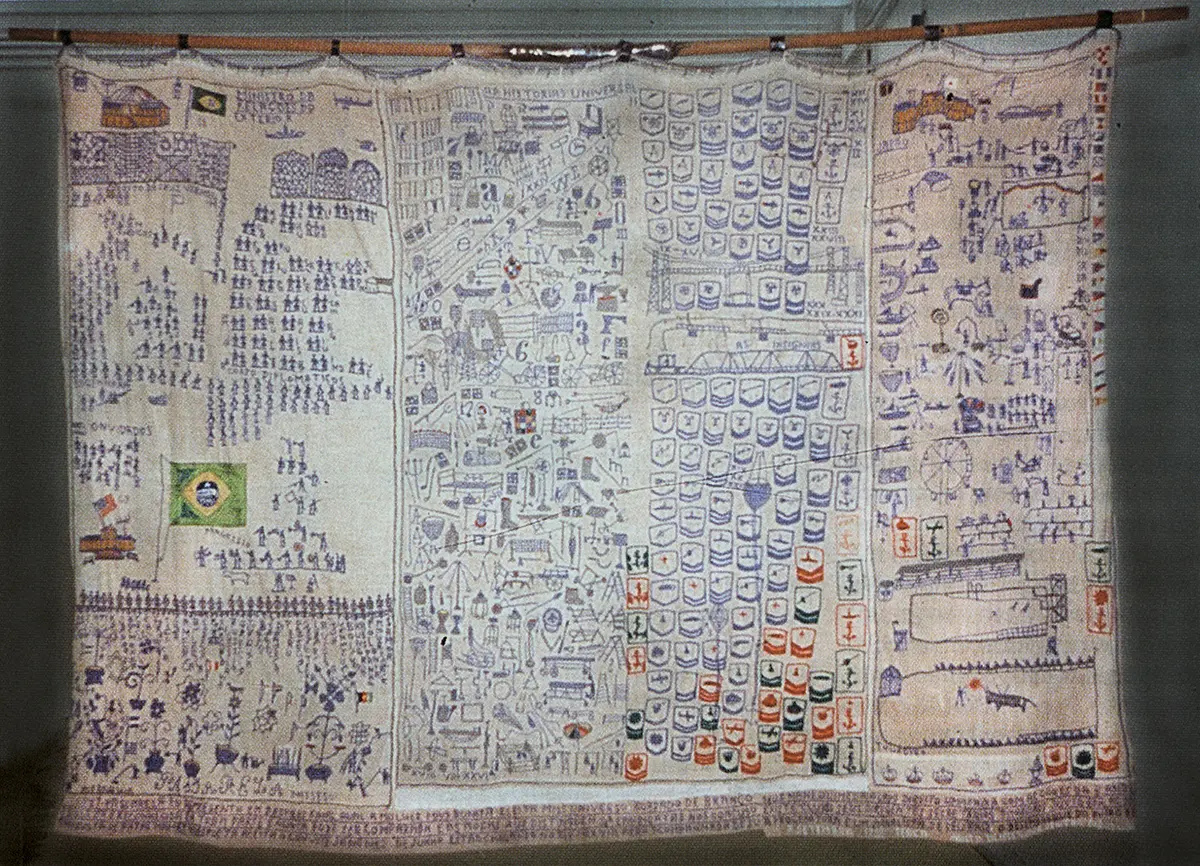
But the Biennial prizes have never reflected the real profile of the show.6 Throughout all the venues in Venice, the most interesting general exhibition was undeniably that of Jean Clair at the Palazzo Grassi. Of the national exhibits, special mention must be made to that of Taiwan, making its debut in the Biennial, and especially the work of Hou-Chun-Ming, an engraver in wood (and artist in other media) on the scale of Munakata and Frasconi. At the individual level, the revelation of this Biennial was Arturo Bispo do Rosario (1911-1989). A featherweight champion of Latin America and a seafarer, Bispo ended up institutionalized for schizophrenia. After preparing his bed with embroidered lace and making it a vehicle in which he would travel to God, Bispo slept on the floor until his death from arteriosclerosis at the age of 78.7 His works, which he was never interested in showing, are an example of spontaneous art related to conceptual currents rather than the traditional expressionist type characteristic of therapy works. A number of "sophisticated" pieces on show at the Biennial as a presence or point of reference were also created by Bispo, without the presumptions of the conscious art of history. Thus Duchamp’s bicycle reappeared as a wheel of fortune, the paving stones of Ansel- mo become (or are preceded by, for the works are not dated) a little wooden vehicle carrying three of them and with the word "parallelepiped" written on the side, Boetti fabrics are reflected in mantles and flags, the bookcase which the super-sophisticated artist from Taiwan, Wu Mali, presented in paper with glass volumes with their respective titles, echoes the bottles of Bispo, also full, and carefully tied to their shelves, and the obsessive numbers of Opalka in the Polish pavilion were repeated in the embroidery work.
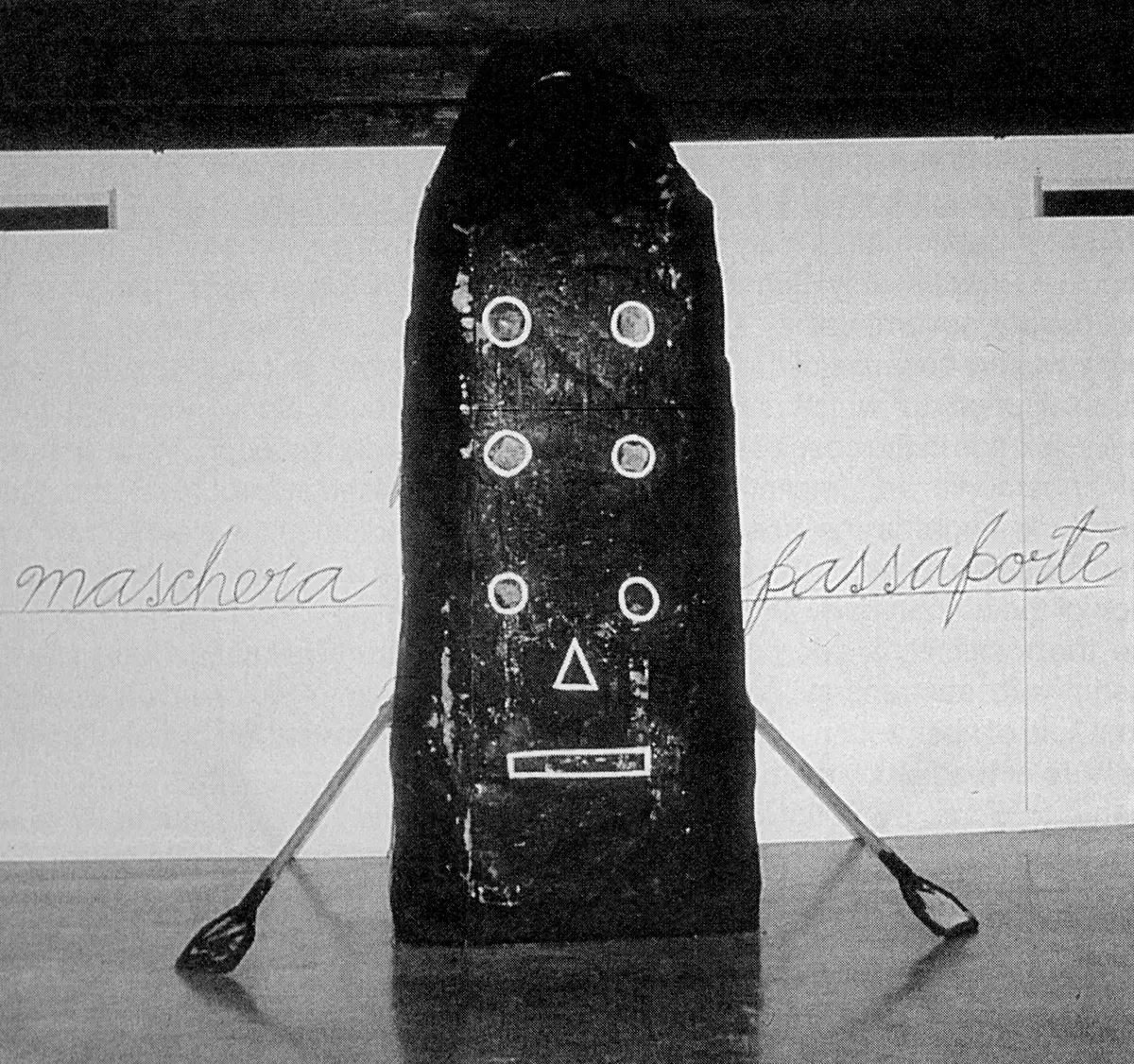
The next step, at this level of quality, was a show not sponsored by the Biennial, but which was possibly indicative of the organizational future of the event - the privatization option. In the Zitelle, a couple of private galleries rented a large space to present their own shows. The most important of these (in the sense that it competed in qualitative terms with the Biennial) was that presented by the Quintana Gallery from Bogota. The show consisted of three large rooms filled respectively with work by the Uruguayan Carlos Capelán, the Cuban José Bedia, and the Brazilian Saint Clair Cemín. Although none of the rooms was totally satisfactory, all had a spark and a consistency which were almost absent in the rest of the Biennial. Capelán, who did not manage to dominate the enormous space with his installation, created zones that, thanks to the shadows, became independent and functioned as isolated pieces, which substituted the work as a whole. The unexpected use of towel racks and bathroom tables introduced a new dimension into his work, where some of the fragments repeated the powerful effect achieved by his installation at the last Havana Biennial. Bedia continued to explore the theme of the boatpeople, culminating in a vessel placed vertically, which became an Abakua mask. The image was so powerful that it overshadowed his other pieces. These works, in Bedia’s typical style and quality, are now running the risk of becoming too aestheticized; furthermore, the accompanying press cuttings seemed to be an unnecessary kind of preaching. Cemín presented three works, including a memorable Monument to Small Vices (1994), a sculpture which at first sight seemed to be a heavy piece of arbitrary constructivism, but which on closer inspection became a fragile pile of forms that managed to sustain itself as if by a miracle.
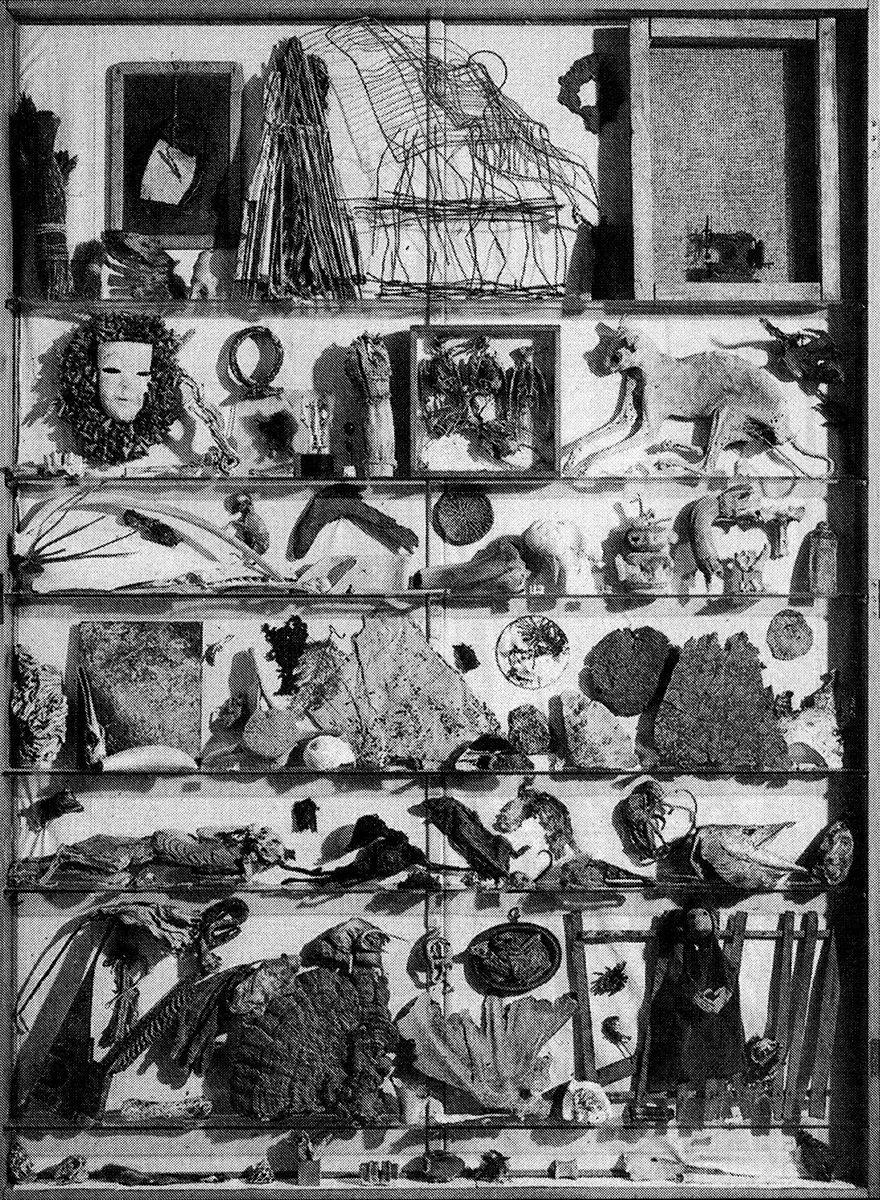
Denmark showed work by John Olsen, whom it introduced as a hunter and a collector in singular harmony with the natural environment. The harmony bit seemed to be a challenge to the protectors of animal rights, but the reference to hunter and collector was a serious one. The best pieces were the large showcases with found objects, some arbitrary, some mummified or even embalmed, but always suggestive and evocative of large-scale sculpted bone structures.

Israel let Joshua Neustein fill its pavilion with books, an attempt to build a library in "honor" of David Koresh, the head of the religious sect whose members and buildings were burned in Waco, Texas. Neustein has the interesting theory that a library should represent the ideas of both good and evil. He therefore decided to create a situation in which the ideas of Koresh do not slowly usurp those which are normally to be found in a library, but complement them in an attempt to "eliminate the memory," a memory which, in the end, is shameful for humanity as a whole. The theory, which is rather reminiscent of Borges, is stronger than the finished work, which was overladen with symbols and sub-symbols that were too much for the visitor’s patience.
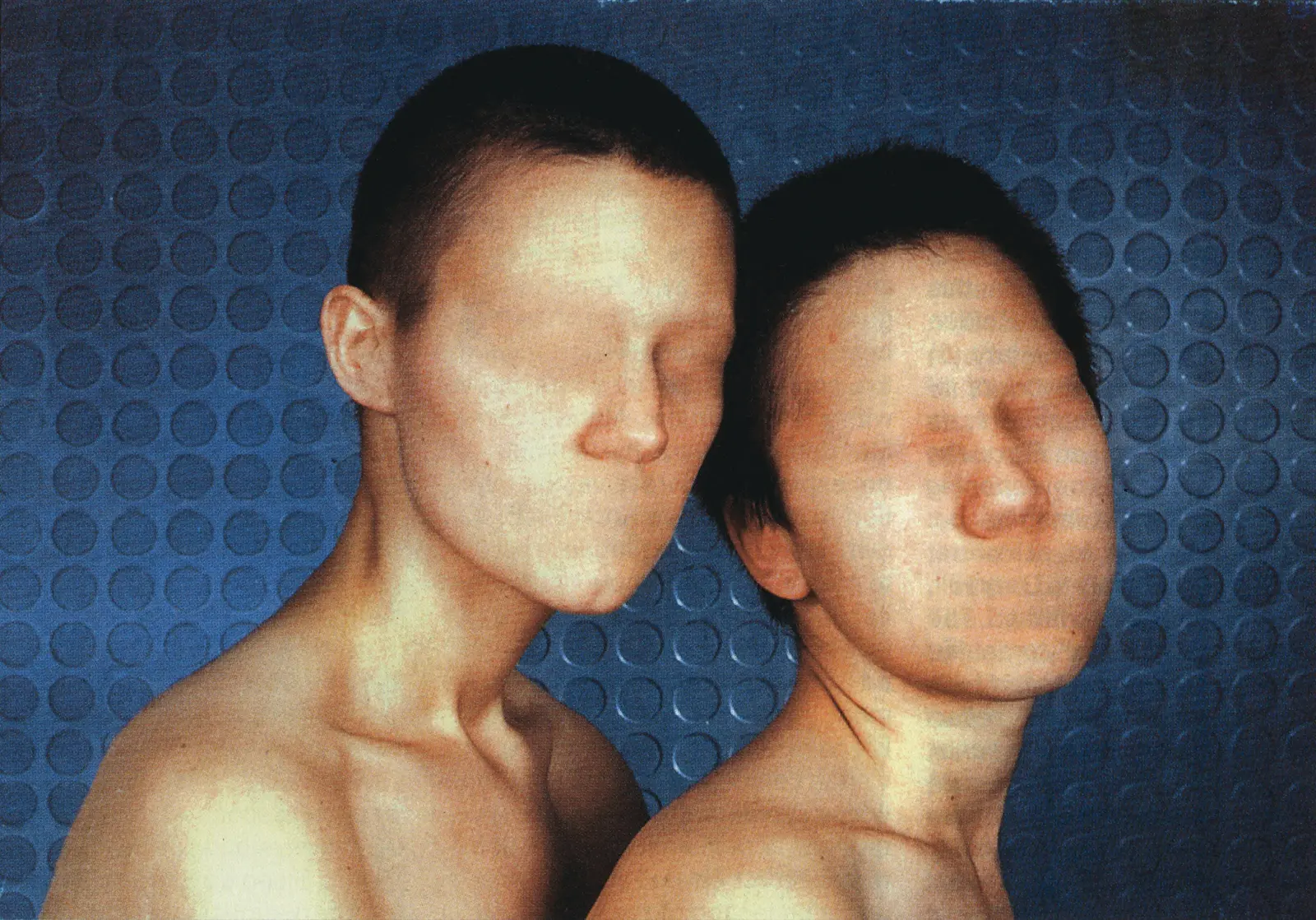
Venezuela presented work by two interesting photographers. Paolo Gasparini showed two of the murals, which had already been seen at the last Havana Biennial, this time along with a third, which completed The Sacrified Passion. The works combine personal and other photographs to create a collective epic image, which in one case concerns the body of Che Guevara, and in another the body of Tina Modotti, and finally, the Latin American "face." In this way, Gasparini took the opposite approach to that of Neustein, affirming memory as a cultural need. Sammy Cucher, in the same pavilion, showed a series of works done with Anthony Aziz, entitled Dystopia, consisting of digitalized photographs in which the identifying signs of the face are removed and replaced by skin. The faces are literally defaced, convincing and disturbing monstrosities which would have been perfectly at home in the Jean Clair show.
This time, the Italian exhibit was not outstanding. Most of the artists not only seemed to have inherited the worst aspects of the century, but they did so badly and with too much sentimentality. Giuliano Vangui, a sculptor also being honored with a major retrospective in the Forte Belvedere in Florence, reached the most complex peaks of sculptural vulgarity in his "modernistic" stylizations. Lorenzo Bonechi tends towards something similar in his painting, which reflects the worst of Delvaux’s figures and places them in a religious-enhancing neo-Gothic context. The only exception was Angelo Savelli, who died a few months ago, whose white abstract-mystical work did at least symbolize the incorruptible honesty of an artist whose death was an irreparable loss for Italy.
The United States presented five works by the video artist Bill Viola, one of the artists who opened up video work from the limitations imposed by the screen and made it independent of filmmaking. The works presented here, except for the last one just before the exit, were very effect-oriented. The last work, an act of greetings between three women, was filmed normally and then slowed down by fifteen times. The result, projected on an enormous, very high-resolution screen, was one of the most mysterious and moving experiences at this edition. Each gesture was amplified in time in a way that made it necessary to break down emotions into small units. Yet they managed to remain whole, even when they were mere minimal fragments. The last brush of a finger as the hands separated contained all the tenderness of the initial grasping hand. The effect appeared to be heightened by the fluttering of their clothes, where a sufficiently brisk breeze managed to keep blowing, even when slowed down.
The Polish pavilion presented pictures by Roman Opalka. In 1965, Opal-ka decided, whether for good or for bad, to paint numbers. He began with the number I and has now reached 5 million. Each picture has around twenty thousand numbers, carefully painted with a fine brush in acrylic. The richness of each picture is the result of variations in the brush strokes. The general tone varies from picture to picture, reflecting the whitening of Opalka’s skin, documented in photographs placed alongside each work. The exhibition was accompanied by five recorded tapes with the voice of the painter dictating each number as he paints them. Thirty years on, Opalka continues painting them, the accounts of his life, although he says that he will finish when he reaches 7777777, when the pictures will be totally white. Which is a contradiction of principles—the general title of the cycle is 1-x. What is interesting about his work, apart from the undeniable beauty of the pictures, is that it establishes a frontier in which the art of madness comes up against the sophistication of the history of art. On the one hand, Opalka is investigating the possible documentation of time, which runs parallel to the passing of his life. The parallels come together by inverting his life in the documentation, and the time passed becomes one. On the other hand, Opalka epitomizes the compulsive neurosis of the artist who becomes the supreme priest of a religion invented for that priesthood, and in which each movement is ritualized until the total disappearance of personality (except for what remains of the initial decision). Bispo and Opalka should have been exhibited side by side to drive home the messages more clearly.
For its part, the Austrian pavilion placed the spectator in the middle of a virtual Möbius strip and presented images "stolen" from commercial television (via satellite) on the intersections of the strip with the cupula in which the work was placed. It was the most advanced and interesting technological work at the show.
Finally, there was the unfailing Italo-Latin American Institute, which is now officially the venue for countries that do not have their own pavilion. The result was lamentable, not because of the quality of the works presented, but the circumstances. When it was part of the Italia pavilion, the group was segregated into a basement. This time, because of the celebration logistics, the group was packed off to a church behind St. Mark’s Square. The artists, represented on average by two works each, were here above all for quota reasons. Even their placement in the general catalogue symbolized their hybrid nature. The list was no longer alphabetical, as in the national pavilions, and the group appeared as a separate show. The only exception this time was Argentina, which managed to maneuver itself into appearing on the first alphabetical page, as if it had its own exhibition, although it then became clear it was another one of the other "poor cousins." Argentina, Colombia, Costa Rica, Cuba, Ecuador, El Salvador, Mexico, Panama, Paraguay, and Peru—half a continent. The most satisfactory work in the group was that by the Colombian artist Elías Heim, Inter-Museal Hybrid Flora, a series of mechanical flowers with inflating and deflating pillow-petals: its theory concerns artistic revitalization through the grafting of tissue taken from the hegemonic museums onto the wounds of the peripheral museums. Air conditioning filters were taken from the Düsseldorf Museum and grafted into the ducts at the La Tertulia Museum in Cali. Luigi Stornaiolo, from Ecuador, was represented by two large-format pictures which together formed one work: Prestigious Ball, which offered a vision of the ball from above, as if taken with a concave photographic lens, which was very effective. Half anecdotal comic strip, half picture of customs, the work suggested a kind of George Grosz almanac which would seem to be full of promise, provided that excessively literary images are avoided.
This year, the Italian pavilion presented a work by Christian Boltanski on its facade. From a distance, it appeared to be a gray tone applied around the entrance and the building’s permanent murals. Closer up, it became a list of all the artists who have participated. In the context of the monuments dedicated to those who have been killed in wars and holocausts, which in recent decades have led to a telephone book kind of aesthetics, Boltansky’s work had a definitively funereal and final character. But as always, there will be another Biennial, although we cannot predict what will happen in the next edition (when it will be 102 years old). The biennial exercise, with all the frustrations and war of words which it generates, remains an interesting event, and one which, in the final analysis, is like going to a birthday party of a relative we do not like very much, but we go all the same, because all the family goes, even though we do not like the family very much either. In the end, we go out of a certain sense of respect and an almost unhealthy curiosity. Except that birthdays are every year, whereas this one comes around only every two years.
NOTES
1. The Soul in the Body: Art and Science 1793-1993, Grand Palais.
2. The last part of the show, entitled Traces of the Body and the Mind, was organized by Adalgisa Luigi.
3. La Presenza Francesa a la XLVI Biennale di Venezia, Ministry of Foreign Affairs, 1995, pp.7-8.
4. Identity and Alterity. Figures of the Body, 1895-1995, Marsilio, Venice, 1995.
5. Tomás Llorens (Spain), Carlo Arturo Quintavalle (Italy), Wenzel Jacob (Germany), and Shujl Takashina (Japan).
6. The prizes were as follows: Golden Lion for painting: Ronald B. Kitaj (United States); Golden Lion for sculpture: Gary Hill (United States); Gold Lion for countries: Egypt; Dosmll Prize: Kathy Prendergast (Ireland). The mentions of honor went to: Nunzio (Italy), Hiroshi Senju (Japan), Jheon Soo-Cheon (Korea), and Richard Kriesche (Austria); Fondazione Cassa di Riparmio Acquisition Prize: Ignacio Iturria (Uruguay).
7. Nelson Aguilar, Brasil em Venezia, São Paulo Biennial Foundation, 1995.
LUIS CAMNITZER
Uruguayan artist. Professor In the Department of Visual Arts of New York State University, College at Old Westbury.