
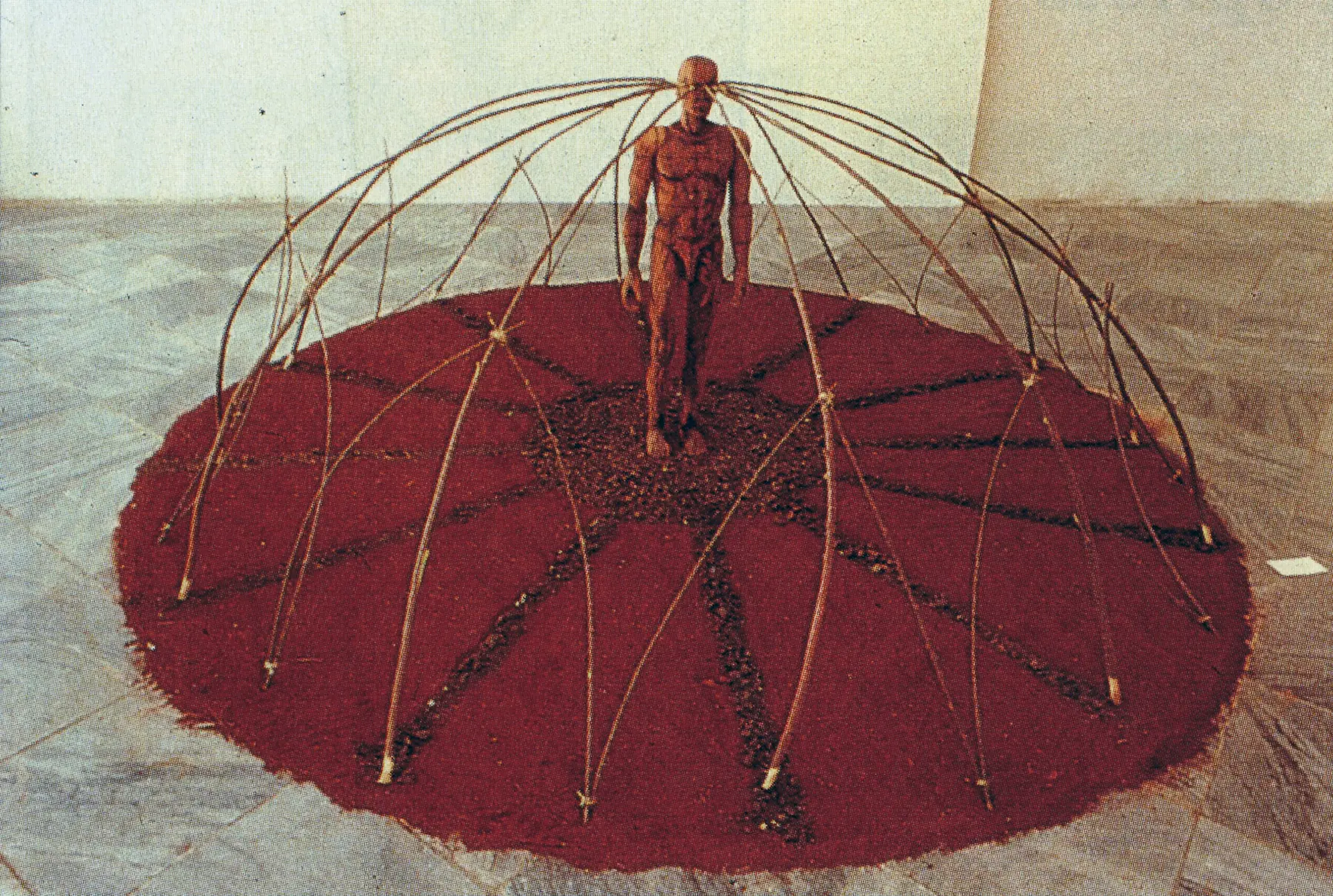
From late March to early May 1995, Havana witnessed one of the most spectacular manifestations of the vibrancy and strength of Cuba’s current art scene. As has been true historically, during times of great strife, the arts have tended to flourish. The wide spectrum of social and economic difficulties that Cuba is currently experiencing is plainly visible to every visitor to Havana. Yet it is equally true that this still exquisitely beautiful capital city is the focus of one of Cuba’s periodic artistic renaissances which have occurred at various times in this century, beginning with the first generation of vanguardistas in the 1920s (Víctor Manuel García, Antonio Gattorno etc.), continuing in the 1930s and 40s (with Carlos Enríquez, Fidelio Ponce de León, Amelia Peláez, and Wifredo Lam) and again in the 1980s with artists such as José Bedia, Rubén Torres Llorca and many others about whom Gerardo Mosquera and Luis Camnitzer have written so eloquently.
On March 28th, an enormous exhibition opened at the Centro Nacional de Conservación, Restauración y Museología (CENCREM), located in the colonial Convento de Santa Clara (now partially restored and an ideal space for such an ambitious show), located on Calle Cuba (between Sol and Luna) in Old Havana. It was entitled de cada clase (One of each type) and remained on view until the second week of May. Organized by the director of the Fundación Ludwig de Cuba (as its first major project), Helmo Hernández Trejo, who was assisted by the members of the organization’s staff, including Wifredo Benítez, Luisa Marisy Martínez, and others, this exhibition consisted of nine individual and three collective shows involving approximately 40 Cuban artists, the majority of whom are under the age of 30. The Fundación Ludwig itself was instituted only in January of this year, and thus it was doubly astounding to witness such a well-organized and fully realized project arranged in such a relatively short time. The Fundación was initiated with the support of German art collector Peter Ludwig, yet it is an autonomous entity with no formal links to Ludwig’s organizations in Europe or to any government agency, Cuban or German. It proposes to serve as a source of support for young artists as well as offering them space to exhibit, a library, and other facilities. The Fundación has announced an ambitious schedule of symposia, lectures, as well as future exhibitions.
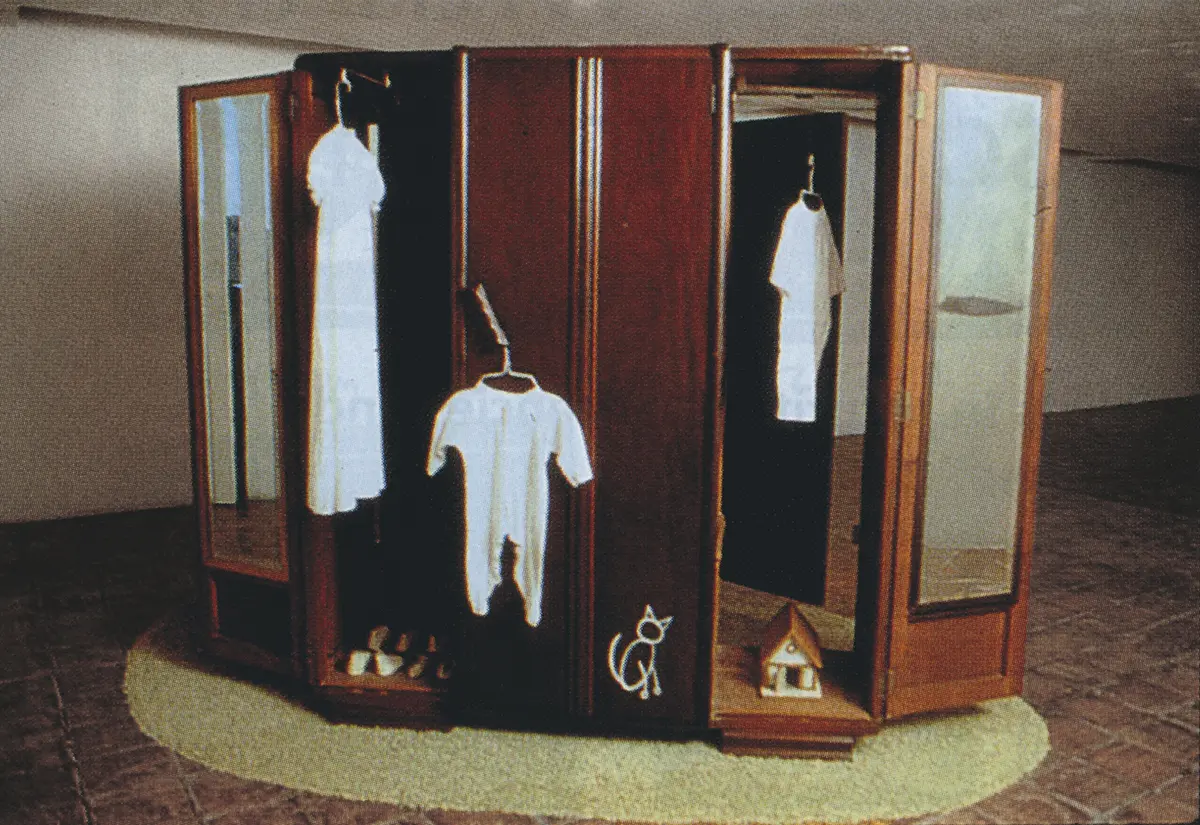
In the collective exhibitions, there were many outstanding artists, a number of whom have become well known (despite their youth) to visitors to last year’s Havana Biennial as well as to recent group and individual exhibitions held in Europe, Canada, and other parts of Latin America. Belkis Ayón is a master printmaker who works with the theme of the Abacoa cult of santería. Her large-scale prints capture much of the mystery and hermetic practices of the practitioners of this religion. Saidel Brito, who presented a fascinating installation featuring large numbers of ceramic sheep heads as well as a large ceramic worm, recently participated in an important show at the Whitechapel Art Gallery, London. His ironic political commentaries are done with subtlety and humor. Carlos Garaicoa, a brilliant photographer and installation artist, works with images of the decaying city to underscore both its beauty and continuing historical traditions. Abel Barroso’s wall piece entitled Teoria del transito del arte cubano traces, in map-like fashion, the trajectory of important Cuban contemporary artists who have left their country (and who, in some cases, have returned). None of the artists in this exhibition was timid in expressing their political ideas. In some cases, there was a more overt critical stance taken, while in others, ironic subtlety was their principal vehicle of political expression.
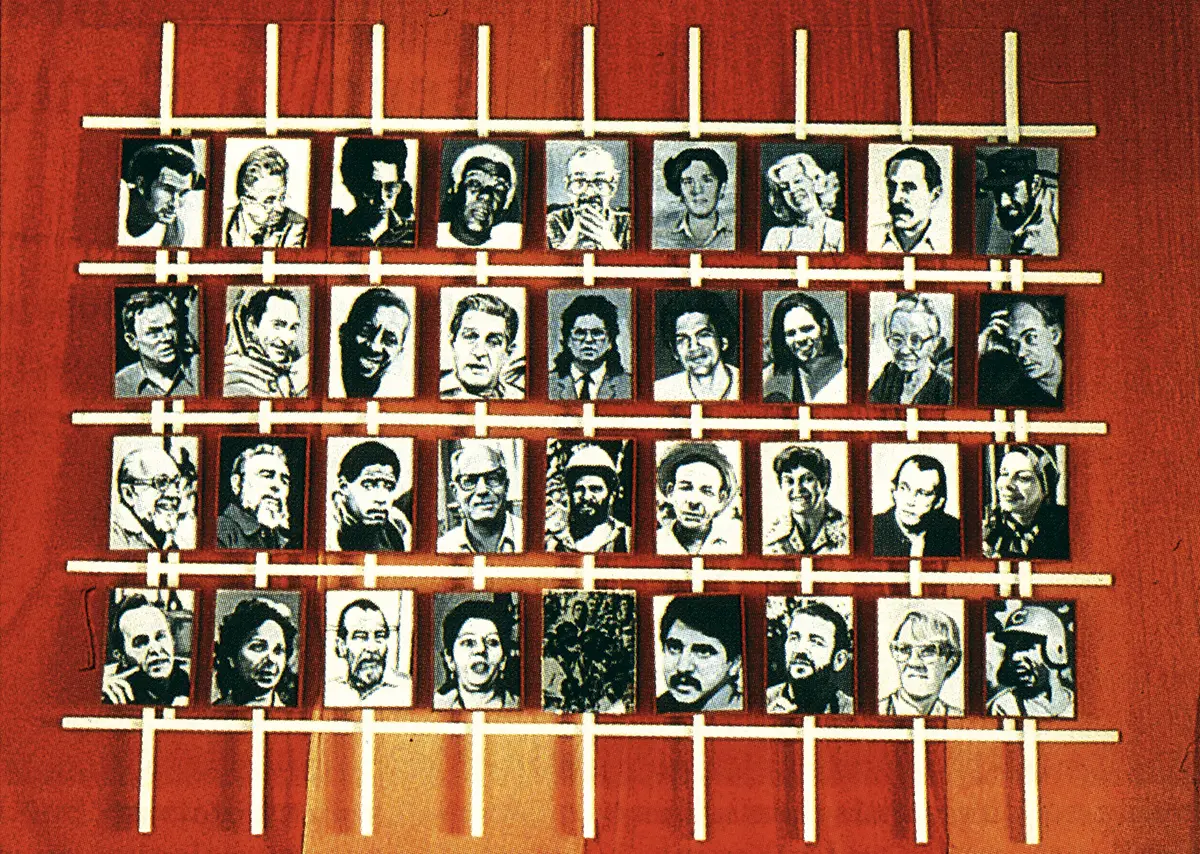
Among the artists who were given individual mini-retrospectives within the CENCREM, Sandra Ramos (whose art—often involving images within suitcases— also deals with travel, physical and psychological displacement), Eligio Fernández called Tonel who investigates the emotional life of the mind through images of the parts of the body, and José Ángel Toirac whose wall of portraits of famous contemporary Cuban personalities from the worlds of politics, literature, and the performing arts included a mirror for viewing oneself in this crowd, stood out as artists with particular promise for the future.
The grand display at the CENCREM was by no means the extent of the Fundación Ludwig’s exhibition activities this spring in Havana. In addition, there was a highly moving one-artist show at the Centro Wifredo Lam by Alexis Leyva (KCHO) who filled several of the main galleries of the Centro’s ample and pleasing space with old wooden docks, producing in the viewer who was meant to walk around them, a definite sense of melancholy and intimations of self-imposed exile and longing for one’s country and one’s roots. Lazaro Saavedra presented an individual exhibition at the Galena Luis Soto of the Faculty of Arts and Letters at Havana University, a highly cerebral affair commenting wryly on the recent history of Cuban Art.
Perhaps the most ambitious, moving, and dramatic of all the Fundacion’s exhibitions was the extraordinary display of the work of Carlos Estevez who was granted a huge space in the Museo Nacional de Bellas Artes to present his intellectually challenging yet sensuously pleasing drawings, installations, and sculptures often concentrating on parts of the body as they form components of a universal cosmic harmony. The exhibition was called Revelaciones gnomicas, and in it Estevez allowed the viewer a highly intimate look into his fertile, literate, and spiritual imagination. Estevez is intensely interested in the interaction of world cultures, universal symbols, and widely recognized metaphors. Yet he manifests these preoccupations in his art, not in the anthropological manner of Joseph Campbell or with any of the psychological overtones of Jung. Instead, he attempts to create simulacra of his own imagination and proffer the visitor to his hermetic universe his own interpretations of myths and dreams.
Concurrent with the Fundación Ludwig exhibitions were several other highly stimulating shows that served to enhance even further the stimulating artistic atmosphere of Havana in the spring of this year. At the Casa de las Americas, Cuban-American artist Ernesto Pujol had a solo show, the first of a North American citizen of Cuban birth to be mounted in the city. Entitled
Los hijos de Peter Pan (The Sons of Peter Pan) and dedicated to the memory of Ana Mendieta, Pujol’s thought-provoking and evocative installations dealt with issues of exile as well as those of personal identity and, in particular, homosexuality. Created entirely of found objects that Pujol sought in the city, his exhibition was, like that of Estevez, a brilliant recreation in a public forum of an intensely private world.
At the alternative gallery known as Espacio Aglutinador ( a small space but one which, since its recent founding, has presented a number of historically significant exhibitions), the artist Chago Armado presented a wide-ranging selection of his work done throughout an extensive career. Long known as an artist undaunted by official criticism or censorship, Chago has been at the forefront of political, social, and sexual satire in his art. It is fitting that in the atmosphere of increasing openness that marks the art world in Havana today that his work is finally on view for a public long denied his biting, witty, and intellectual images.
EDWARD J. SULLIVAN
Professor at the University of New York Department of Visual Arts.