This show presented a series of paintings done in the style of Lyubov Popova, Alexandra Exter, Olga Rozanova, and other women artists who emerged in the 1910s and 1920s in Russia and Europe, who frequented such avant-garde tendencies as constructivism, Suprematism, the Bauhaus, etc., all of which for Sandra Ceballos are the paradigm of the most daring productions in art up to the present.
The oilworks had such titles as Absolut Sophie Tauber, Absolut Udaltsova; others were ironic variations on advertising, as in Absolut Vodka. Ceballos’s purpose is to cast a critical eye over the convergence of political and historical periods that are distant from one another, and to examine their imprint on culture. She is attracted by the fact that, although there is a mutation in the referents, the validation of the latter depends on the contexts, periods, and interests through which they were determined.
Although Ceballos became familiar with the works of these women when she visited Spain and realized that many of them were virtually unknown, she uses their poetics, rather than paying tribute to them, so that they become a means for her own speculation. Her interests are focused on the fact that in all periods, "there has been stardom and recognition for some artists, and undervaluation, oblivion, and even persecution for others... and above all, a lack of respect for women."
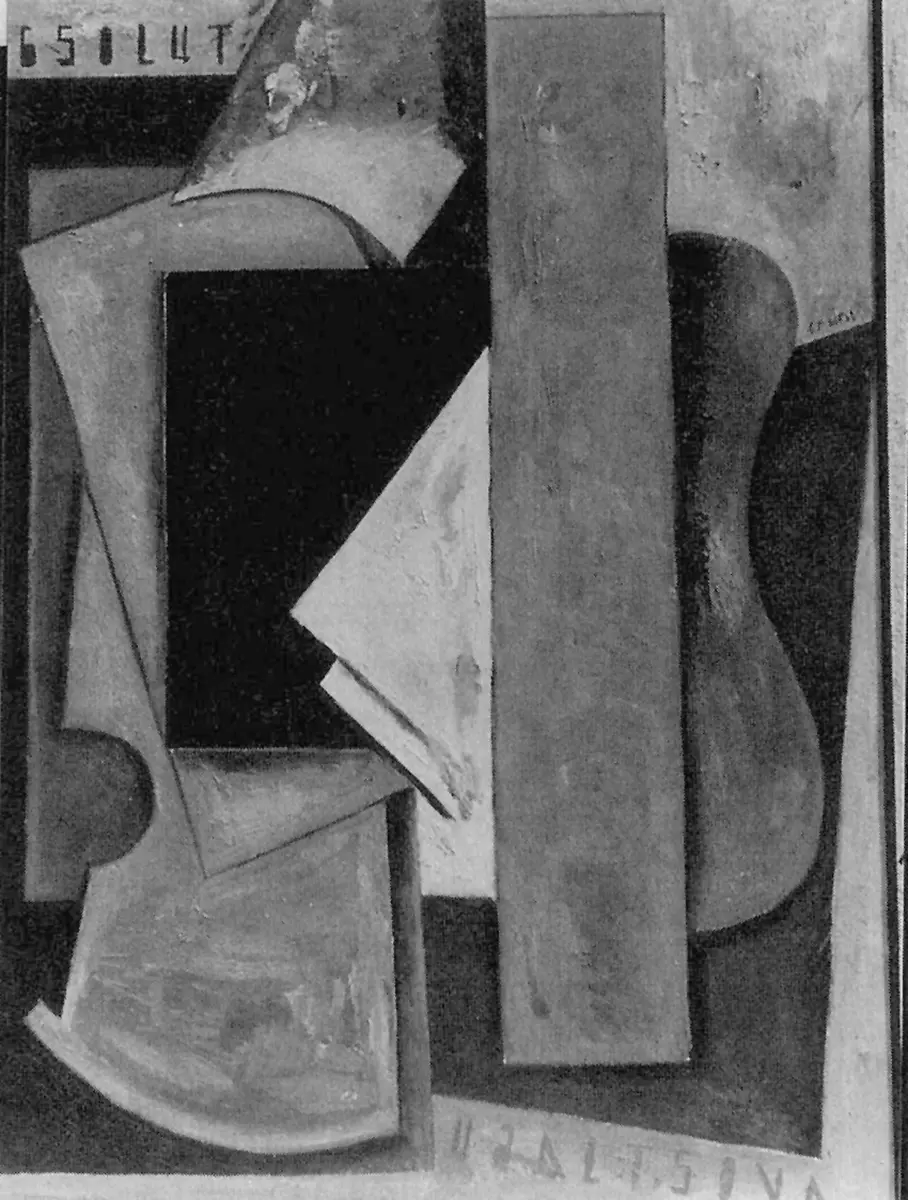
Inspired by this idea of the past and the theme of exclusion, Sandra Ceballos painted another series, entitled Absolut Sandra (apparently, she also feels she is outside the “star system” in Cuba, which results in official approval by the cultural institutions). Each picture in the series is, in turn, titled with a verse by Emily Dickinson, her favorite writer.
This exhibition at the Wifredo Lam Center was itself mysteriously titled Where is Loló?, which was in fact a tribute to Lolo Soldevilla, the Cuban artist who was ostracized with the advent of the Revolution for having had a job during the Batista tyranny.
This “desire for justice” of Sandra Ceballos must be what spurred her, along with her companion, the artist Ezequiel Suarez, to establish a nonofficial gallery in Havana, which operates out of the couple’s own home. It is called the Agglutinating Space, and is already a landmark in the Cuban art scene, presenting the most experimental artwork and pieces rarely seen in the State galleries.
Through her work, which has reflected very different stages, Sandra Ceballos will be remembered as an artist, but her determination to “agglutinate” the best art and her very serious curatorial approach have already earned her and Ezequiel Suarez their place in the history of Cuban art.
ERENA HERNÁNDEZ