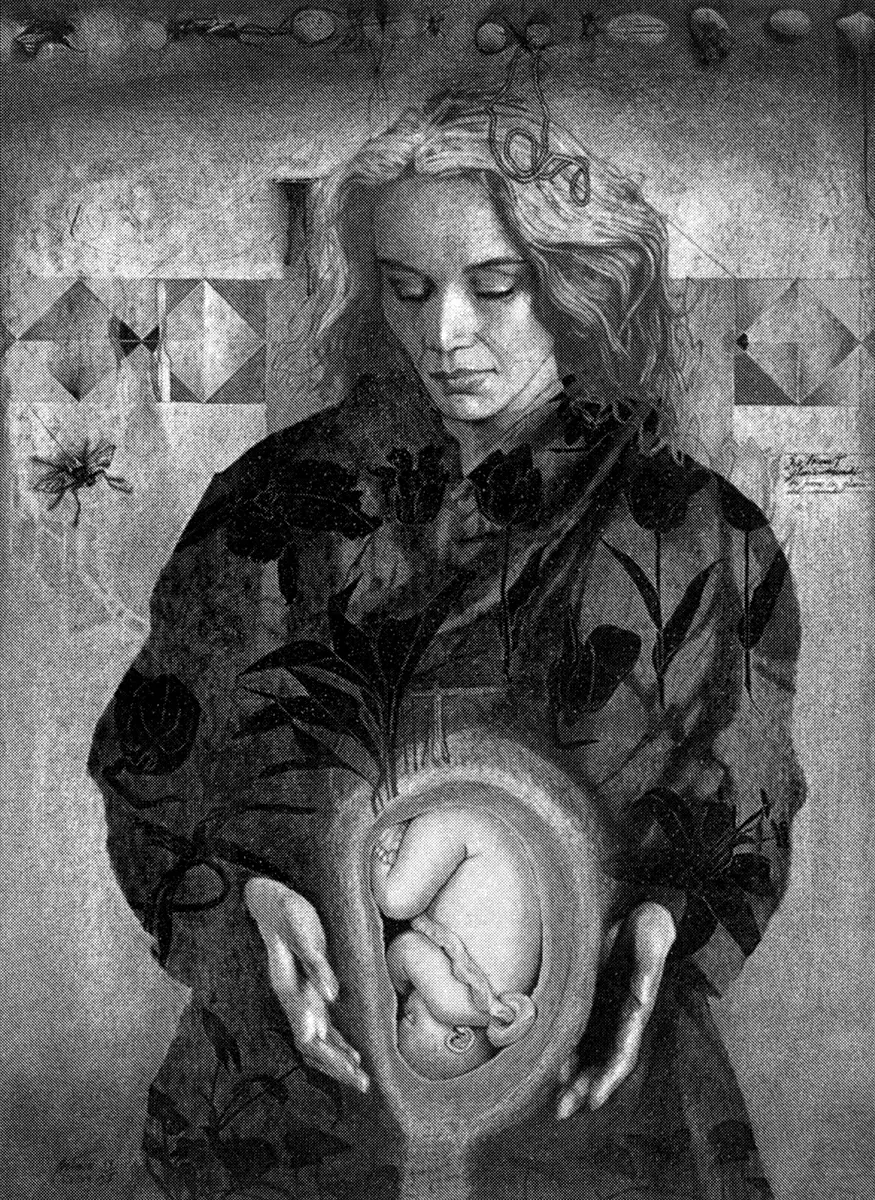
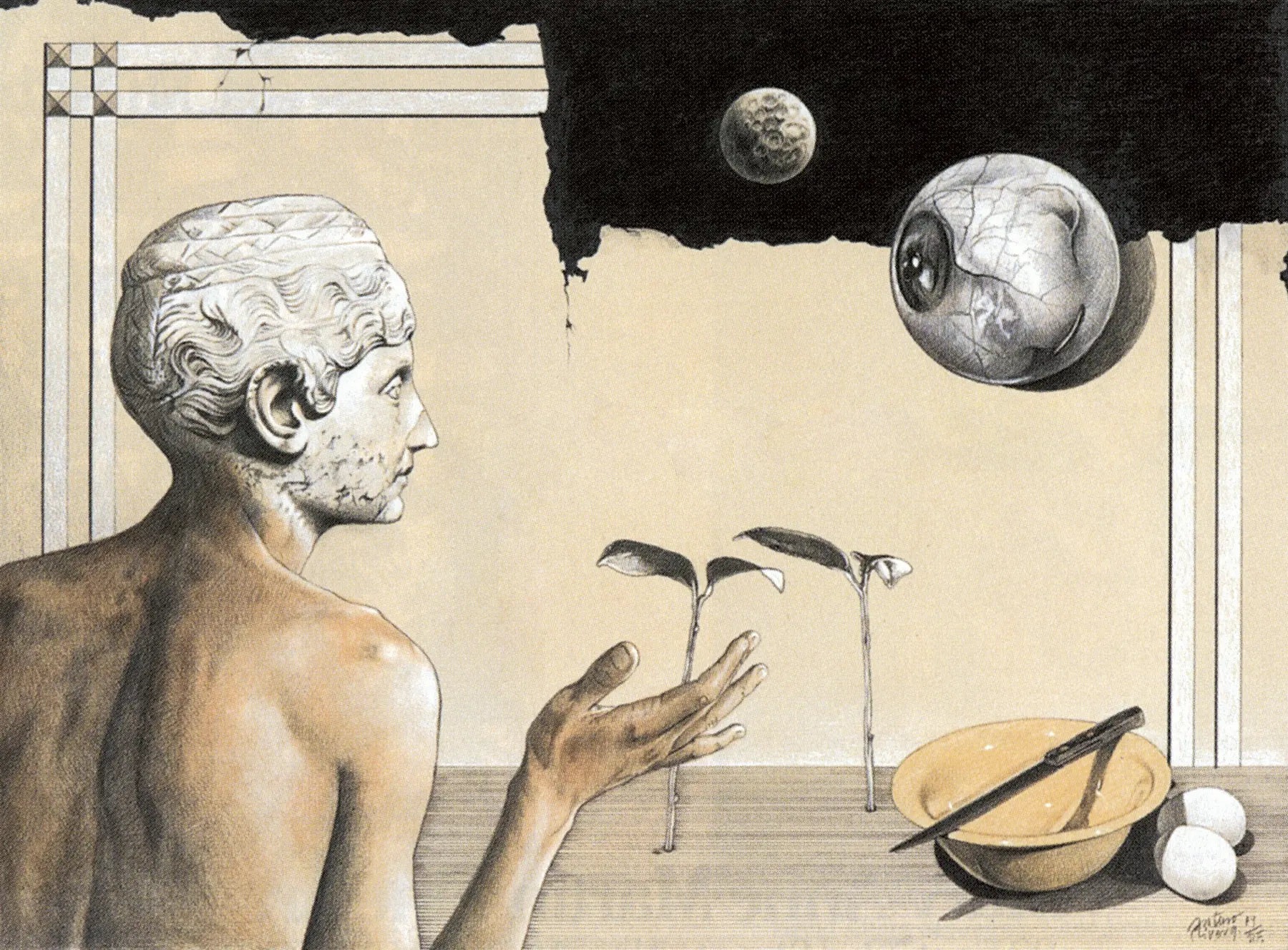
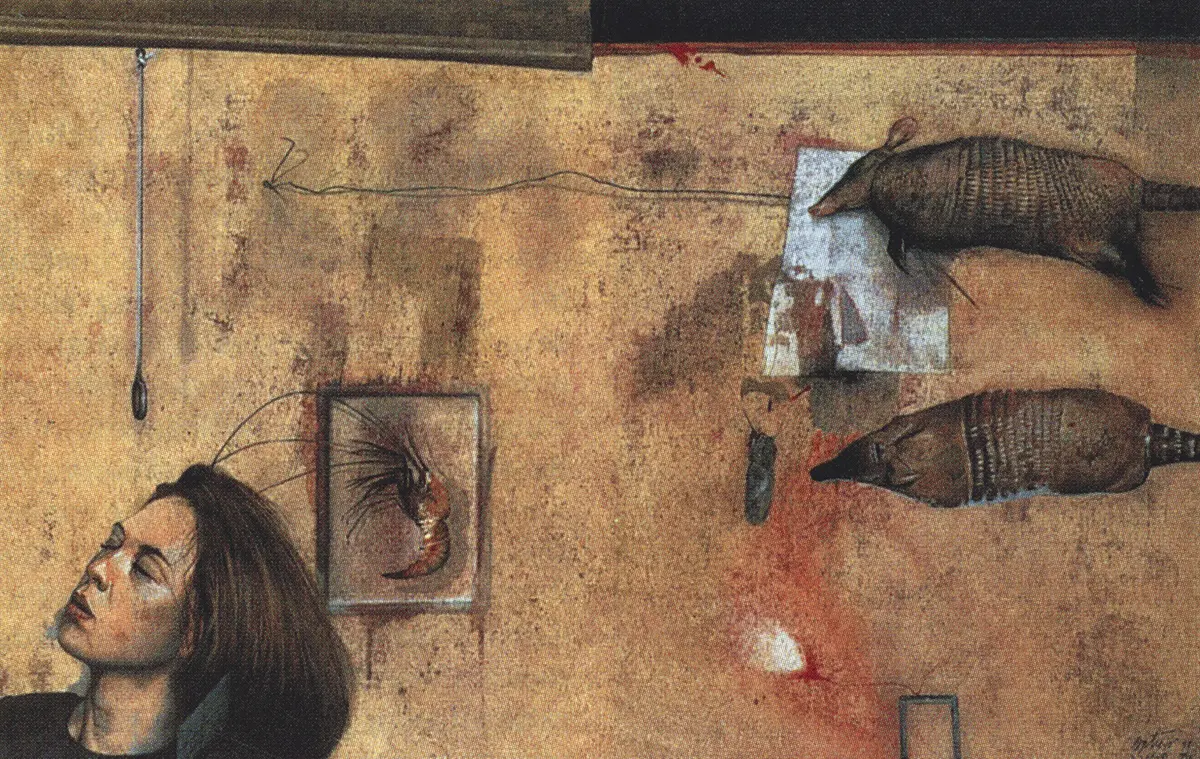
Conflict and correspondence between a host of contradictory and complementary ideas are the thematic features of Rivera's works. This artist uses a powerful force of expression, which is based on the use of contrasting aesthetic ingredients such as the sinister and the sensual, the transcendental and the typical, the pleasing and the terrifying, the fragile and the brutal, the nefarious and the dramatic, the sublime and the grotesque, or the grandiose and the ugly.
In the final years of the 1970s, the Mexican artistic scene was dominated by the local neo-concrete movement, which, of course, was itself related to Latin American geometrical abstraction and with European and North American examples of international neo-abstractionism. Some artists adhered to local versions of the neo-figurative movements, and so there were representatives of the new figuration, which in the Mexican context was originally of an expressionist kind, especially in works with political themes, of an unusual form of pop or post-pop, neo-surrealism, or even symbolic neofiguration.
It was also a time marked by the incipient emergence of collective production, with a political content and themes referring to national identity, and with frequent and intense neo-Dadaist links. Production was directed to large sectors of the population by groups of artists and other cultural workers as a reaction to the dominant trends in Mexican art and the anachronistic options resulting from the nationalist past and the various kinds of informalism. It was in this stylistic environment that Arturo Rivera began his* career as a professional artist.
By 1977, he had explored the fusion between the informal kind of stain and non-detailed figuration resolved with a few brushstrokes, which seemed to be fused with its abstract complement. Although his proposal lacked boldness, in the intolerant Mexican cultural world of that time, which was dominated by purisms and where no hybrid expressions were welcome, it appeared to be advanced. In 1978, he moved towards a combination of new figuration (at first realistic and then rather expressionist), combined with elements taken from post-pop and symbolic neo-figuration, although the latter was used in smaller doses: the combination was characterized by his use of flat color, contrasting chromatic accents, a wider palette than in his immediately previous period, and by the presence of precise contours.
Towards 1979, he once again reduced his range of colors and opted for a mainly drawing-based support, using geometrical relationships which, like the remnants of the compositional base which artists do not usually reveal, have since been one of his stylistic features and indicative of the intellectual ingredient in his artistic production. From 1980, Rivera began gradually to consolidate his individual language in the context of the post-avant-garde (Octavio Paz has proposed this term as more suitable than "post-modernity" for the Mexican context).1
With his links to the neo-academy, which is one of the post-avant-garde variations and basically characterized by the use of verism, perspective, chiaroscuro, and contour drawing, Rivera presented his mature work (from 1980 to the present) in an exhibition at the Museum of Modern Art in Mexico City between July 14 and October 29, 1995. Under the title Marriage of Heaven and Hell, Jutta Rüttz (companion of the artist and curator of the show) gathered together 94 works that highlighted Rivera's achievement and the potential dangers that lie ahead.
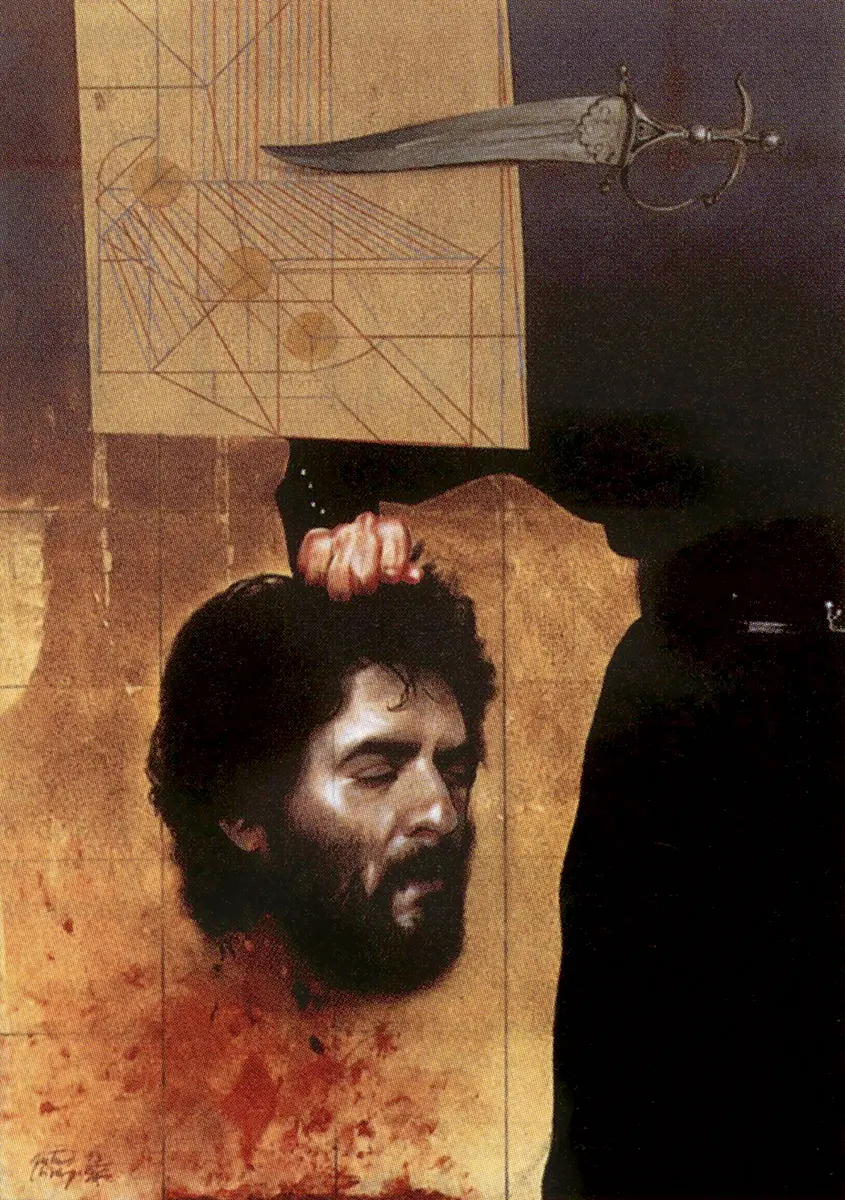
Conflict and correspondence between a host of contradictory and complementary ideas are the thematic features of Rivera's works. While a major theme of his production is the conflict between human nature and human rationality, rather than inspire us to reflection, Rivera prefers initially to create sensitive reactions. Indeed, Rivera is post-avant-garde not only because of his neo-academic associations but because he questions the control which we think we have over nature through our use of reason. He places ideal society—society which is perfect and therefore desirable—before its own vulnerability by revealing its unconfessed reality: that which is unusual, which we reject or which makes us feel ashamed, as reflected in monstrosities and other phenomena, where our control over nature is of little avail and where our rationality can only utter denials and draw a veil.
In calling attention to this situation, Rivera turns to one of the non-reflective human capacities: the enormous potential of his work to generate enthusiasm, to move, disturb, intrigue, wound, astonish, impress, and seduce, as the case may be. In creating these reactions, Rivera uses a powerful force of expression that is based on the use
of contrasting aesthetic ingredients such as the sinister and the sensual, the transcendental and the typical, the pleasing and the terrifying, the fragile and the brutal, the nefarious and the dramatic, the sublime and the grotesque, or the grandiose and the ugly.
Attraction and rejection, whether simultaneous or in succession, cause the spectator to modify his initial reaction to the challenge posed by the works and to recognize the themes proposed by the artist. Nature and rationality are also present, for example, in the precise formal solutions given to fruits, animals, and objects; similar to pre-photographic scientific illustrations, these images allude to the rational explanation of a tangible and certain reality, but one which has been separated from some of its components. The figures lack some of the imprecise nature which is considered as "normal;" nightmares which occur in some state of vigil become materialized, and the portrayal of morbid images in settings which are sometimes aseptic suggests that irrationality is a right, but also a risk.
Conflict and correspondence between a host of contradictory and complementary ideas are the thematic features of Rivera’s works.
Occasionally it seems as though Rivera is not looking for spectators but for accomplices who have the ability, like him, to mitigate the sense of guilt at finding a certain pleasure in suffering (which is not always the result of evil) and perniciousness, or if not pleasure, then something which mitigates or even neutralizes the sense of distaste and sadness which most people feel about allusions to harm and potential injury.2 Now, if, as semiologists have proposed, there must be a contract of probability in art between the producer and the recipient,3 in the same way, there must be some degree of ambiguity so as not to infringe the autonomy of artistic reality with respect to everyday reality.
In the work of Arturo Rivera, the disarticulation of space, the deliberate fragmentation of forms as if they continued on outside the limits of the work, the isolation between the elements depicted in themselves and with the work as a whole, the indiscriminate treatment of ordinary subjects and clearly religious motifs are all components that heighten this necessary ambiguity. However, when conventional portraits replace the mutant and suffering forms characteristic of Rivera's iconography, the result, however probable, loses impact and expressive force.4
The redress of collective cultural needs (the goal of the historical avant-gardes, taken over by critical post-avant-gardists, such as the deconstructivists) is not the same thing as the satisfaction of tastes predominant among sectors that are culturally conservative. Rivera will have to avoid the presence of unresolved contradictions in his work, such as the concessions made in his portraits (whether they are commissioned or not), which disrupt the discourse of the interdependent conflicts between nature and rationality or pleasure and pain, if he wishes to continue along the path of cultural invention.
Any neo-academic will face the risk of condescension. Acceptance by the public should not be confused with understanding by the public. This year, Arturo Rivera was awarded an honorary mention by the jury of a competition organized by the Museum of Contemporary Art of Monterrey (MARCO) on an invitational basis to increase its holdings. Moreover, Rivera's work was the favorite of those who visited the exhibition based on the competition entries. However, no other Mexican institution, apart from the Museum of Modern Art of Mexico City, was interested in exhibiting this show entitled Marriage of Heaven and Hell, even though it was offered, among others, to MARCO itself.
NOTES
1. See his text entitled "Postmodernidad?" in Vuelta, No. I27, Mexico City, June 1987.
2. The reader might recall, for example, the sexual excitement of Yukio Mishima before the image of Guido Reni’s San Sebastian, as recounted in his celebrated Confessions of a Mask.
3. This concept was proposed by A.J. Greimas and his followers, such as the Mexican Rafael Reséndiz Rodríguez, the author, among other publications, of Semiotica, comunicación y cultura, Autonomous National University of Mexico, 1990.
4. The idea of "cinematographic verisimilitude," which can be transferred to any of the arts, was developed by Christian Metz in the collective publication entitled Problemas del nuevo cine, Alianza, Madrid, 1971.
CARLOS BLAS-GALINDO
Mexican art critic and curator. Graduate teacher at the Autonomous National University of Mexico.