
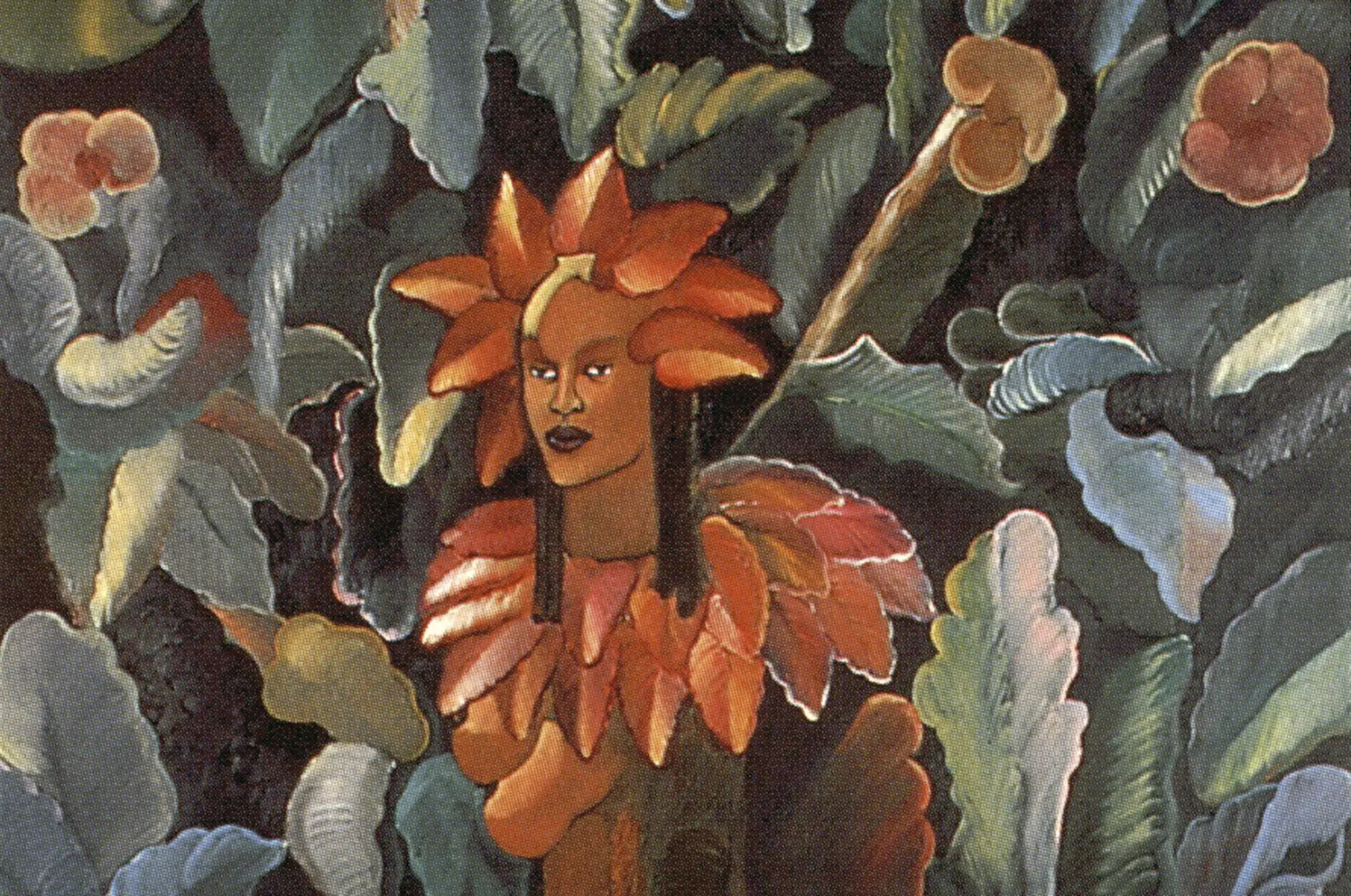
Alanna Locward: What is the image of Haitian art?
Edouard Duval-Carrié: The Haitian art that has been promoted is mainly the so-called naïf art, the art of the rural areas, which is marvelous. But the middle-class artists who use a more sophisticated language have been left out of this promotion process. Their work is not so easy to sell, so they have been left to one side. But this does not mean that these artists do not exist. They do, and I believe that they will become known over time. They have been isolated and have not had the opportunity to show their works at the international level.
AL: Do you consider yourself a victim of this classification?
EDC: I have tried to escape it. My goal has always been to perfect my technique, and in so doing, I try to be very serious. What is important for me is what you introduce into art and the level of poetry that it embodies.
AL: Your style was much more caustic before. Now it is a bit more accessible to the public as a whole. What you are now doing is to present this world of magic to the non-African public, without using the commonplaces associated with "Haitian Art."
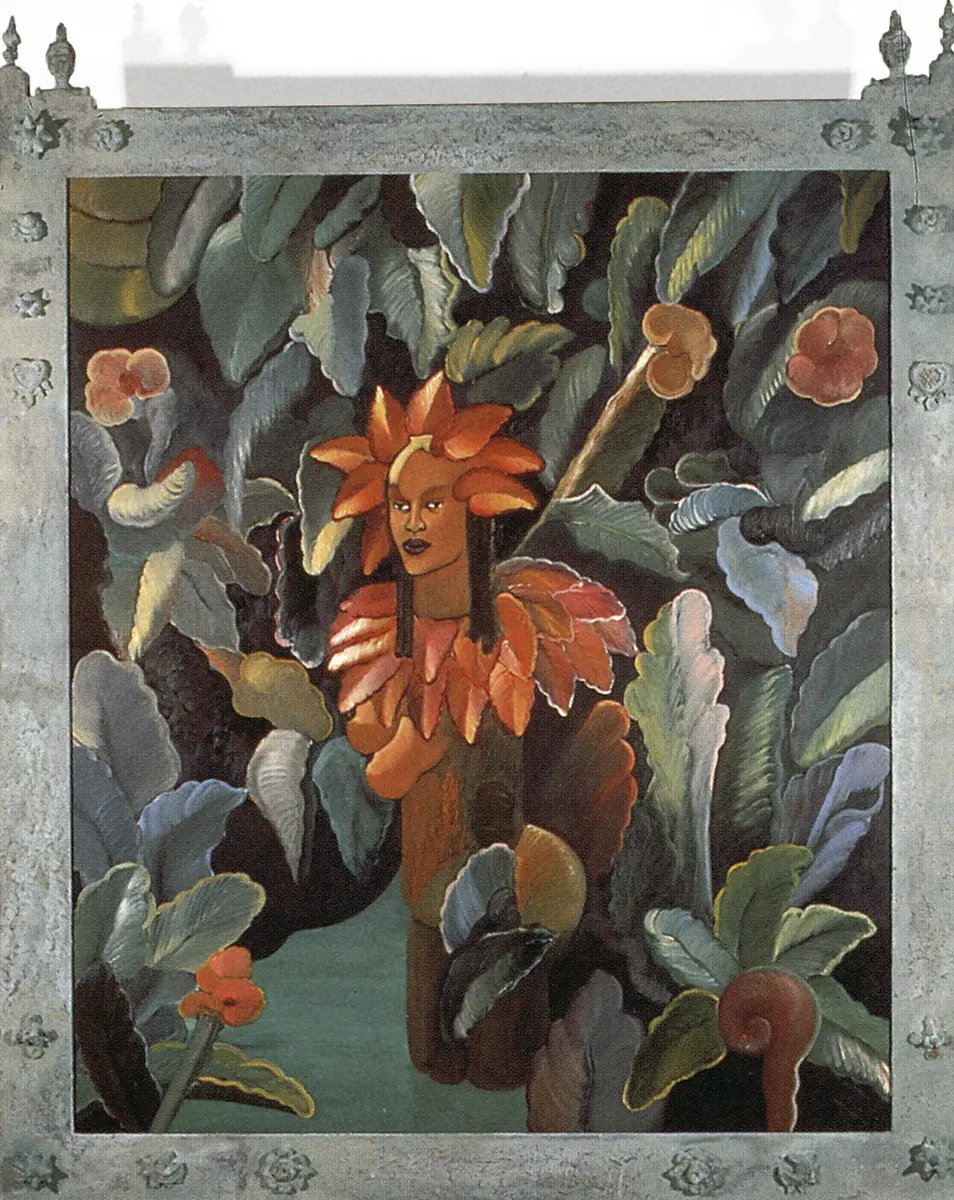
EDC: I have great respect for the masters of Haitian art and their achievements. They were my best guides when I was trying to escape from the "commonplaces" of Haitian art. But all my work is evolving, and I hope that this will continue. I also hope that I can have a direct and permanent relationship with my surroundings. Of course, the places in which I have lived have had a great influence on my work.
AL: Could you be a little more specific? What came first, Paris or Haiti?
EDC: I did not begin to paint in Haiti, but in Montreal. Of course, I was trying to find my roots after many years out of my country. Haitian society is archaic and very closed. I left when I was very young, and we lived for a time in Puerto Rico. Then, I went to study at the University of Canada, which opened up a much wider world to me. But my interest was in my country, which I was trying to understand. After acquiring this "opening" in my perception, which I tried to reflect in my work, I returned to Haiti and saw it with fresh eyes, trying to understand it.
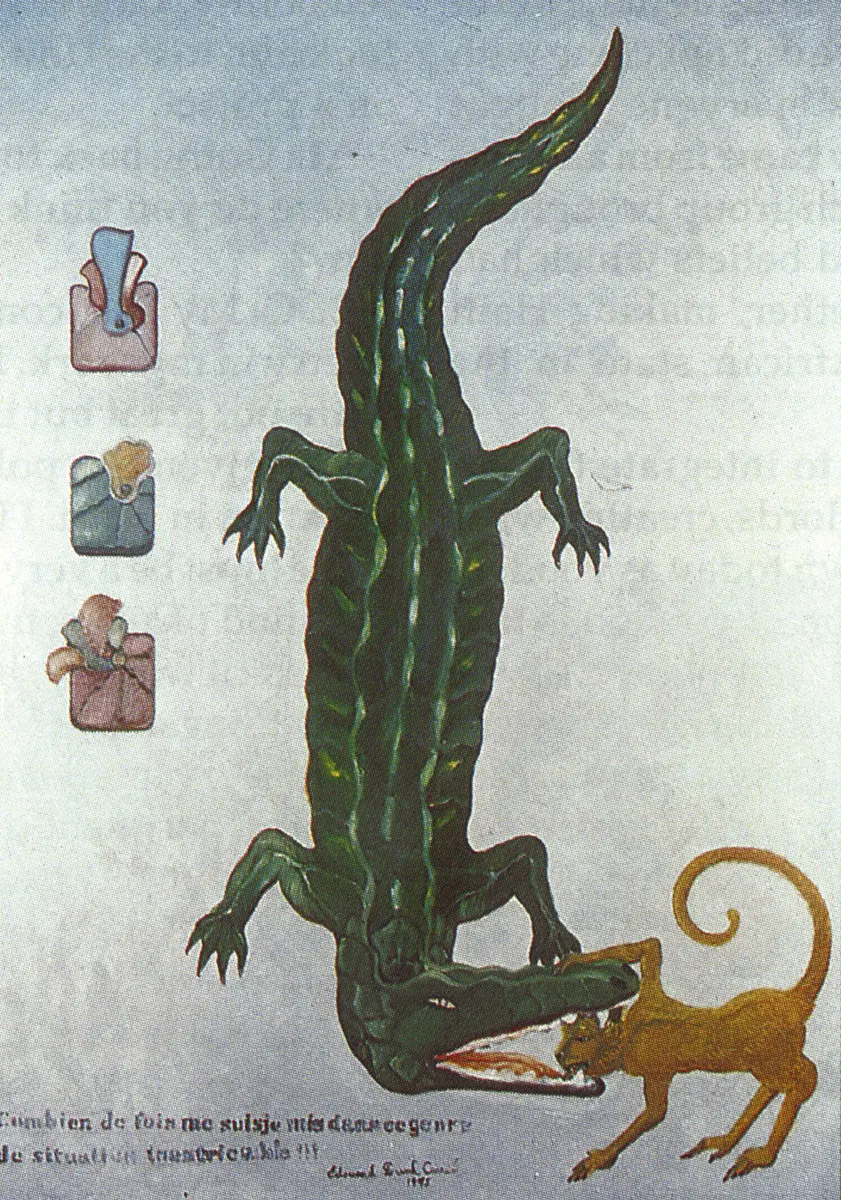
AL: In what way has this "archaic and very closed" society that you talk about influenced your work?
EDC: I do not know if I am overly optimistic, but after 200 years of total isolation, and particularly after the thirty terrible years of terror under the Duvalier family regime, one hopes that this sad state of affairs is now finally over. When I speak of an archaic and closed society, I am referring to the historical process under which we achieved our independence. Instead of being a total liberation for most of the Haitian population, what happened was that the colonialists who were expelled were merely replaced by a local political system which was but a pale and unscrupulous copy of what had existed before. This has been the case down to the present.
AL: How would you describe the reality of the artistic environment in Haiti in light of the country's two cultural colonial periods - first that of France, then the United States?
EDC: You have to know a bit about the history of the island. Because we are black, the island has always been rather isolated. So we have lived in a closed society which is only just beginning to evolve, with an archaic oligarchy, a social system based on agriculture, and I think it is this that has created the phenomenon known as "Haitian art."
AL: How would you describe the influence of the boom in Haitian naïf painting in the Caribbean region?
EDC: This is a real paradox. The marketing of Haitian art has taken on a dimension that, in the end, has not benefited artists in general, but only certain people, mainly dealers. The relative success did not affect the artists themselves or their development. It did not create a space for the freedom necessary for exploring new avenues, and the artists concerned were not encouraged in this respect by their representatives. Even so, popular Haitian art has had its luminaries who created and still create works of extraordinary poetry. To some extent, it is a more spontaneous and accessible kind of art, but I am not sure whether artists and art lovers have appreciated the real meaning of this work, which is a great pity. It is also regrettable that other lesser artists are always included alongside these luminaries under the rather loose label of "Haitian art." I believe that it is time to organize retrospective exhibitions of work by such artists as Hector Hippolite or Rigaud Benoit, so that we can see all their work and the real nature of their aesthetics. I hope that when this happens, it will lead to a real understanding of what that period meant in the history of Haitian painting
AL: Where do you think your countrymen's prodigious artisanal ability comes from?
EDC: Haiti is a country in which the needs suffered by the vast majority are such that people have to be inventive merely to survive. Then there is religion, which is liberating in that it is something which people share and which gives them comfort in their complaints, and yet is very sweet, because it is a religion which evolves with every passing minute, without any canons or dogmas. This enables people to visualize the cosmos in so many different ways that, with the necessity to survive such a hard life, it creates a space in which they can do what they have to do.
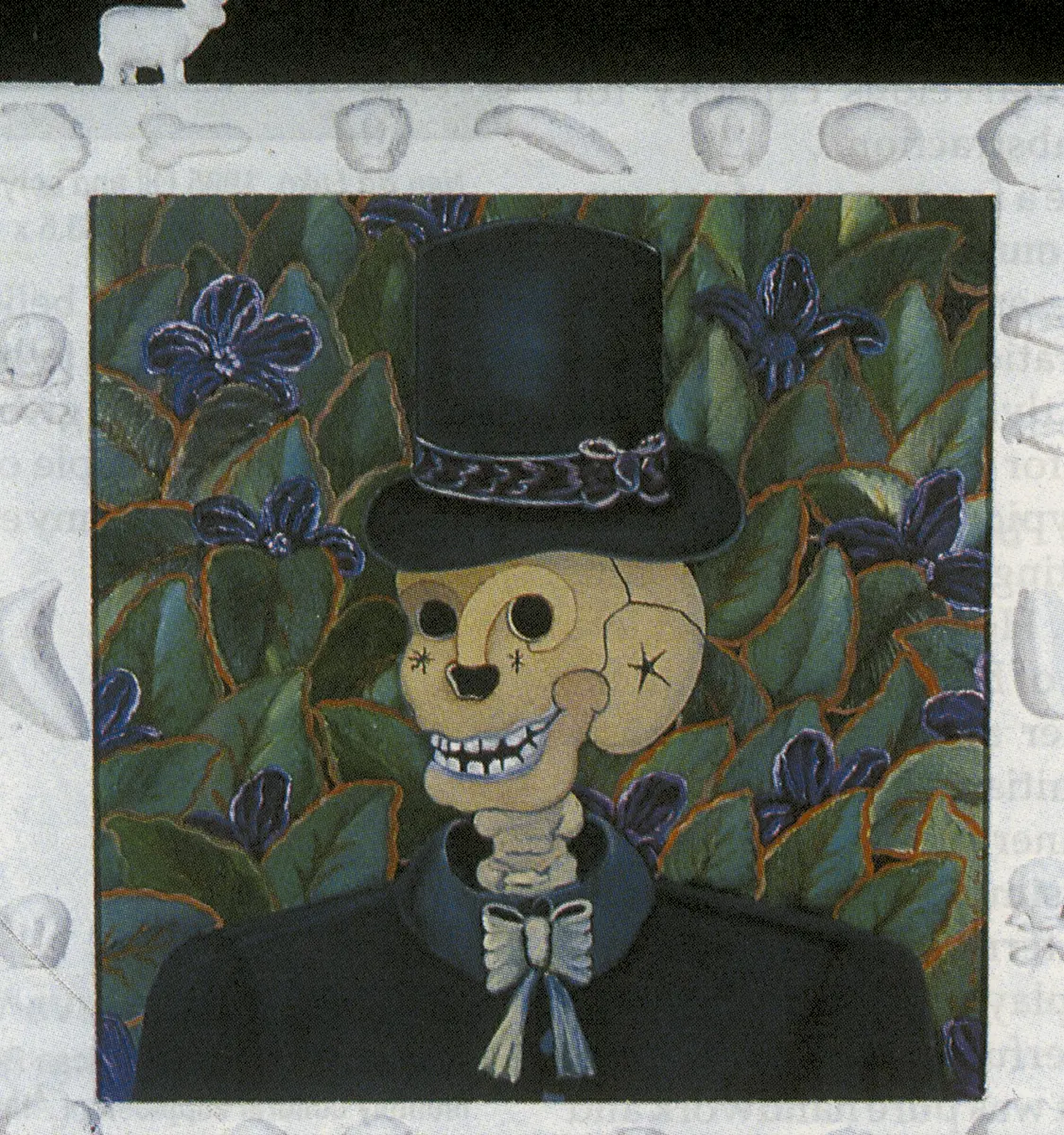
AL: Has this religion, which you say is without canons or dogma, been reflected in your work?
EDC: Without going into an exhaustive study of the voodoo religion, there are a few points that I consider relevant, at least for my art. The slaves who made St. Domingue the jewel of the French empire did not come with empty hands, as everyone thought they would. They came from all parts of Africa, and each group brought its own customs and beliefs which had to be fused together, making Haiti the first pan- African state in the world.
They also had to integrate the beliefs of their overlords, creating what is generally known today as voodoo. The first condition of voodoo is that of tolerance and acceptance of the other, with all its differences, with a view to achieving a systematic recuperation of ideas, concepts, rituals, and beliefs which are brought together to create a very dynamic religion. Another characteristic is its reticence to adopt dogmas, making it the product of the fact that freedom was an international ideal, which was not lost with the slaves. There is a profound poetry here which, in my case, has not disappeared.
AL: Who are the country's authentic naïfs?
EDC: I do not think they really exist. I knew quite a lot of artists from the first generation, such as Rigaud Benoit, Georges Liataud, the sculptor...
AL: Castera Bazil...
EDC: Castera Bazil was already dead when I began to frequent the Art Center. But all these artists had a relatively articulate discourse, and it is a pity that no one asked them to speak about their art and the way they saw things. For example, Rigaud Benoit had a great sense of humor and a marvelous capacity for conceptual abstraction...
AL: Was he a forerunner of conceptual figuration or rather an extraordinary representative of conceptualism in figuration?
EDC: Exactly. He had a sensibility and an eye for capturing situations that are typically Haitian and for communicating them in a very condensed way. He was very articulate, and to think of him as a naïf is ridiculous. Another artist, Jasmin Joseph, depicted Haitian society in a very caustic manner, using animals in a graphic and simple way, which made the message terrible: the animals seemed to be playing, but in fact, this was a masterful metaphor. George Liataud's art was pure handwork and sensibility. Calder wrote to him and took him to the United States to work on a project.
AL: Going back to your own work, where do you think you are heading now?
EDC: My first concern is to create poetry in my work. Perhaps my goals are not great, but they are essential to me given the political and social situation in Haiti. I believe that such a role must be a very conscious one in the mind of any artist, and perhaps in my case, it will take me towards different things.
I am very interested in the medium and I experiment a lot, sometimes even putting my health in jeopardy. I try out different materials, I feel a need to create and to explore the medium, perhaps to discover something different. But I believe that behind all this, there has to be an agenda that is related to a given public. In my case, it is the people of Haiti with whom I want to share my experiments.
AL: Do you think that you might one day become a conceptual artist who does installations with a little drop of water in a glass?
EDC: I do not think I could ever use such arid concepts, since I have frequented the baroque for too long. The concept of horror vacui is very familiar to me, but I hope that as I develop, I will be able to purify my vision and reach the point of being able to say much more with much less. I repeat that my goal is with poetry and for poetry.
AL: Have you ever done any installation work?
EDC: Yes, on several occasions. I did one in Paris, a monument, and another for MARCO in Mexico, which was another monument. They were not works of pure conceptualism, but rather in the service of the image and the impact it might have.
AL: How do you view the renewed interest in installations?
EDC: It is a very interesting medium because it allows the artist to move away from the picture and to experiment with space in terms of surface and concept, using a new medium and supports. The combination of objects is also something that is very African, a kind of return to a certain religiousness. When we visit a church, the architecture speaks to us of a religious concept, of objects and sacred images, and this is a kind of return which we need very much in the world.
AL: Do you see this as part of a reassessment of contemporary Haitian art? In what way?
EDC: Just as Haiti is experiencing major changes at all levels, so too is its artistic production changing radically. How my work can be placed in this process is something that will be decided over time. But one thing I do know is that I have always endeavored to evolve with my work and to achieve a higher level of resonance and universality.
ALANNA LOCKWARD
Journalist from the Dominican Republic who writes for the editorial page of El Nuevo Herald and the monthly cultural supplement "Atelier" in El Siglo in the Dominican Republic.