Haitian art, as most people identify it today, was born with the vision of Dewitt C. Peters, an American watercolorist and teacher who went to Port-au-Prince on a wartime assignment to teach English and discovered the natural talent of its peasant painters. On May 14, 1944, he opened the Centre d'Art in Port-au-Prince to give artists a place to study, exhibit, and sell their works. Most significantly, through his center, he introduced Haitian art to the international art world and tourist buyers eager to bring home a souvenir of an exotic land. Quick to recognize the opportunity to encourage artists and bring financial assistance to the Centre, Dewitt C. Peters changed the image of the tiny and poor island nation forever. The art promoted at the Centre affected future generations of artists to both continue their vision in order to reap the commercial benefits and assert their independence from its most characteristic appearance.1 The artists who participated in the many exhibitions at the Centre d'Art were always a highly individualistic group. However, the image that was most popular with the viewing and buying public was the work of naive painters depicting a beautiful landscape of sun and sea dotted with palm trees and flowers. They painted happy people involved in everyday pursuits ranging from tending the fields and fishing to worshipping the spirits. Their style was essentially that of artists working with meticulous attention to detail, using repetitive patterns in bright tropical colors. What was particularly extraordinary about the great quantity of work produced by these artists was the fact that, despite years of poverty, oppression, and social and political conflict, they continued (to this day) to depict their land as joyful and idyllic, and untouched by such realities.
The dynamic decades of the 60s and 70s in other parts of the art world presented a dilemma for Haitian artists faced with the commercial success of traditional island imagery and their desire to be "modern" or "Haitian" or both. As more artists traveled to France and the United States, their exposure to the now well-established styles of Cubism, Surrealism, and Abstractionism had an impact on their work. Inevitably, alternative groups were organized in Haiti in an effort to promote a more "modern" vision. While each trend promoted by these groups included distinguished artwork, the artists were still confronted by difficulties of acceptance.2 There was little market for a Haitian artist wanting to follow the stylistic categories of the Europeans and Americans.
Today, the situation for contemporary Haitian artists, producing art in the styles and media characteristic of artistic trends throughout the world, has not improved. With the exception of a few artists who have managed to rise above the stereotypes and find acceptance in the international art scene (Hervé Télémaque, Edouard Duval-Carrié, Philippe Dodard, Marilene Phipps, among them), Haitian artists are given little attention or support. Although they create their art out of a wide-ranging variety of media and deal with themes and subjects of worldwide concern, it has been difficult for them to maintain their independence as contemporary artists, rather than the descendants of Haitian naïveté. Some work in Haiti, where they are categorized as members of a certain "school" or group; others live and work in Canada, the United States, and Paris, content to defy such categorization and compete as artists without labels. Their dedication to exploring new methods of representation has set them apart from the Haitian scene and thrust them into the open market. In Haiti, where galleries often have difficulty explaining such anomalies in the Haitian artistic tradition, these artists are frequently bestowed with the title of Les Independents (The Independents).
Port-au-Prince maintains its position as the artistic center of the country, and artists who have successfully incorporated European and American stylizations can be found amidst the vast quantity of tourist art. The artists Jean-René Jerôme and Bernard Séjourné are sculptors and painters known for their association with the School of Beauty, artists who use themes and images of women as the basis of their art. They also explore abstraction and a variety of surface textures to impart a distinctly mysterious quality to their works. Philippe Dodard has enjoyed considerable success with oil paintings that are constantly changing and maturing, as they gain in complexity of theme and surface. His most recent works display masks and primitive symbols drawn with a surety of line and color. The elegant contours so characteristic of his work are especially evident in a series of black and white ink drawings that pay tribute to the fascinating spirit world that pervades the island and every aspect of Haitian life. Called loas, the Haitian spirits arrived with the African slaves in the sixteenth century and were worshipped in the rituals of Vaudou. They continue to be a remarkable presence in their art.
The "belief that all living things are interrelated in this world and share a universal energy"3 is at the basis of the beautiful mixed-media works on paper done by Philadelphia resident Marie-Hélène Cauvin and is shared by many Haitian artists. It is a pervasive element in their art that is sometimes obvious, other times subtle, but constantly in mutation. In Marie-Hélène's hand-painted prints and drawings, the loas take on the different identities as they emerge from within the magical rhythms at play in every complex composition. For Emmanuel Merisier, a prolific artist living in New Jersey who many consider to be the elder statesman of Haitian artists in the United States, the spirits appear under the guise of modern expressionistic painting, but with no less power. In his images of Haitian spirits in Christian disguise, two worlds of reality overlap. The same aspects of dual-interpretation of the real and the unreal appear in the works of Frantz Lamothe of Haiti and Lyonel "Yony" St. Pierre in Miami. Both work in the color and style reminiscent of the CoBrA Expressionist revival that espoused a primitive, unsophisticated aesthetic in Europe in the late 40s.
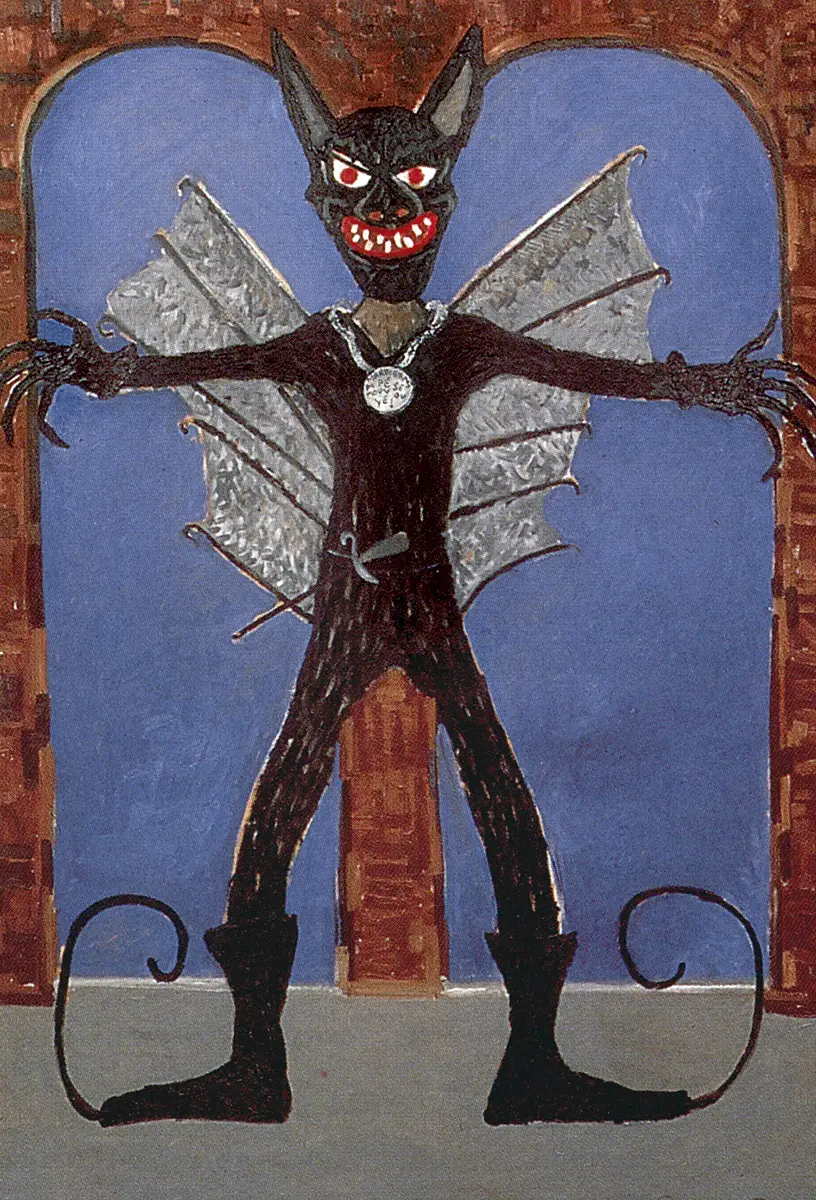
The two worlds of Burton Chenet are split between Miami and Haiti, and his paintings are a combination of childhood memories from Haiti revealed through sophisticated academic training in the United States. It was while he was in school in New York that he recognized that the strange stories of his childhood could be the source of inspiration for his paintings. The codes and symbols of Vaudau were translated into a vibrant and energetic painting style that can be appreciated on numerous levels of interpretation, and whether one is familiar with Haitian ritual or not, the aesthetic of ritual and modernism in Z'Elematurin, 1995, speaks loudly.
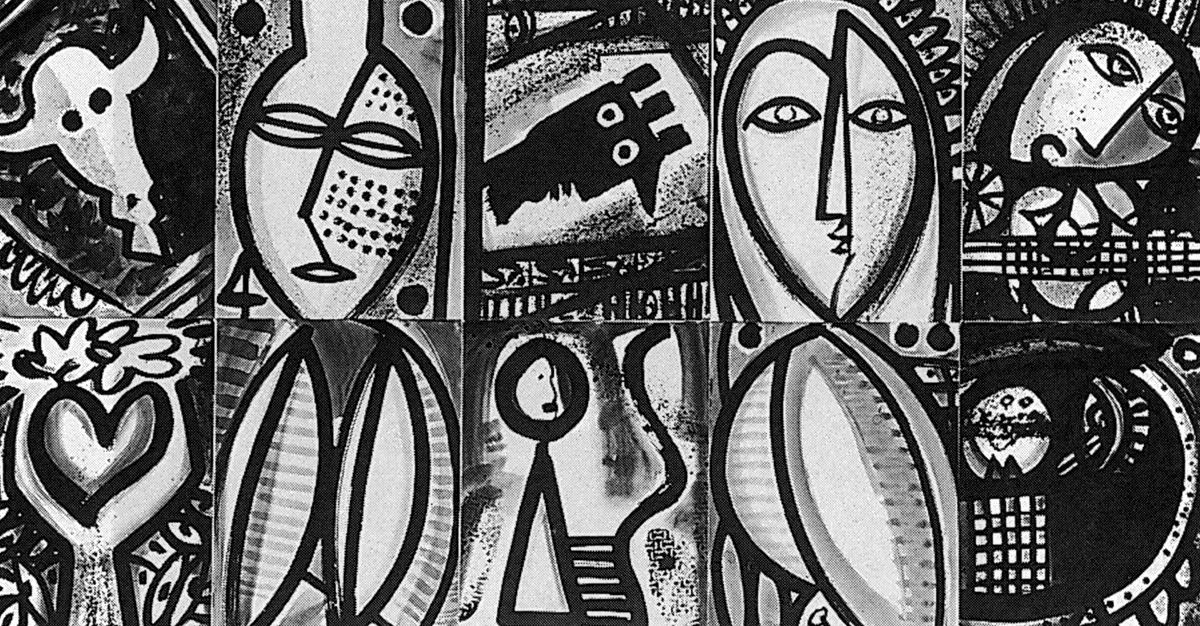
Marilene Phipps currently resides in Cambridge, Massachusetts, working on a Bunting Fellowship in Painting at Harvard University. Her imagery also draws on the powerful early sensations she experienced as a child in Haiti. Her painting is an act of self-expression, but also of communication. In "Praying Houngan, she invites viewers into a dialogue by conveying an idea in visual terms, by asking a question, or by challenging their thoughts or their emotions."4 Her paintings of physical life and emotional exile involve sensuous surfaces built up of color and texture. Haitian myths and Vaudau spirits inhabit and inspire their very essence.
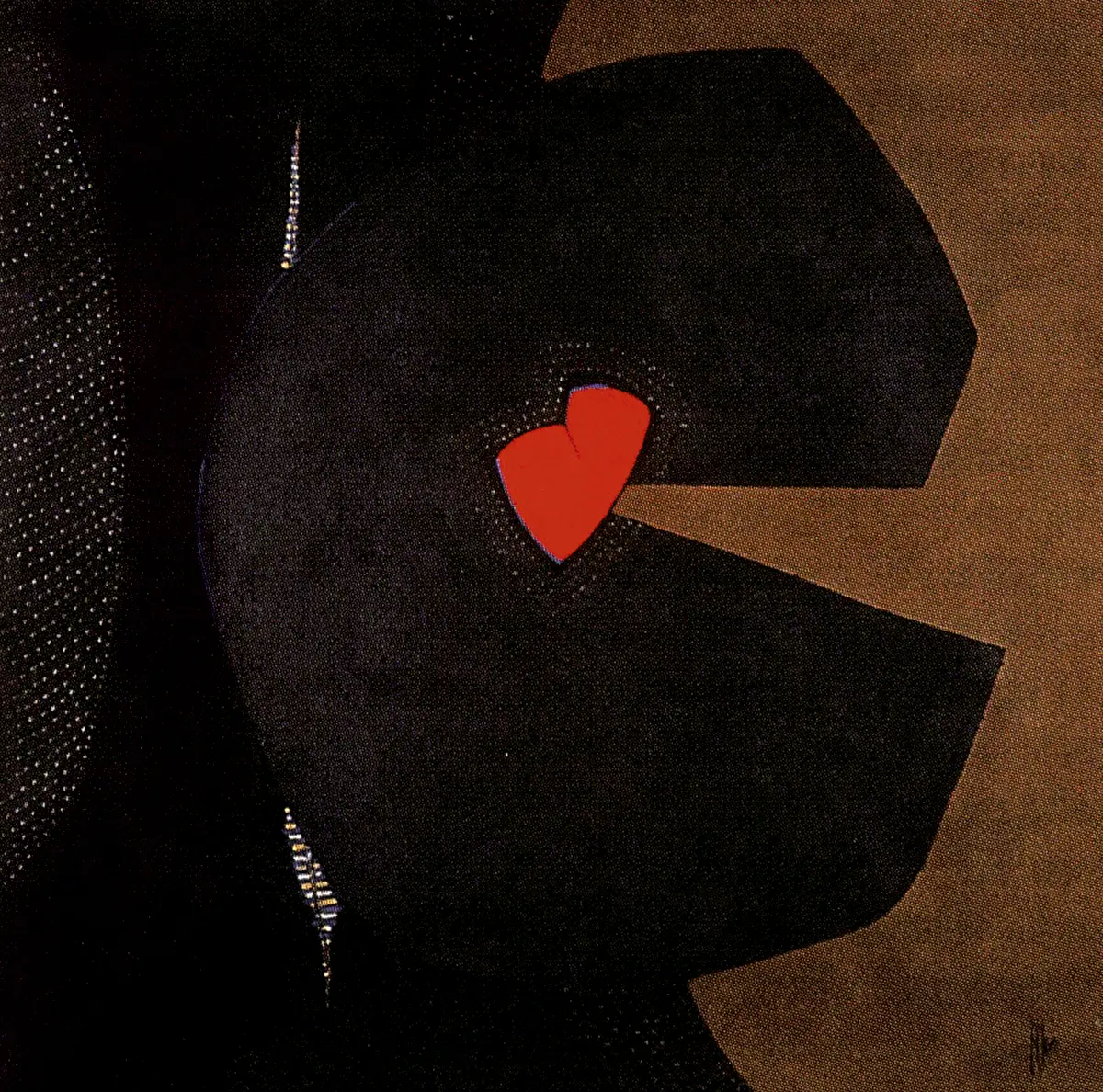
The myths of Haiti take on political, historical, and religious resonance in the complex and multi-dimensional images of Edouard Duval-Carrié. Now in Miami Beach, Florida, he has lived in Puerto Rico, Canada, and Paris, but returns frequently to his homeland. In creating his amazing panorama of spirits, saints, and heroes, Duval-Carrié elevates Haitian painting above time and place and into a new dimension of imaginative visualization.5 Strangely pigmented and tattooed personages from history, real and imagined, cavort with the loas in lush landscapes. As much a comment on Haitian painting stereotypes turned upside down as a homage to the island's rich culture and unique history, his works appear as ritual altars invoking a modern awareness of art and its historical methods. The integration of modern methods with cultural memories appears in Hervé Télémaque's assemblages and Roland Jean's complex collages. Living outside of Haiti for many years (Telemaque in Paris and Jean in Toronto), both artists may appear to incorporate few Haitian elements into their works. However, the symbolic attributes of the Haitian visual vocabulary still inform their compositions. They create and produce in an environment free of assumptions regarding their work, and the results are paintings that are fully representative of international modernism, made especially exceptional by Haitian artists.
The ability to assess Haiti from afar, to step away from its bizarre history and constant turmoil, is often best demonstrated through visual images. Political commentary takes numerous forms in the hands of artists today, and is at its most effective when conceived by artists exiled from their homeland. In New York, a large Haitian community that includes over one hundred artists has settled in the Queens community of Jamaica. Although far from Haiti, they continue to paint Haitian scenes from both a traditional and modern perspective. Carlo Thertus has redefined Haitian painting with a brash, aggressive style and his own personal symbolism that confronts not only Haitian themes but universal concerns. He sent one of his canvases, entitled The End/ The Beginning, to President Clinton. A large, chaotic collage of current events, the painting afforded the artist an opportunity to make statements about the realities of today.6 In his latest series of large works painted in vibrant, expressive colors directly on plywood, Thertus directs his anger and energy to world problems in Wake Up, America, Oklahoma City, and a Deaf Eye in Europe that refers to Bosnian atrocities.
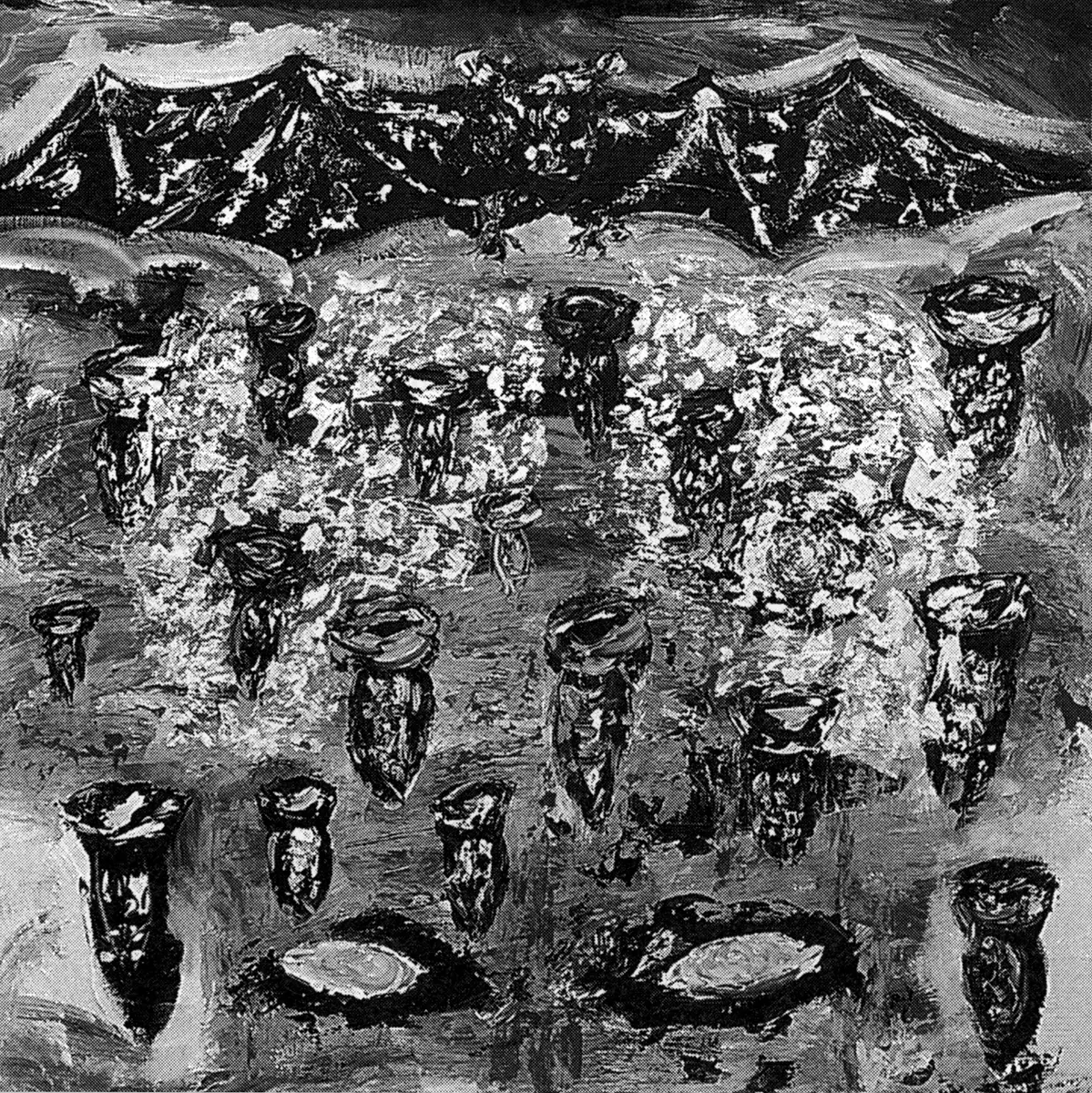
Opposite in size, the small scale of books is a powerful tool for strident political imagery in the works by Brooklyn artist Rejin Leys. The association with the book as an object for education and communication makes it a perfect vehicle for the disturbing references she creates in her handmade fold-outs. The barbed wire borders defining the images in Guantánamo Survival Kit need no explanation. Equally disturbing are the realistic portrayals by Maryland artist Jacques Liautaud that combine word and image to empower portraits of Papa Doc Duvalier, and Joseph Beuys, who is now invested with the torturous tire "necklace." Frightening for the realism of their message, the political collages of Miami artist/musician RaRa Kuyu confront the issues with screaming contention.
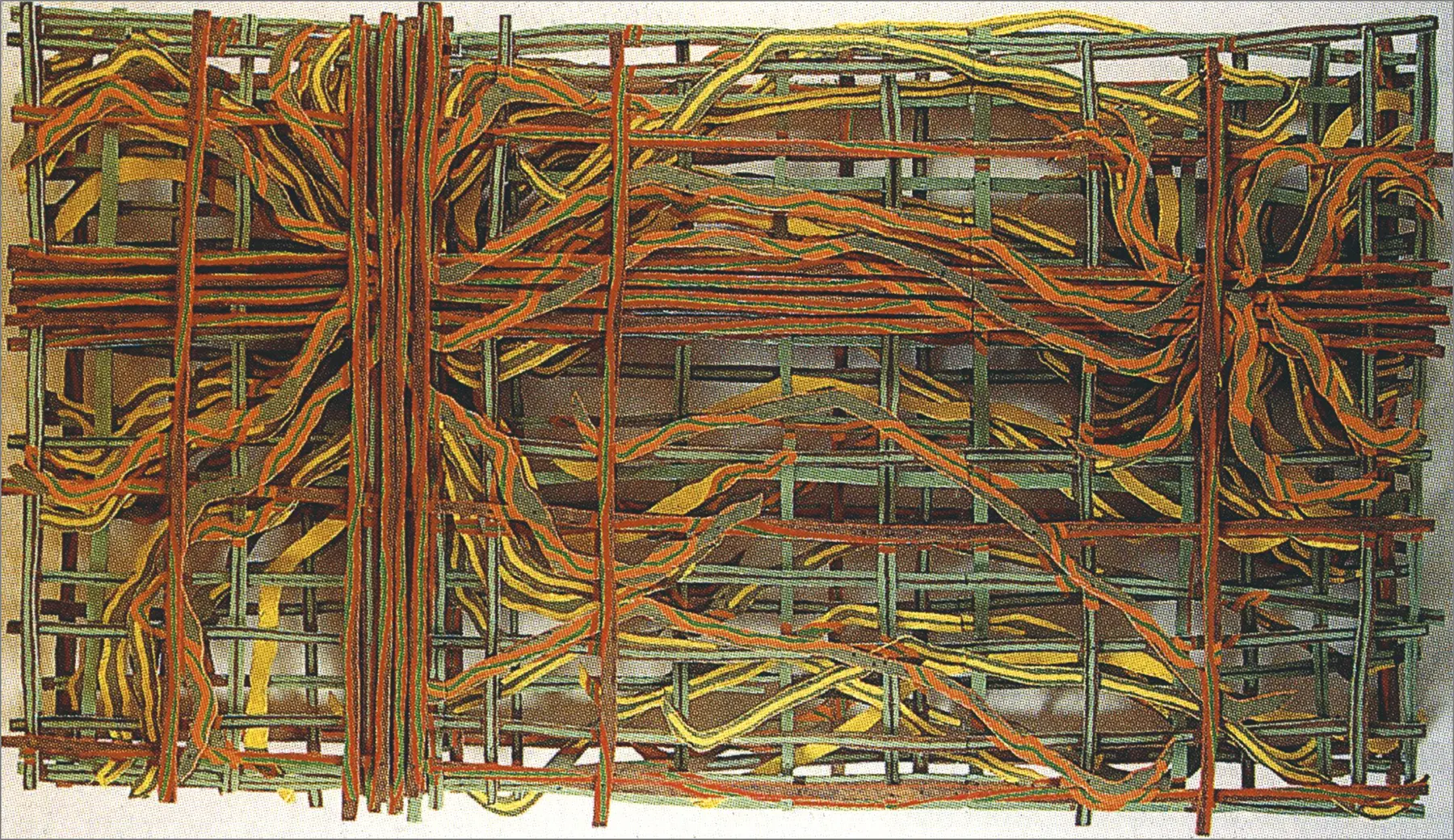
The narrative content of the new Haitian painting has expanded its sources beyond that of the country itself into the world that is the new reality for artists who are no longer confined to one location, one tradition, or one point of view. For Andre Juste, a young transplant living in Brooklyn, the modern industrialized environment that is so remote from his island heritage has impacted his sculptural constructions. Feeling that he has "achieved the mental reconciliation of his old and new worlds, he is able to synthesize the elements of his art to reflect the values of modernity."7 The rickety painted wood construction entitled Soléy (Sun), 1985, is directly related to the Porteaumitan or center post that supports the roof of a Vaudau ceremonial area. Decorated in bright colors and ribbons, the post acts as the passage of the spirits called by the priests from the spiritual to the earthly realm. In Juste's piece, the wood sags and deliberately lacks a center, or perhaps, he says, it has more than just one. A totally abstract minimal construction, it stands on its own as a provocative sculptural assemblage; its meaning is enriched by its Haitian mythology.
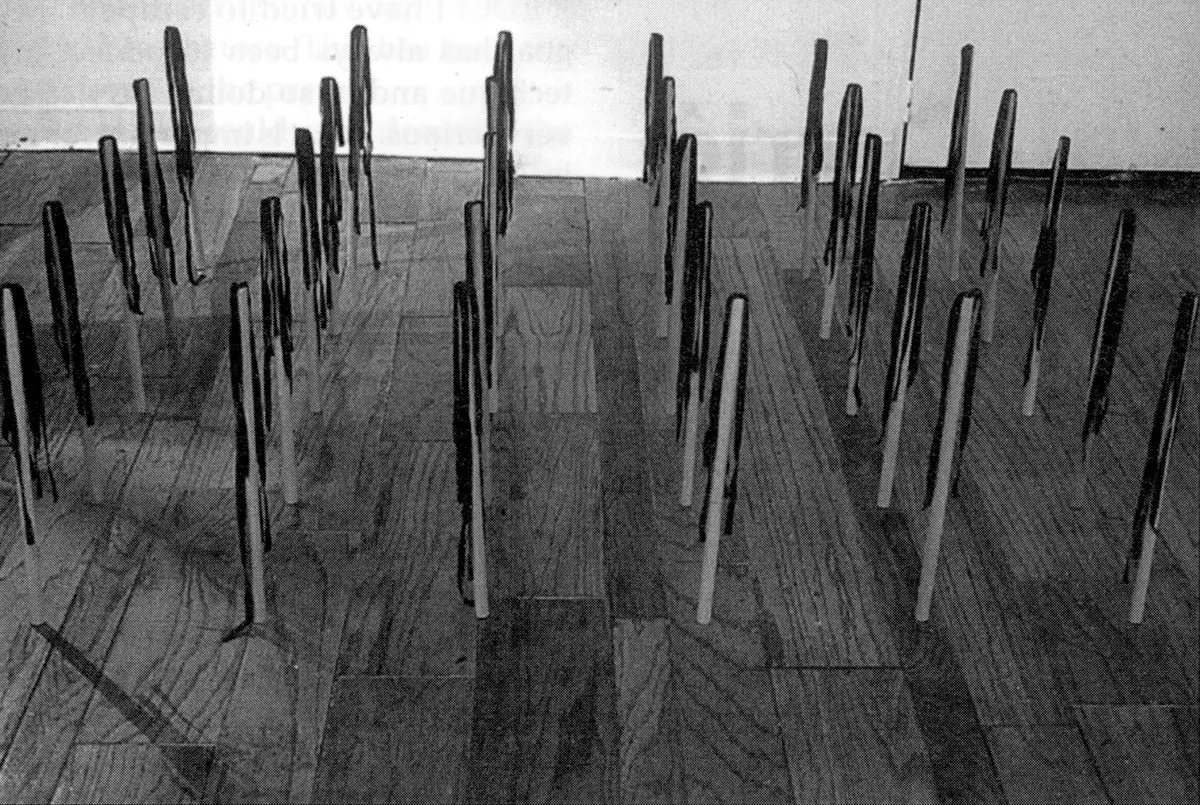
Assemblage, installation, construction, and conceptual arrangements are integral categories for the art of the 80s and 90s, but are seldom associated with the art of Haiti. However, there are many artists defying such generalizations about what they should or should not represent because of their Haitian artistic heritage. Jean-Claude Rigaud creates monumental abstract metal sculpture that has no overt ties to anything «Haitian.» Ronald Mevs has been in self - exile in Canada for many years, where he felt he was able to pursue his own independent style of painting, sculpture, and two-dimensional wall constructions without criticism. He has recently returned to Haiti to pursue his career in the country's promising new cultural and social environment. His works combine bold abstract color areas for maximum visual effect with careful linear elements that invoke his own modernist language.
The modernist language of abstraction and personal conception finds a powerful advocate in the work of Mario Benjamin. The Port-au-Prince artist uses available materials in mysterious installations that invite the viewer to question and interact, but provide few answers to their puzzling arrangements. The installations by Brooklyn artist Vladimir Cybil are equally mysterious. Her contemporary feminine perspective on traditional Haitian mythologies and female spirits offers new insights into interpretations and relevance for modern women expressed through very non-traditional materials.
For Haitian artists attempting to maintain their independence from the stereotypes and generalizations that so often accompany their association with Haiti and its artistic history, contemporary styles of art have provided new materials, opportunities, and alternative vehicles of expression. The works of this multi-faceted, diverse, and independent group of individuals must be seen as significant contributions to the international art world, made all the more notable because of the strength of the Haitian spirit that dwells within and inspires creativity in the midst of adversity.
NOTES
1. The story of the Centre d’ Art can be found in Selden Rodman, The Art of Joy, New York: Ruggles de Latour, 1988, and Renaissance in Haiti: Popular Painters in the Black Republic of Haiti, New York: Pelligrini and Cudahy, 1948; see also Michel Philippe Lerebours, Haiti et ses Peintres, tome II, Haiti: 1989.
2. Marie-José Nadal and Gérald Bloncourt, La Peinture Haïtienne (Haitian Arts), Paris: Éditions Nathan, 1986, p.119.
3. Marie-Hélène Cauvin, personal statement, May 1995.
4. Marilene Phipps, exhibition catalog, Maurine and Robert Rothschild Gallery, Radcliffe College, Cambridge, Massachusetts, May 1993.
5. Carol Damian, Edouard Duval-Carrié, Obra Reciente: The Savage Garden, exhibition catalog. Galería Fernando Quintana, Bogotá, Colombia, November 1994.
6. Garry Pierre-Pierre, "Haitian Artists’ Colony in Queens," The New York Times, April 8, 1995.
7. Andre Juste, personal statement, May 1995.
CAROL DAMIAN
Assistant professor of visual arts at Florida International University, Miami.