
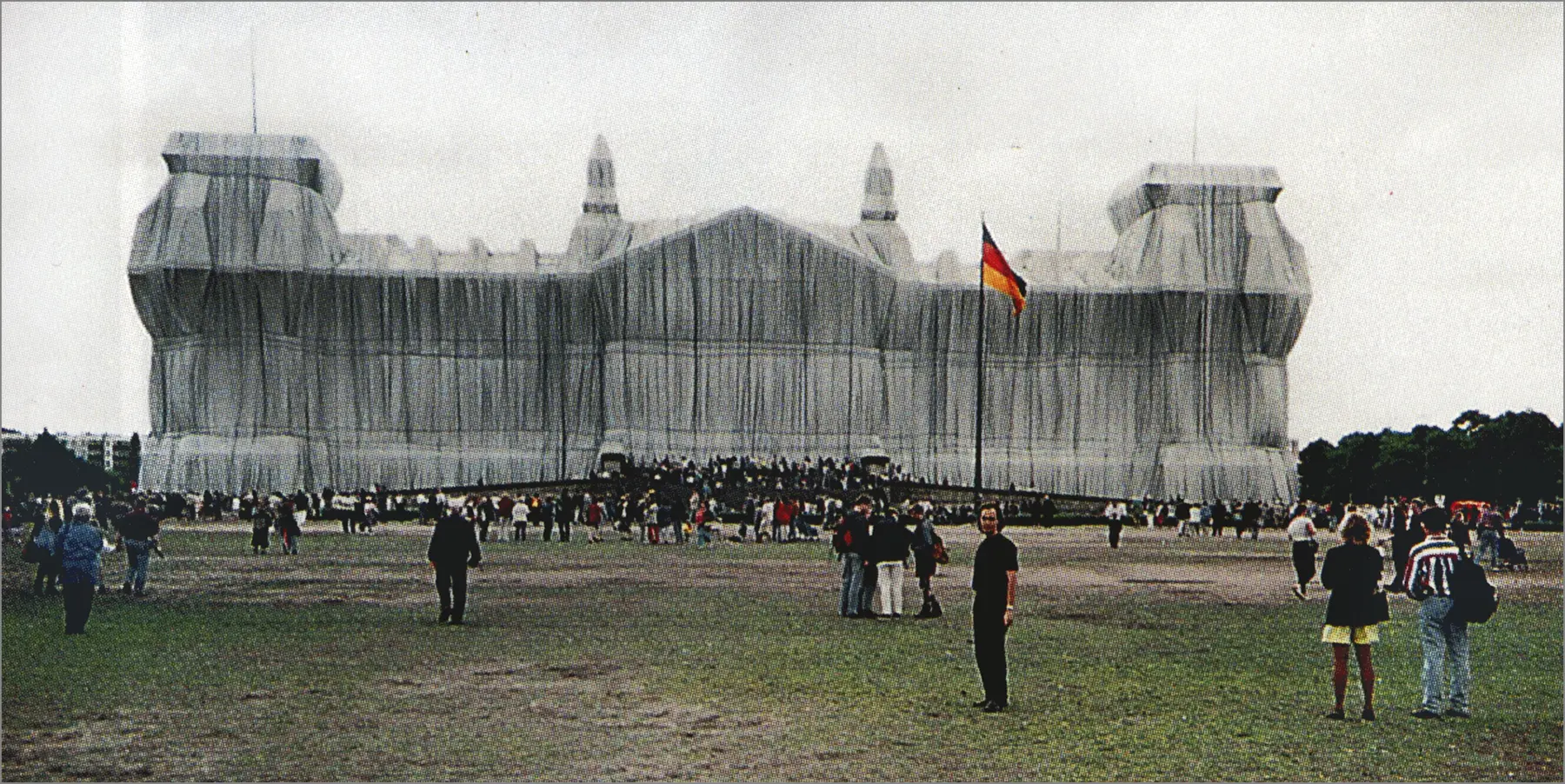
The 1995 summer cultural calendar in Europe, which offered such spectacular shows as the centenary edition of the Venice Biennial and the packaging of the Reichstag in Berlin by Christo, was fortunately not limited to such events. The Christo work was a mass-media spectacle in which the artist and his wife, Jeanne Marie wrapped the Reichstag in silver polypropylene. The Germans rushed out to celebrate the event, thankful that someone was at last healing their old and painful wounds. Hitler ordered the burning of the Reichstag in 1933 as a pretext for imposing a state of siege, closing Parliament, persecuting communists and Jews, and establishing his dictatorship. Christo's packaging lasted three weeks and was seen by five million visitors, two million foreigners, two million Germans from outside Berlin, and a million from the city itself. And it was seen by a further 300 million people on their television screens.
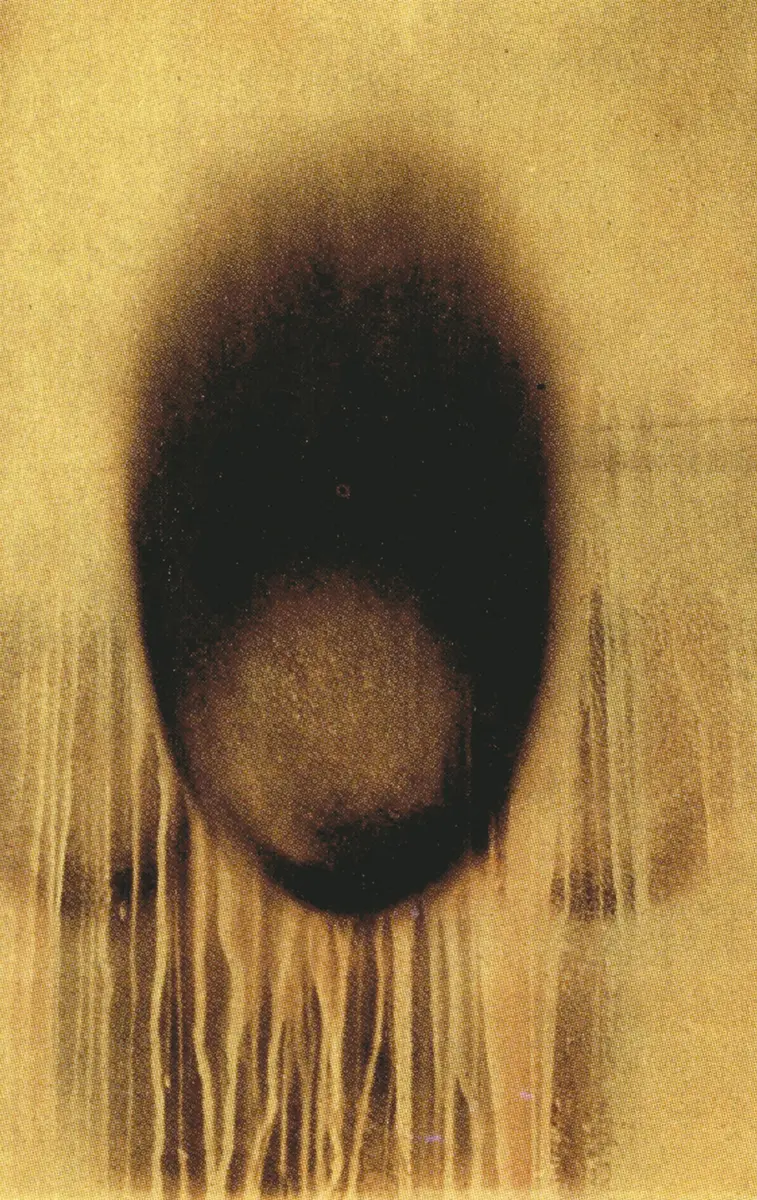
But there were also other events during the summer which, although offering less light and sound, were of at least equal or greater artistic importance. For example, there was the show by Yves Klein at the Queen Sofía Center in Madrid, the forerunner of which was a traveling show with the same name and subject matter presented in Houston, Chicago, New York, and Paris between 1982 and 1983. The advantage of the new show, apart from an improvement in the sections devoted to fire paintings and sponges, lay in two points. First, there was the return, albeit during a decisive period of his youth when he was an instructor in the Spanish Judo Federation, and where he presented his work for the first time, precisely in one of the Federation's gymnasiums—a series of monochromes which, with titles such as To London, To Madrid, To Nice, To Tokyo, and To Paris, he published with a preface written by one of his artistic fellow-travelers, Claude Pascal. The second point was that this show offered another opportunity to display the work and obviously the life of one of the most original artists of the post-war period in Europe. Klein is kept alive today by his monochromes, sponges, fire paintings, and the documentation of his concerts and performances, as well as his willingness to throw himself into the void, both literally and metaphorically, in his search for an art which transcends all kinds of genres, places, and historical codification, to become an integral part of events in time, motifs, and melodies audible only to the spirit of those who are the most audacious and intrepid. Yves Klein’s death from a heart attack in June 1962 was, and continues to be, an irreparable disaster.
Barcelona offered another impressive exhibition—a retrospective by the German artist Hans Haacke at the Tàpies Foundation. Haacke is a radical artist who, after creating in the 1960s in North America marvellously lyrical works of water and wind done in the wake of minimalism, subsequently devoted himself to an implacable criticism of the connivances between art and the multinational corporations. The show at the Tàpies Foundation included works from both periods. Particularly surprising and effective was one piece, which was nothing more than a piece of white muslin hanging from its two corners and constantly ruffled by the air from a simple, moving fan. Equally startling, although for totally different reasons, was the documentation on a dozen or so works selected from among all those Haacke has done on the denunciation of multinational enterprises and their manipulation of art. They included the famous Manet Projeckt 74, the first to censure such enterprises, and which consists of ten panels for presentation at the Wallraf-Richartz Museum in Cologne, indicating the powerful and at times very questionable owners of La botte d’asperges, a well-known work by Manet. The show also included the Helmsboro Country, the Violin and Cigarette: Picasso and Braque, and Cowboy with Cigarette, all of which denounce interference in the world of art by the Phillips Morris Company, which in addition to the damage it has done through its promotion of cigarette smoking, has also systematically financed the electoral campaigns of the ultra-right Jesse Helms, the declared enemy of art and the National Endowment for the Arts in the United States. The reader will remember the cases of Richard Mapplethorpe and Andrés Serrano. However, the most disturbing pieces were those which dealt with the revival of fascism, and in particular, the work entitled Und Ihr habt doch gesiegt, which Haacke did in 1988 in Graz, an Austrian city on which Hitler bestowed, in a public ceremony on July 25, 1938, the title of City of the People's Insurrection in recognition for the support which most of its population had given to the Nazi movement. Haacke reconstructed the spectacular street setting mounted by the Nazis on that occasion, adding to the pseudo-classical columns of the time information about the thousands of deaths in the city and the region as a result of persecution by the Hitler regime and the wars which that regime unleashed. Haacke's installation led to heated disputes and was destroyed by an incendiary device detonated one night by neo-Nazi activists. Fortunately, they ended up in prison. But the event itself was still a chilling one.
With the summer threatened by economic crisis, the neo-Nazis, and the insidious war in Yugoslavia, Paris, as always, provided a note of quality. Indeed, the range of artistic events offered at any given moment in the city is in itself equal to any Biennial. The Centre Pompidou presented two exceptional exhibitions: a retrospective of Brancusi and a show of work by Ilya Kabakov: C'est que nous vivons. It is difficult to say which was more relevant.
Brancusi continues to be the master par excellence of modern sculpture, the first to confront in his art the new challenges of modern abstraction and temporality, and through which he affirmed a sense of form which was beautiful, absolute, unconditioned, infinite, and eternal. The Pompidou retrospective, the most complete and important to date, not only showed the birds, llamas, and endless columns of stone and bronze which continue to astonish us, but included the so-called Atelier Brancusi, a set of works which he kept in his workshop during his productive life and which, according to the directors of the Museum, will soon be housed permanently there. The Atelier works are both splendid and instructive. They can be seen as reflections of his thought processes, first drafts of works in progress, explorations of the conflicts and hazards inherent in his materials and in human endeavor, prior to the shuddering perfection captured in his definitive pieces. The enormous volume of photographic work by Brancusi, which was fully illustrated in this show, provided a different kind of documentation of the dialectic between eternity and temporality, open form and perfect form, the variations of which constituted the essence of his artistic work. The faultless montage of the show was the crowning glory of this outstanding retrospective.
The Kabakov exhibition was about exactly the opposite. No perfection, no infinity, no eternity: C´est ici que nous vivons. It is here that we live, or perhaps one should say: It is here that the Soviets live, or used to live. It was a place rather like a city-camp, made up of twenty-seven barracks improvised from pieces of pressed wood, whose labyrinth housed workers with their families, and whose rooms contained a precarious pile of furniture, tablecloths, books, clothes, toys, and a long and sordid etcetera. The installation admirably suggested the great task on which the former Soviet Union was engaged, the construction of a communist society. Except that Kabakov revealed once again the hardship and misery hidden in the heart of this grandiose and impossible project. But Kabakov was not the only artist to do so during the summer. At the Russian pavilion in the Venice Biennial, under the ominous theme that Reason must prevail in history, three Moscow artists, Yevgeny Asse, Vadim Fishkin, and Dmitro Guttoff, produced a series of installations which also highlighted the desolate truth about communism and post-communism in the former Soviet Union, centered around a single motif: the construction, destruction, and reconstruction of the gigantic Church of Christ the Savior in Moscow.
The Museum of Modern Art of the City of Paris presented exhibitions of work by three artists: Marc Chagall, Claude Cahun, and Louise Bourgeois. The Chagall show was subtitled The Russian Years 1907-1922, and had the added interest of presenting for the first time outside Russia the drop-scenes which he painted for the Jewish Chamber State Theater in Moscow. The Claude Cahun exhibition was even more surprising: he or she, because in the end the artist was androgynous, was a surrealist, a member of André Breton's innermost circle, a poet, drafstman, illustrator, and above all, a feline and multiform personality who documented all the transformations of his/ her body through entire sequences of photographic self-portraits, each of which was increasingly subjugating.
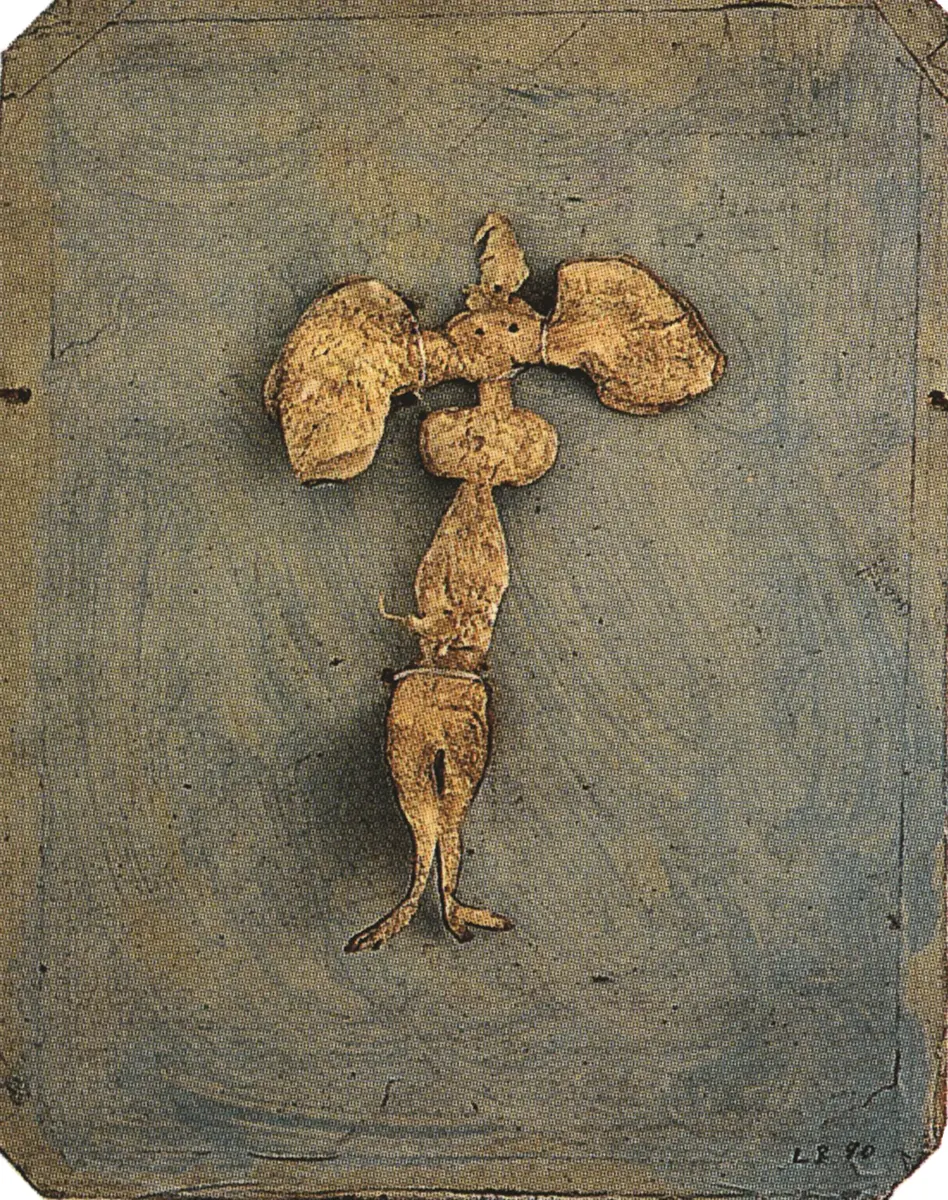
The Louise Bourgeois show was also a retrospective, with more than one hundred works from all phases of her artistic career, although to speak of phases in the work of this French woman who has been a resident of the United States for more than half a century is not entirely appropriate. Rather than periods, Bourgeois has had themes, and these themes are recurrent: over and over again, she returns to the subject of sexual ambiguity, the father or patriarchal figure, her dreams, and disturbingly organic deliriums. It has been said that her work, initially as a sculptor and then as an installation artist is both surrealist and autobiographical, and there is reason to back up such claims. Except that her works, both her tall and elegant pillars as well as her pieces in granite and obsidian in which a penis is simultaneously an eye, a nipple, and a clitoris, propose motifs and arguments which reflect the current interest of metropolitan women in the problems of gender, seen as a cultural and therefore historical delimitation rather than an irreversible biological destiny tantamount to condemnation.
CARLOS JIMÉNEZ
Colombian art critic. Lives in Cali.