
From the 1970s down to the present, Roberto Obregón has remained faithful to his exploration of the theme of the rose. Within this context, his work has reflected the conceptual trends in the country, and he is one of our most interesting representatives.
Obregón’s work is characterized by a notable relationship with what is real. His painted dissections (watercolor representations of dissected roses) were done with a strong and deliberate dose of naturalist representativeness. The artist clearly enjoyed color, as can be seen from the exhibition catalogue, except that today, the painting seems to falsify the natural process of the roses.
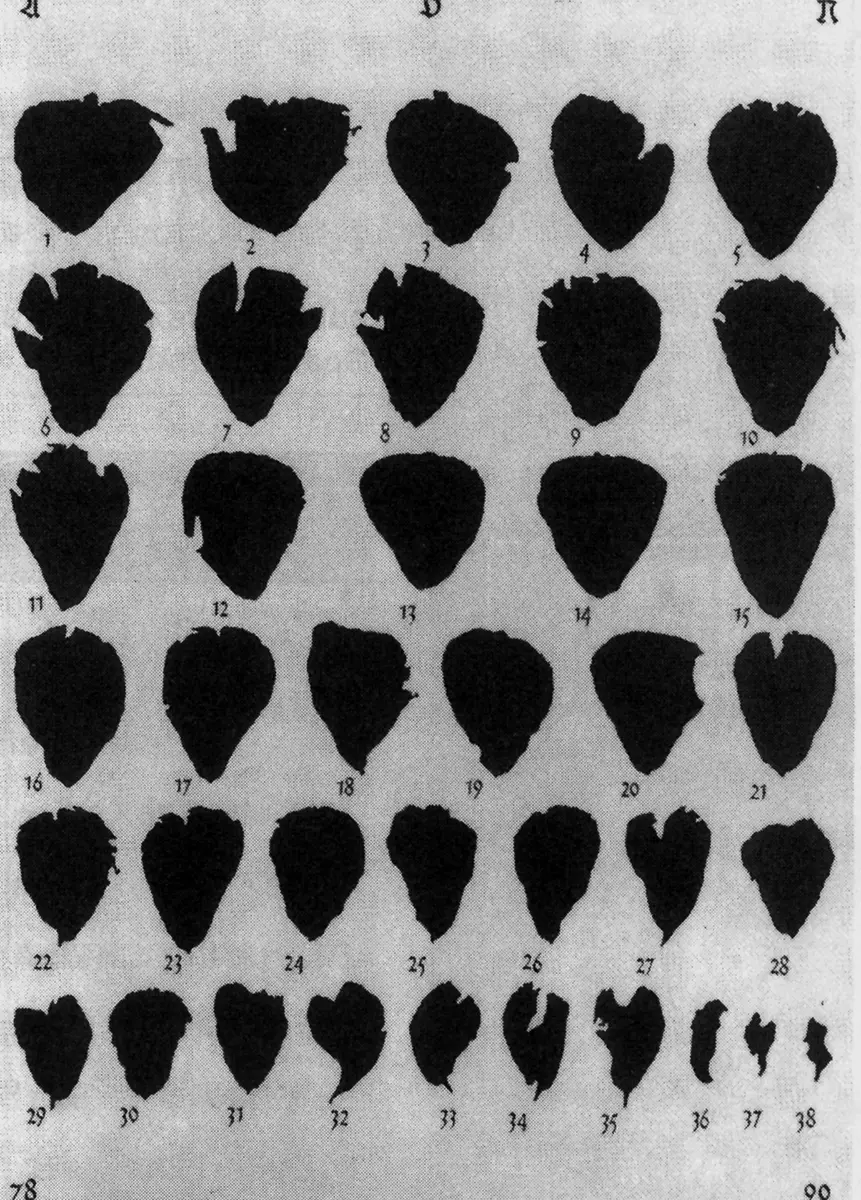
For this reason, in these twenty-eight works entitled Real Disections, real roses are dissected, and their petals are organized on the paper, just as they are in the real flower. The intention is "to awaken the spectator’s capacity to see, to analyze, and to perform a visual exercise," as Rosana Guastaferro Preda writes in the catalogue.
This inevitably leads to a narrative reading of the image, which accounts for the unique existence of each rose. This, in turn, gives the lie to the famous remark by Gertrude Stein, "a rose is a rose is a rose," since this is not a generic rose, even though the artist is working with the imagery of universal symbolic references. On the contrary, he works with an individual rose in each Disection, so that no version is the same as any other: "You will not find one real dissection that is the same as another, since there is never repetition. Up until last year, I was investigating a series of roses, all from the same rose bush, to test this theory. When you look at them, you realize that there is a relationship, but they are never the same."
In the watercolors, as in the Real Disections, Obregón maintains the same attitude of remaining faithful to what is real. In this case, he does not depict the flower, but dissects it, records it, and reorganizes it in order to depict the rose in itself. In this way, the artist, as Reverdy would say, savors the taste of what is real—the methodical, systematic pleasure of reworking it in its literalness, transforming it into an artistic reality of considerable aesthetic strength.
SUSANA BENKO