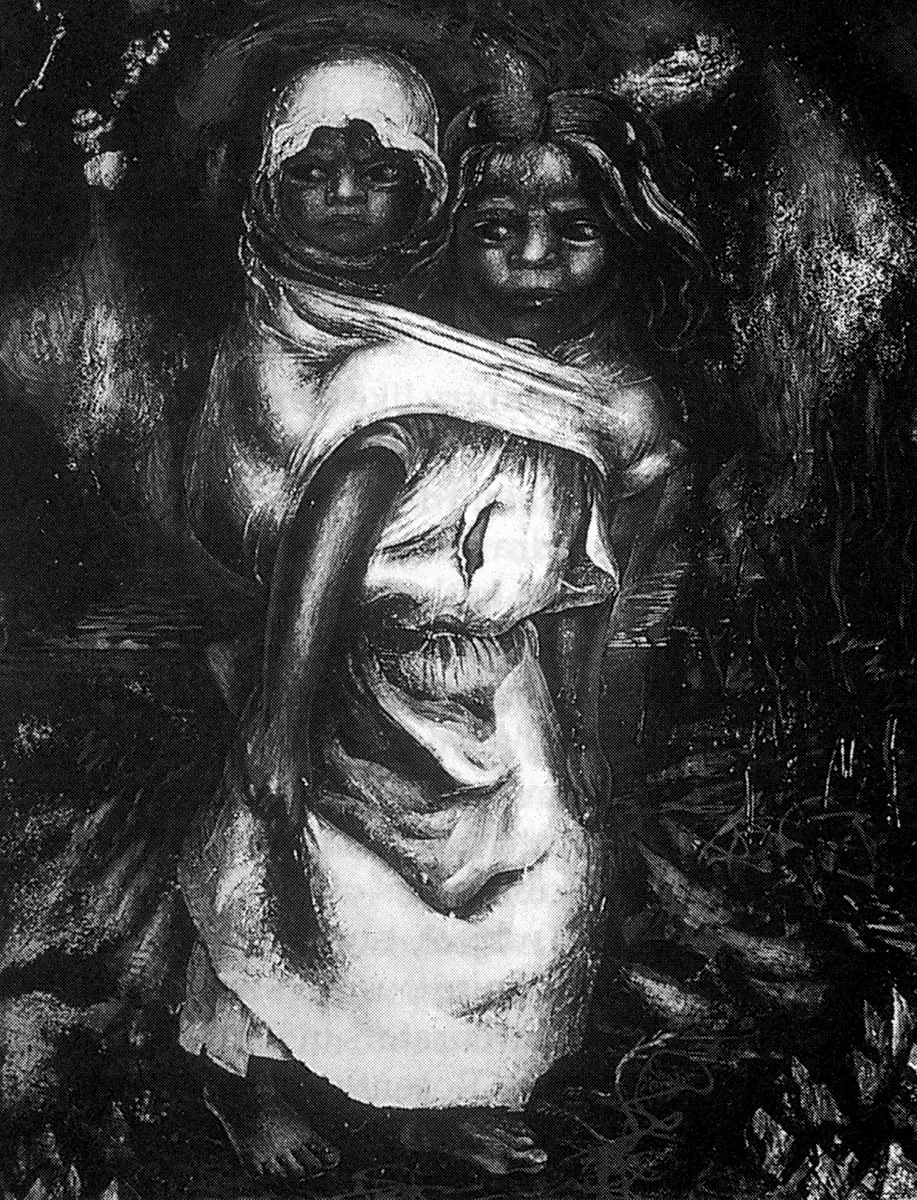
In April 1936, Siqueiros opened in New York his Experimental Workshop: A Laboratory of Modern Techniques in Art, whose participants included Jackson Pollock and his brother Sanford. Since the Mexican artist had decided to travel to Spain at the end of the year to fight in the Civil War, the participants organized a farewell party for him. Late on the night of the party, someone proposed a toast to the master, who was nowhere in sight. He was finally found, in the company of the young Pollock (sixteen years his junior), both completely drunk, fighting, and trying to strangle one another under the table.
This anecdote appeared at the entrance to the Düsseldorf exhibition. The director of the Museum and curator of this unusual show, Jurgen Harten, uses the quotation as a metaphor for an age-old conflict in which Siqueiros and Pollock are placed at opposite extremes. This sheds light on the deeper meaning and historical interest of a show such as this because the brief encounter with Siqueiros or the technical knowledge which the North American artist might have acquired in the Siqueiros workshop is not sufficient material to justify such a broad-ranging comparison. Harten, who has the reputation of a cultural and philosophical thinker, has said elsewhere that he was not interested merely in an investigation based on the history of art, but rather in deeper questions concerning artistic practice and the historiography of art over the last five or six decades. Furthermore, he establishes a relationship between the fall of the Berlin Wall, which symbolizes the end of the Cold War. For him, this provides an opportunity for a freer appreciation of artistic trends that had diverged from one another following the polarization of the respective systems. One wonders, however, whether his pretentions and the wide scope of his curatorial ambition are satisfactorily communicated through the works presented in the show, bearing in mind that the contrast between the pieces does not provide any key. His praiseworthy intention was to dismantle presuppositions and ideological postulates and subject the history of the reception of different positions to a critical examination. However, in the final analysis, such an intention can only be deduced from the catalog, rather than the show itself.
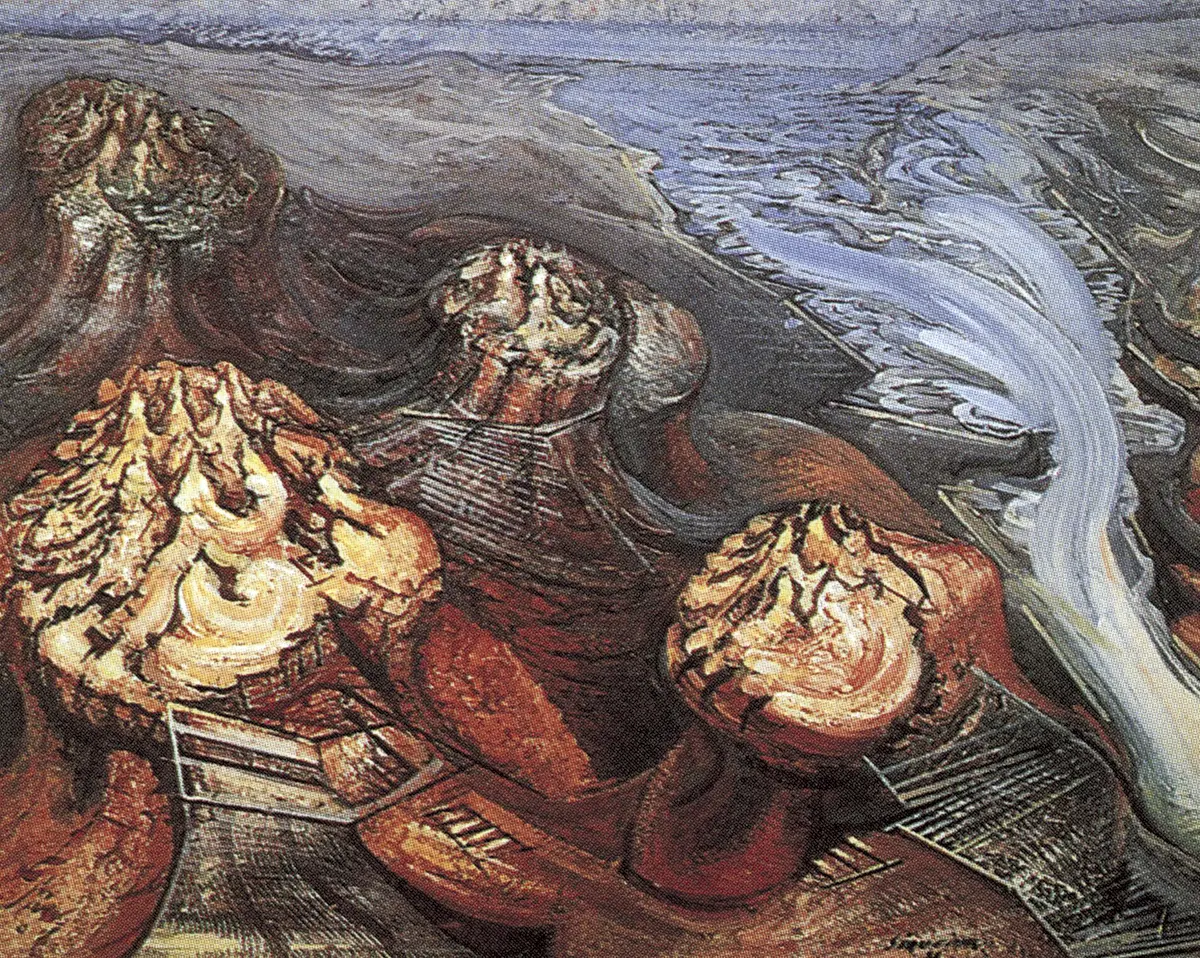
The exhibition concentrated on works by both artists from the 1930s and 1940s. It was conceived on an antithetical basis, with the curator resisting the temptation to present minute parallels and points of coincidence in terms of form. At all events, this would not work as a central theme. Of course, some works by Pollock, which were done at the time of his Workshop or just after, might reflect some of the things he had learned. In Landscape with Bull (1936-1937), for example, he uses a compressor and sprays gun; in other work,s he began to use techniques which would later become very characteristic, such as dripping or the mixture of color fields, as Siqueiros had done in his Collective Suicide or Birth of Fascism (both from 1936 and executed in New York). But the collection of works from this period, which were presented at the Düsseldorf show that he was much more fascinated by Orozco during his training period. Occasionally, we can determine exactly which works by Orozco inspired some of Pollock's dramatic compositions. One of his teachers, the regionalist Thomas Hard Benton, who had himself been influenced by the Mexicans and experimented with muralism, could have made direct reference to his work. Furthermore, at the other end of the street where Siqueiros had set up his Workshop, in the New School of Social Research, there were murals by Orozco from 1930-1931. These works are specifically mentioned in the Düsseldorf catalog.
This is necessary for a country like Germany, where studies on Pollock have stubbornly ignored this influence. In 1990, the Wiirtembergischen Kunstverein in Stuttgart presented the collection of drawings which Pollock's widow, Lee Krasner, had donated to the Metropolitan Museum of Art in 1982. One of the most important German art publications, Kunstforum International, ran an article on this event. Although one of Pollock's works reproduced in the text showed his obvious admiration for Orozco, the author of the article did not mention his name even in passing. Although we might attribute this omission to the writer's unfamiliarity with the subject, another example reveals that behind all this, a definite position is being taken up. Two of the most influential curators in Europe, Christos M. Joachimides and Norman Rosenthal, presented a retrospective in Berlin and London in 1993 entitled American Art of the Twentieth Century. Although Rosenthal spent many years researching the subject, which he undoubtedly knows very well, he does not refer even once, in the part of the catalogue dealing with Pollock's work, to the significance of Orozco and Siqueiros in the 1930s. It is precisely this bias in the "Western" vision of twentieth-century art that Harten's exhibition wanted to address.
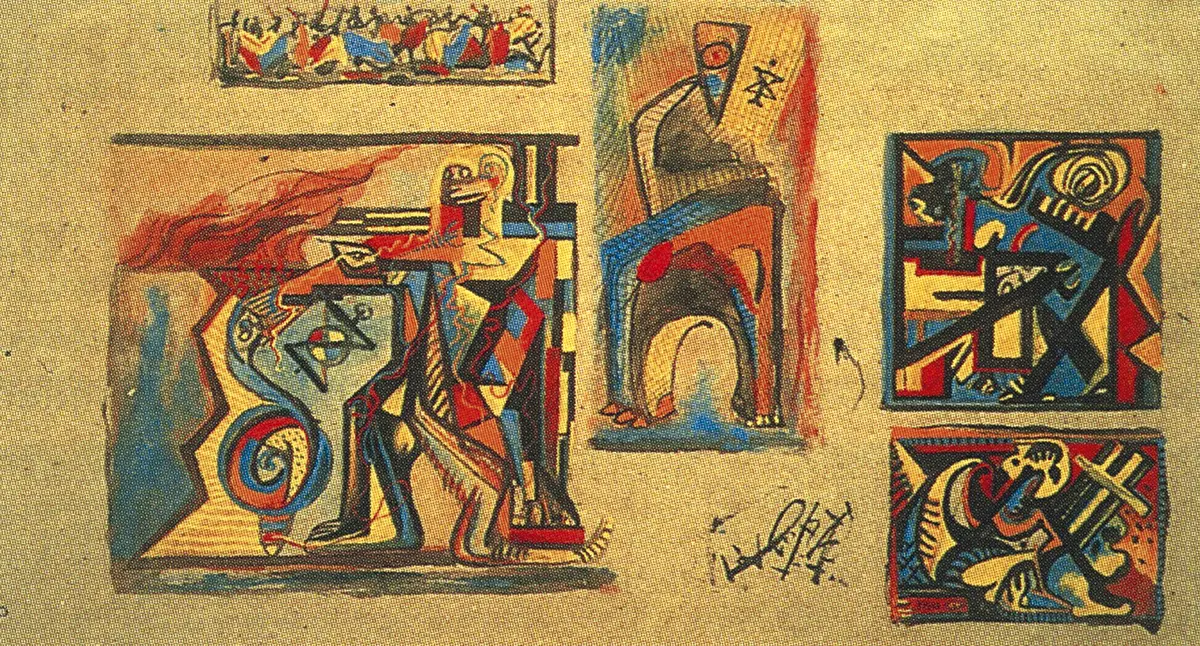
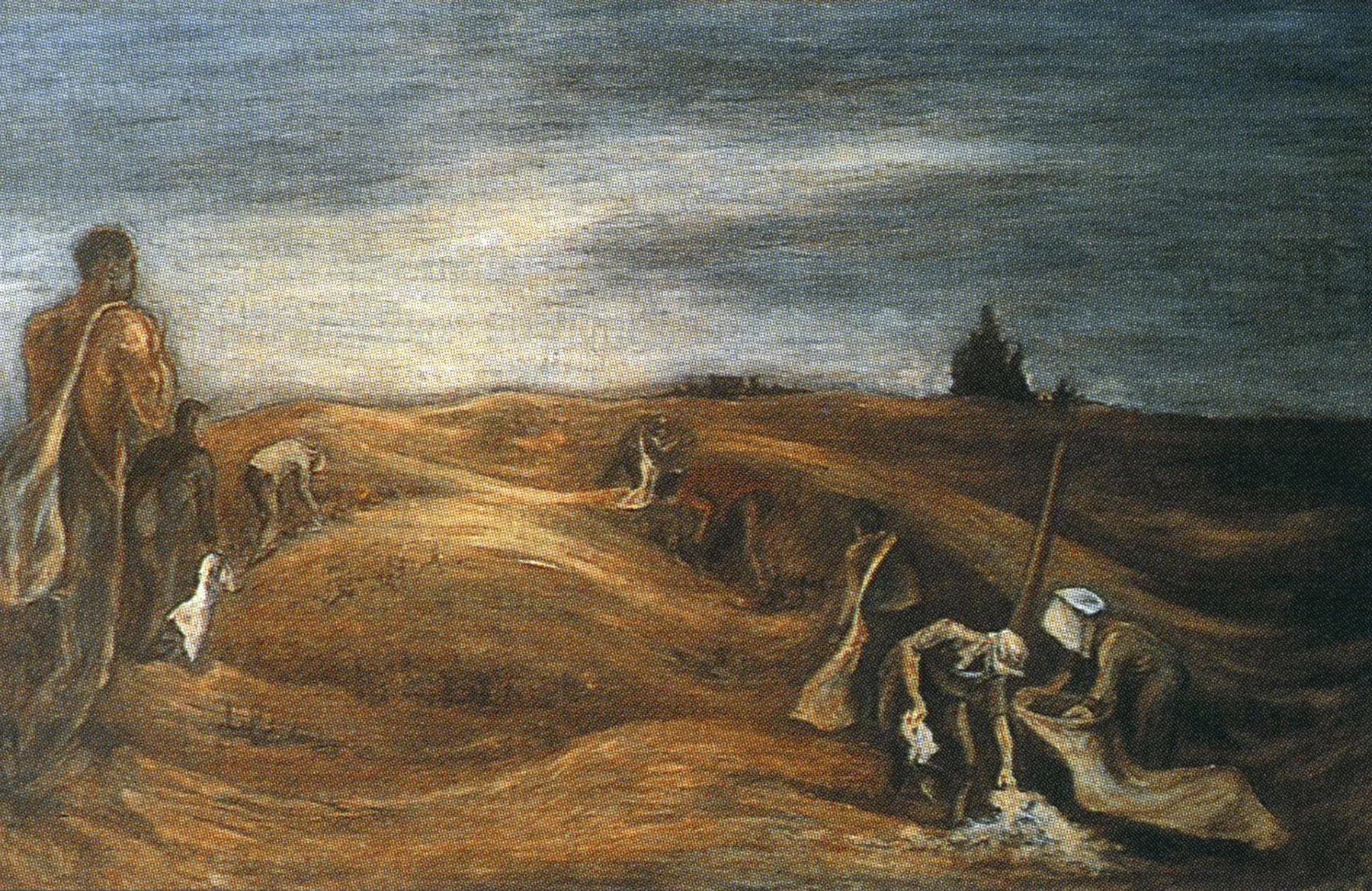
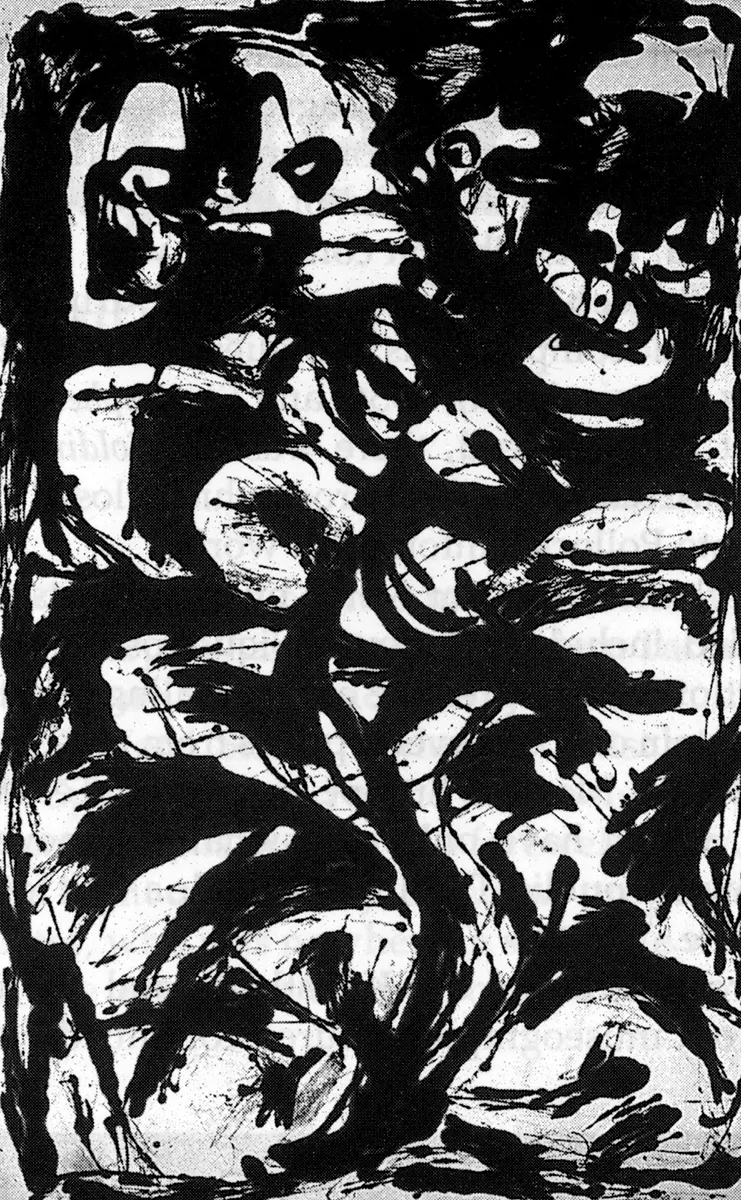
In general, the works of both artists were shown separately. The one exception was the largest room, which was devoted to Siqueiros, where there were two paintings by Pollock of an introductory kind (Going West, from 1934-1935, and Cotton Pickers, from 1934-1936). These are very Benton-oriented works and reflect the prolongation of the influence of the Mexican school on the master. Most of the visitors thought at first that they were works by Siqueiros: this was precisely the intention. The exhibition reveals that in the end, the paths taken by both artists are different, despite the points of contact: this is obvious in two canvases by Pollock from the beginning of the 1940s (including The Moon Woman Cuts, from 1943). The visitor, accustomed as he is to a "Western" aesthetic of a North American or European kind, found himself confronted in this room with the violent pathos of Siqueiros's art. The dominant work was The New Day of Democracy (1943), which belongs to the National Museum of Havana. The picture, which measured 2.5 x 3 meters and hung very high, shows a titanic female figure wearing the cap of liberty, which fills all the space. Some visitors preferred to rush on into the next room, which was more intimate, to pictures by Pollock. On the upper floor, the show continued with works by both artists from the 1940s. On one long wall, there were pyroxilin works by Siqueiros (The Mutilated House, 1947-1951, The Devil in the Church, 1947) and others painted in the same way. Separated visually from these were other, larger, but equally musical and passionate pieces by Pollock. Along a narrow, spiral corridor, with labyrinth-like walls, there were some smaller works on paper by the same artist. As if to demarcate the two different conceptions, the center of the space was occupied by black panels arranged in zig-zag form, with photographs by Edward Weston depicting landscapes, stone structures, and trees in a kind of visual essay. Finally, in another area, the exhibition concluded with large-format works by Pollock, full of gestuality and drippings, with some dynamic compositions by Siqueiros on the other side, including Atomic Airship (1956) and Stratospheric Antennas (1949). At the very end, there was the Folding Screen of Controlled Accidents by Siqueiros, which closed the circle leading into Pollock's informalist work.
Although several major works by both artists could not be included, including obviously Siqueiros's mural works, the selection was impressive and revealing. Harten managed to obtain on loan several pieces from museums in the United States, Mexico, Europe, and even Tel Aviv and Tehran, which have only occasionally or never before been shown in public. This in itself made a visit to the show worthwhile.
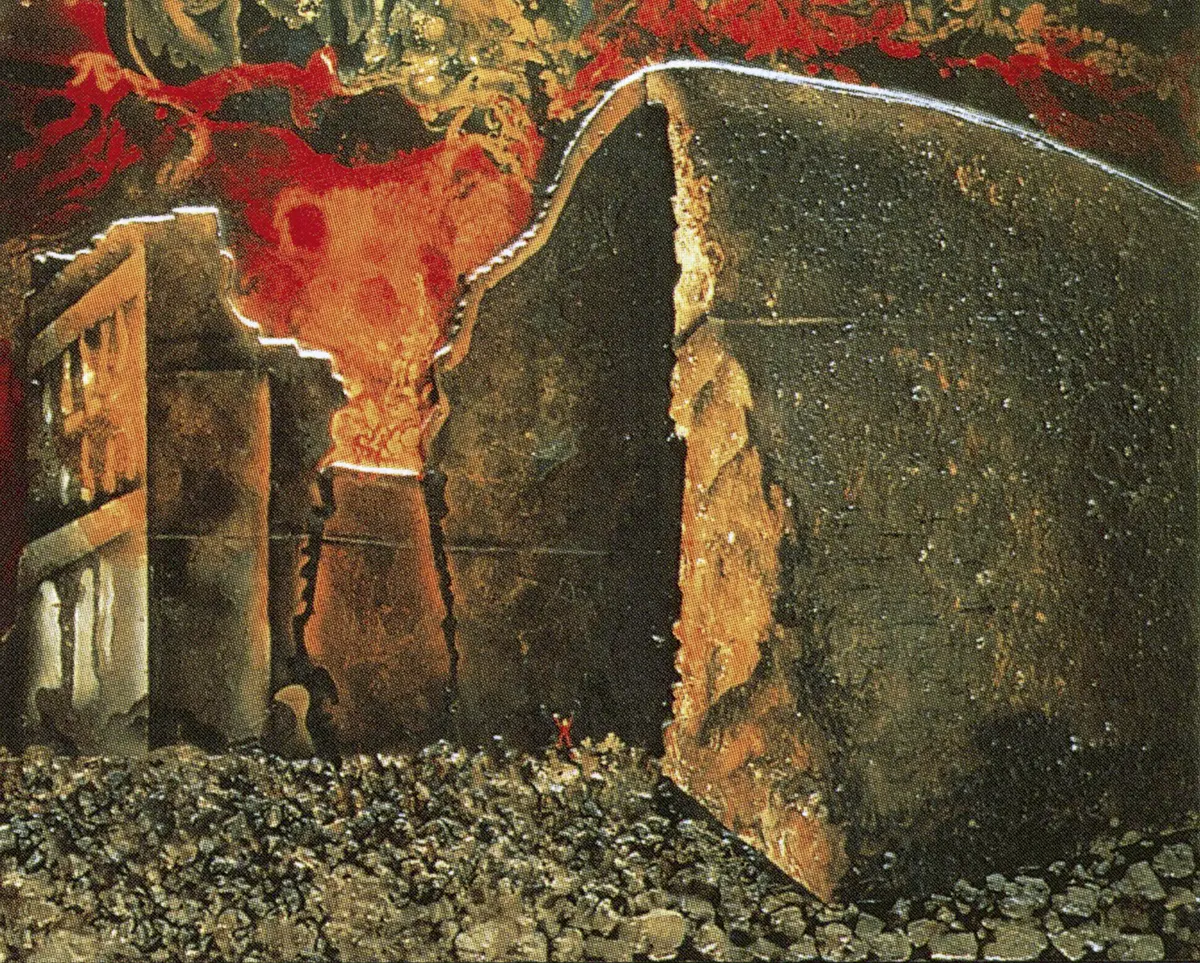
The architecture of the Kunsthalle and the carefully thought-out museography ensured continued visual contact with the works of both artists. There was a sense of drama resulting from the permanent comparison achieved between what was seemingly incomparable. This resulted in a curious counterpoint between harmony and dissonance, with baroque claps of thunder, hymns, and free improvisation done in strident tones. The hermetic figuration and voluminous forms of Siqueiros, which finally took him to his "sculpture-painting," have apparently nothing to do with the dissolved and psycho-grammatical abstractions of Pollock. Texture, which is concentrated in close pictorial spaces, contrasts with an energetic network of subtle and transparent pictorial layers. Even so, over and over again, there are points of contact. A common aesthetic feature is the sense of dynamic movement and gestural action, which even transcends Siqueiros's compact figures with their pretentions of superficially stressed meanings raised to the point of becoming commonplaces. It is no coincidence that the question is raised about the relationship between Siqueiros and abstract art, a subject of controversy, although there is no doubt that, at least in his studies and experiments, he always maintained a relationship with abstraction. And as a series of works by Pollock makes clear, there is something in his work beyond "abstract expressionism", devoid of any content. He himself used to say that he was sometimes very representational and always a little. In this way, the Düsseldorf exhibition gave food for thought about the usefulness of the strict division between such categories as "abstract" and "figurative," and whether all their consequences can really be justified.
This exhibition in Germany had a very special context, since it showed work by two artists who had for decades been the figureheads of opposing positions. In the official art of the eastern part of the formerly divided country, Siqueiros was considered the symbol of the social commitment of art to the "struggles of our time," as one of the overworked slogans used to say. Pollock, on the other hand, was seen as the purest example of "the decadence of a late bourgeoisie," a tragic figure in art governed only by market interests. In the western part of the country, exactly the opposite occurred: Pollock was the protagonist of a liberal conception of art, and Siqueiros was nothing less than a painter of pro-Communist argumentation. Even after German reunification, these two narrow and false stereotypes continue to be repeated. And so it is very important to undertake an in-depth review of the historiography of art conditioned by this situation and to make a specific analysis of the interdependence and mutual influence of different conceptions of modernism, based on an acceptance that such an inter-relationship is a matter of fact. This was achieved on an impressive scale in Düsseldorf, through the work of two very different artists, thanks to the deep understanding, reflected in the exhibition, of the intricate paths of their respective artistic development.
GERHARD HAUPT
German art critic, resident in Berlin.