The installation created by Ana Albertina Delgado transforms a blank gallery space into a feminine vision described in diaphanous white cloth, translucent plastic tubes, soft rabbit fur tondos, and elegant drawings. Entering through a small area hung with what appear to be white veils, the viewer is invited to step into the artist’s version of her autobiographical chart described on three filmy organza curtains. Inscribed with stitched profiles symbolic of her maternal line of descent and outlines of the body’s essential parts, the cloth is also decorated with tufts of hair and buttons, items of personal identity and domesticity. The sensual nature of the fabric is used to disclose a vocabulary based on feminine traditions that reveals her spiritual nature, memories, and the essence of her personality. Creating with materials that contain numerous personal associations, Ana Albertina Delgado applies the drawing skills that are the essence of her artistry to new modes of expression.
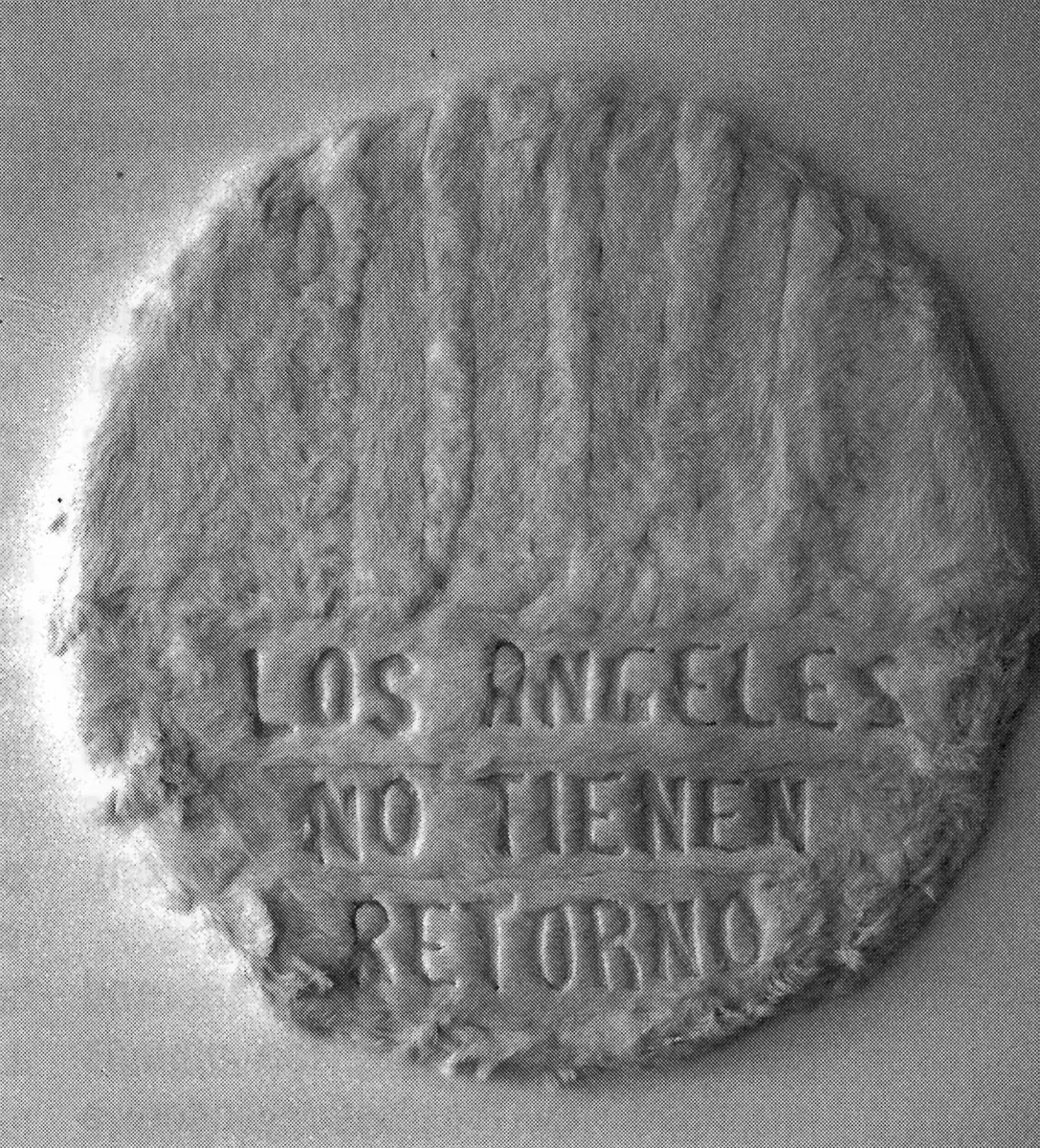
In the second gallery, she draws directly on the walls, utilizes photographs and plastic films, as well as rabbit fur medallions and objects arranged in clear plastic tubes, to further elaborate on the autobiographical theme at the entrance. Their focus is on images and items of sensual perception that remain after one’s physical nature has disappeared. The three rabbit fur tondos suspended freely from the ceiling are engraved with the titles of significant works produced during her career that she wishes to maintain and preserve in another context. The soft tactile texture of the white fur is a surprising surface for the carefully inscribed letters, as puzzling as it is a provocative statement on the nature of materials and their associations. They complement the fragility of the clear plastic sheet with white body imprints that hang to their right and the translucence of the plastic objects that are suspended to their left.
The five plastic tubes hang before a wall meticulously drawn with the silhouetted image of Paquita, an imaginary alter-ego with associations to a popular Spanish bon vivant, Paquito.
He/She is given personal and serious overtones by the objects arranged within the plastic cylinders: a photo of her family dinner table in Cuba; bones and cerebral objects; a fetus-like cocoon wrapped in white nylon; a floating baby with tiny flowers, and the artist’s hair entwined with that of her husband. Each is a reference to the human senses, and the clear plastic cylinder appears as a delicate container for her memories. The small objects within are a fragile reminder of life’s voyage and the persistence of the five senses even after death, when they become part of one’s personal history.
Dedicated to human frailty, Ana Albertina Delgado’s installation invokes memories of the past that live on in the body and soul of a family’s descendants, seen from a feminine perspective and created from materials as precious as a woman’s world.
CAROL DAMIAN