In 1981, Lucy R. Lippard linked the work then being done by Argentinian artist César Paternosto with the Nazca lines and said that the surfaces of his paintings "evoked the large scale of natural space."1 Traced out more than 1500 years ago, the Nazca lines are gigantic signs encompassing the landscape of a large area of pampas in the Peruvian desert. Now, a landscape is something that in our minds, evokes the idea of open space. But Lucy R. Lippard was not referring to an orthodox landscape but to a very sophisticated abstract painter, one of the most reflective in recent decades in terms of his art and the serenity of his theoretical contribution.
In a 1983 essay, Sam Hunter noted that Paternosto was becoming less hermetic, and he recalled a phrase in which the painter called for the restoration of the symbolic meanings which geometry had evoked long before the
golden age of Western civilization2 eclipsed them. Shortly after, the Colombian artists Édgar Negret and Eduardo Ramírez Villamizar embarked on a path similar to that of Paternosto. In all three cases, this led to a gesture of affirmation and autonomy with respect to the cosmopolitan kind of geometry being practiced at the time. The new attitude had a valuable precedent in the Quipu of 1971 by Alejandro Puente, a work which referred to the calculation and registration instrument used by the Incas. In this way, the work initiated by Carlos Merida in the Meso-American area and Joaquín Torres-García in South America was renewed and extended.
According to Charles Merewether, Paternosto's painting is the encounter of memory with imagination.3 It should be noted that memory is rooted in the past and that the past means history, the monuments which bear witness to the sense of history, and the artistic or ritual objects which confirm such sense. If memory is nurtured by what in the visual arts we call the cultural heritage, imagination is the prerogative of the individual and is the subjective expression of what the memory holds. On the basis of what he has stocked in his memory throughout his intensive exploration of archeological sites, Paternosto reinvents, dreams, and paints.
From Greece and Rome to ancient America.
A hundred years ago, the aesthetic ideals of a painter from Buenos Aires (or Mexico City or Bogota) were derived, directly or indirectly, from those of Greece or Rome. The situation is now very different. Although viewed with suspicion by some sensitive and cultured artists and intellectuals, pre-European art of the Americas is now exerting considerable influence. That being said, the idea predominates in Argentina that it is irrelevant to look for cultural, conceptual, or ideological enlightenment in the pre-Iberian arts of South America. This opinion contrasts with the fact that in Uruguay, a country less rich in pre-Columbian vestiges, Torres-García proclaimed in the 1930s that it was not only viable but advisable to search for inspiration in these ancient cultures.
Slowly and almost silently, Torres-García's hypothesis has been confirmed by the facts, refuting what in Argentina is the official and extra-official opinion. It is useful to emphasize this here in this article of Paternosto, who, after the death of the Uruguayan master, is the artist who has produced the best theory, embodied in new and very valid arguments, which the pre-Columbian artist has in common with the XXth century artist. In practice, this opinion, shared with other Latin American painters and sculptors.
The Venezuelan critic Carlos Silva has noted the presence in Paternosto of an "ascetic morphology,"4 a definition which could also be applied in the final analysis to Merida, Torres-García, Gonzalo Fonseca, Vicente Rojo, and Eduardo Ramírez Villamizar. Carlos Silva also spoke of "tonal subtleties" an aspect which is to be found in Torres-García, although also in Fernando the Szyszlo and Gunther Gerszo, and of the "multiple nuances based on asymmetry" in Paternosto, which takes us back once again to Vicente Rojo, and Ramírez Villamizar, but also to Alejandro Puente, Olga Amaral, and the recent sculptures of Édgar Negret. What is the place of Paternosto in this Indo-American genealogy, which has seen the addition of new names over the last fifteen years (including Adolfo Riestra, Marta Palau, Milton Becerra, and Nadín Ospina, among others)?
Minimalism and pre-Columbian art.
Paternosto's art has an undeniable relationship with minimalism, although in the 1970s he began to visit archeological sites and his painting started to acquire a new meaning without, however, renouncing the visual choices and theoretical postulates which had characterized his earlier work. According to Charles Merewether, there is a work from 1977, entitled Saywite (Inca archeological site in the region of Abancay), which marks the beginning of a change.5
Paternosto had understood that the pre-Columbian artist sometimes used a pure and anti-baroque geometrical language which, if well assimilated, could give greater density to the geometry which himself was using, based on iconic orderings related to ritual and magic in the search for the spirituality advocated by Kandinsky.
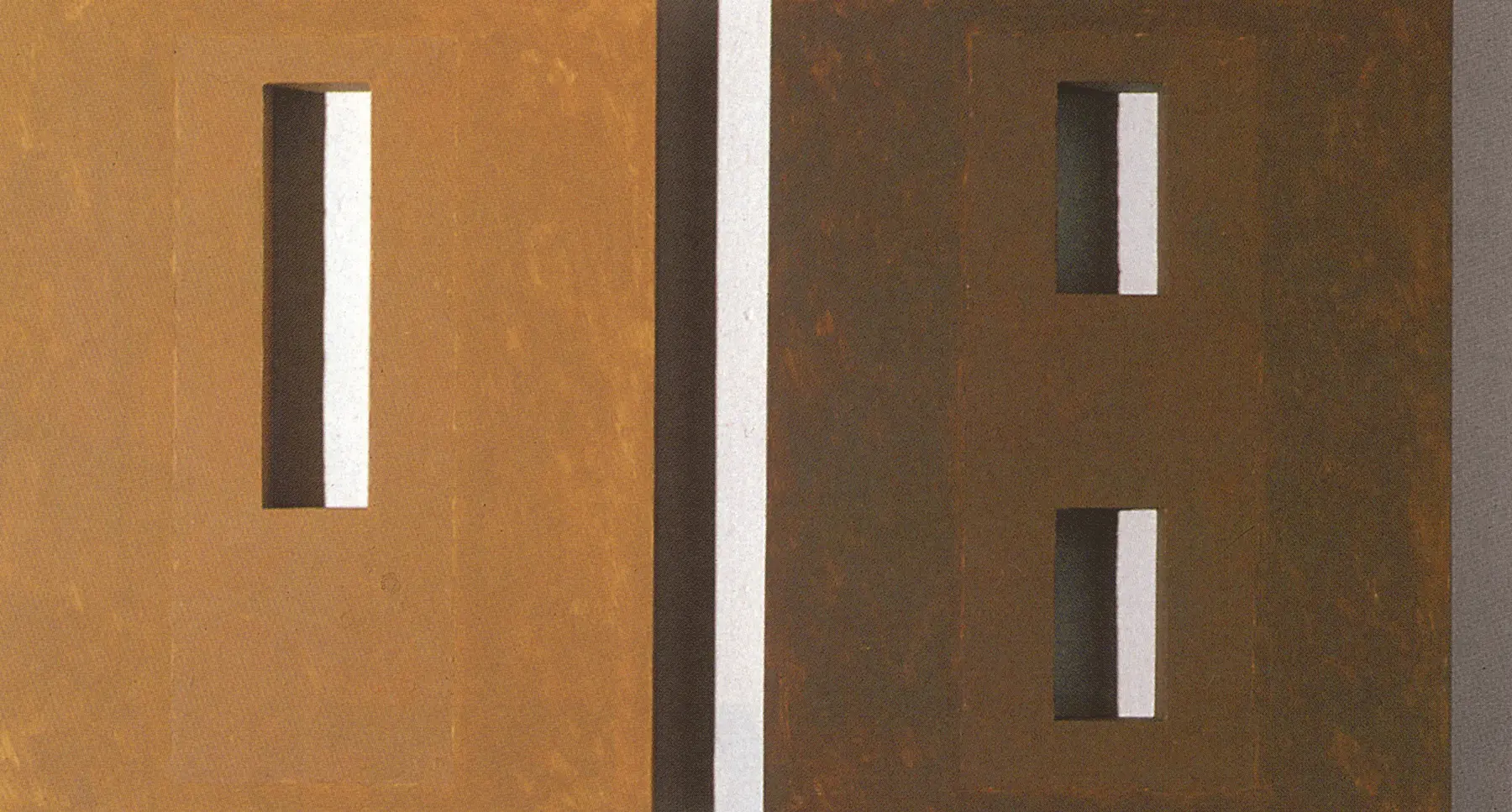
In 1993, the Argentinian artist exhibited in Caracas paintings and sculptures that he had done since 1970, which revealed that one of the singularities of the frontality and symmetry of his work was that they were based on the magical religious principle of duality. In Saywite, there is a chromatic contrast between what is on the left and on the right, as is the case in the rupestrian paintings in Baja California, Mexico, and the architectural work at the Chavin de Huantar sanctuary in Peru, two of the most outstanding examples. This effective technique appears in many other canvases.
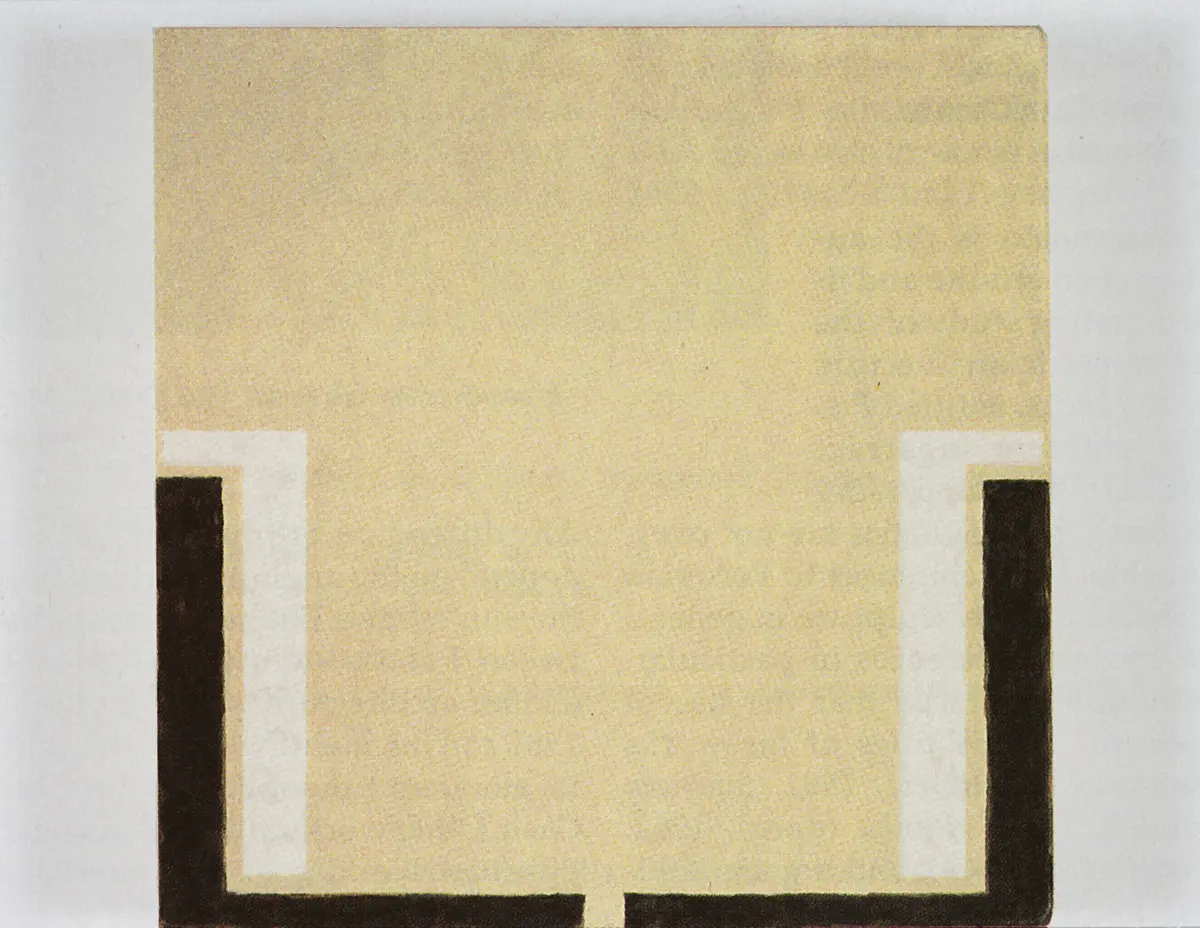
Rufino Tamayo sometimes made use of the principle of chromatic duality. In Tamayo, the contrast is one of color, and therefore accentuated, whereas in Paternosto, it is one of tone, and therefore more subtle. This reference to tone was in line with one of the recommendations made by Joaquín Torres-García to his disciples. When we look at a picture by Paternosto, we have to open our eyes wide ( as with the pictures of Ad Reinhardt and the sculptural cubes of Larry Bell), so that the structure can be fully appreciated. Canvases like Aymoray (1979), South (1980), and Sunlight in Chan Chan (1981) are almost monochrome. Monochrome comes from minimalism, whereas the structures are so complex in their simplicity that the minimalists would never see Paternosto as one of theirs.
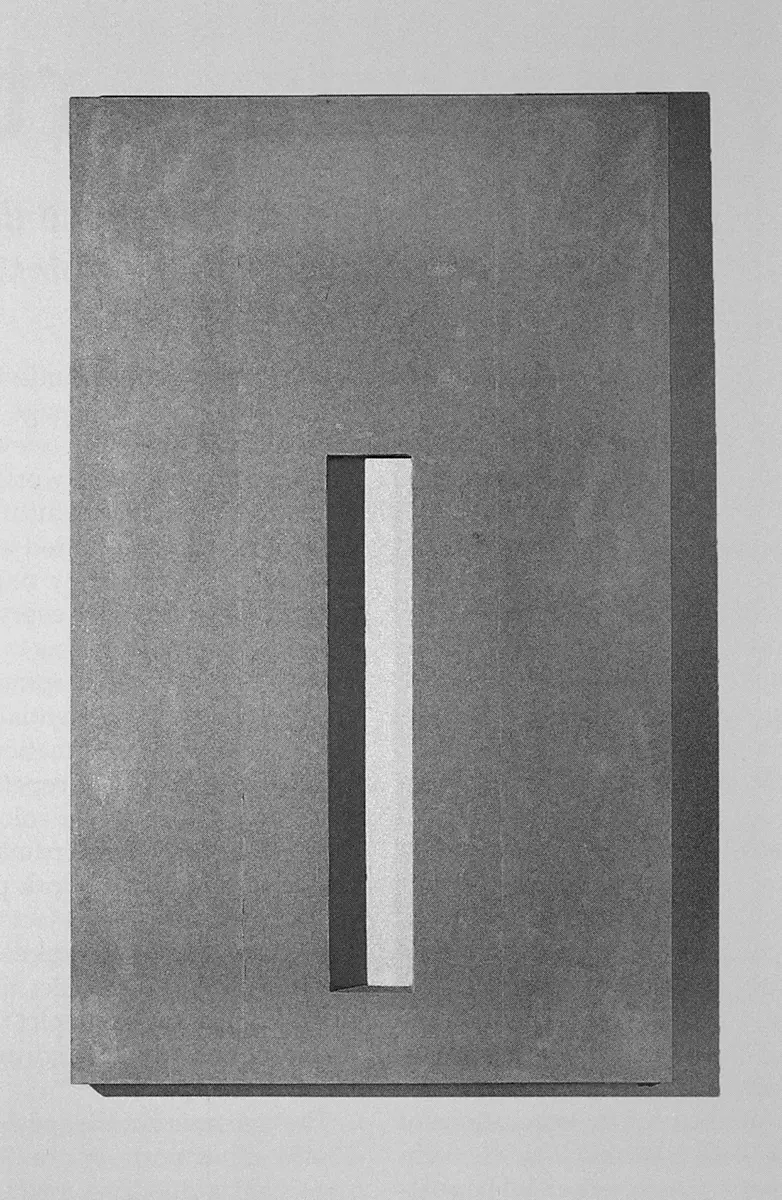
As a further means of expressing his monochromatic obsession, Paternosto began at the end of the 1970s to mix acrylic and powdered marble. His aim was not to introduce a measured and agreeable effect of texture, but to emulate the "mural dimension" of walls, which he wanted to suggest. I use the term “mural dimension" here because his thematic source of inspiration during these years was architecture. (Later, between 1987 and 1988, he turned to pre-Columbian textiles from Peru).
From Chan Chan to Tiwanaku
Paternosto is the author of an erudite and illuminating study of the asymmetric architecture of the Incas, entitled Piedra abstracta (abstract stone). Yet surprising enough, his aesthetics are not overwhelmed by references to Peruvian pre-Columbian sculpture in general or by Inca references in particular, although it is true that the use of quechua in the titles of his works Kantaray (october), 1981, Suchuna (slide), 1982, Punku (door), 1982, Paqcha (fountain), and a geographical name such as Tambo Colorado, 1981, might suggest the contrary.
As regards architecture, which is omnipresent in such titles as Mastaba III (1990), The Narrow Door (1991), and Double Portico (1992), the painter ignored elements related to Incan architecture, such as the trapezoid doors and recesses or various forms of masonry. Indeed, the origin of Paternosto's painting lies in the cultures of the Peruvian coast, rather than the sierra, and more exactly, in Chan Chan, capital of the Chimor Kingdom, on the outskirts of Trujillo.
Chan Chan is known for its broad, high earth wall. The ground and the wall faces also have the same color.
Any differences are merely tonal and depend on the angle and intensity of the sun's light. The relationship between Paternosto's paintings and Chimu architecture is evident in the 1981 canvas mentioned above, with its eloquent title of Sunlight in Chan Chan. Other works followed in which the artist, working with a secret kind of insistence, captured the poetic nuances of light of the spatial complex of this admirable pre-Columbian city, an insistence which bears comparison with that of Monet, except that the structural variations in the work of the Argentinian artist are more important than in Monet, and the purely tonal variations are less accentuated.
In Paternosto, evocation predominates over representation. The symmetries of his painting suggest imaginary facades, and at the same time, the almost vanished outline of these pre-Incan palaces and sanctuaries, whose remains loom out of the moving mantle of sands of the Peruvian desert. There is such austerity in all this that it is understandable that the celebrated and profuse ornamentation of Chan Chan has not caught the interest of the painter, who in the 1990s turned his eye towards the Bolivian high plateau and the artistic potential of Tiwanaku.
In a 1993 exhibition in New York, Paternosto collated paintings and sculptures with photos of the Puerta del Sol, re-enacting the 1989 experiment entitled Symbolic Andean Forms presented at the Ruth Benzacar Gallery in Buenos Aires in 1989. In an artist distinguished by his vigor and asceticism, it is only logical that the sources of his inspiration are not to be found in the sculpted frieze of the Tiwanaku gate, but on the other, non-photogenic side, in the recesses of different proportions and sizes.
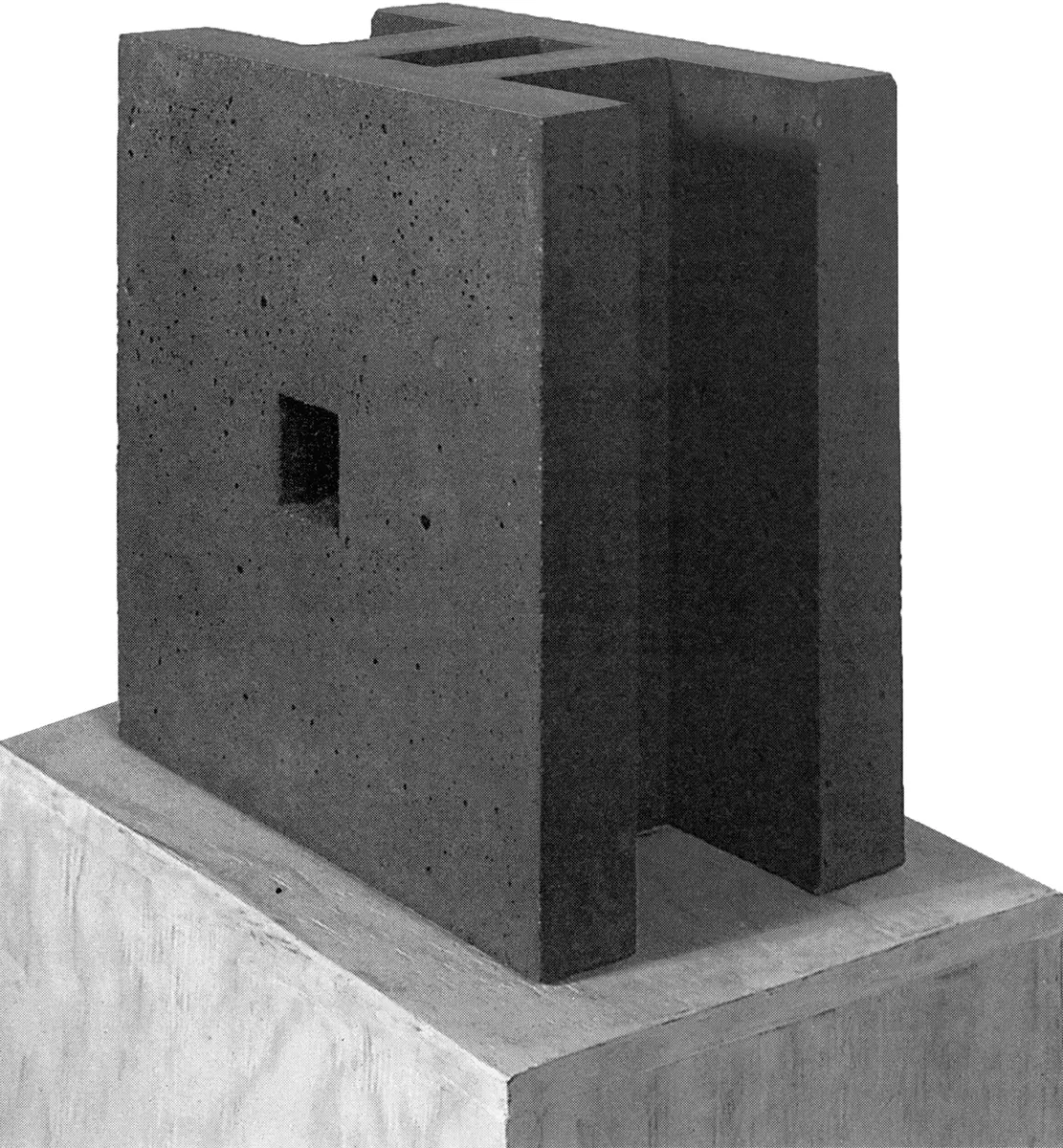
In Piedra abstracta, in which Paternosto examines the originality of the walk-through sculptures of the Incas, he calls them “sculptural architectures."6 The term makes me think that his paintings are kind of picto-architecture, the development of which, after years of research, has led him to create works which function as pictoarchi-sculptures. In the two 1993 exhibitions and in the 1995 show at the Cecilia de Torres Gallery in New York, Paternosto exhibited projects for sculptures which, once executed in concrete, would become part of the public space for which they had been conceived.
Pictorial, architectural, and sculptural elements are perfectly balanced in these works, and none predominates over the others. The surfaces that rise up like walls take us back to architecture. The freedom within which the volumes are orchestrated to create a totally liberated monument evokes the world of sculpture. Pigmented cement covers the surface with tonal subtleties of a pictorial kind, which remit the chromatic reductions already explored on earlier canvases.
Symbol and magic, two of the obsessions motivating the artistic endeavors of the new generations of Latin American artists, are present in the work of César Paternosto, although our eyes and minds are not overwhelmed by the profusion of literary references that other artists make in the form of anecdotes or illustrations. There is no room for the obvious in a language as refined as his, which does not seek refuge in the self-sufficient contemplation of itself, although it is based on abstraction. It is allusive and therefore can be interpreted, thus diverging from orthodox minimalism. Paternosto's facades and his porticos are porticos. They are dreams, not real, because we are in the territory of imaginary reality.
When Negret and Ramírez Villamizar make constructions which evoke Incan aqueducts, they are referring to something which we do not know but which we can imagine. In a similar spirit, Paternosto offers us hypothetical walls and monuments. There is genuine nostalgia here, as there is in the work of Piranesi in the eighteenth century. But where Piranesi provided a wealth of detail, Paternosto holds back, where the Italian becomes fantastical, the Argentinian prefers to be sober and flat.
In the context of the cultural patterns that have reigned in Buenos Aires throughout the century, we can see that César Paternosto is not afraid to explore the remote past of the region in which he was born, transgressing certain prohibitions and taboos. This means that we can no longer simply look at his work in terms of what happens in the museums and galleries of New York, where he has lived since 1967, and ignore the processes which take place in his mind and sensibility when he finds himself alone in his Manhattan studio, condensing substantial images from what he has seen in Monte Alban, Mitla a Ollantaytambo, and Tiwanaku.
NOTES
1. Lucy R. Lippart, "The Abstraction of Memory," in Paternosto, exhibition catalogue, Durban Gallery, Caracas, June 1993, p 17.
2. Sam Hunter, untitled text, in Paternosto, op. cit.., p. 19
3. Charles Merewether, "Imaging Utopia", op. cit.., p. 12.
4. Carlos Silva, untitled text, op cit.., p. 7
5. Charles Merewether, op cit.., p. 13.
6. César Paternosto, Piedra abstracta - La escultura Inca: Una vision contemporánea, Fondo de Cultura Economica, Buenos Aires, 1989, p. 68.
ÁLVARO MEDINA
Historiador y critico de arte colombiano. Premio Nacional de Historia con El arte colombiano de los anos veinte y treinta, que acaba de ser publicado.